The new building in Stockholm for the Social Security Administration was the result of a closed competition organized by the National Board of Building and Planning. The Administration was in acute need of office space, as the temporary offices in Auditorium on Norra Bantorget were altogether too cramped and did not satisfy fire safety regulations.
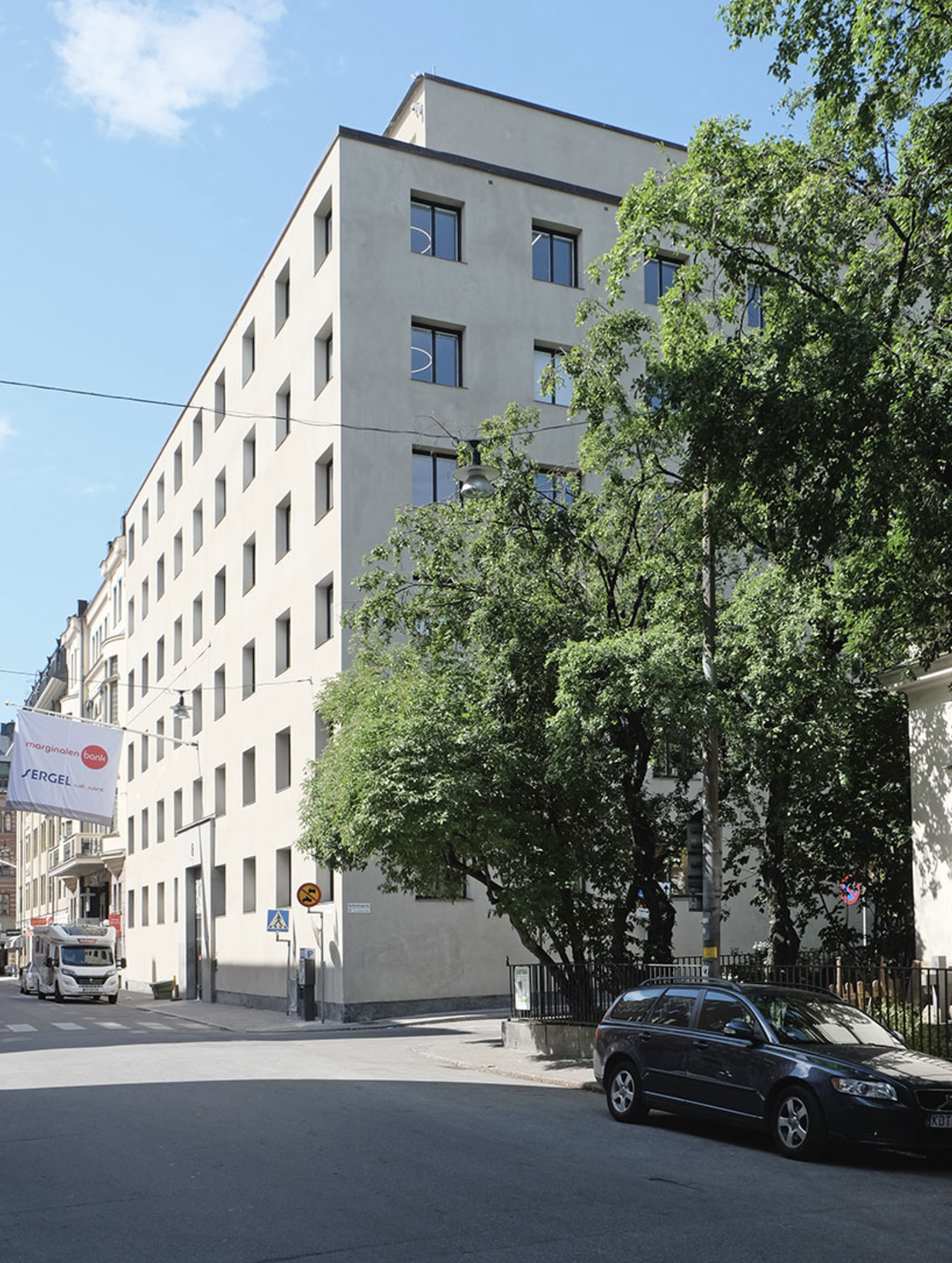
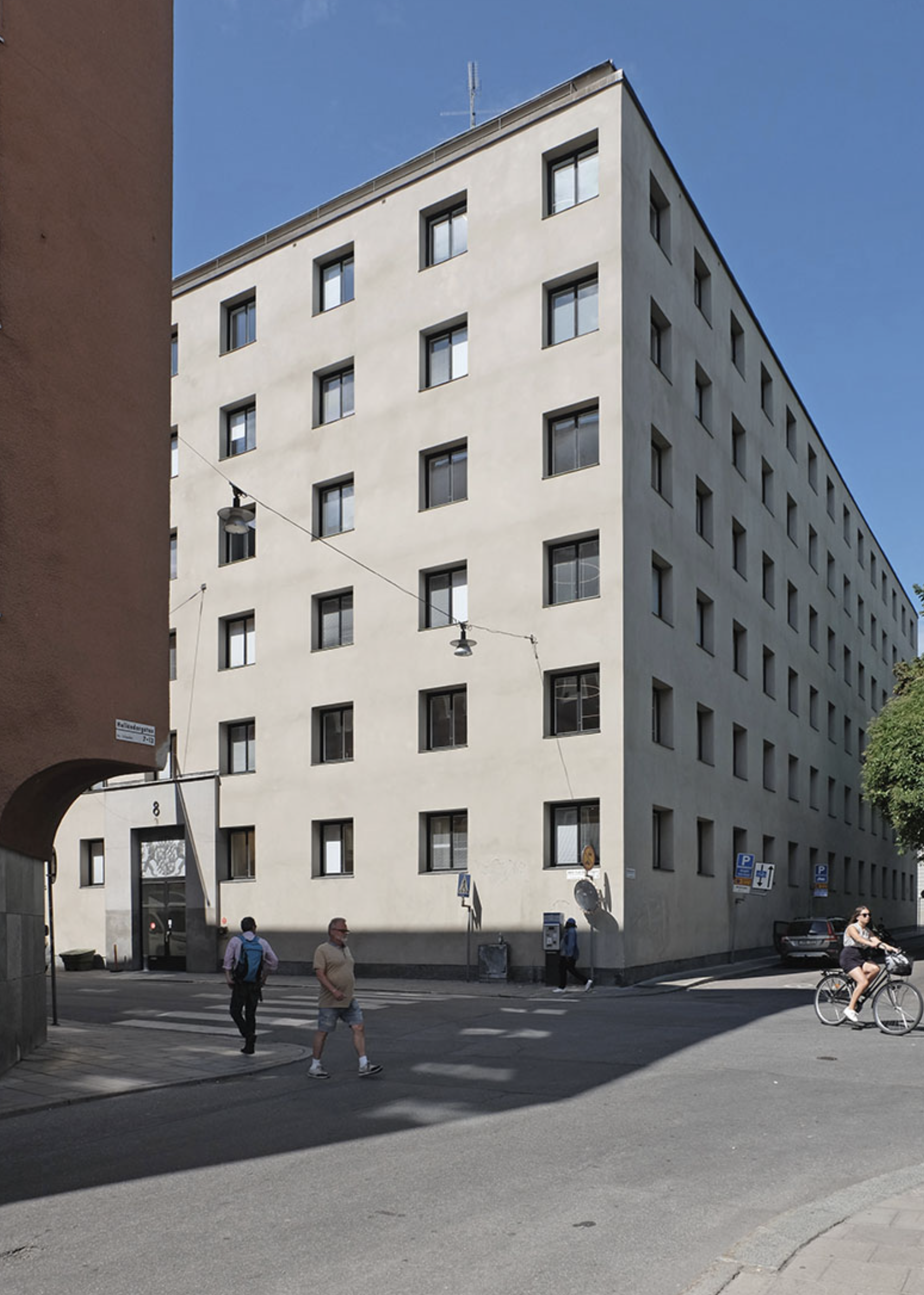
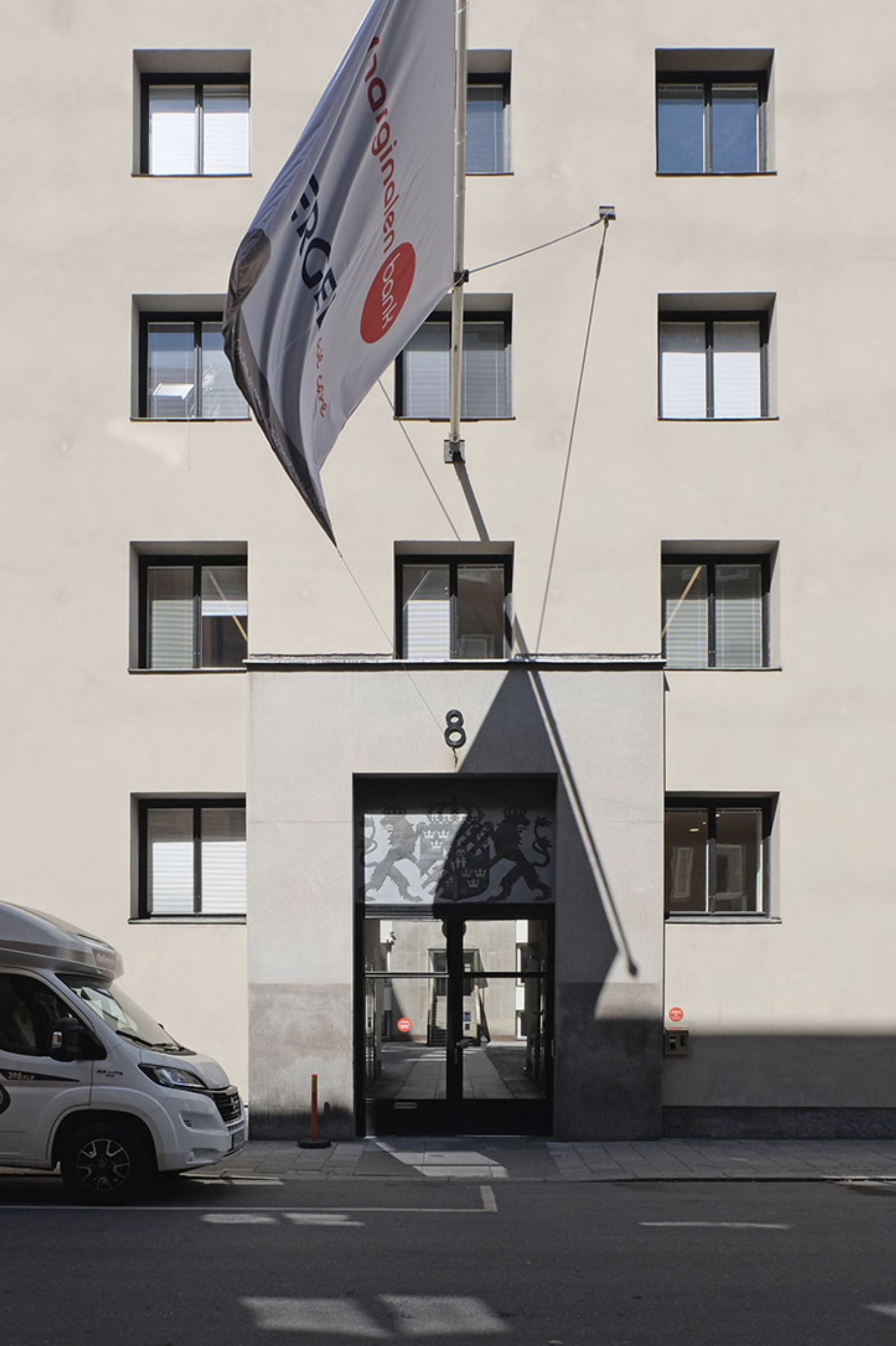
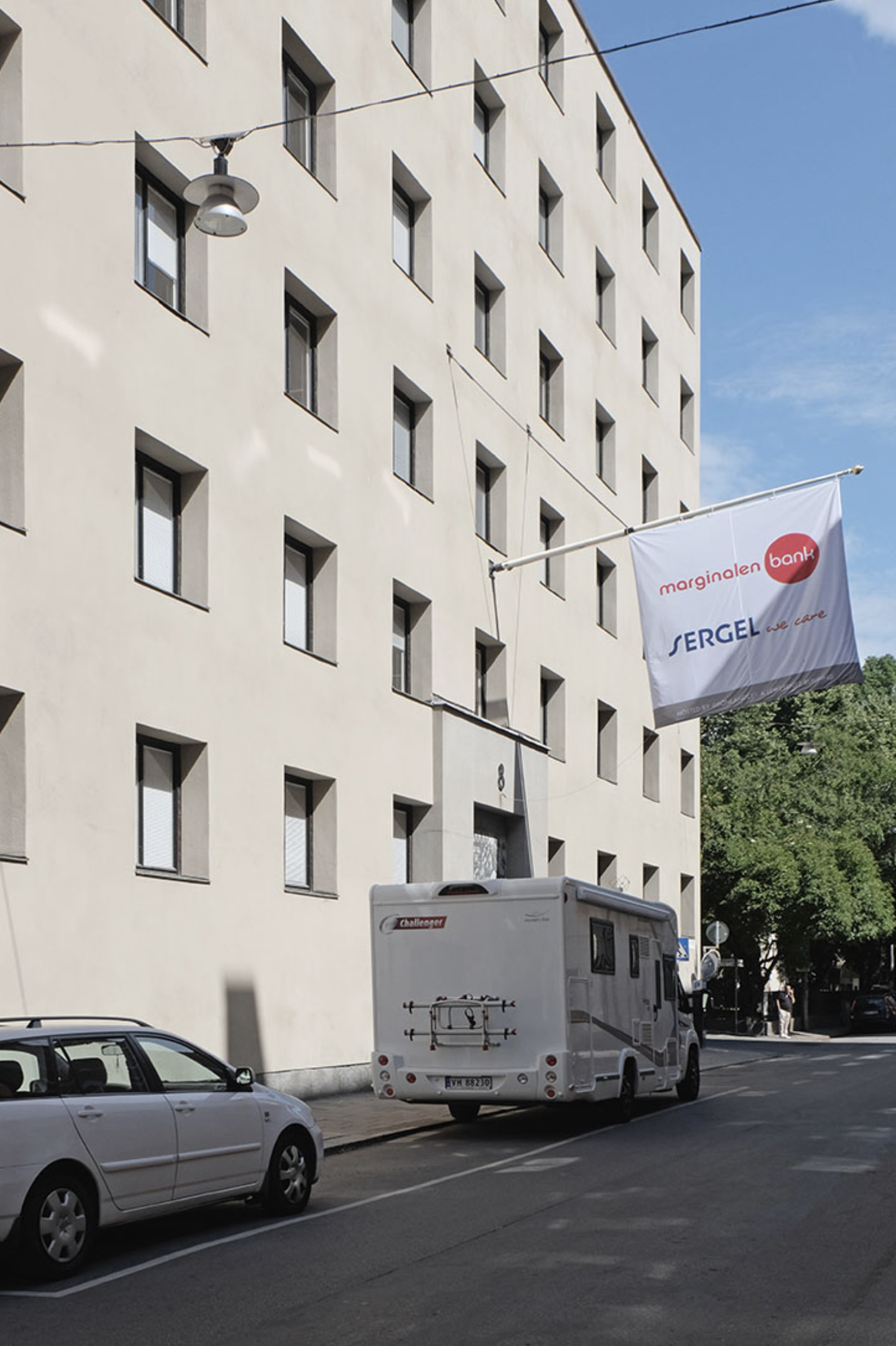
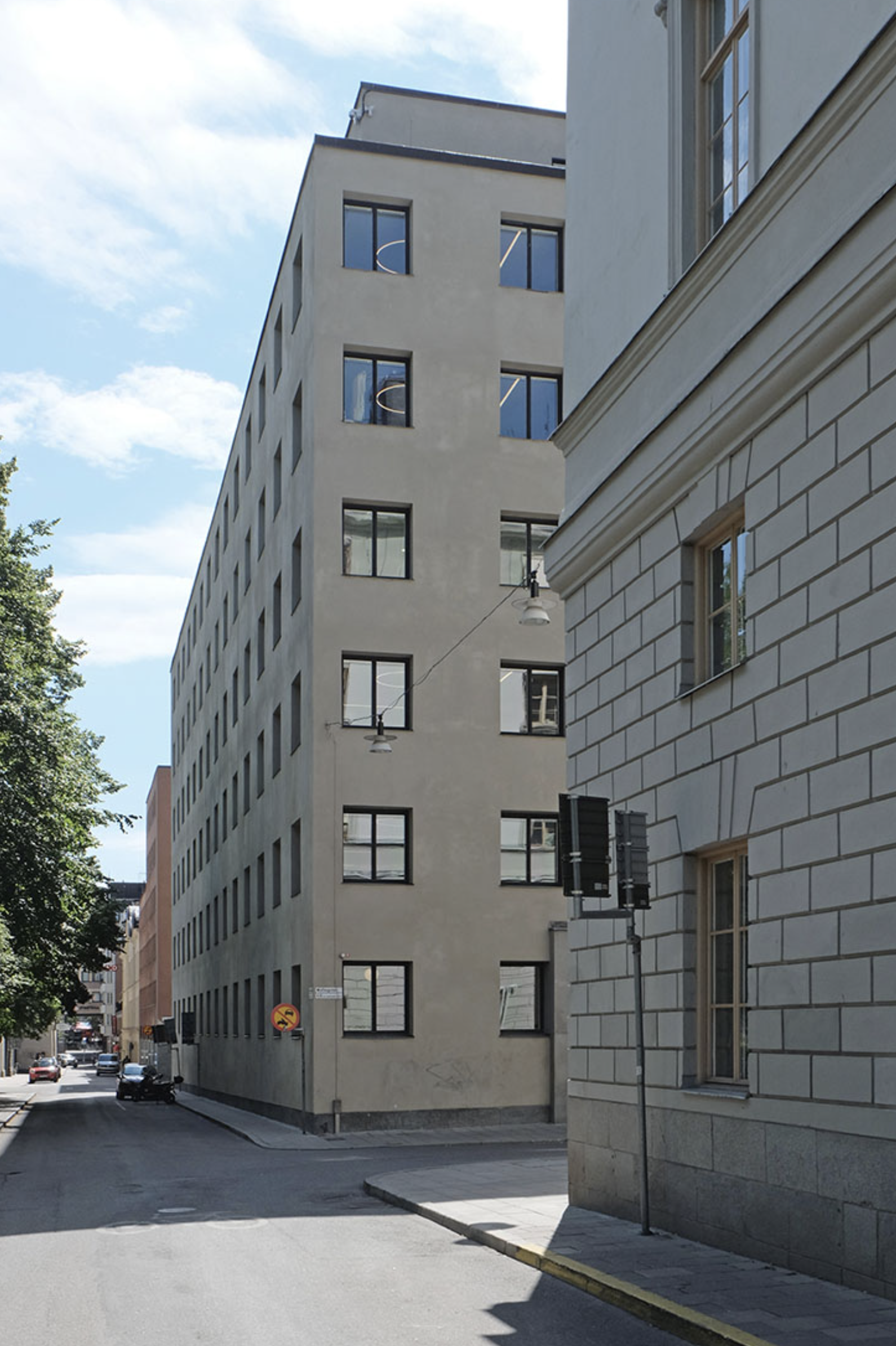
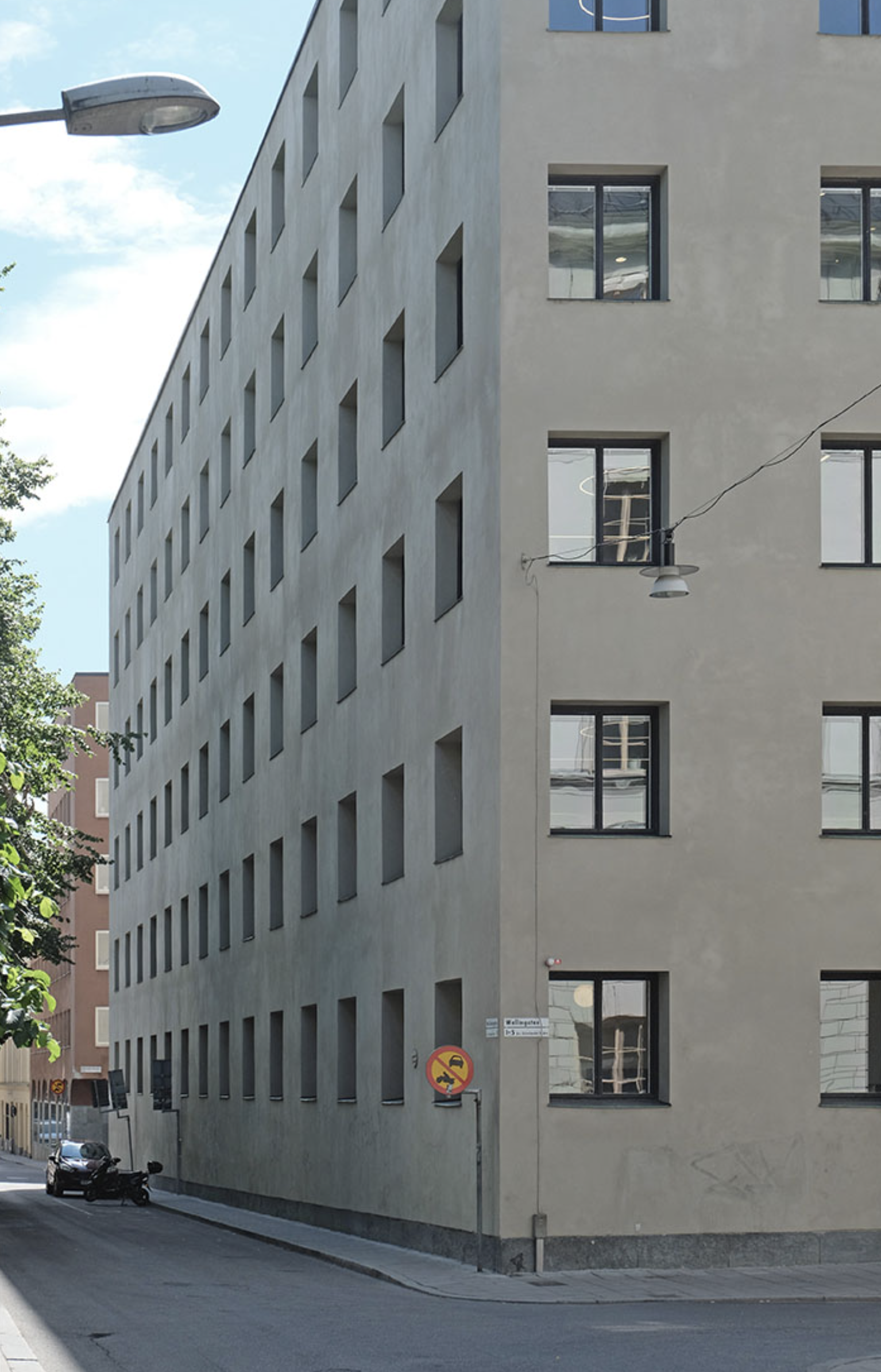
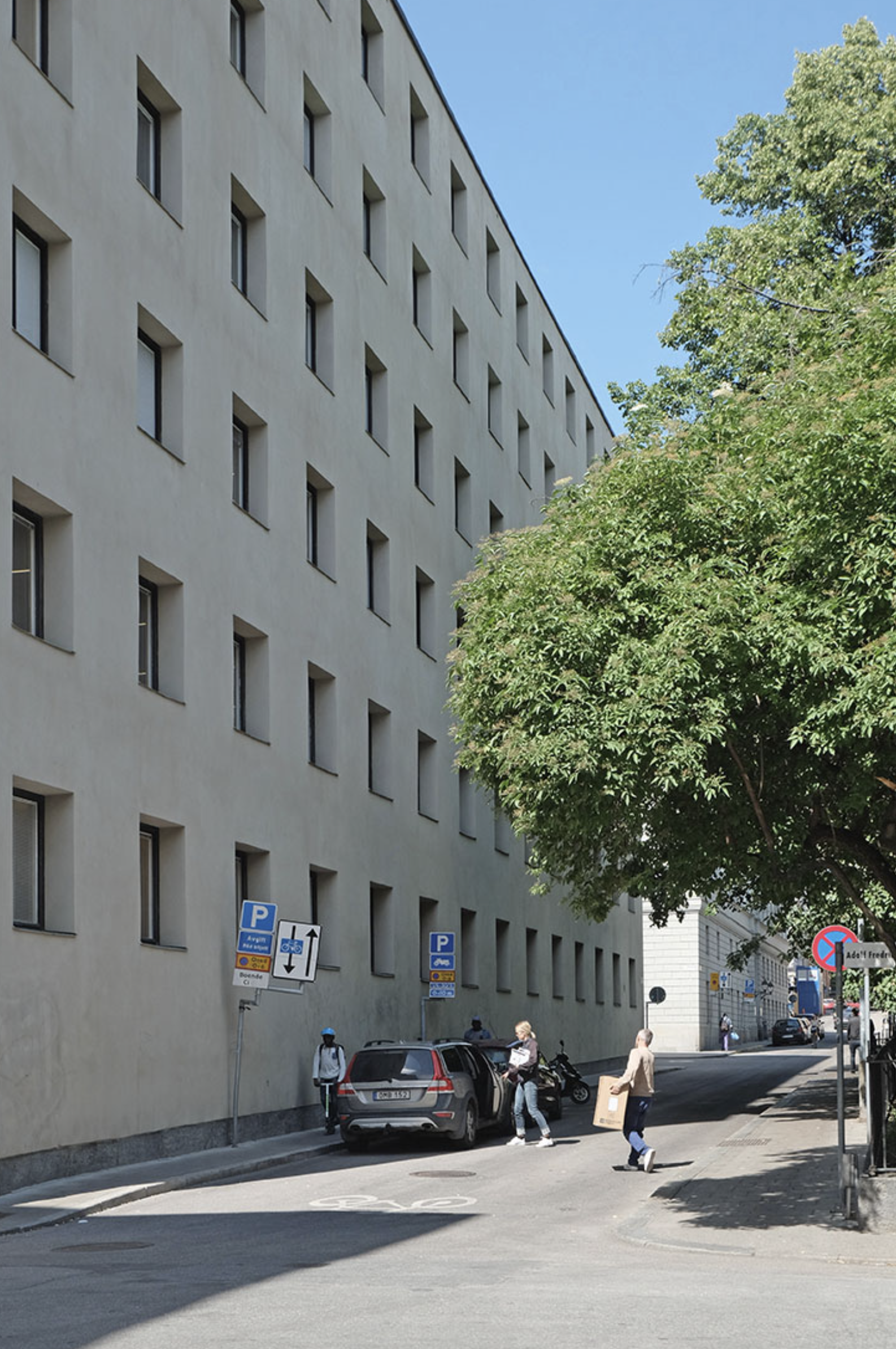
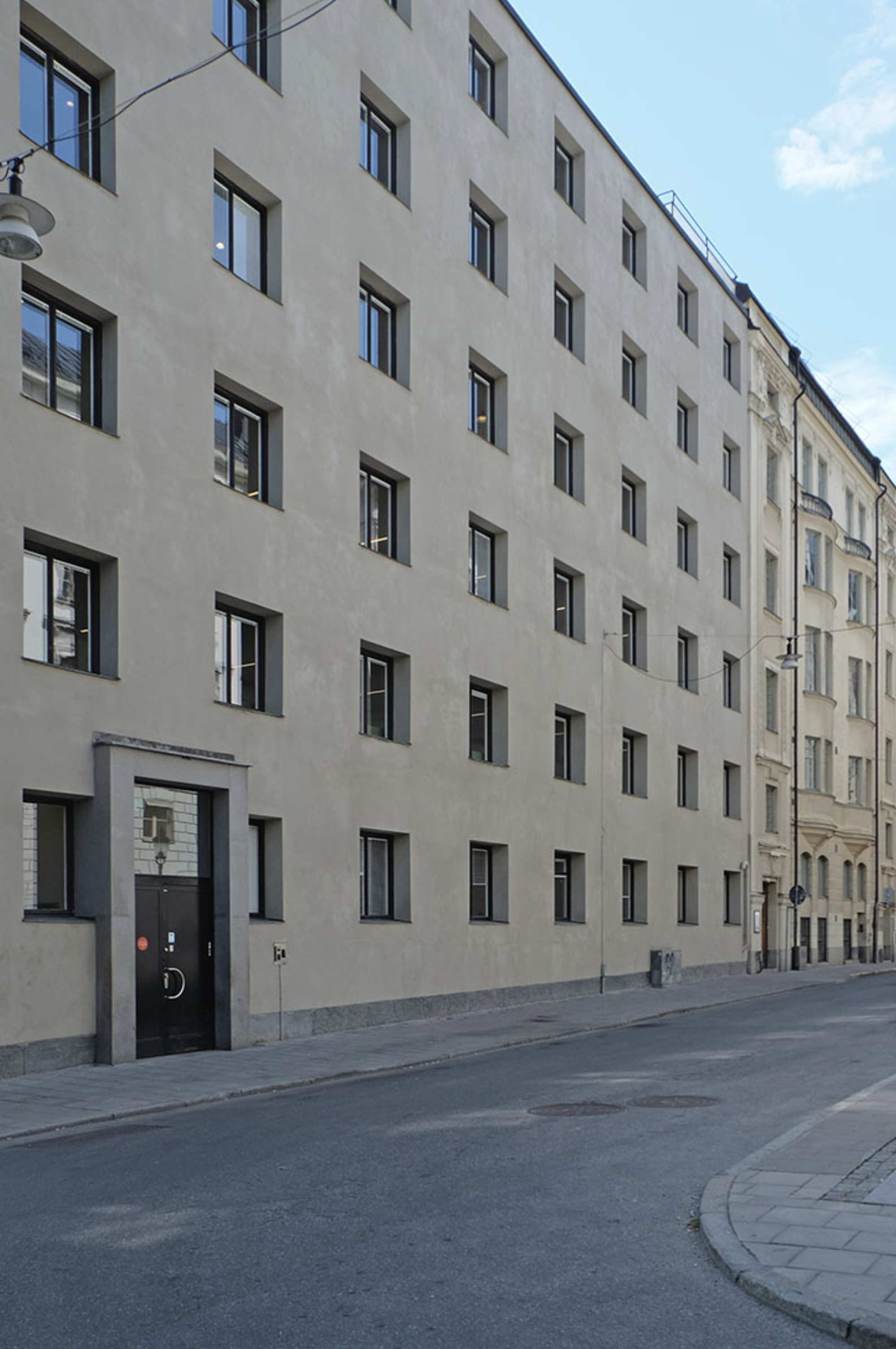
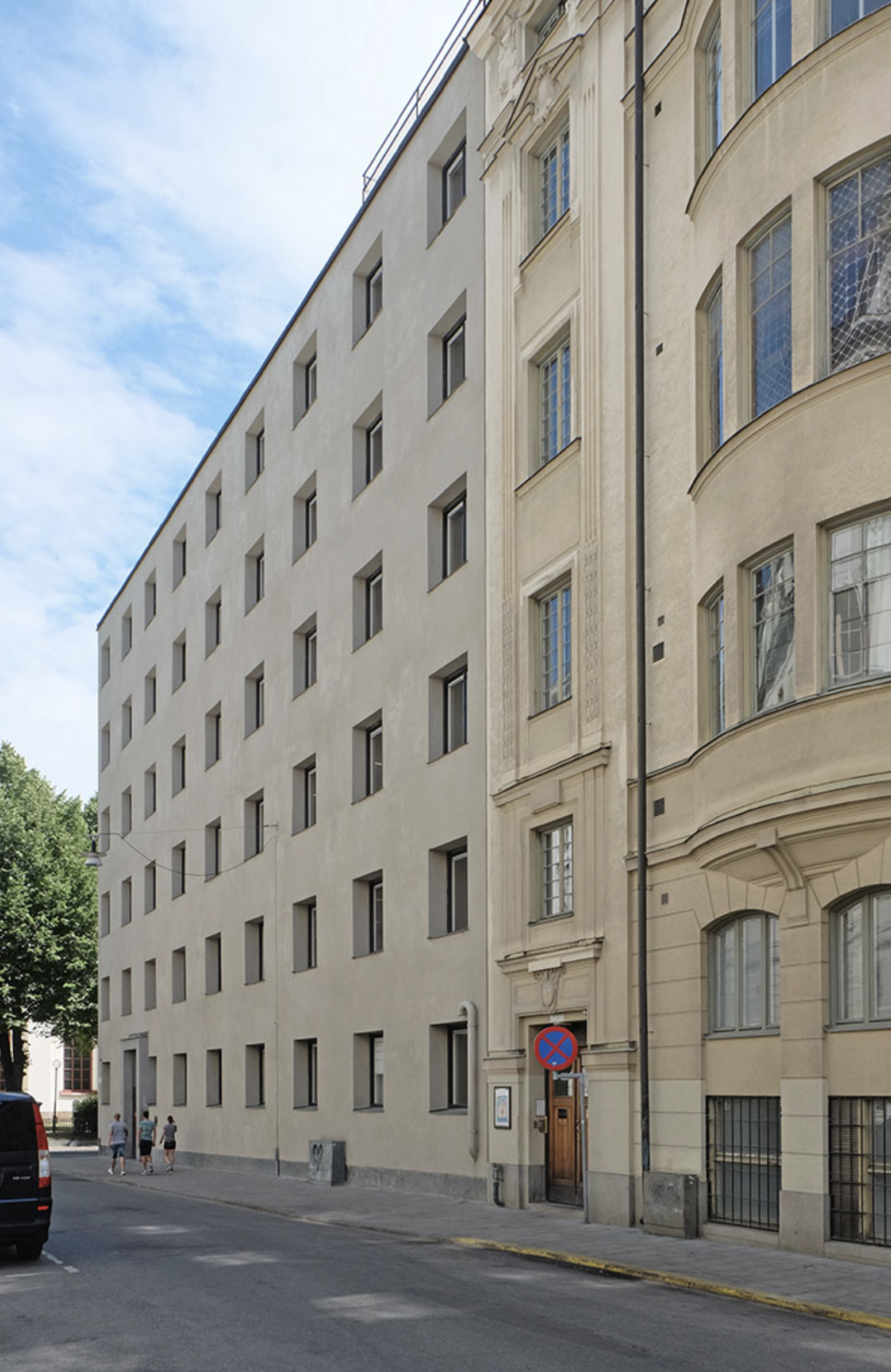
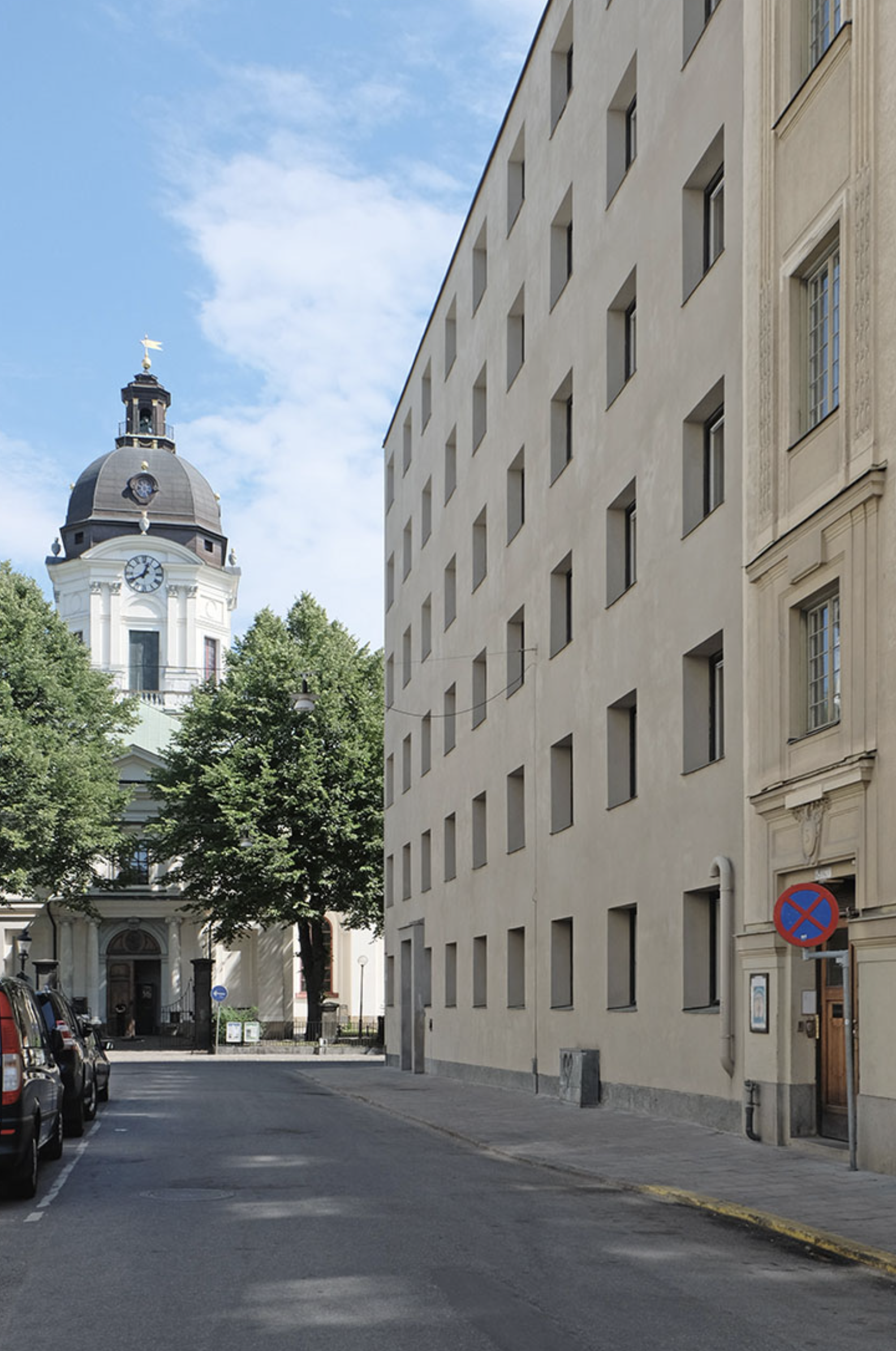
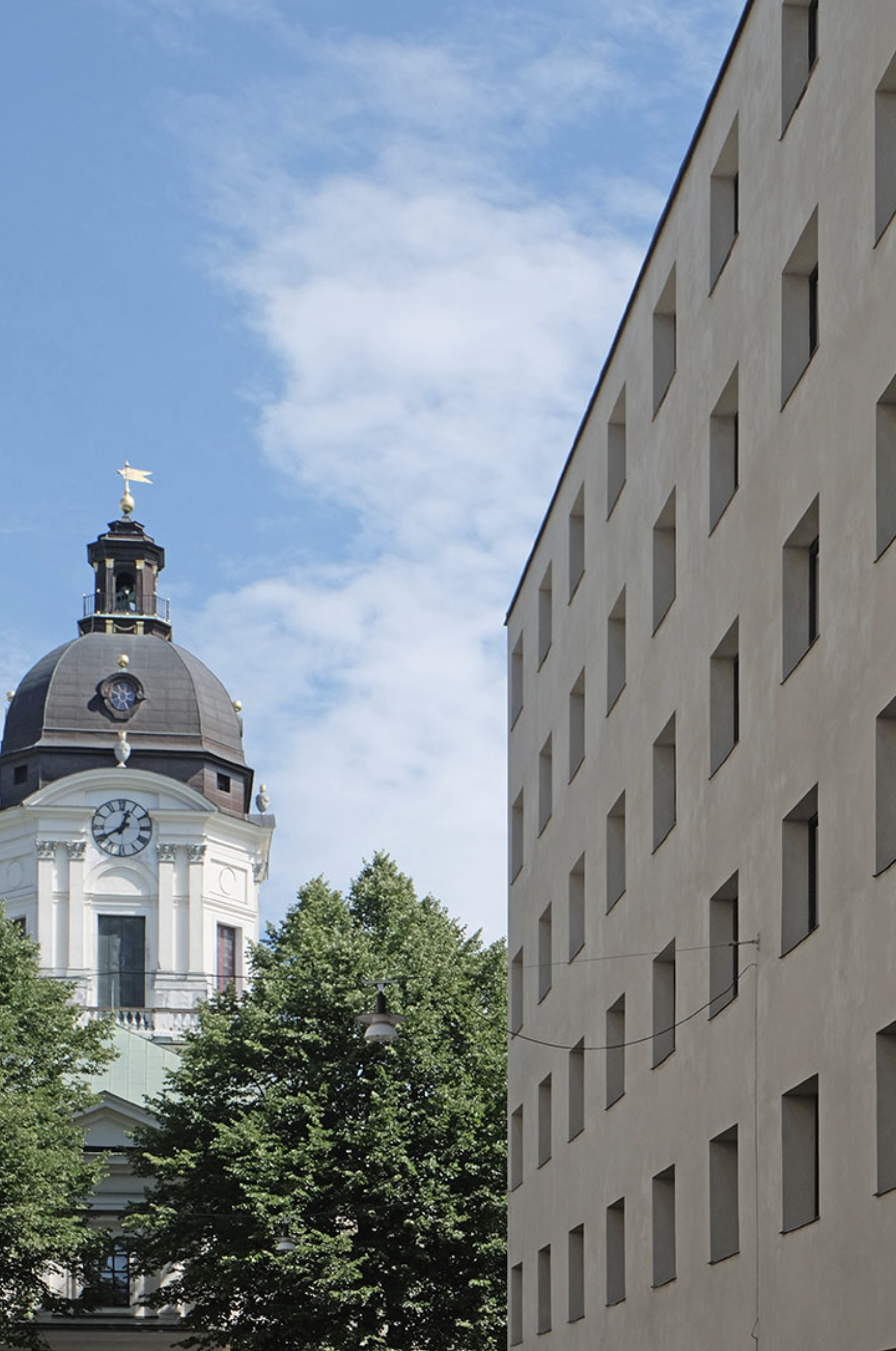
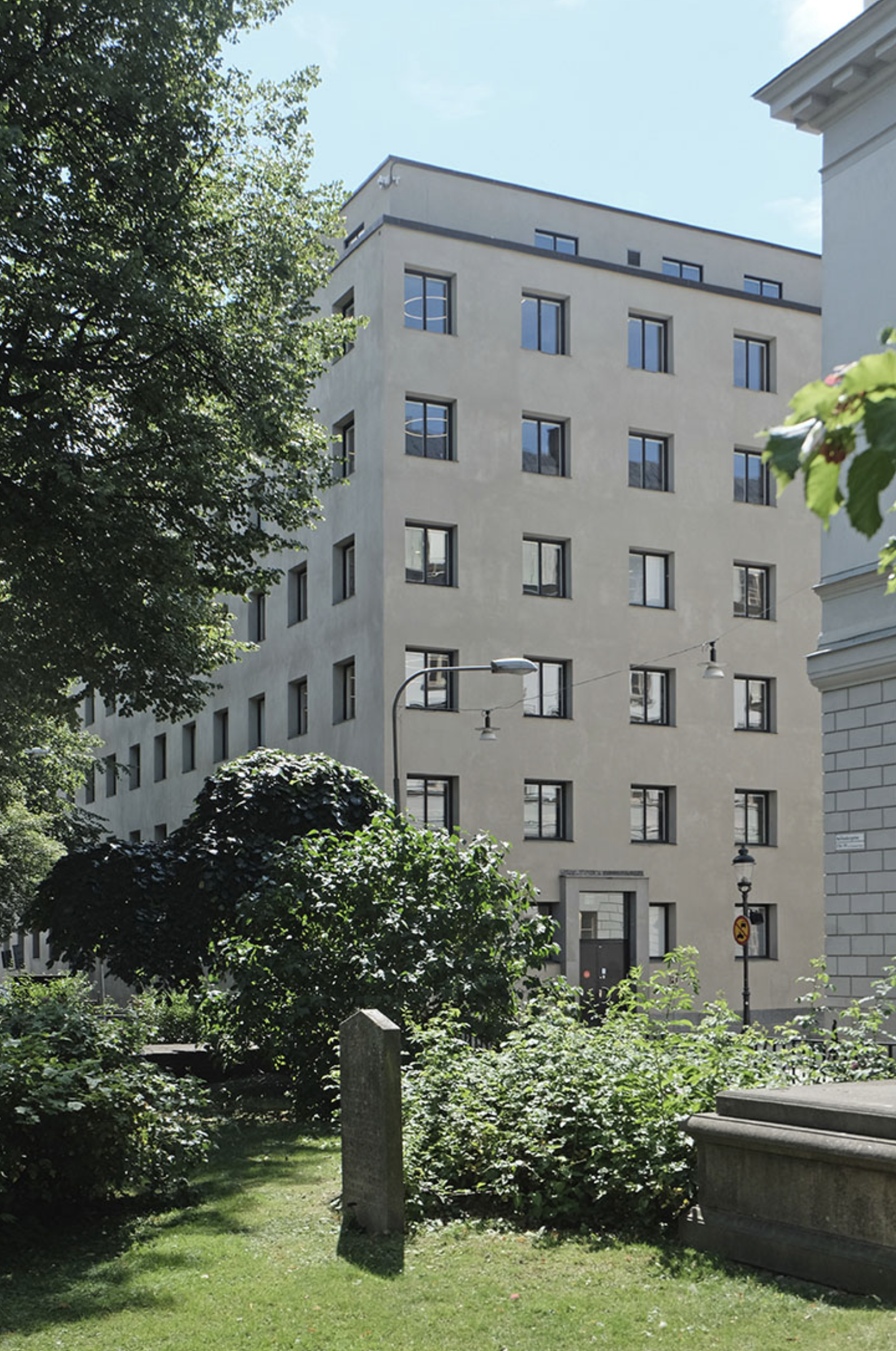
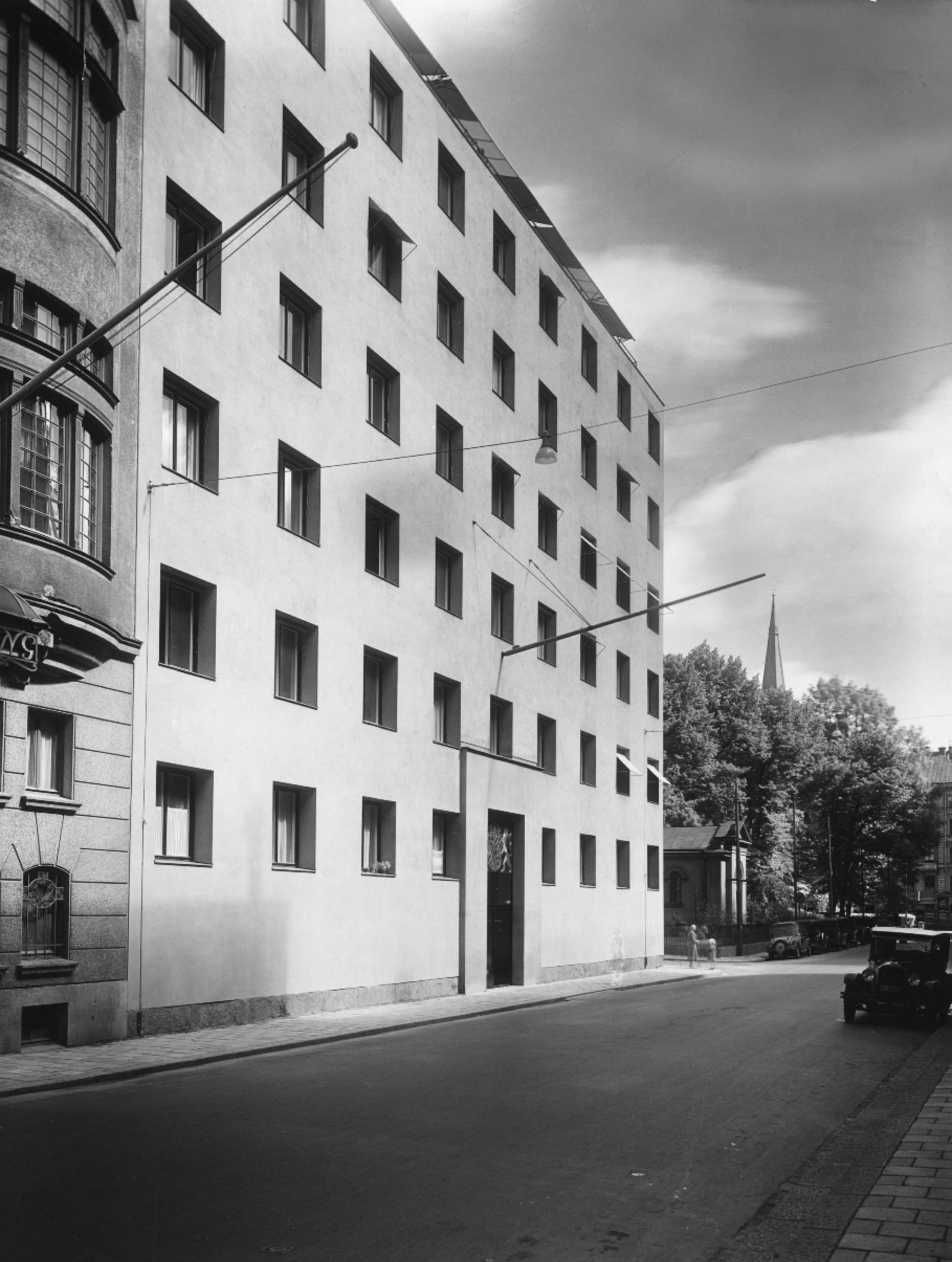
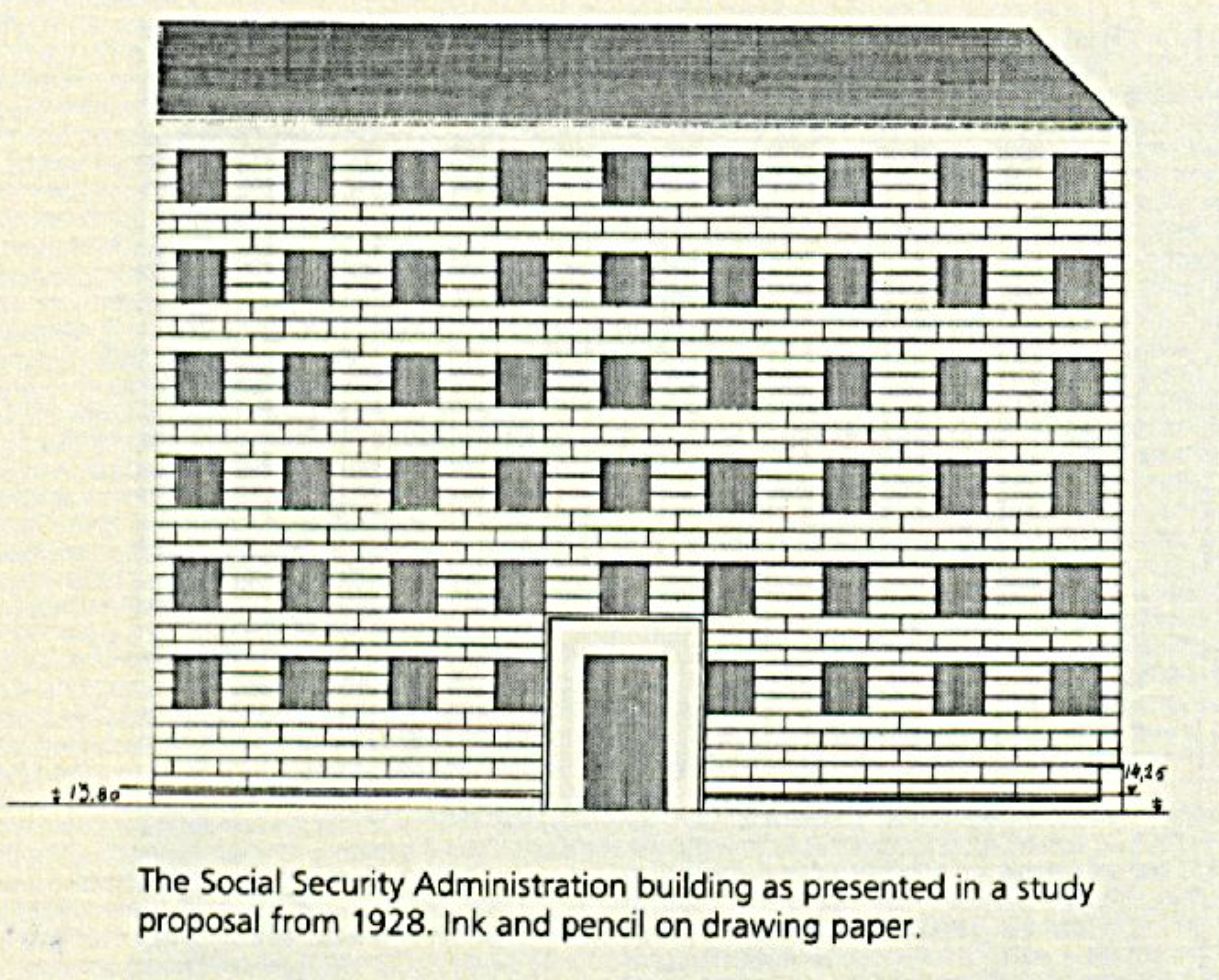
Lewerentz’ winning proposal was a further elaboration of sketches from 1928. The main entrance was on the quiet Wallingatan, which acted as a sort of forecourt. The building was set on a plinth of coarsely hewn granite to a level with the embrasures of the first floor windows. Above, the facade was rendered in light stucco, terminating in a cornice of finely hewn granite. The sloped portions of the roof were clad in copper.
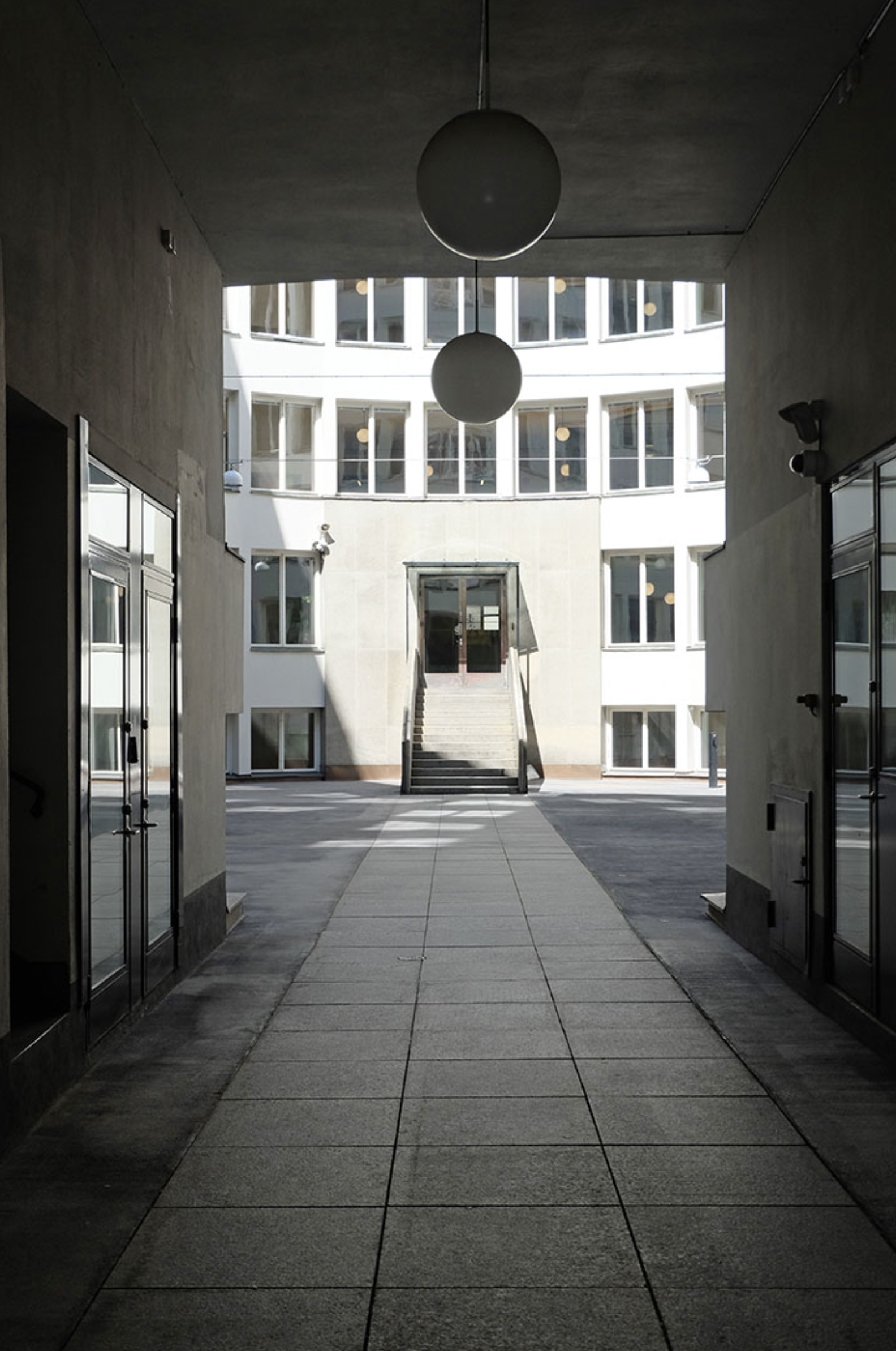
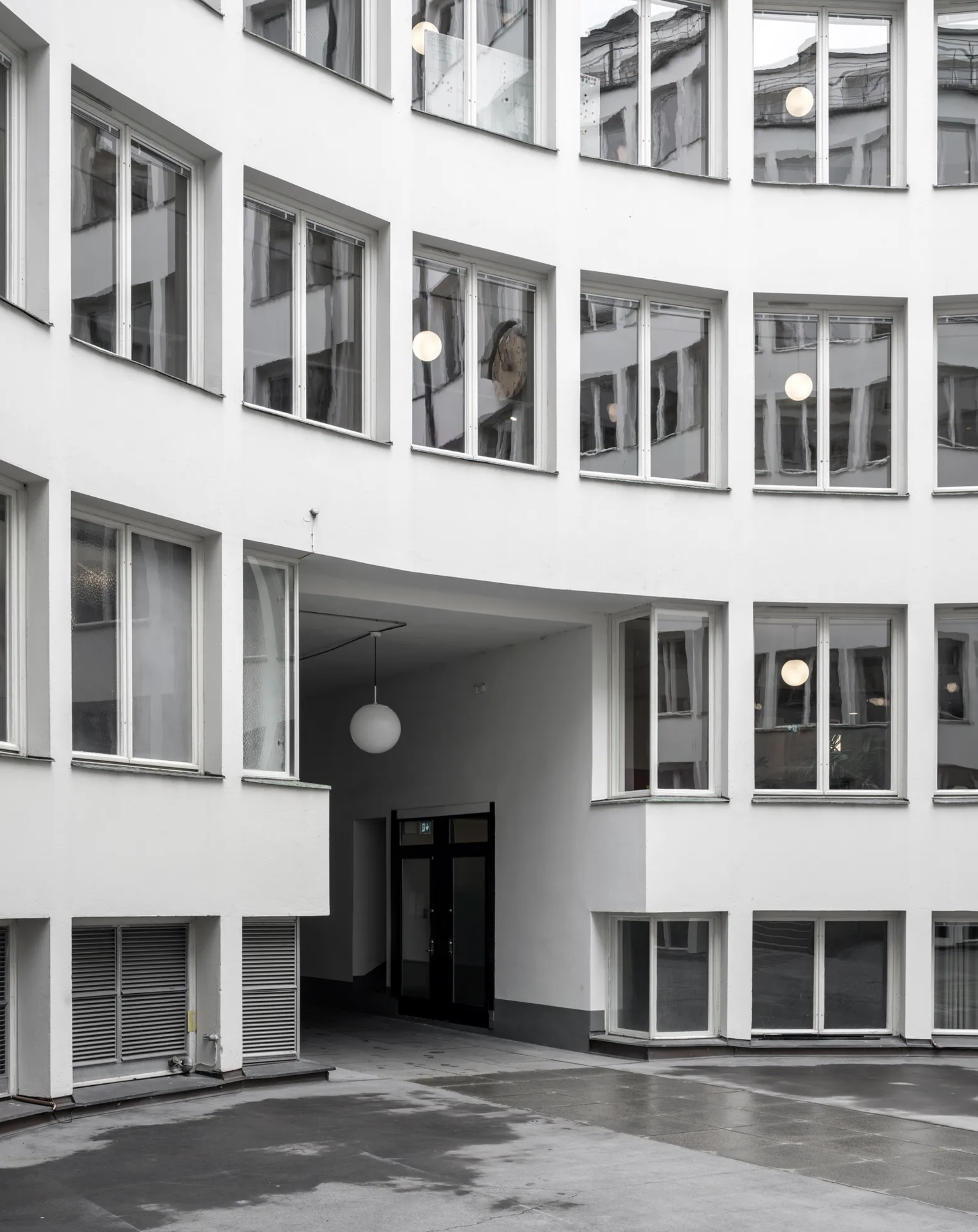
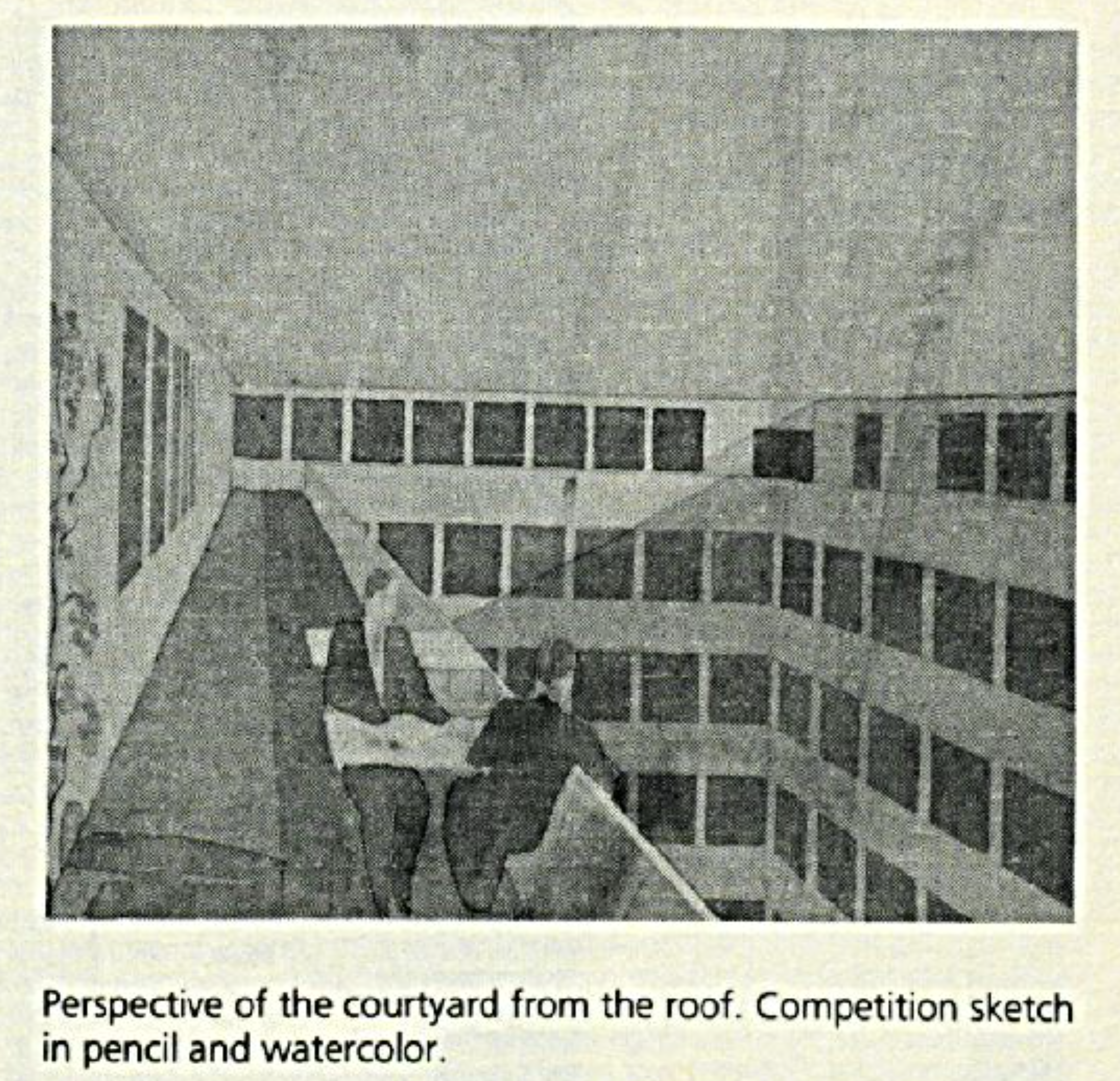
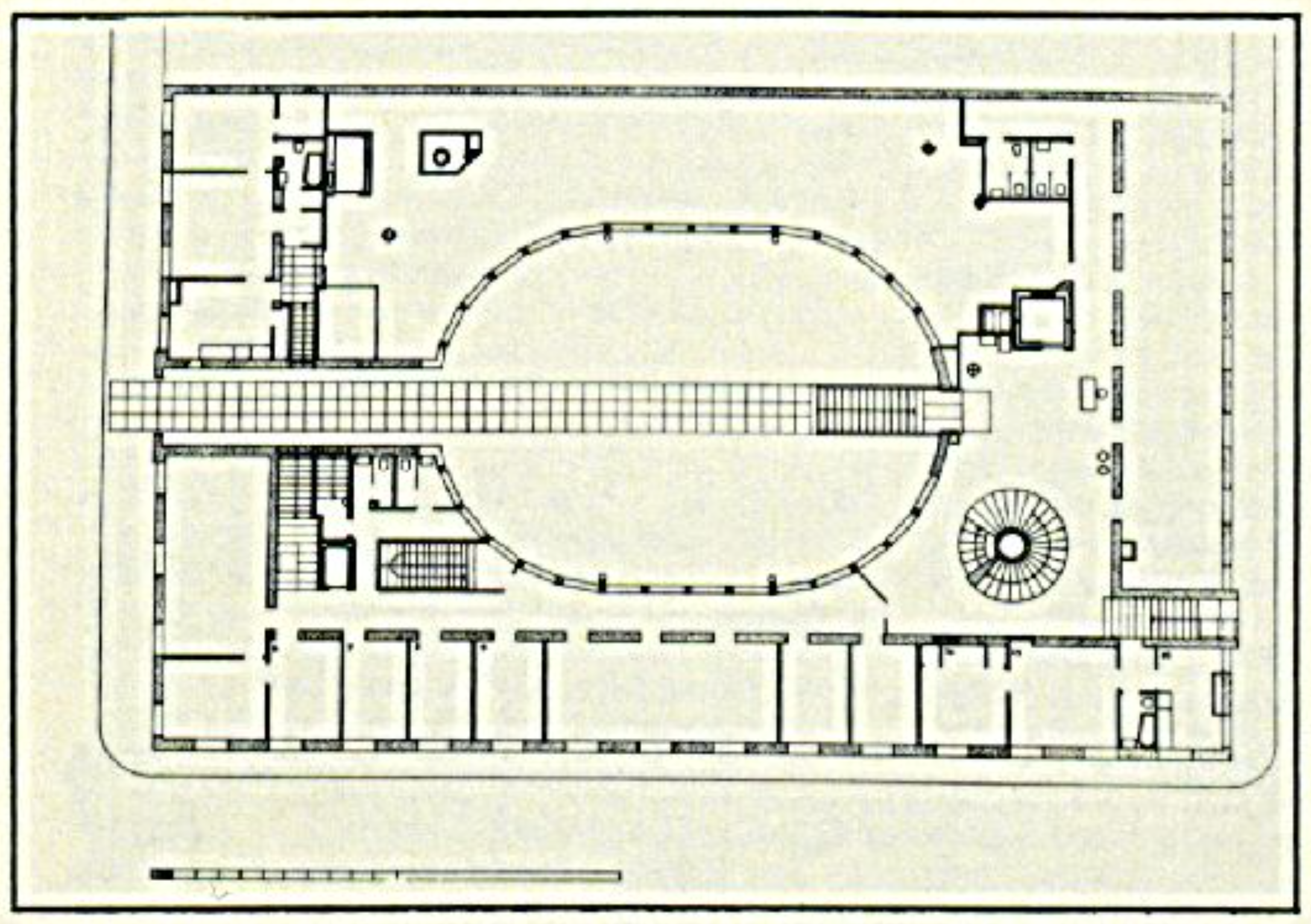
Entrances to the various spaces were from a light-filled courtyard, the floor of which was in part constructed of glass blocks set in frames, giving light to spaces below, and for the rest was paved in white marble.
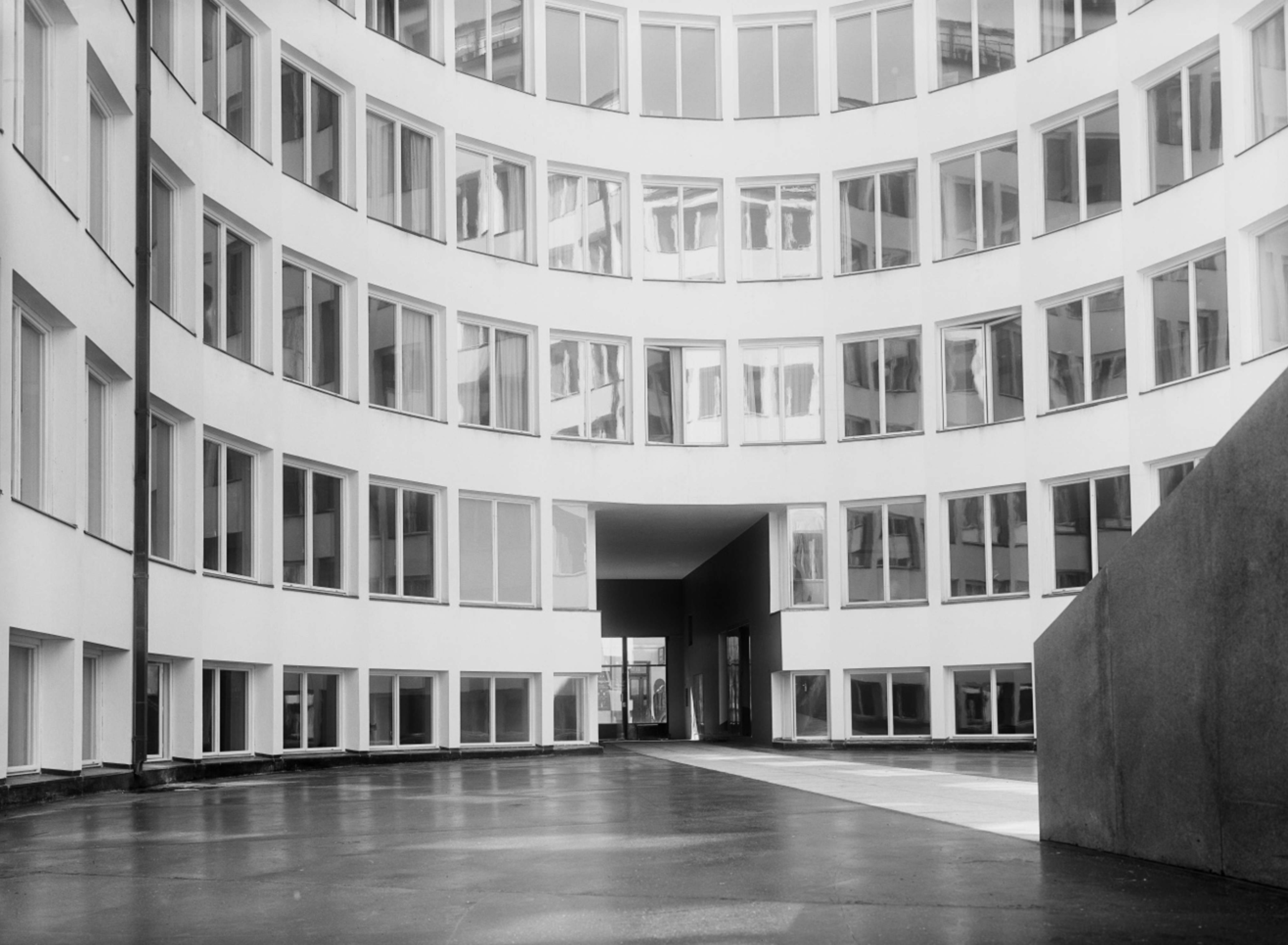
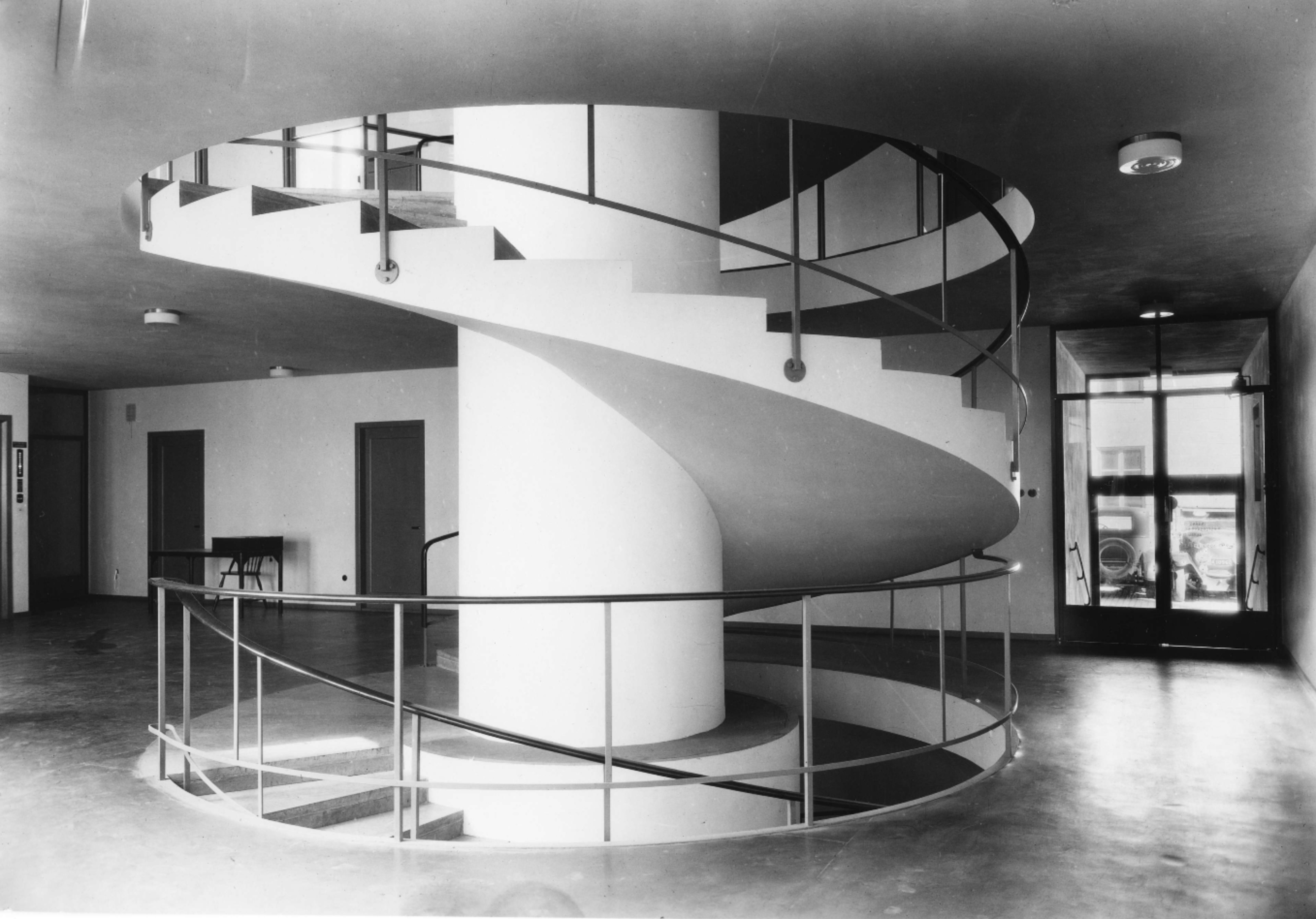
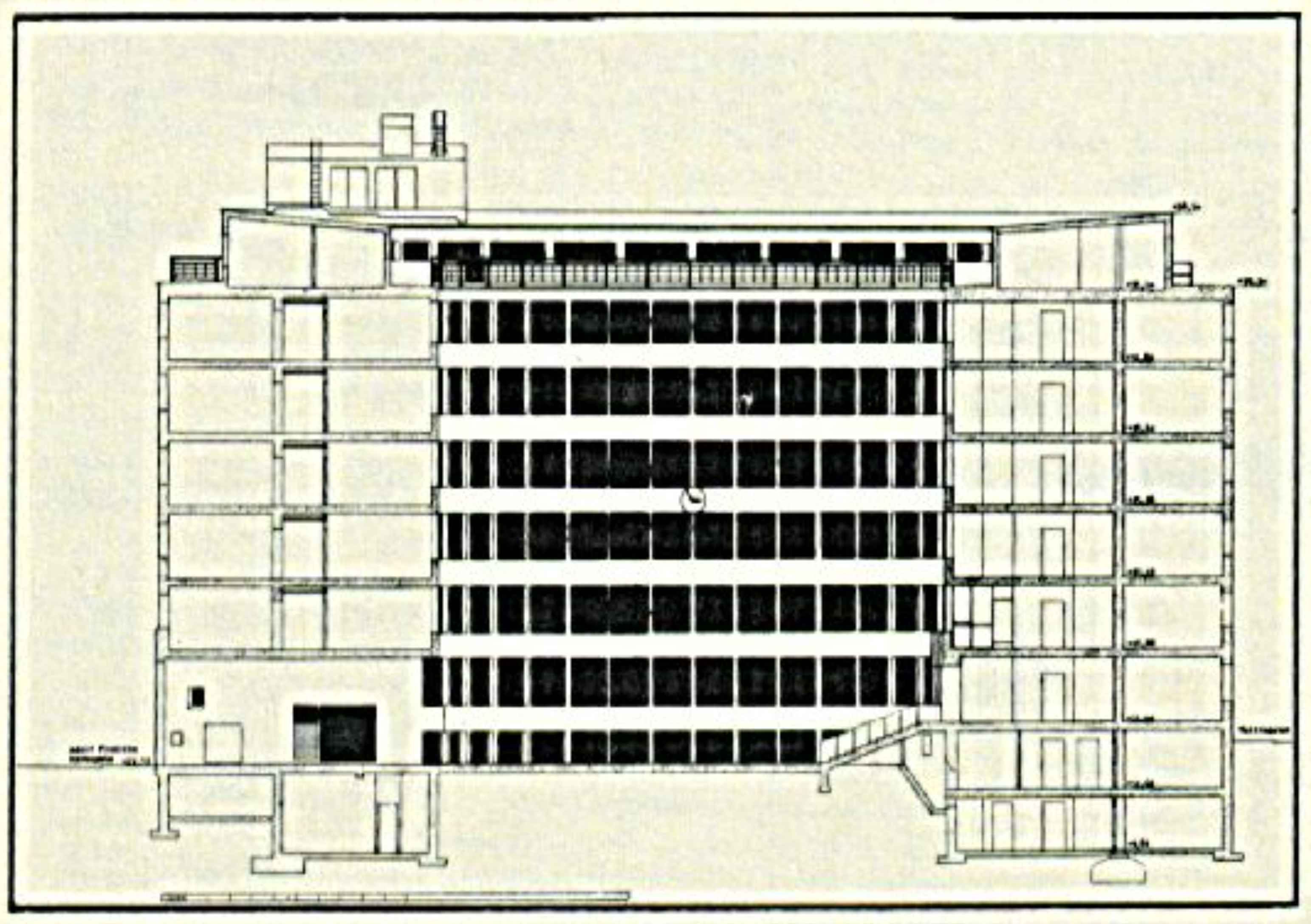
The competition led immediately to the commission. In his intensive sketch development, Lewerentz moved between different classical tendencies. The slopes of the roof were made more visible, the stucco finish was rusticated, and the courtyard was made oval and symmetric. In the end he returned to the smoothly plastered and solidly cubic building in a functionalist style with the penthouse level set back. The oval-shaped courtyard was retained, but the entry was turned toward Adolf Fredriks Kyrkogata. The courtyard became the building’s most important room, and was clad in light marble.
The building was at first to be of a steel frame construction with curtain walls in reinforced concrete. For reasons of economy, only the courtyard was constructed in this manner, while the street facades were of a more traditional construction.
Lewerentz focused upon two questions, and in these he was a functionalist: one concerned lighting, the other had to do with the utilization of his own inventions.
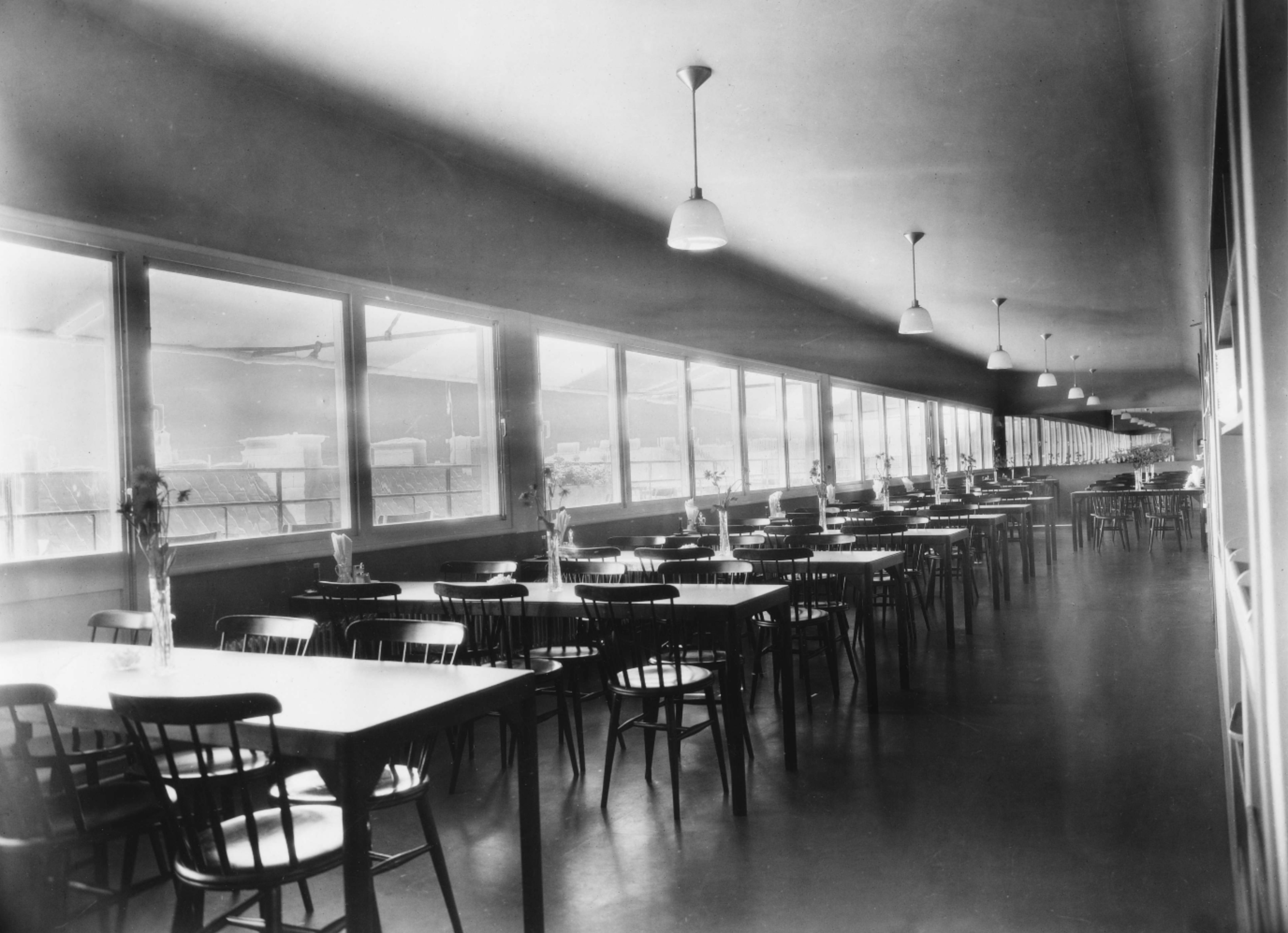
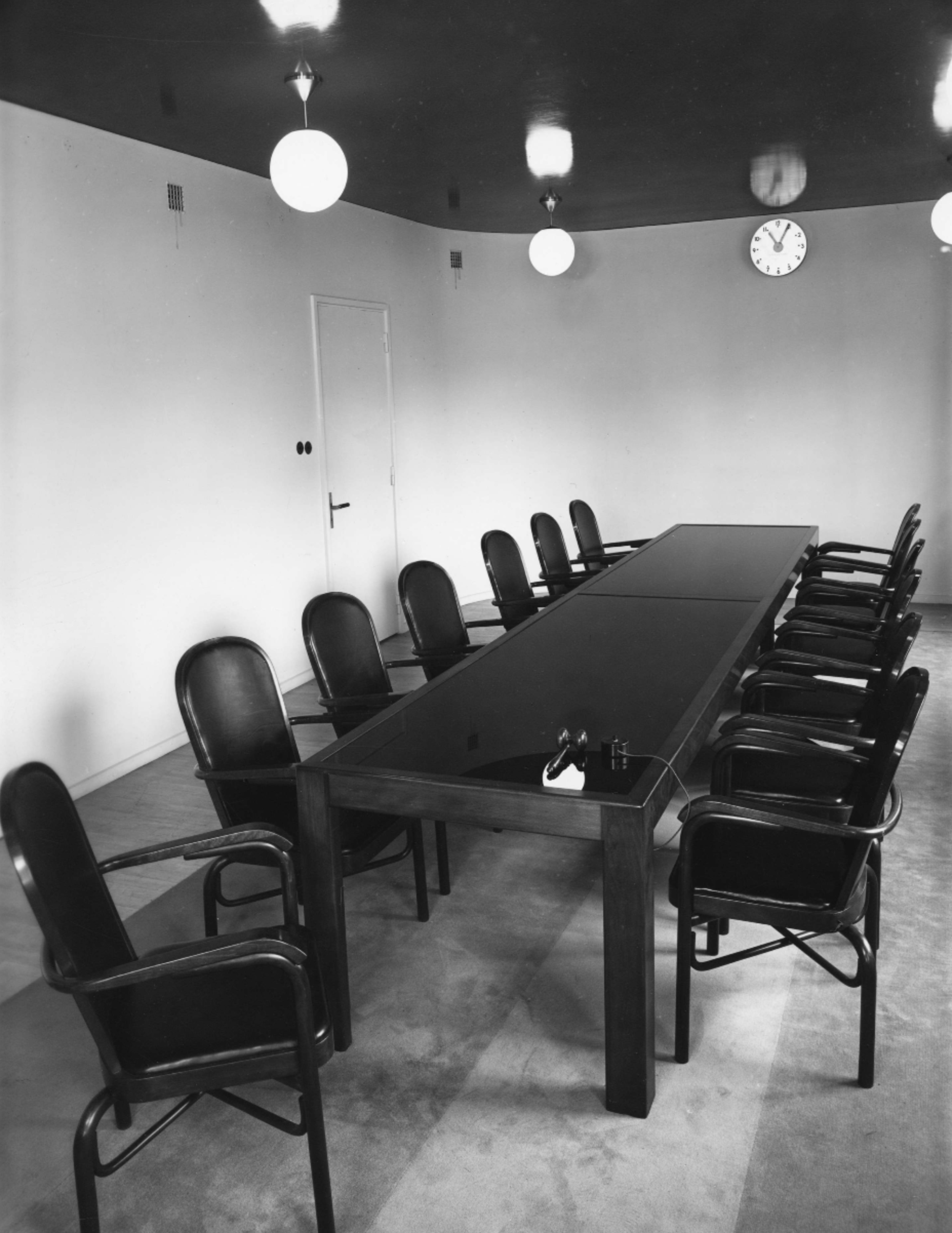
The building was meant as a place of work, and in Lewerentz’ opinion, the light should be generally and evenly distributed. Consequently, the windows onto the courtyard are larger than those onto the streets, compensating for its more limited daylight. Electric lighting was evenly distributed in points to avoid the need of task lighting as well as to allow flexibility in furniture arrangements. Walls and ceilings were in an off-white tone, while the floor covering was a dark, almost black linoleum.
The building allowed opportunities to investigate a number of innovations in doors, windows, and partitions. These were manufactured according to Lewerentz’ own patents and were marked by great simplicity and durability. The detail which Lewerentz himself would mention was in the employees’ coatroom. He divided the space into stalls with dividing walls of steel and wire mesh. Doors to these were self-closing, and each employee was given a key. The system proved to be inexpensive, and demonstrated how Lewerentz succeeded in keeping himself within the framework of a tight budget. He noted with satisfaction that he had kept within the means allotted by the Parliament down to the penny.
Ahlin, Janne, Sigurd Lewerentz, Architect, 1885–1975, The MIT Press, Cambridge, Mass, Massachusetts, 1987 |