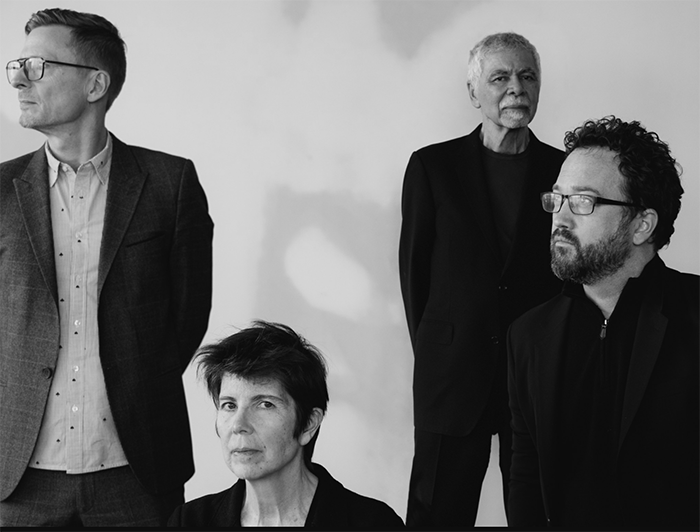
Founded 1979 in New York City (Elizabeth Diller, Ricardo Scofidio and Charles Renfro). Live and work in New York City.
Diller Scofidio + Renfro is an interdisciplinary studio whose work encompasses architectural design, master planning, temporary and permanent multimedia installations, experimental theatre and dance, furniture, digital media and print. Their projects incorporate elements of nature in various ways. One of Diller Scofidio + Renfro’s most celebrated projects using a natural element is The Blur Building, 2002, a structure in the form of a fog mass. Situated at a breathtaking location above a lake, the lightweight construction is covered by a fine mist using water pumped from the lake below. A computerised system reads climatic conditions such as temperature, humidity, wind-speed and direction, regulating the water pressure accordingly. Similarly, an undeveloped waterfront tract inspired Waterfront Park, 2003, a speculative project for New York’s East River. It was conceived as a 24-hour, year-round, mixed-use development incorporating recreational, retail and cultural activities. The plan for the park comprised a series of floating and pile-supported blocks connected by elevated bridges, each block intended to host a water-based area such as a fish farm, a tidal pool or an urban beach.
Much of Diller Scofidio + Renfro’s work seeks to reconsider conventional distinctions between nature and artifice. One such example was Rapid Growth, 2001, an unrealised project for the terrace of the Philadelphia Museum of Art. It comprised a computerised mobile landscape of 10 motorised grass mounds (containing one specimen tree each) whose movements were conceived in response to surrounding stimuli such as the density of people and the location of sunlight. Similarly, Arbores Laetae, 2008, at the Liverpool Biennial International Festival of Contemporary Art, consisted of a small grove of hornbeam trees, three of which were planted at a 10-degree bias within a large turntable. Moving at different speeds, the trio occasionally brushed against each other, resulting in a disorienting and playful experience for visitors. Landscape was again employed for the architects’ project High Line, 2009, a 2.5 kilometre-long public park on an obsolete elevated railroad in New York. Inspired by the way in which nature had reclaimed this abandoned post-industrial stretch, the park is designed as a string of site-specific microclimates, including shady, sunny, wet, dry, windy and sheltered. Pre-cast concrete planks with open joints are intended to encourage the emergent growth typical of every metropolis. The park is conceived as an otherworldly place of respite from the frenetic city below.
Radical nature: art and architecture for a changing planet 1969-2009, London: Barbican Art Gallery, Koenig Books ; New York, N.Y., 2009 |