|
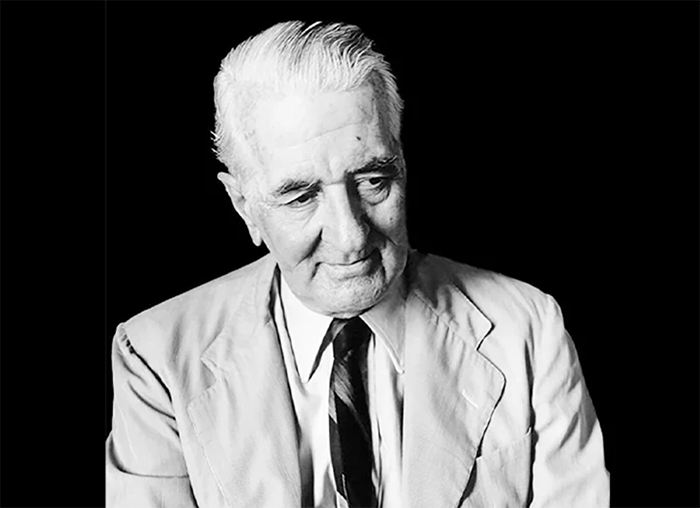
| SEDAD HAKKÍ ELDEM |
| |
| |
|
| |
| |
 |
|
Name |
|
Sedad Hakkı Eldem |
| |
|
|
|
| |
Born |
|
August 31, 1908 |
| |
|
|
|
| |
Died |
|
September 7, 1988 |
| |
|
|
|
| |
Nationality |
|
Turkey |
| |
|
|
|
| |
School |
|
|
| |
|
|
|
| |
Official website |
|
|
| |
|
|
| |
| BIOGRAPHY |
|
|
|
|
| |
|
Sedad Hakkí Eldem was the leading proponent of a regionalist and tradition-conscious
modernism in 20th-century Turkish architecture. Born in Istanbul as the descendent of an elite Ottoman family, Eldem spent his childhood in Geneva, Zurich, and Munich, where his father served as an Ottoman diplomat. He studied architecture in the Imperial School of Fine Arts in Istanbul (1924–28; the school was established in 1882 by his great-uncle Osman Hamdi Bey), which was based on the École des Beaux-Arts. After graduation, he spent two formative years in Europe (1928–30), visiting the offices of Le Corbusier and August Perret in Paris and working with Hans Poelzig in Berlin. His beautifully rendered sketches, titled “Anatolian Houses,” dating from this period also reflect his fascination with Frank Lloyd Wright’s prairie houses, which were inspirational for his own vision of the modern Turkish house. In 1931, he returned to Istanbul to start his own practice and joined the faculty at the Academy, where he taught continuously for 48 years.
Eldem’s architectural training at the Academy coincided with the end of the Ottoman revivalist (or national style) in Turkey. By 1930, that style was replaced by the International Style-influenced German and Austrian modernism of Ankara, the symbol of the new Kemalist Republic. Critical of the academicism of the former and the formal sterility of the latter, Eldem posited the traditional Turkish residential vernacular as the only viable source of a modern and national architecture. He devoted a lifetime to the theorization, codification, and promotion of the “Turkish house” as a distinct cultural and plastic type spread throughout the vast territories of the Ottoman Empire, especially in Istanbul, the Balkans, and northern Anatolia. In 1934, he established the National Architecture Seminar at the Academy to study and document hundreds of such traditional houses, which, he argued, already embodied modernist qualities in the rationality of their floor plans and the constructional logic of the timber frame clearly manifest in their facades. Although much of this material perished in the Academy fire of 1948, it constitutes the core of his Türk Evi Plan Tipler i (1954; Plan Types of Turkish Houses) and his monumental Türk E v i (1984; Turkish House), conceived in five volumes. In addition to these seminal works, Eldem published numerous monographs on individual pavilions, kiosks, and houses of Istanbul as well as a two-volume documentary of the city’s engravings and old photographs.
Eldem’s early built works were largely private houses in Istanbul based on traditional Turkish plans and displaying the characteristic tile roofs, wide overhanging eaves, and modular repetition of projecting windows above the ground floor. These features became his distinct personal style, which he elaborated in numerous private villas for wealthy clients, mostly along the banks of the Bosphorous, well into the 1980s. In most examples, the modular grid that acted as the generator of the plan, and the facade versus the in-fill panels within the grid were distinctly articulated in different materials and colors. His masterpiece, the paradigmatic Taslík Coffee House in Istanbul (1950; demolished in 1988 and rebuilt on an adjacent site), is a reinforced concrete replica of a 17th-century shore mansion on the Bosphorous.
The larger and more monumental public buildings of Eldem’s early career were also informed by his quest for a rationalist conception of modern Turkish architecture. Working in partnership with Emin Onat and in close association with Paul Bonatz, Eldem became the leading proponent of what was termed “National Architecture Movement” in the 1940s, epitomized by the Faculties of Sciences and Letters of the University of Istanbul (1942–44). This building is organized around a series of open courtyards and displays the classicizing tendencies of the period in its use of monumental tall colonnades and stone facing. The main facade is an elongated version of Eldem’s Turkish house idea, blown up in scale and lifted above a monumental colonnade on the ground level with clear allusions to Paul Bonatz’s Stuttgart Railway Station (1912–28). In the courtyards, Eldem adopted the Ottoman walling technique of alternating brick and stone layers, also used by Bruno Taut in the Faculty of Humanities Building in Ankara (1937–38).
The most acclaimed scheme of Eldem’s long career, however, was the Social Security Administration Complex in Zeyrek, Istanbul (1962–64), which won an Aga Khan Award in 1986. The program is skillfully scaled down and fragmented into smaller blocks, and the scheme conforms to the topography of the triangular site sloping toward the old neighborhoods of Zeyrek, with its narrow streets and wooden houses. In its sensitivity to the scale and architectural character of one of the few remaining traditional neighborhoods in Istanbul, the design marks the shift in Eldem’s attitude from the more monumental nationalist classicism of the 1940s to a more contextualized modernism of the 1960s.
SIBEL BOZDOGAN
Sennott R.S. Encyclopedia of twentieth century architecture, Vol.1. Fitzroy Dearborn., 2005.
|
| |
| |
| |
| |
| |
| |
| |
| TIMELINE |
|
|
|
|
| |
|
1908 Born Ömer Sedad in Istanbul, 18 August;
1924-28 Studied architecture, Academy of Fine Arts, Istanbul;
1928-30 Traveled and studied in Paris, Berlin, and England;
1929-30 Worked in the office of Hans Poelzig, Berlin;
1930 Member, Faculty of Architecture, Academy of Fine Arts, Istanbul;
1931 Private practice, Istanbul;
1931-41 Member, and chairman for several years, Central Committee of Antiquities, Istanbul;
1932 Member, Union of Fine Arts, Istanbul;
1934 Adopted family name of Eldem;
1934 Created National Architecture Seminar, Academy of Fine Arts, Istanbul;
1934-54 Member, Turkish Architects’ Union, Istanbul;
1941 Married Fahire Hanim;
1941-45 Member, Central Committee for the Protection of Cultural Properties, Istanbul;
1941-46 Head of department, Faculty of Architecture, Academy of Fine Arts, Istanbul;
1944 Head, Design Bureau for Major Projects, Ministry of National Education, Istanbul;
1946 Honorary fellow, Royal Institute of British Architects;
1954 Member, Turkish Chamber of Engineers and Architects, Istanbul;
1962-78 Member, Council of the Monuments and Sites, Istanbul;
1978-88 Member, Turkish Foundation for Environmental and Historical Protection, Istanbul;
1986 Aga Khan Award for Architecture;
1988 Died in Istanbul, Turkey, 7 September. |
| |
| |
| |
| |
| |
| |
| |
| FURTHER READING |
|
|
|
|
| |
|
Selected Publications
Bursa Evleri, 1948
Yapi: Geleneksel Yapi Metodlari, 1954
(with F. Akozan and K. Anadol), 1967
Köşkler ve Kasırlar, 1968
Anadoluhisarı'nda Amucazade Hüseyin Paşa Yalısı, 1969
Köşkler ve Kasırlar II, 1970
Türk Mimari Eserleri, 1974
(with F. Akozan and K. Anadol), 1975
Sa’dabad, 1976
İstanbul Anıları, 1977
Boğaziçi Anıları, 1977
(with F. Akozan), 1979
Sedad Hakkı Eldem: 50 Yıllık Meslek Jübilesi, 1982
Further Reading
Bozdoğan, Sibel, “Profile: Sedad Hakkı Eldem,” Mimar
Bozdoğan, Sibel, “The Legacy of An Istanbul Architect: Type, Context and Urban Identity in Sedad Eldem’s Work,” in Die Architektur, Die Tradition und Der Ort, edited by Vittorio M. Lampugnani, Ludwigsburg: Wüstenrot Stiftung, 1999
Bozdoğan, Sibel, Suha Özkan, and Engin Yeral, Sedad Eldem: Architect in Turkey, Singapore: Concept Media, and New York: Aperture, 1987
Eldem, Sedad Hakkı (editor), Sedad Hakkı Eldem: 50 Yıllık Meslek Jübilesi (Sedad Hakkı Eldem: 50 Years in the Profession), Istanbul: Mimar Sinan Üniversitesi, 1983
MORE BOOKS |
| |
| |
| |
| |
| |
| |
| |
| RELATED |
|
|
|
|
| |
|
ISTANBUL; |
| |
|