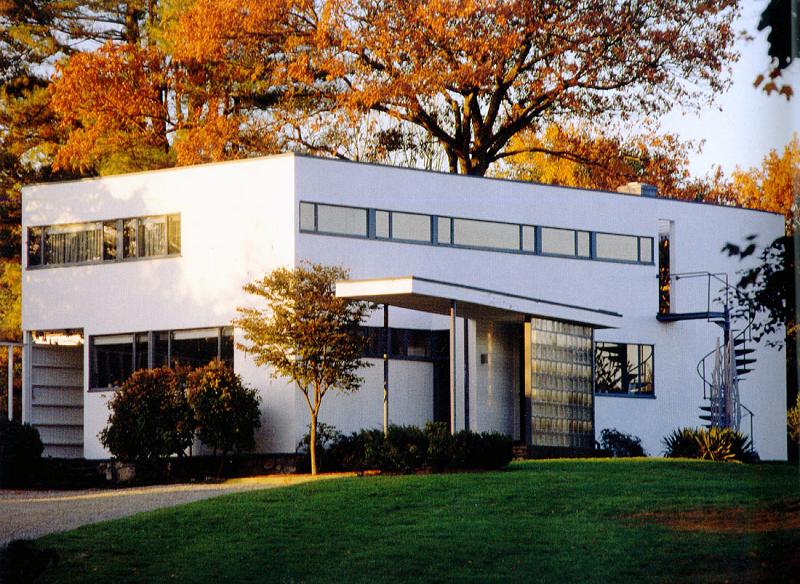
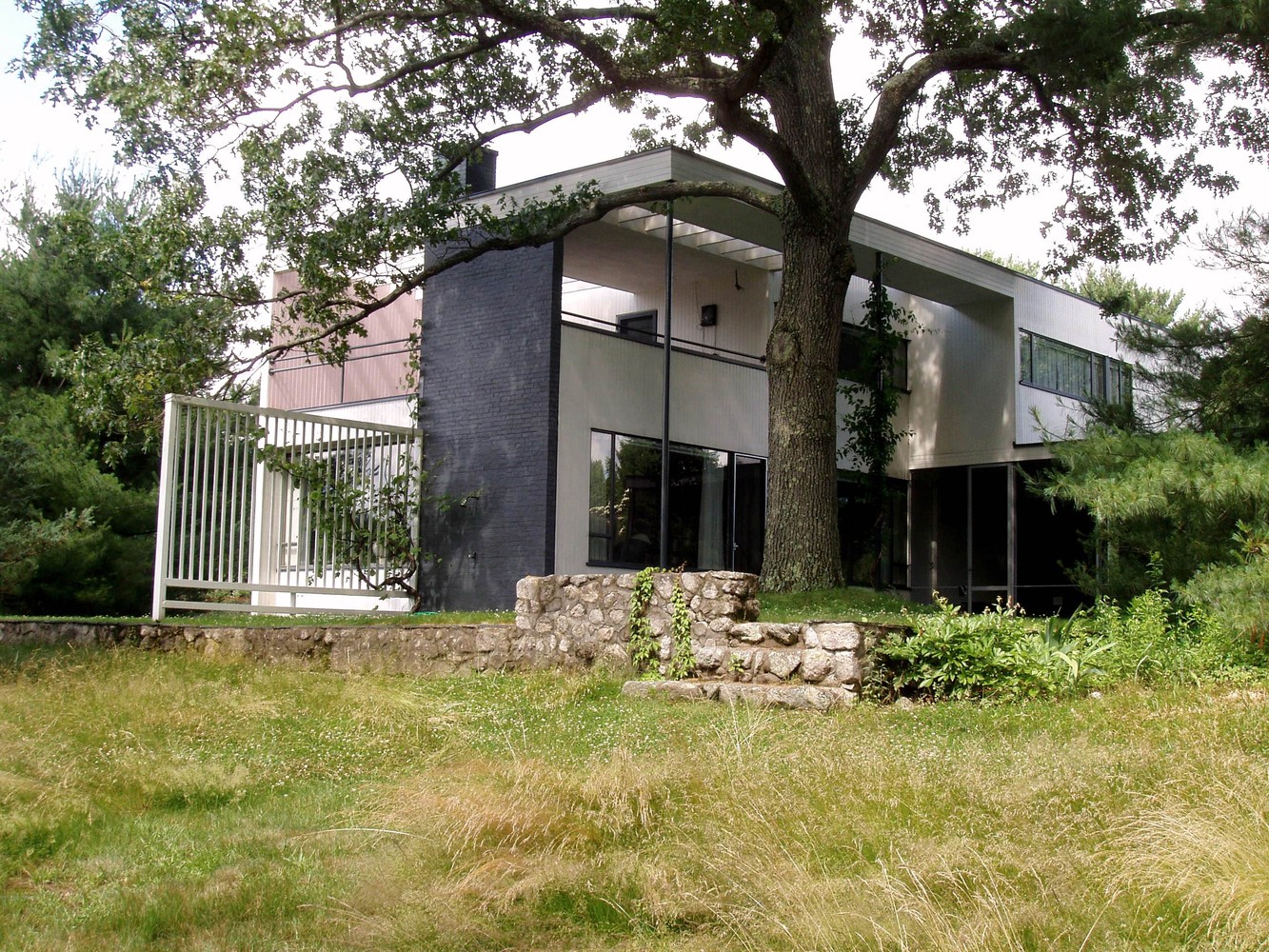
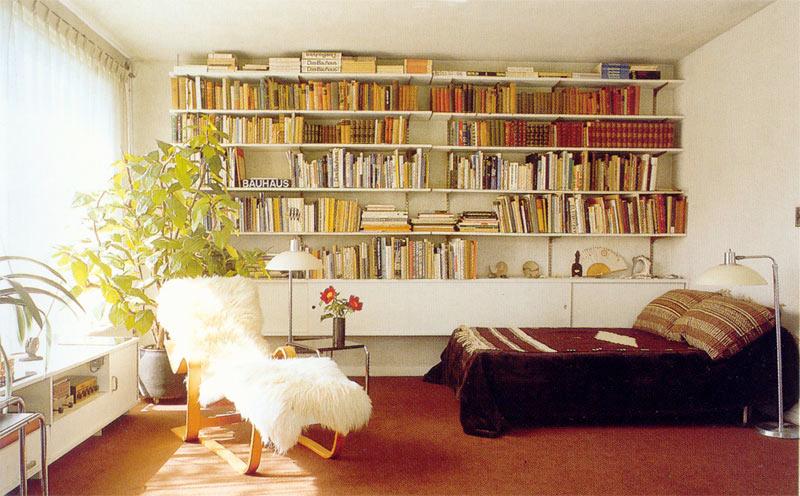
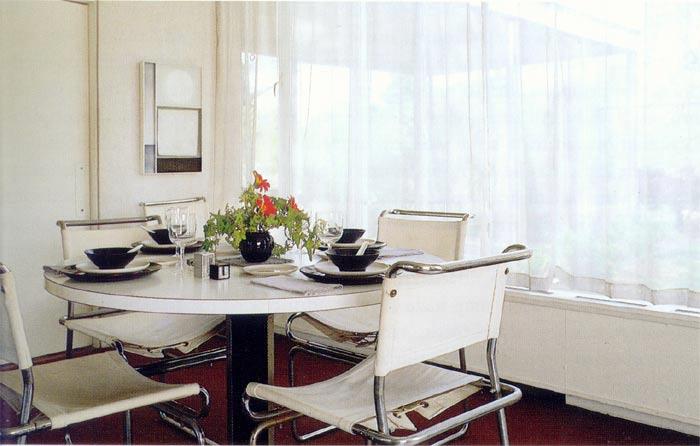
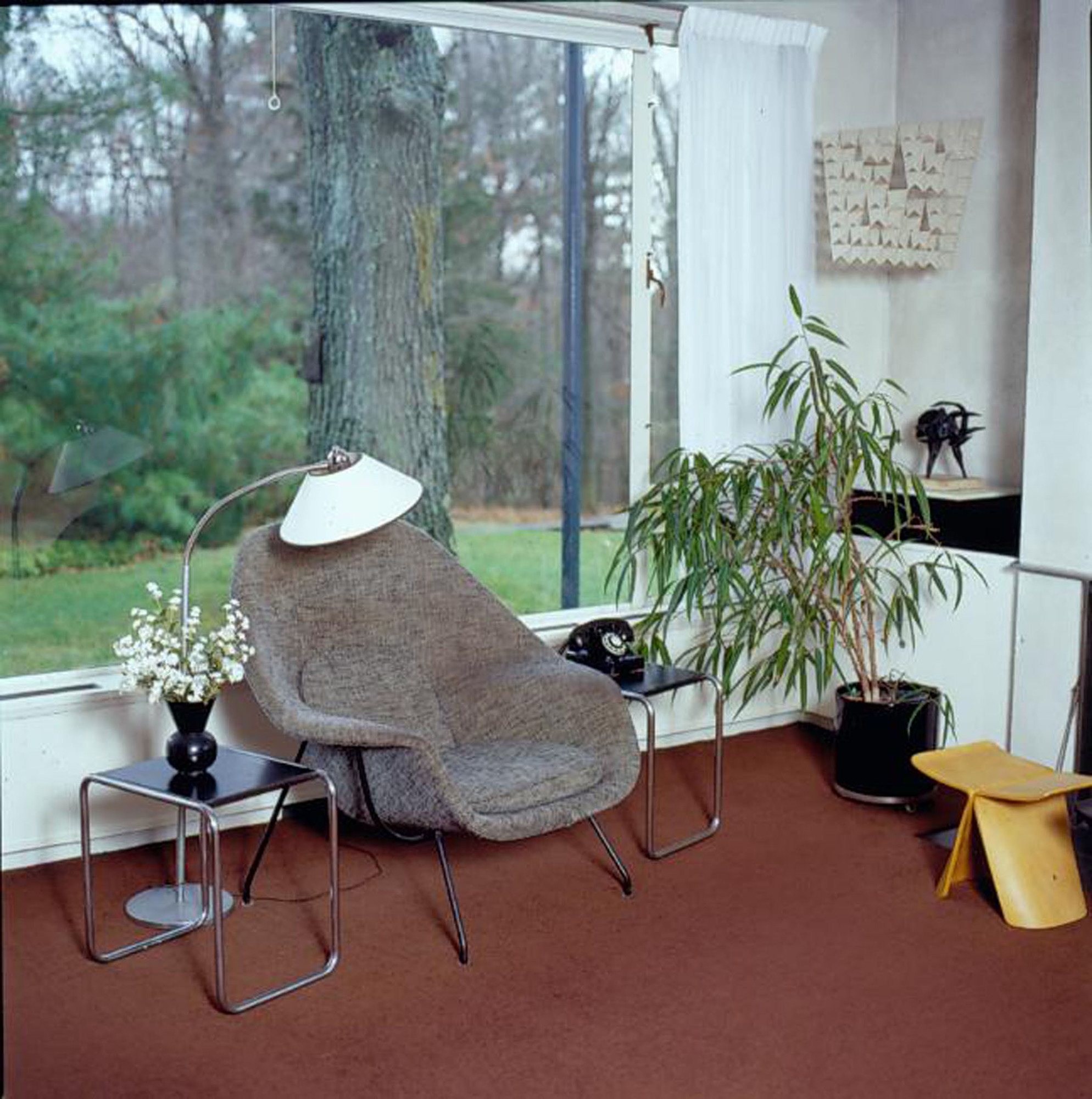
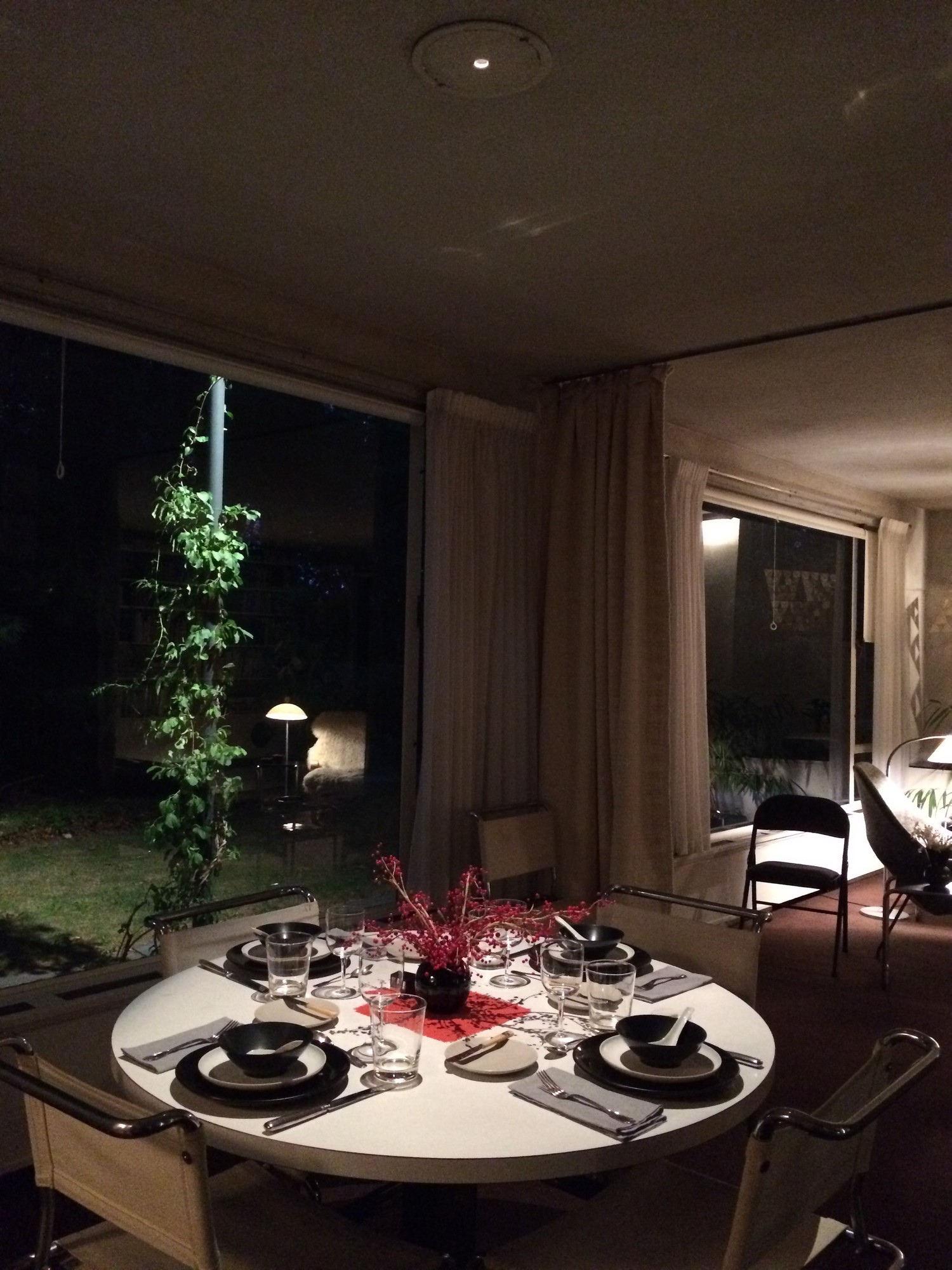
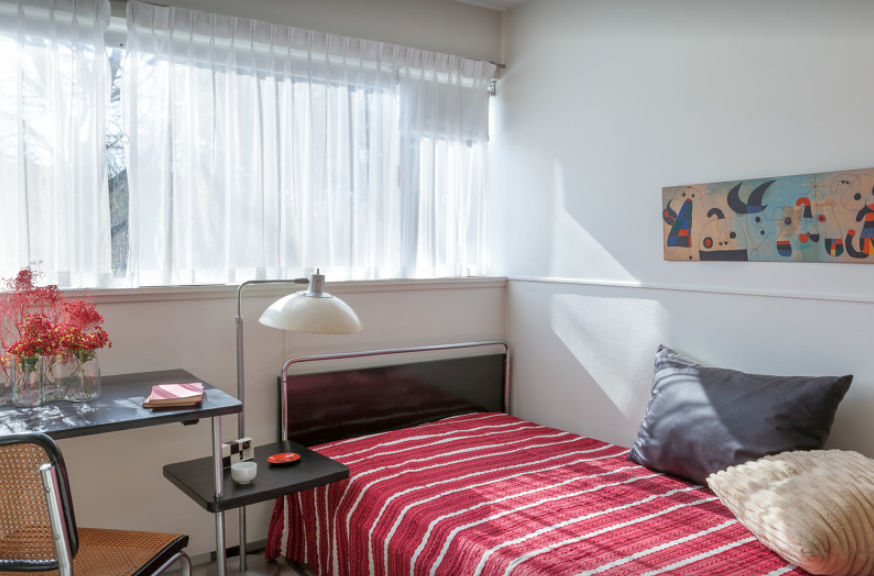
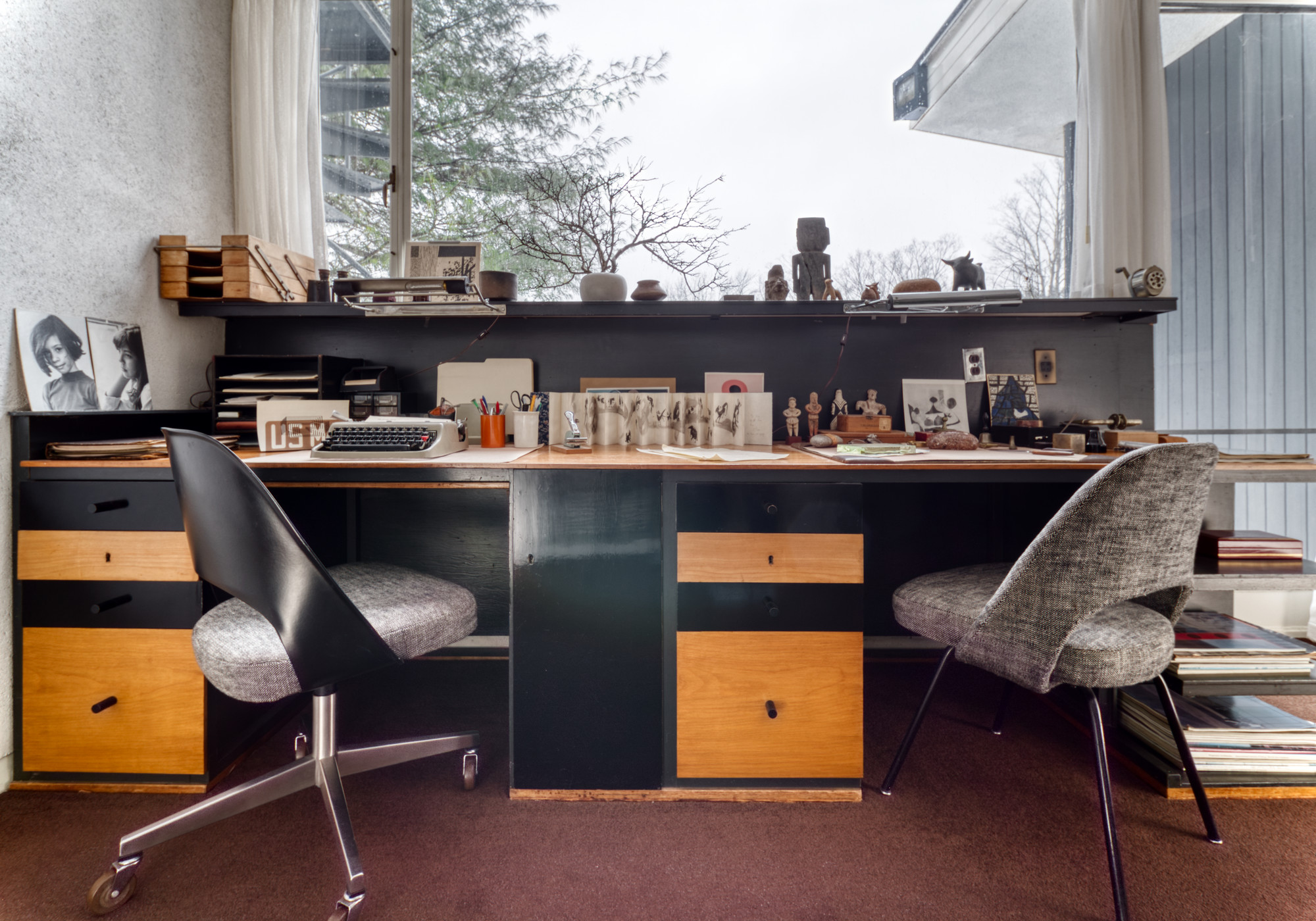
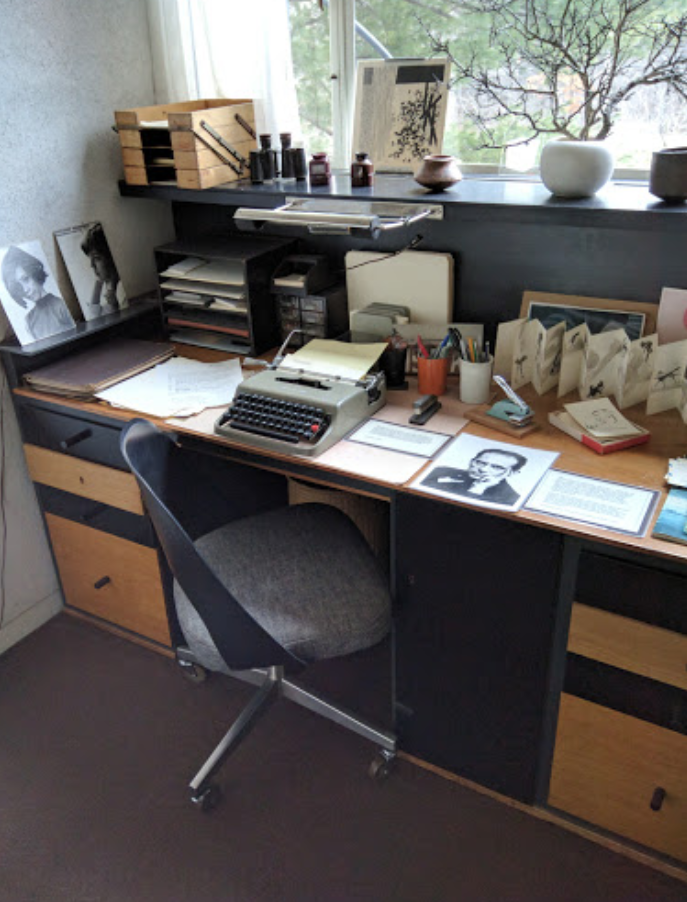
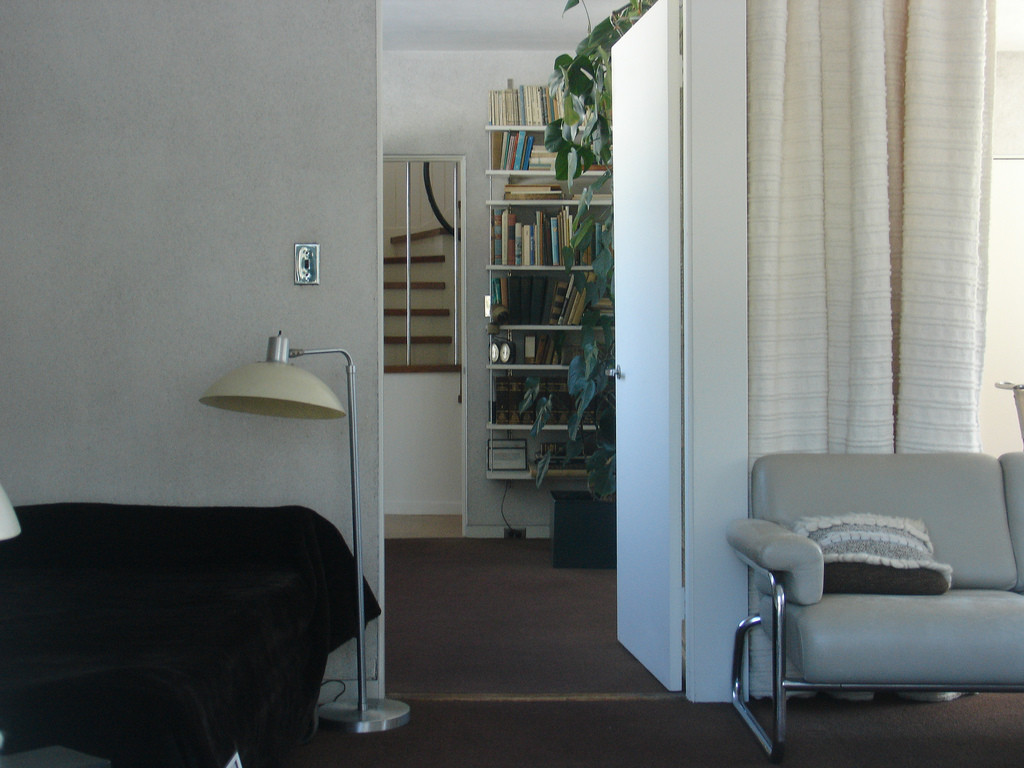
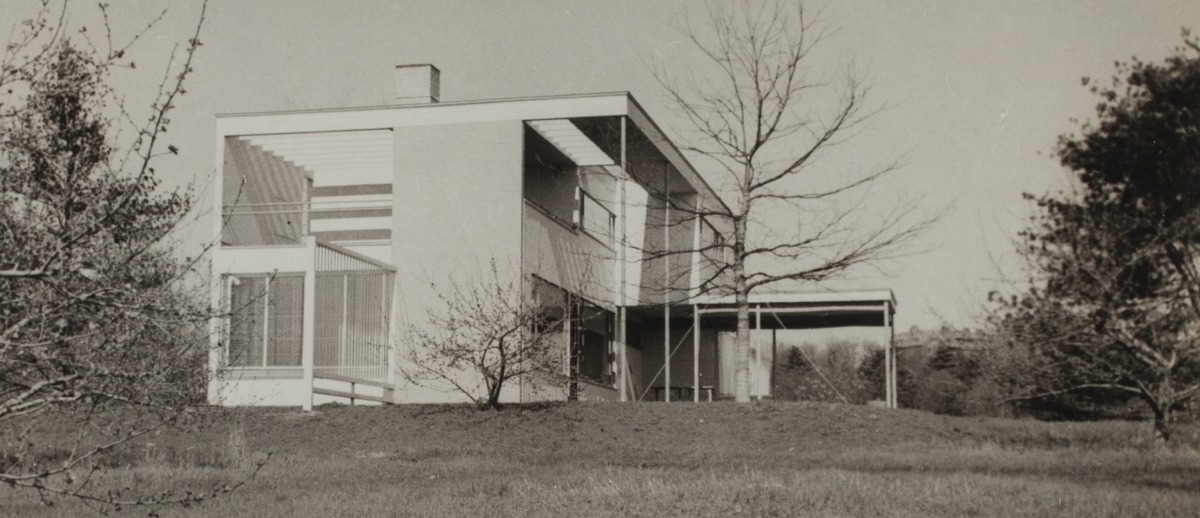
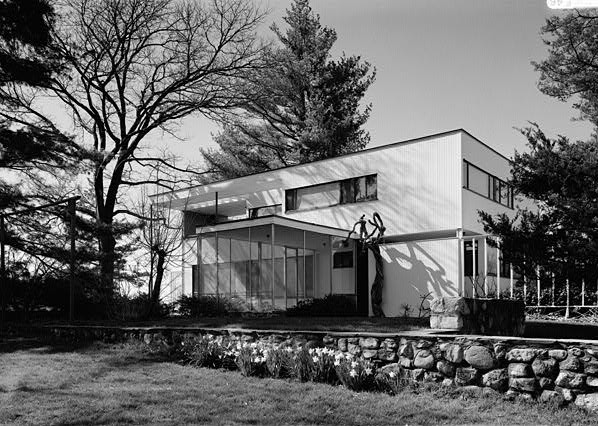
| The home that Walter Gropius designed for himself in 1937–38 even today seems strikingly modern. With its flat roof; clean, boxlike silhouette; ribbon windows; and interacting, seemingly weightless planes, the design has an affinity with Picasso’s faceted analytic Cubist paintings. Gropius intended for his house to exemplify humankind’s spirit, creativity, and industry. Perfectly situated within the context of the Massachusetts landscape and climate, it is also deferential to local building traditions. It has been hailed as the first widely accepted modern house in conservative New England.
The history of the Gropius House begins when the German pioneer architect and creator of the Bauhaus arrived in 1937 in the United States to teach at Harvard University, where he was to redesign and modernize architectural education. In search of a house in the rural surroundings of Boston, Gropius and his wife, Ise, ended up renting a colonial house in the small town of Lincoln, half an hour’s drive from the university. On trips in the area, Gropius became impressed with the local domestic architecture in adapting to the New England climate and resources. He began to see a basic kinship between their practical approach and clean unpretentious design and his own modern architecture. He later stated, “I made it a point to absorb those features of the New England architectural tradition that I found still alive and adequate.”
Gropius’s first commission in the United States was to be the modest house for his own family. Because Gropius lacked the funds to build the project, Henry Shepley, an architect on the Harvard Board of Overseers, persuaded a wealthy Lincoln landowner, Mrs. James Storrow, to commission what Gropius’s TAC (The Architects Collaborative) partner, Norman Fletcher, later dubbed the first unequivocally modern house in New England. She allowed Gropius to select a site on her extensive property and provided the $18,000 for the construction of the house with the understanding that Gropius could first rent and later buy the dwelling with its four acres of land from her over the years.
Gropius was eminently prepared to accept the offer. For a long time, certainly since 1925, when he designed the Bauhaus faculty houses and began planning the housing development Dessau-Törten in Germany, Gropius had thought much about domestic architecture, as evidenced in his essay, “The Small House of To-Day,” published in Architectural Forum in March 1931. In this text he advanced his conception of a modern single dwelling, that it be of “light construction, full of bright daylight and sunlight, alterable, time-saving, economical” and that it be of the utmost use to its occupants. He also pointed to the availability of new materials and construction methods that would allow large expanses of glass. At great length, he enumerated the advantages of a flat roof.
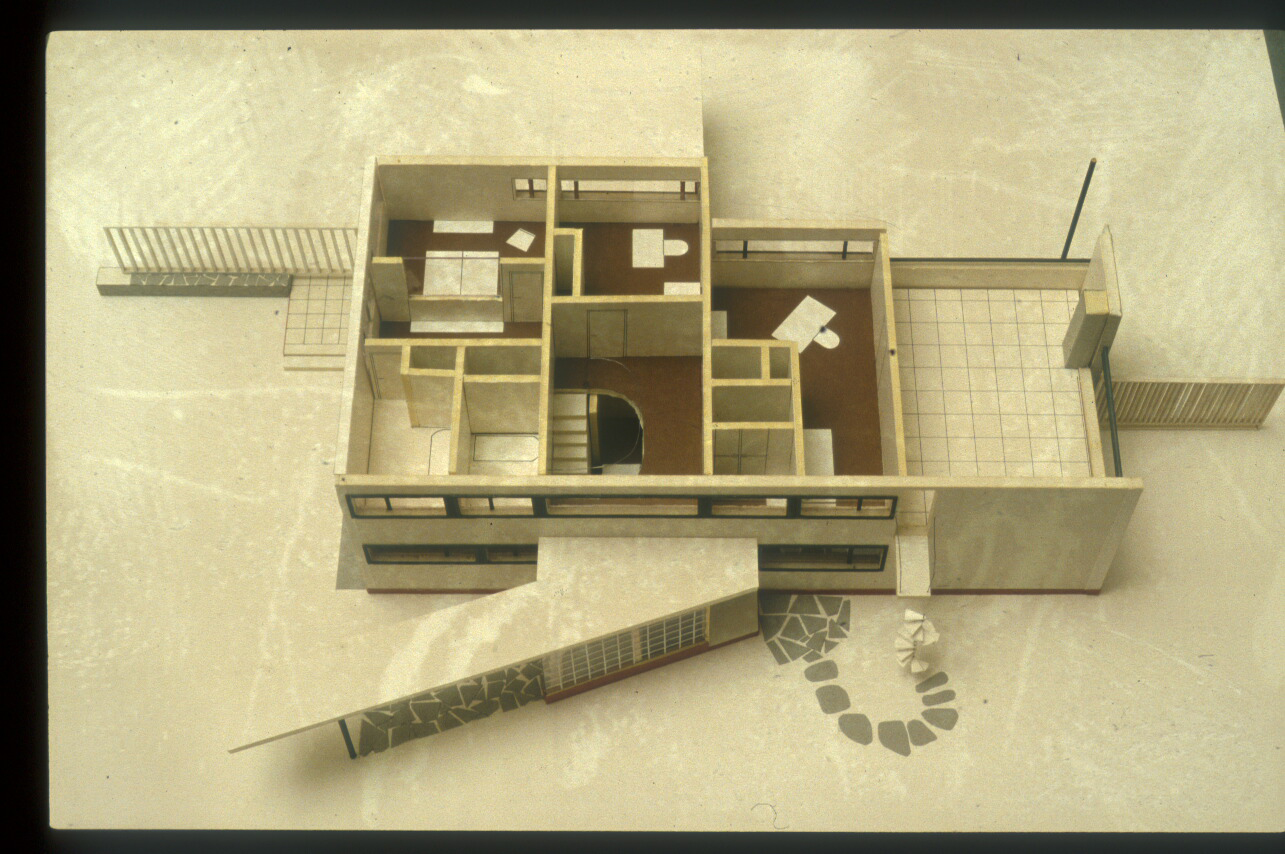
His two-story house (2300 square feet) in the shape of a rectangle, with its broad sides north and south, sits on the crest of a small hill with a view to Mount Wachusett. Screened from the main road by a large apple orchard, it is carefully positioned to catch maximum sunlight in winter.
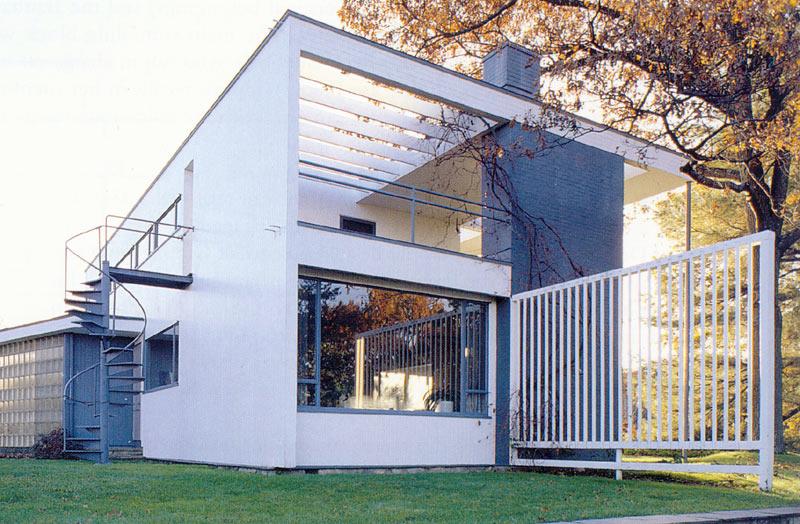
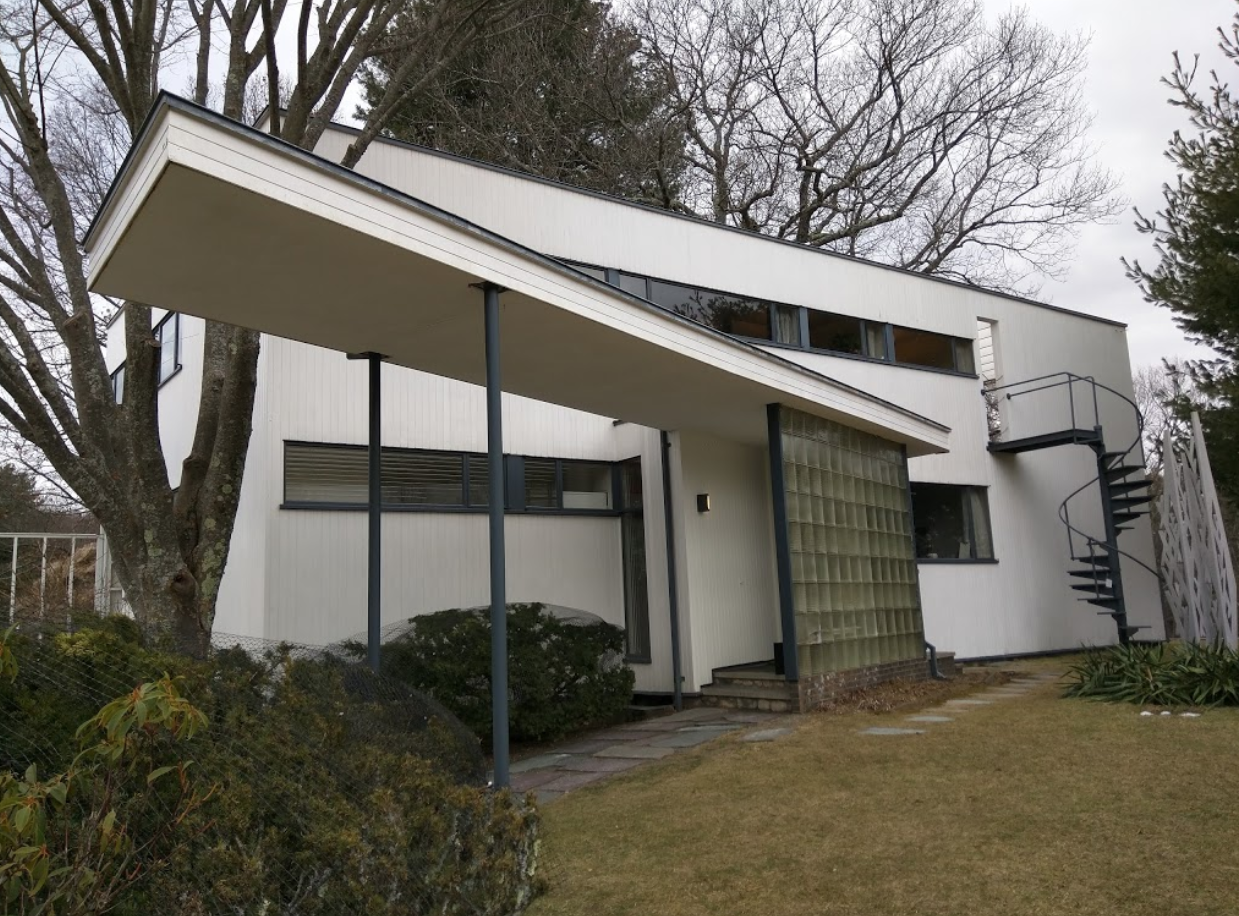
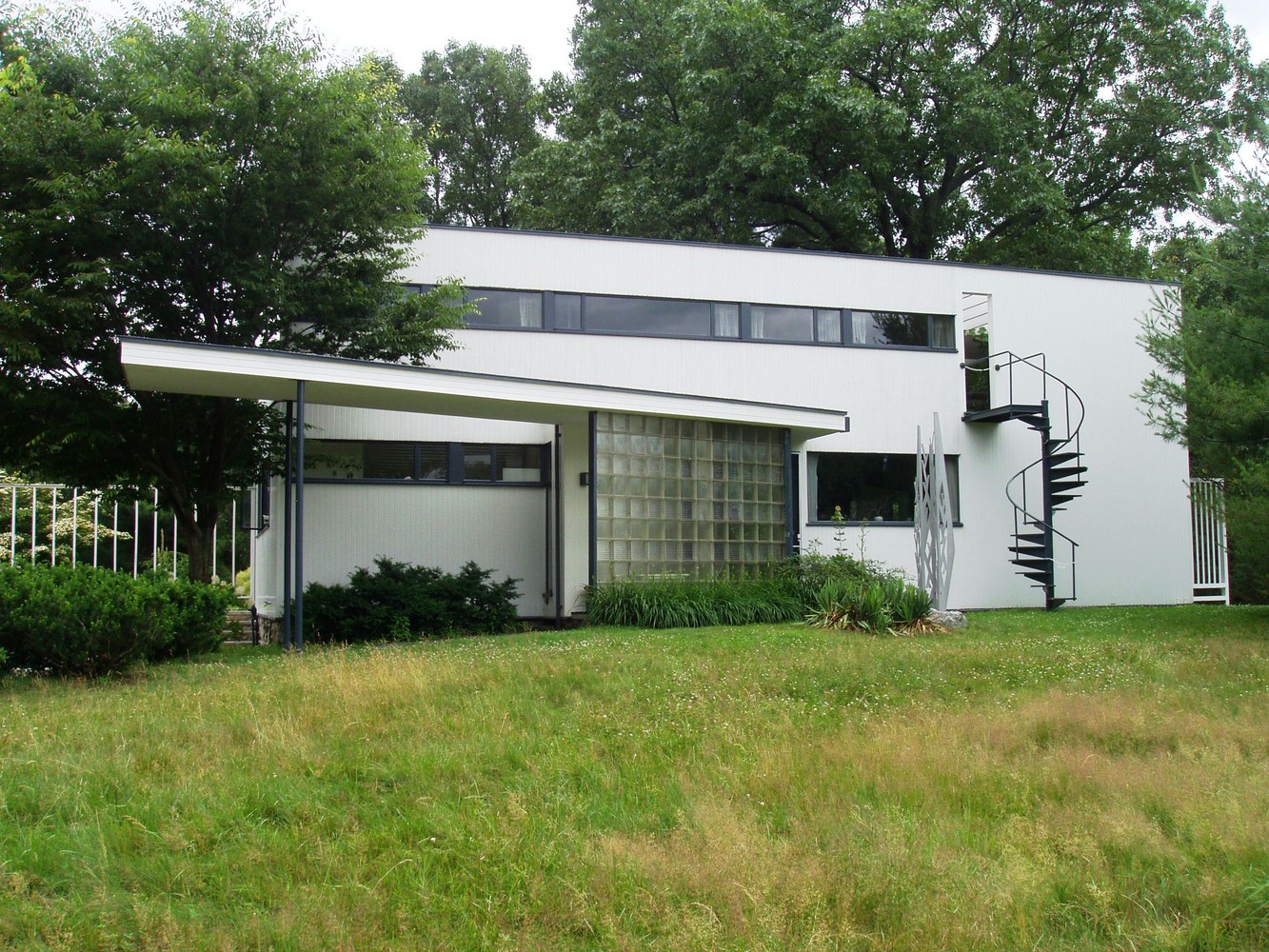
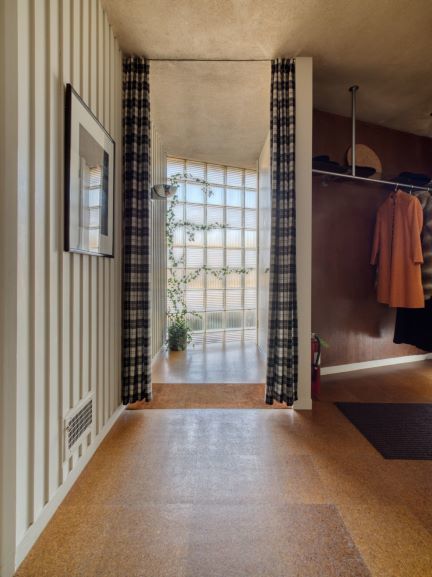
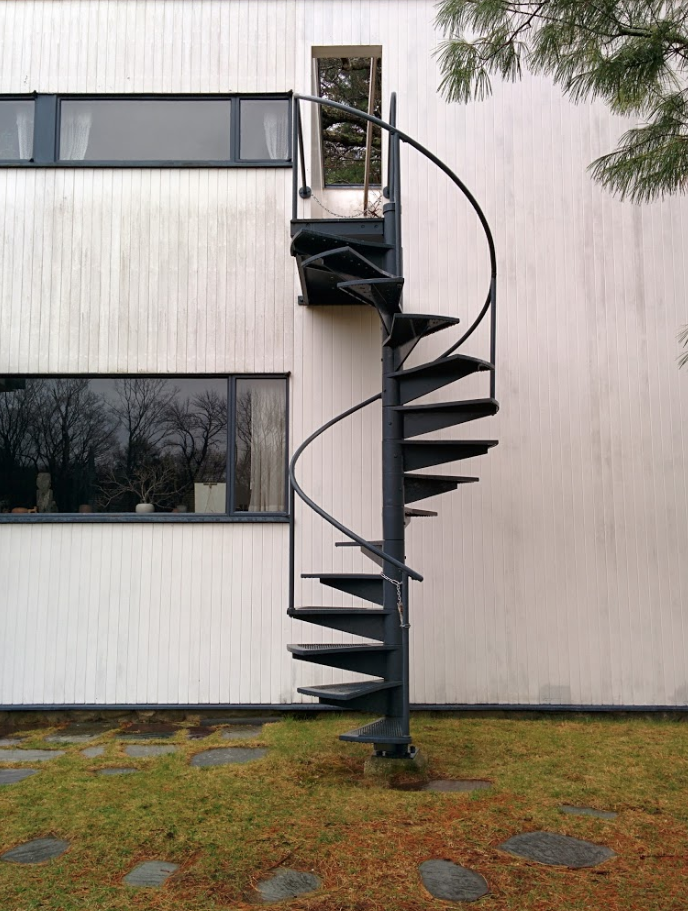
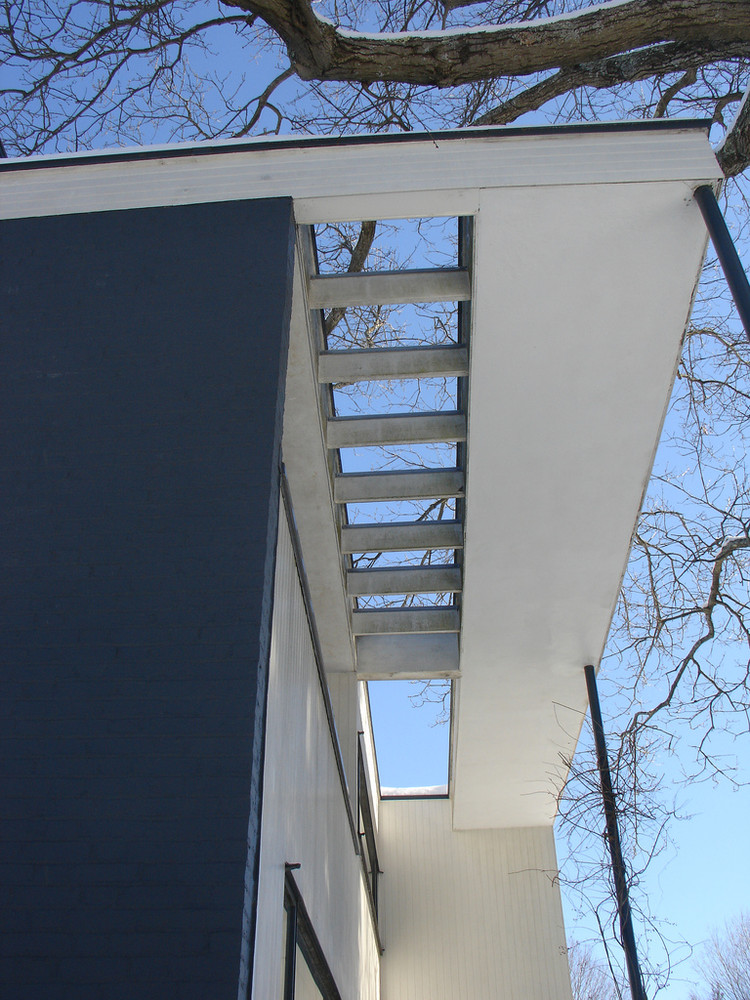
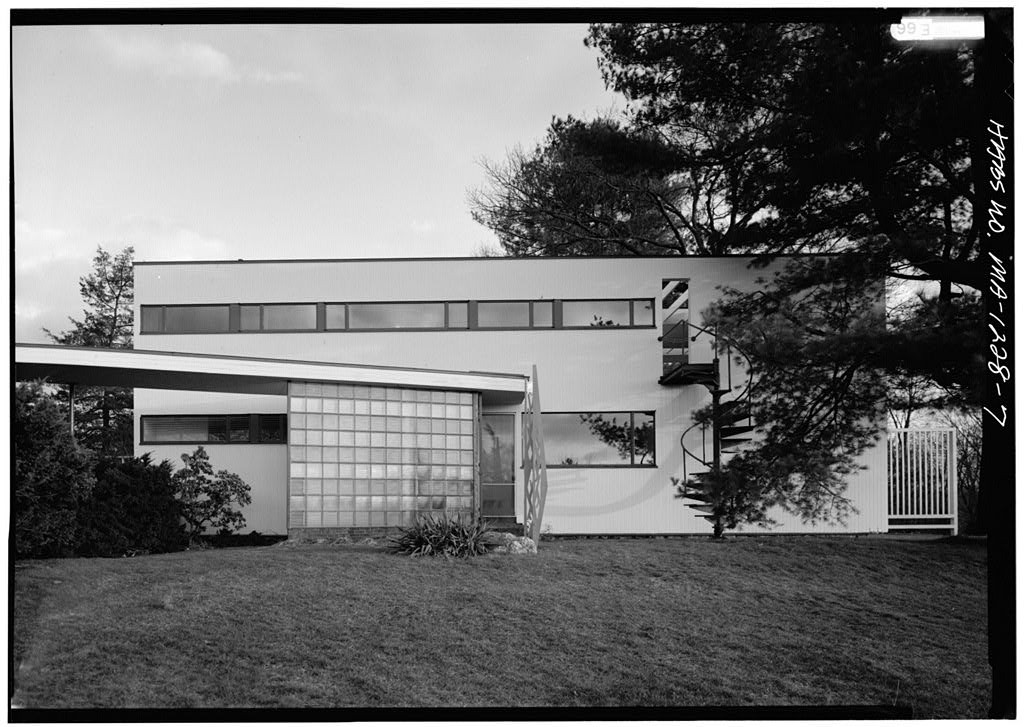
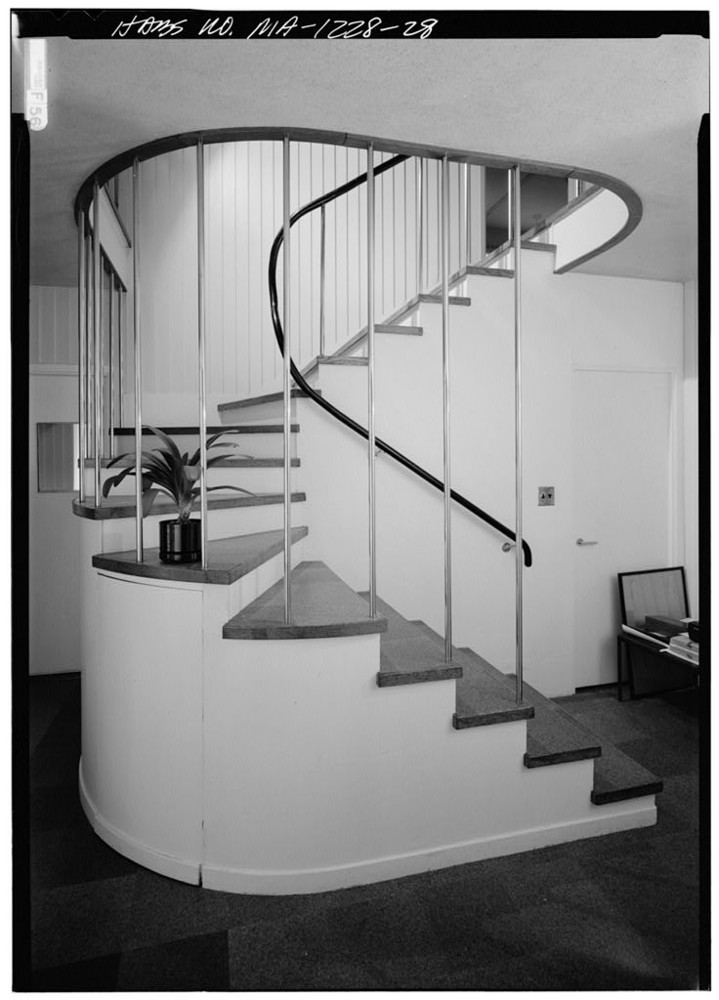
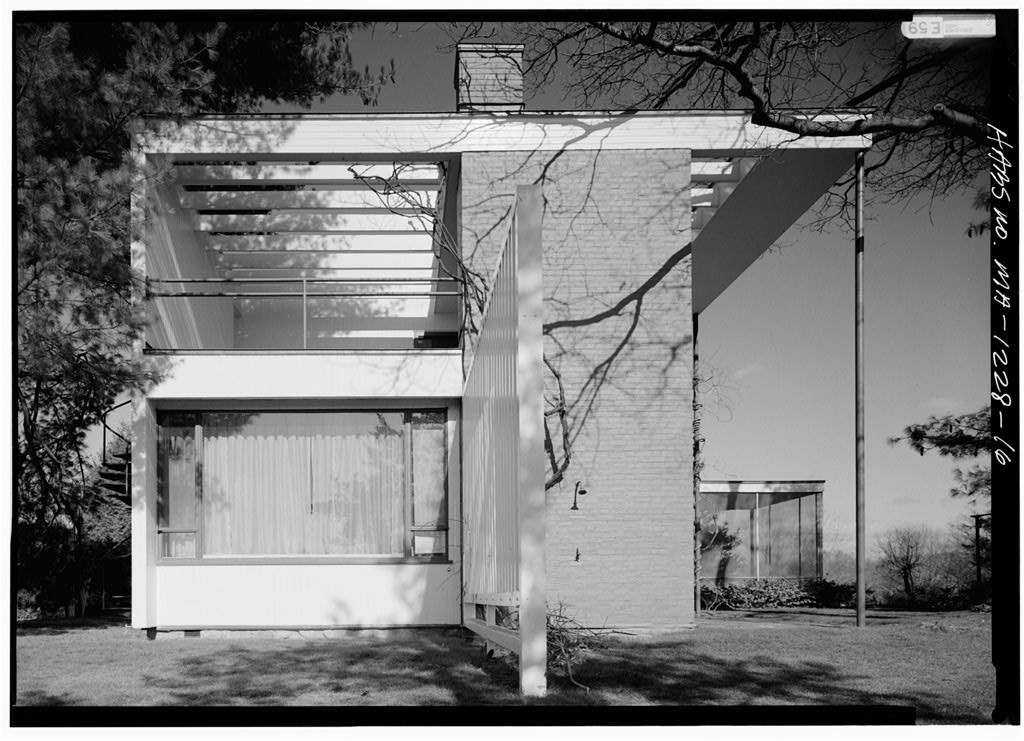
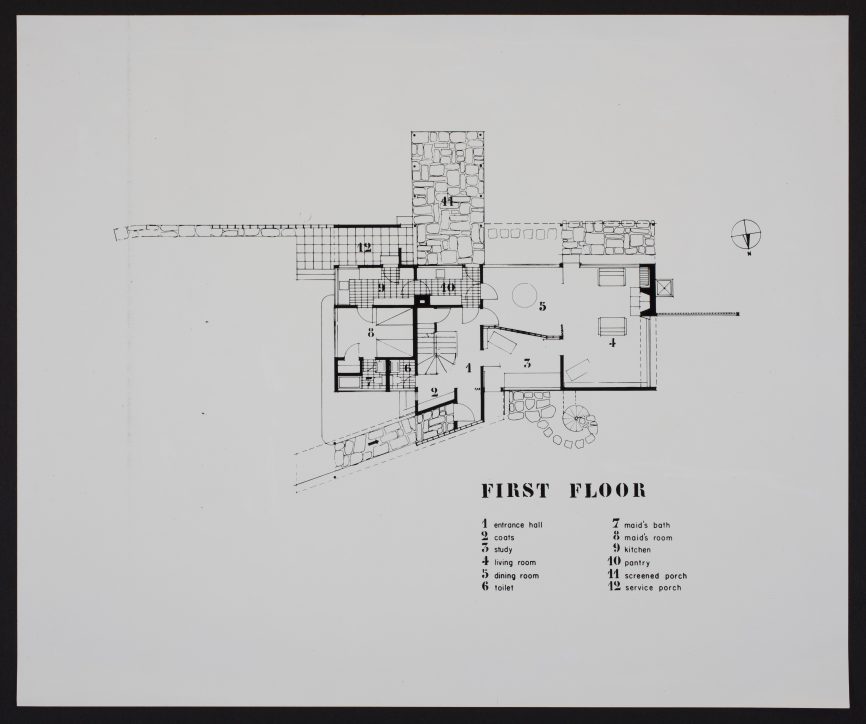
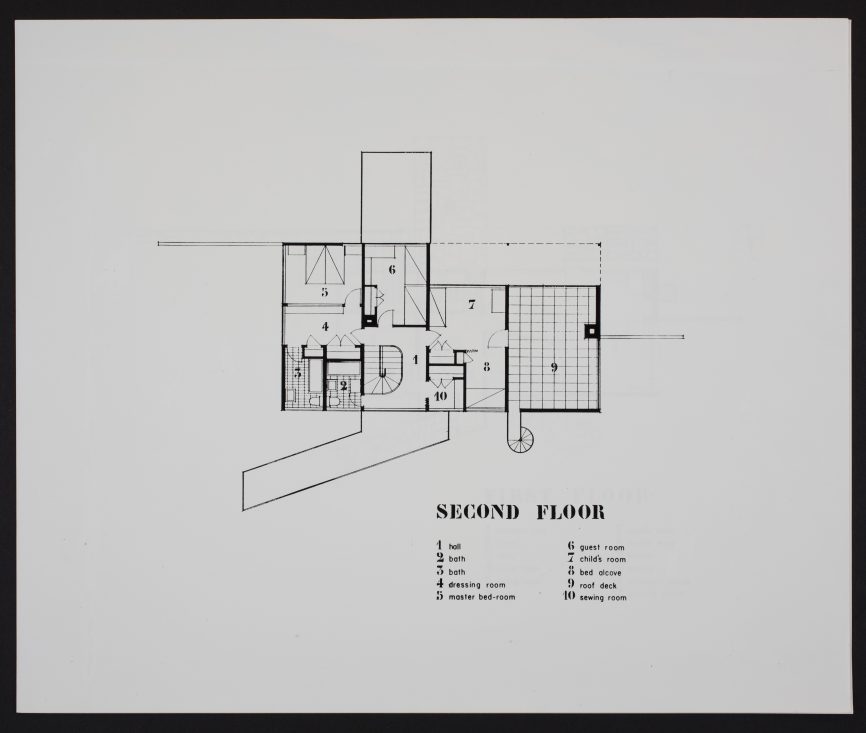
In 1938, the flat roof of the Gropius House caused one neighbor to derogatorily liken it to a chicken coop. Actually, it slants slightly toward the center (one-quarter inch per foot) for runoff of rain and melted snow into a drain that, running through the house to prevent freezing, leads into a dry well. The most unconventional side of the house is its north facade. Coming from the driveway, the diagonal of a long marquee leads to the front entrance, which is protected from weather and street view by a large glass-block wall. The animated juxtaposition of contrasting materials is countered on the facade’s other side with the sculptural twisting of a large spiral staircase. This leads to the second-floor roof terrace, where one finds a private entrance to a second-story bedroom area.
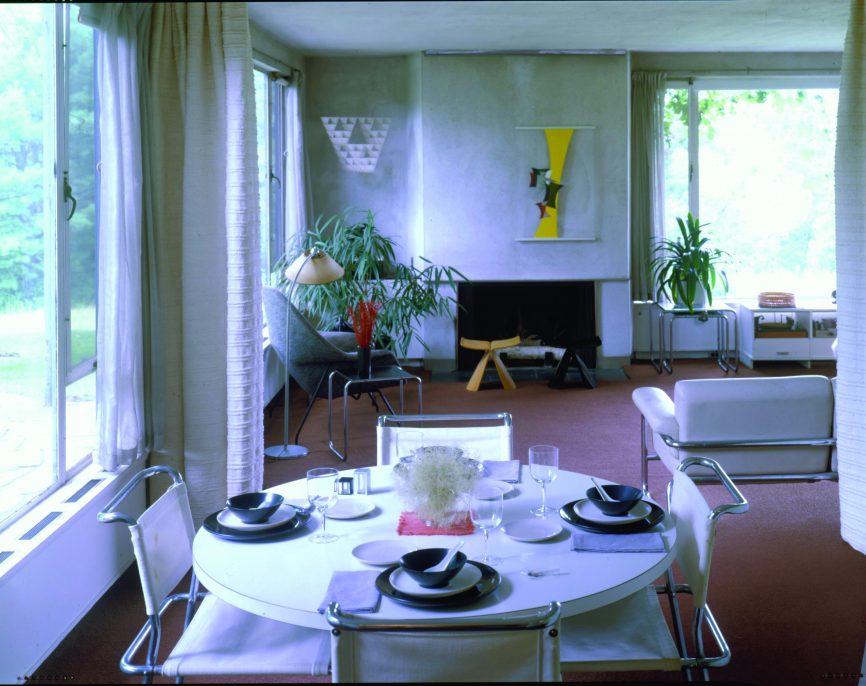
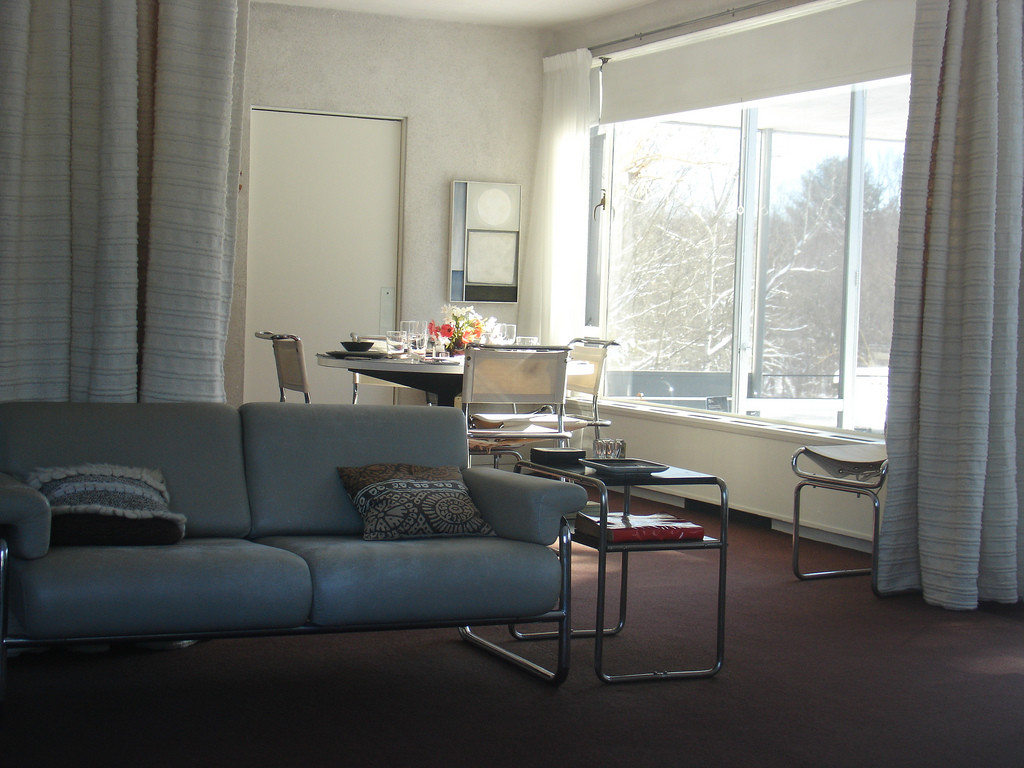
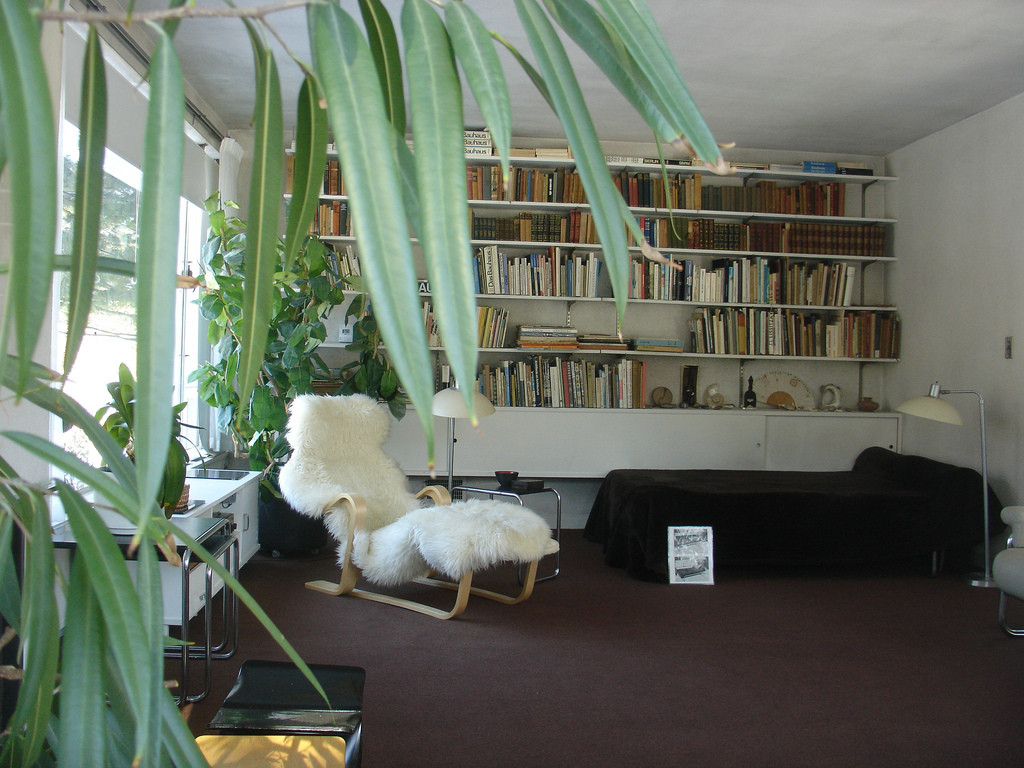
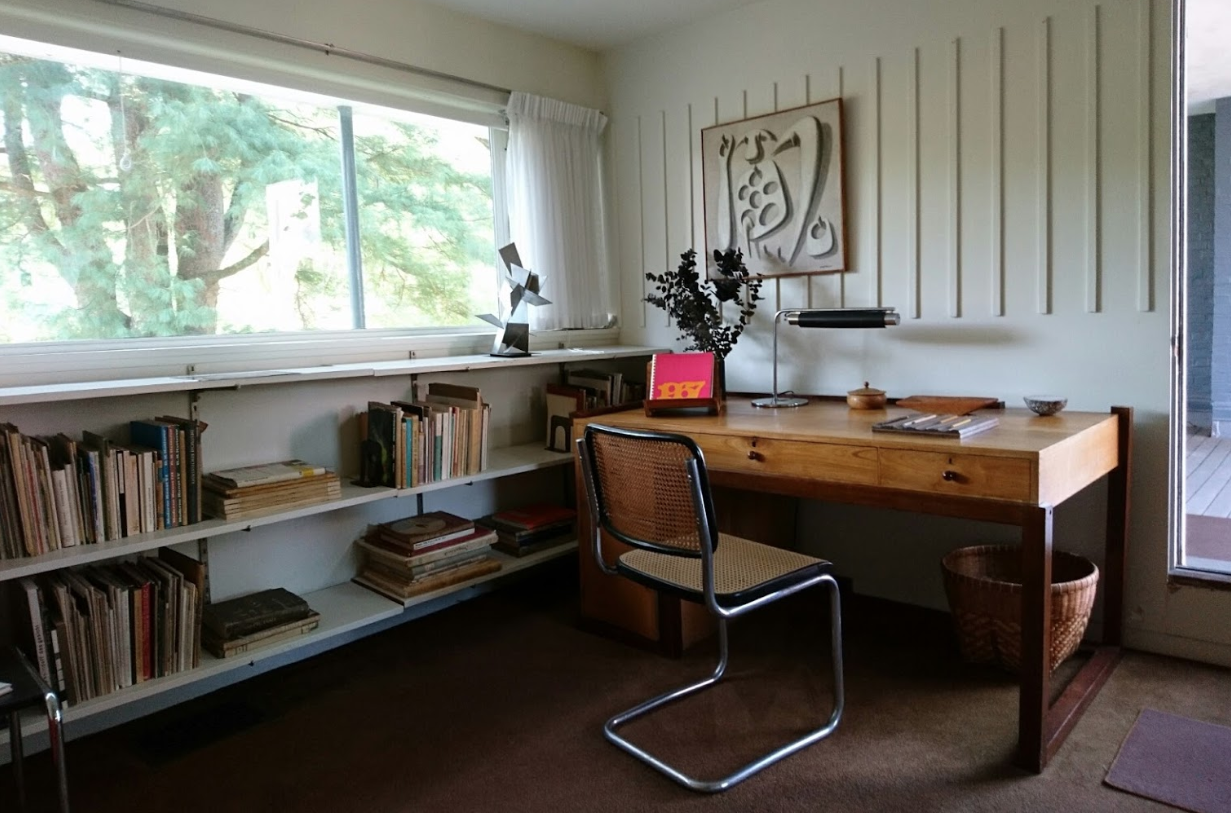
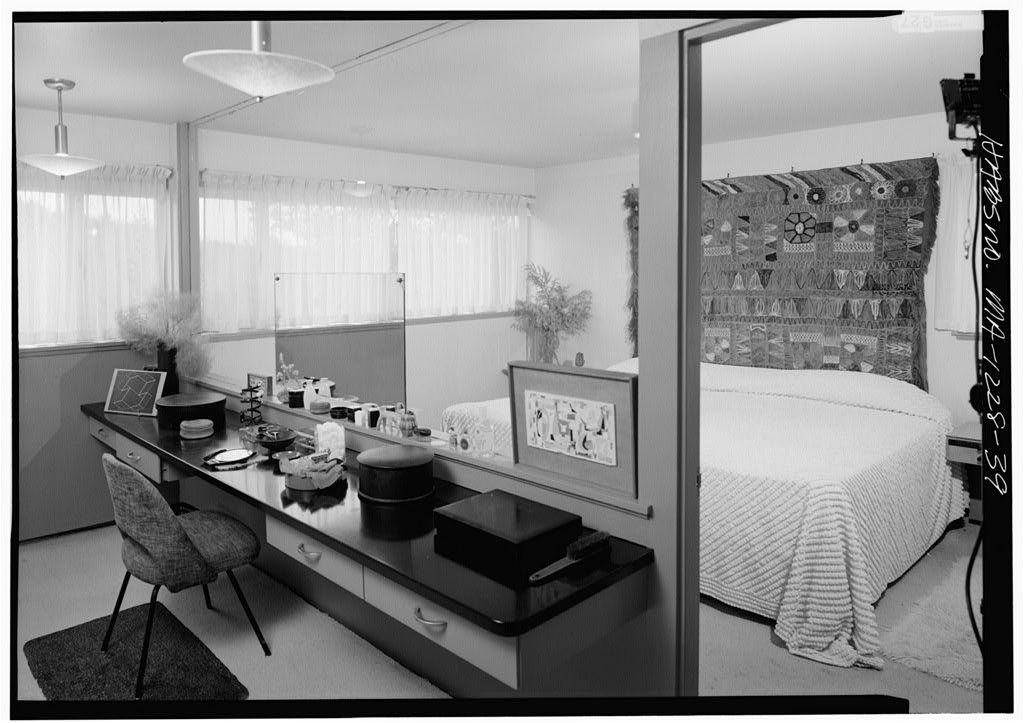
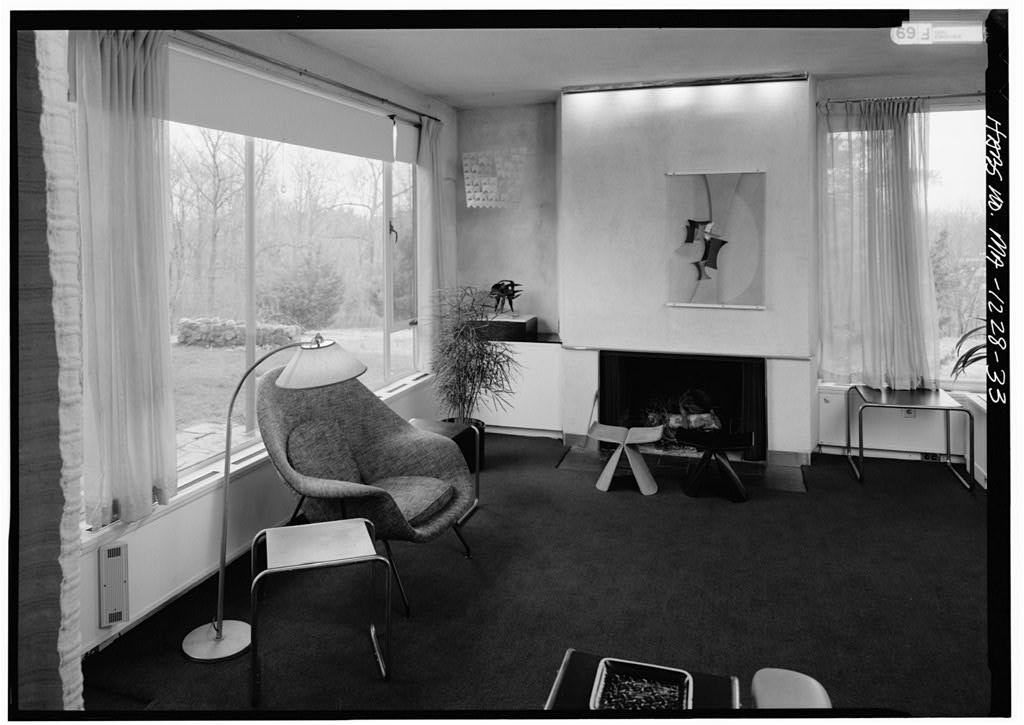
For the layout of the interior, Gropius had advocated in his 1931 article “no artificial symmetry, but free functional succession of room . . . clear separation living, sleeping and housekeeping parts of the house.” The plan of the first floor generally conforms to this ideal. A large area (21 by 28 feet) is divided into a living room and dining room separated by a glass-block wall from the study.
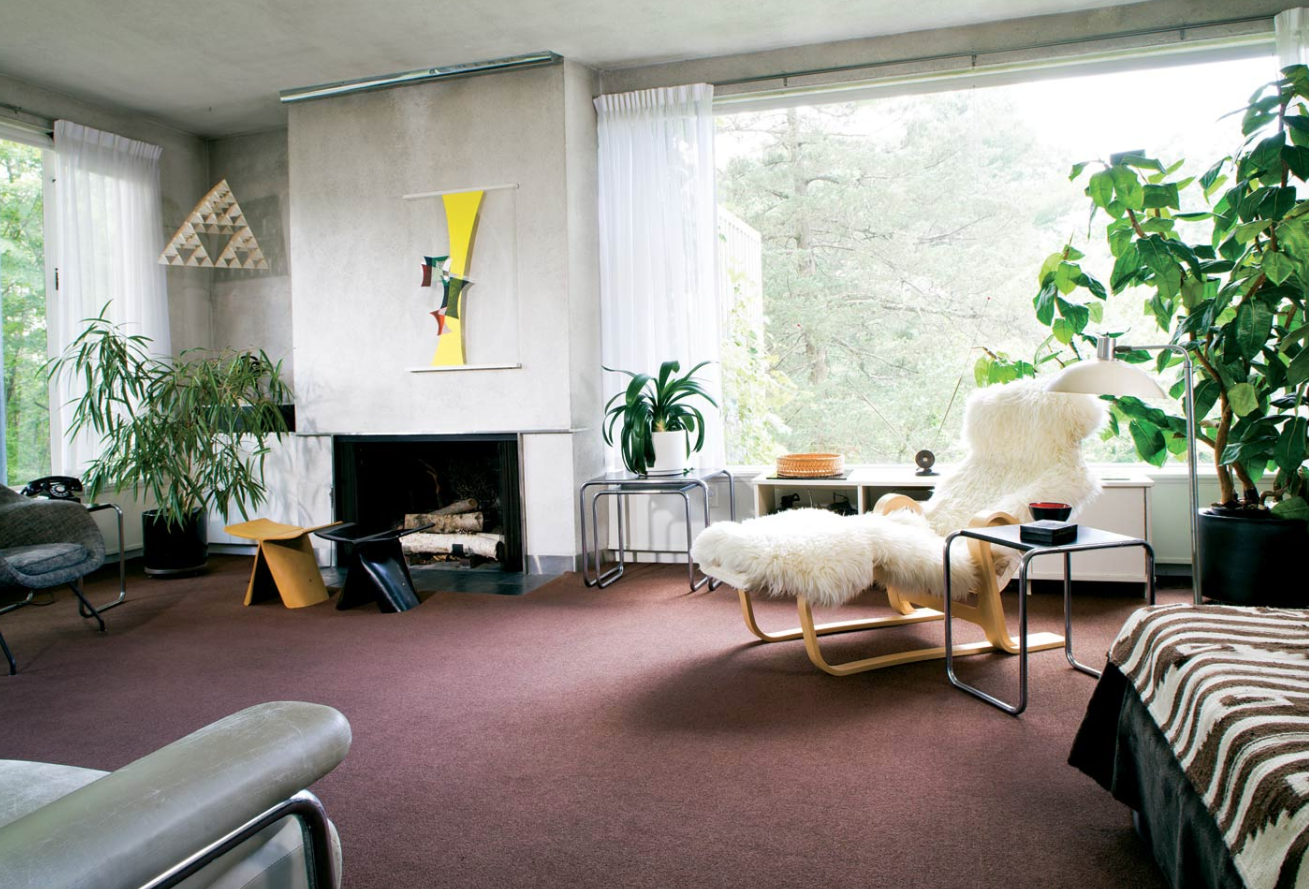
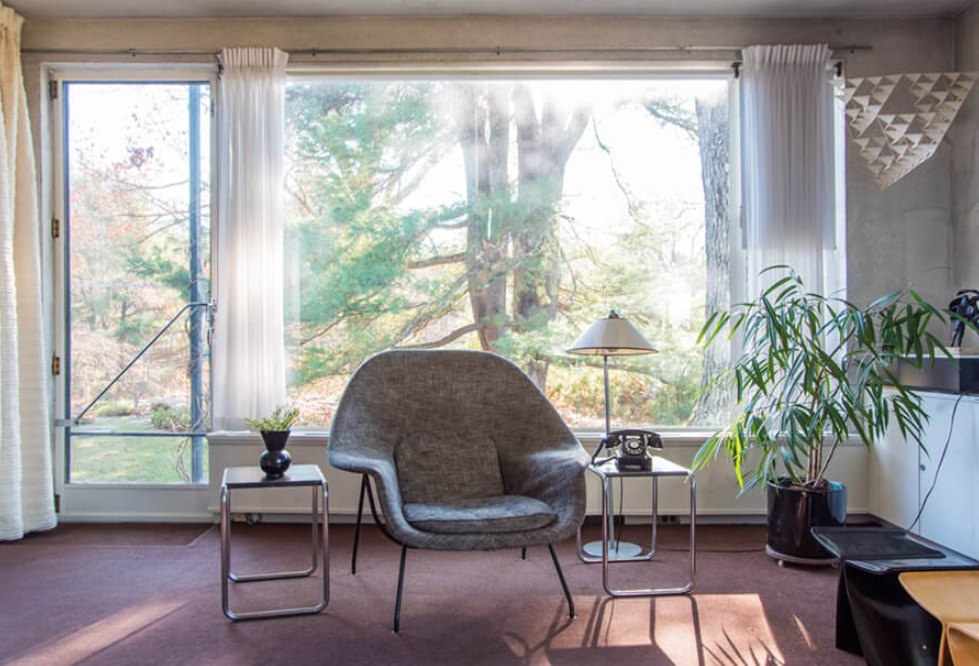
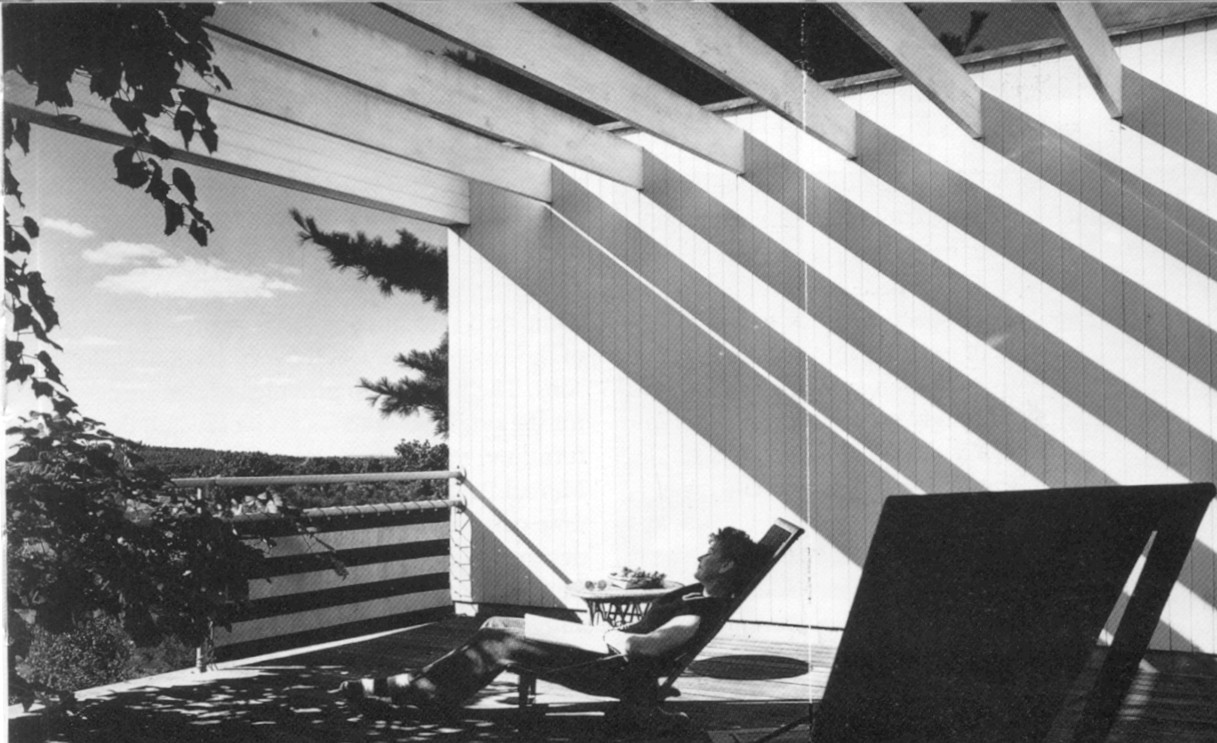
On the south side, two large plate-glass windows (each 6 by 11.5 feet) and a tall, glass door provide glorious light for the dining and living rooms. The latter even has an additional plate-glass window on the west side; these large expanses of glass generate a constant awareness of the beautiful outside with its indigenous birds and other wildlife. From May to September, the south side is shaded with a large wooden screen that projects from the roof and is placed three feet away from the house to allow the rising hot air to escape.
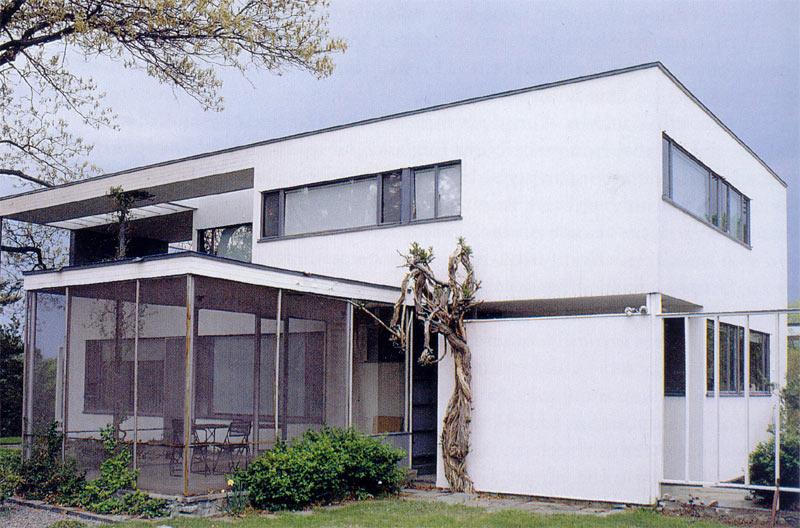
The large west-side window deflects the sun by means of a heavy exterior aluminum blind that is operated from inside. The entrance hall leads straight through a pantry to the screened patio (11.5 by 23 feet and 9 feet high), which unconventionally juts out at right angles from the rear of the house.
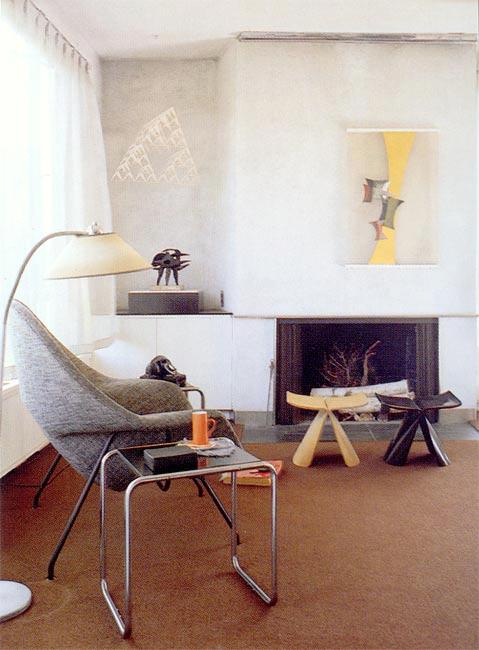
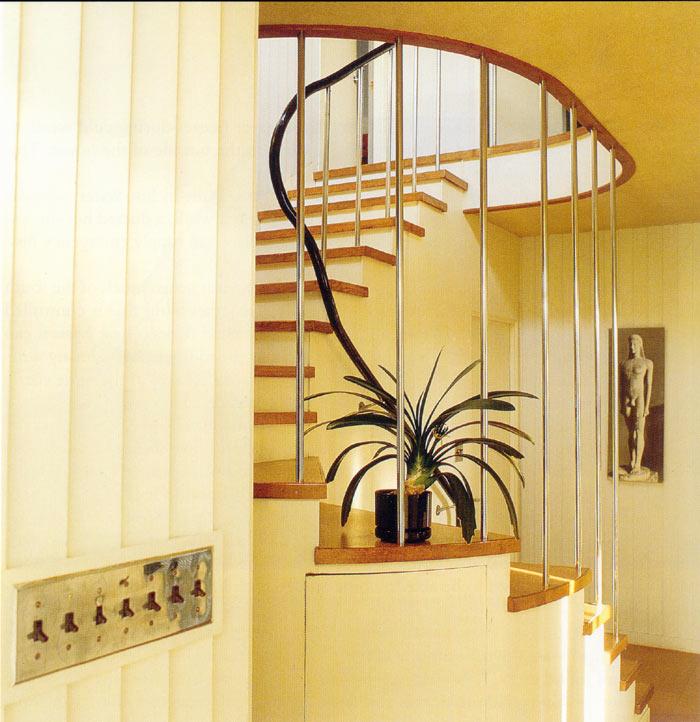
Although the design of the house stands in sharp contrast to that of its colonial neighbors, its fieldstone foundation, retaining walls, most of its building materials, and basic structure are the same: light wood frame, sheathed with white-painted redwood siding, and a west-side fireplace wall of gray-painted bricks. Gropius used clapboards, the ubiquitous exterior siding in New England, vertically as inside wall cover in the hallways.
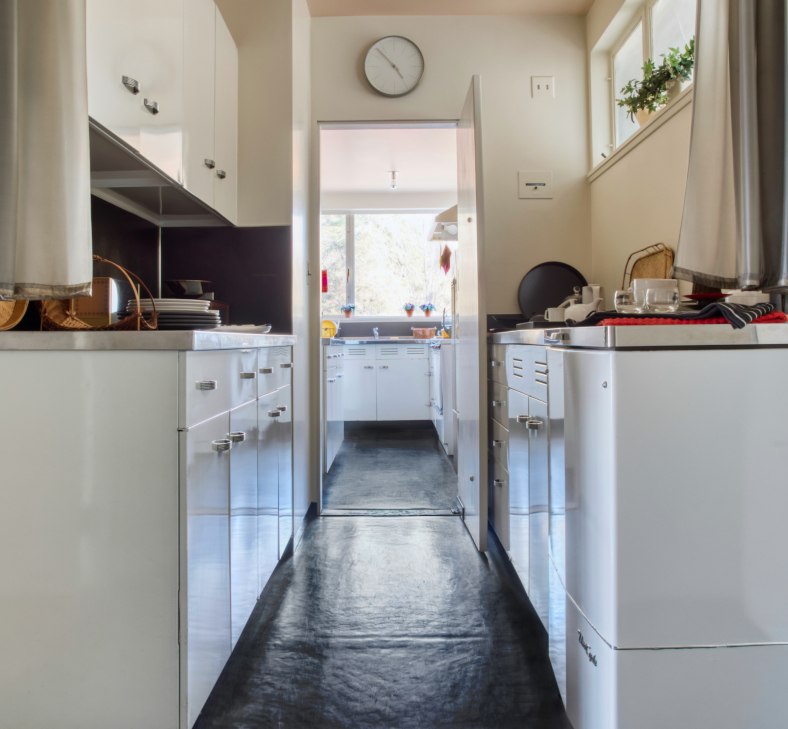
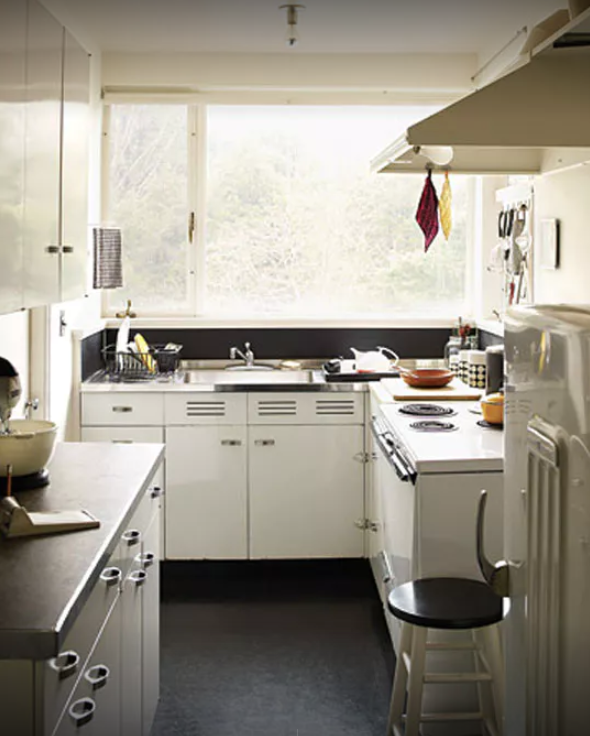
All the structural items and indoor features, such as doors, lighting fixtures, shelves, glass bricks, and even the exterior spiral staircase, were ordered from stock catalogs. According to his wife, Gropius “wanted to prove that the mass-produced output of American industry was quite capable of producing a sophisticated house of contemporary design” (see Gropius, 1989).
The use of these materials proved a useful object lesson for students of architecture. The builder recalled that almost every afternoon students from Harvard came out to look at the progress of the house, watching and listening to the architect discuss his reasons for using the materials that were inexpensive without sacrificing quality.
In 1974, the Society for the Preservation of New England Antiquities took over the governance the Gropius House and its furniture, a large portion of which was constructed in the Bauhaus, as its first modern historic artifact. In 1982, the building was depicted on a 20-cent U.S. postage stamp as part of the American Architecture series, which included Frank Lloyd Wright’s Fallingwater.
ANNELIESE HARDING
Sennott R.S. Encyclopedia of twentieth century architecture, Vol.2. Fitzroy Dearborn., 2005.
Further Reading
Buck, Susan, “A Material Evaluation of the Gropius House: Planning to Preserve a Modern Masterpiece,” Association for Preservation Technology Bulletin, 28/4 (1997)
Gittleman, Peter, “The Gropius House: Conception, Construction, and Commentary” (Master’s thesis), Boston University, 1996
Gropius, Ise, “History of the Gropius House in Lincoln, Massachusetts,” 1977; reprint, as “Trip to Epoch-Making Walter Gropius House, Lincoln, Massachusetts” GA Houses, 25 (March 1989)
Gropius, Walter, “The Small House of To-Day,” Architectural Forum, 54 (March 1931)
“Gropius House,” in SPNEA Annual Report 1987, Boston: Society for the Preservation of New England Antiquities, 1988
Summers, Nevin, “Analyzing the Gropius House as Energy-Conscious Design,” AIA Journal, 66/2 (February 1977) |