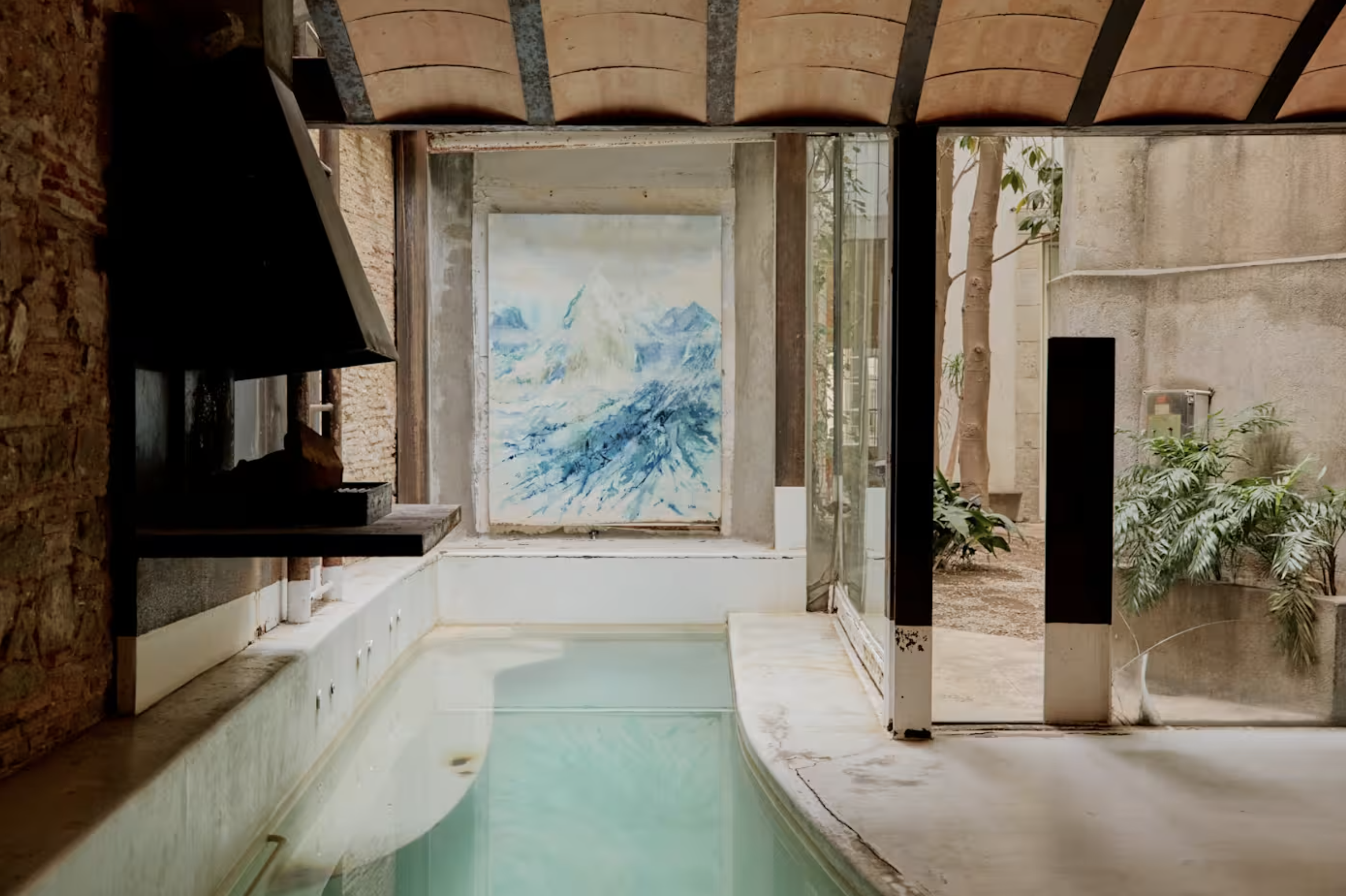
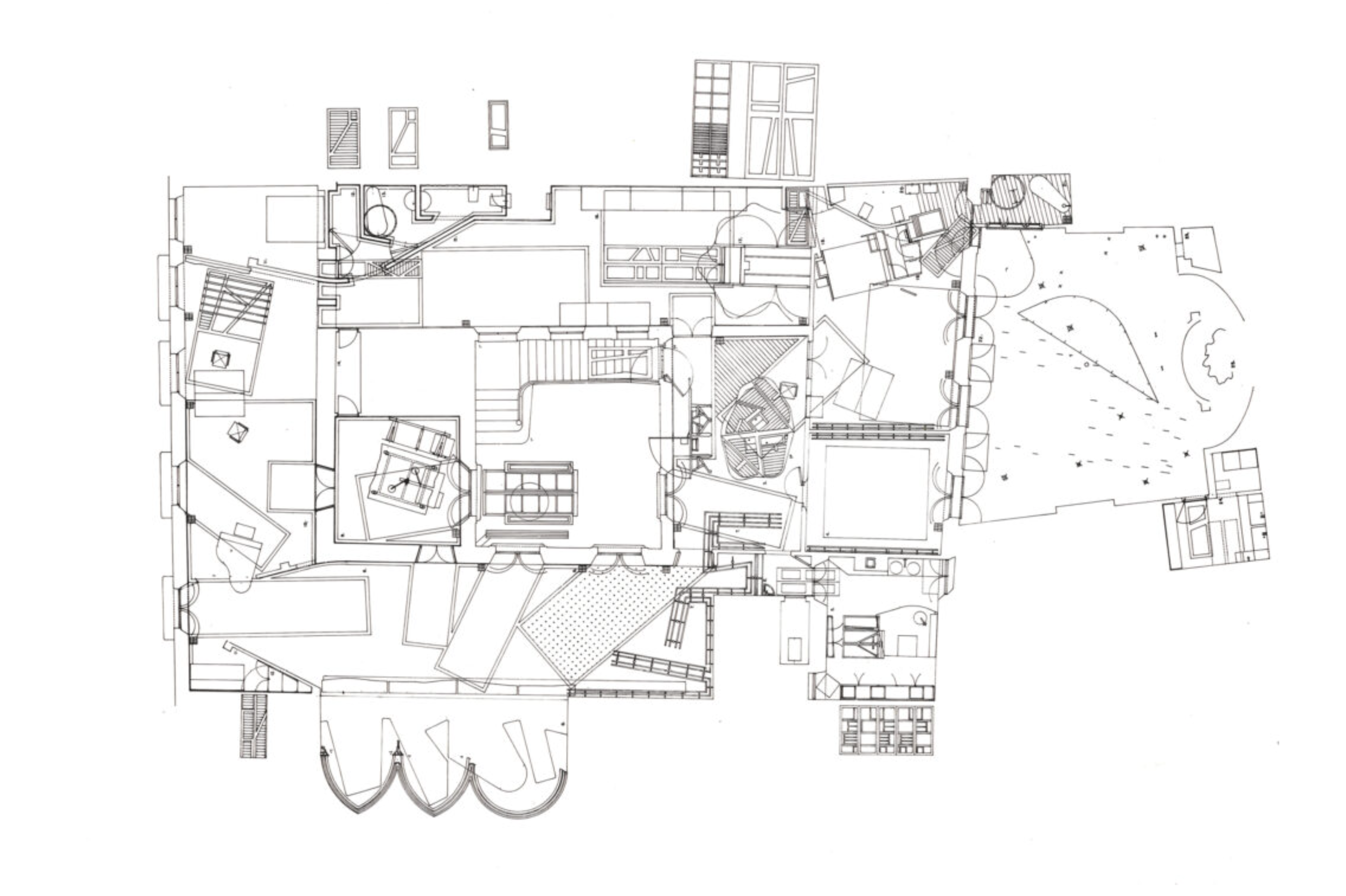
The home of this Spanish and Italian team is in the old town
of Barcelona, just outside the Gothic walls, in a building
whose past is as rich and complex as it is difficult to define.
When Miralles and Tagliabue first saw the building it was in a
desperate state of disrepair. They decided to remodel the
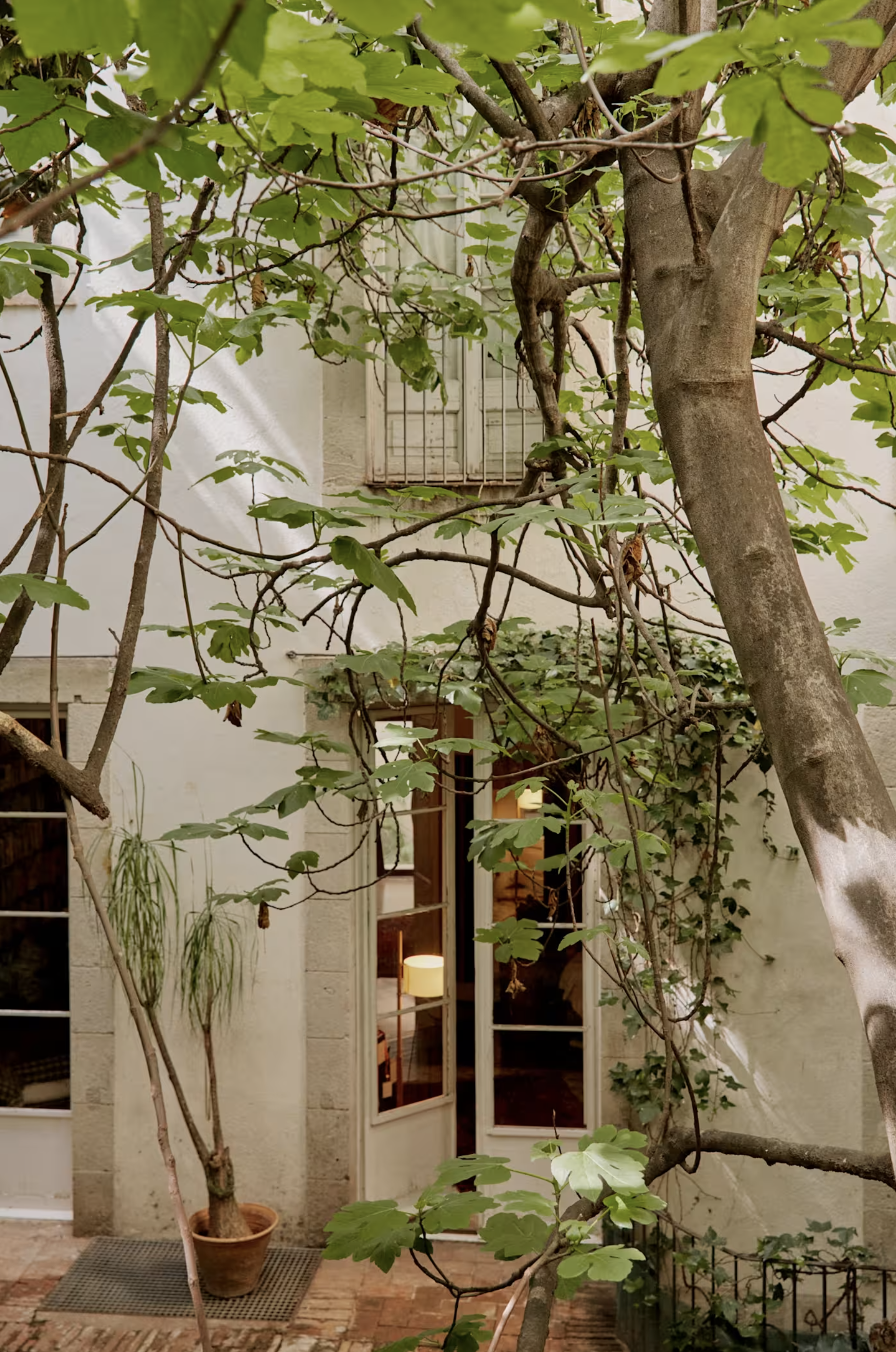
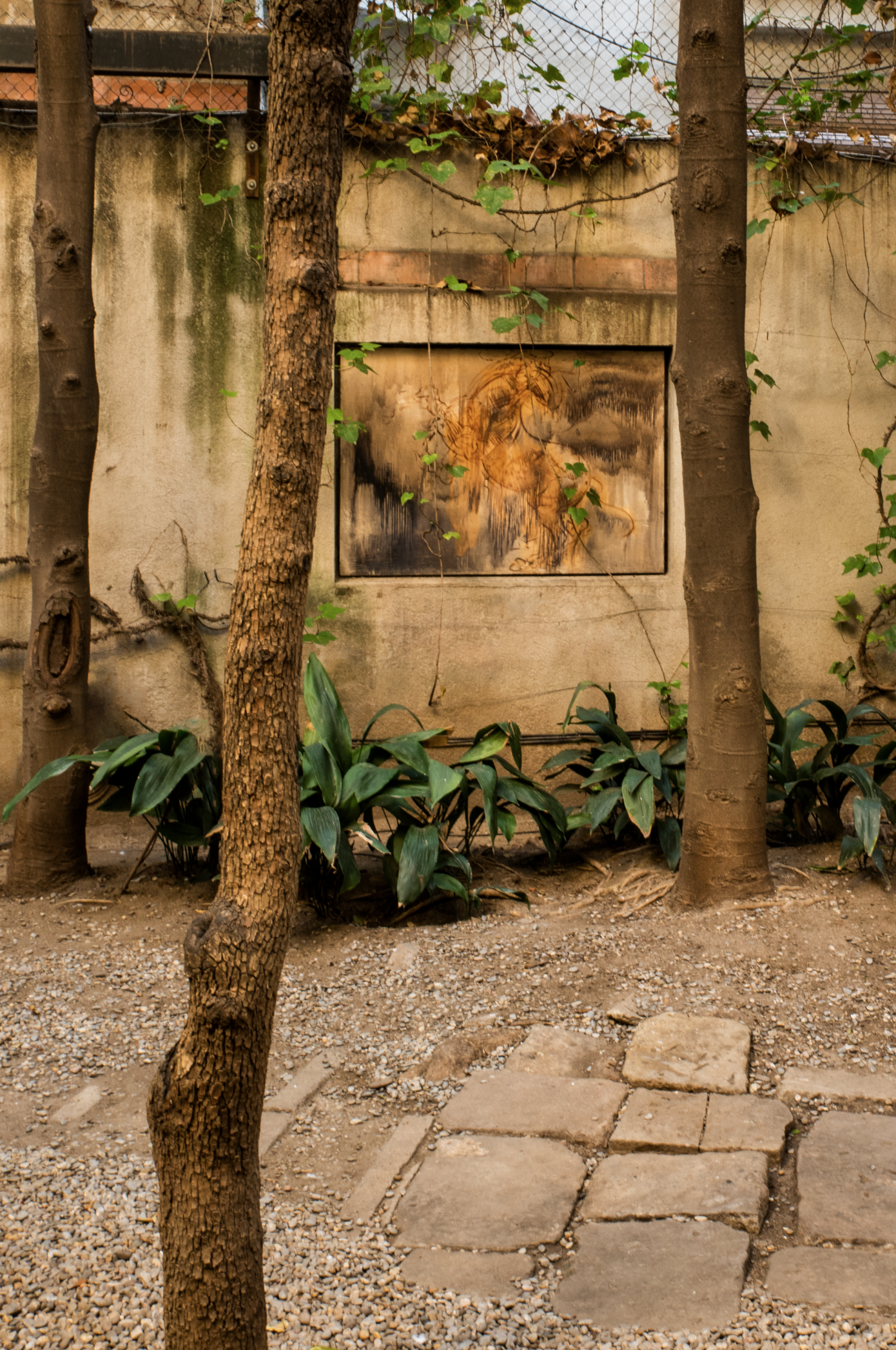
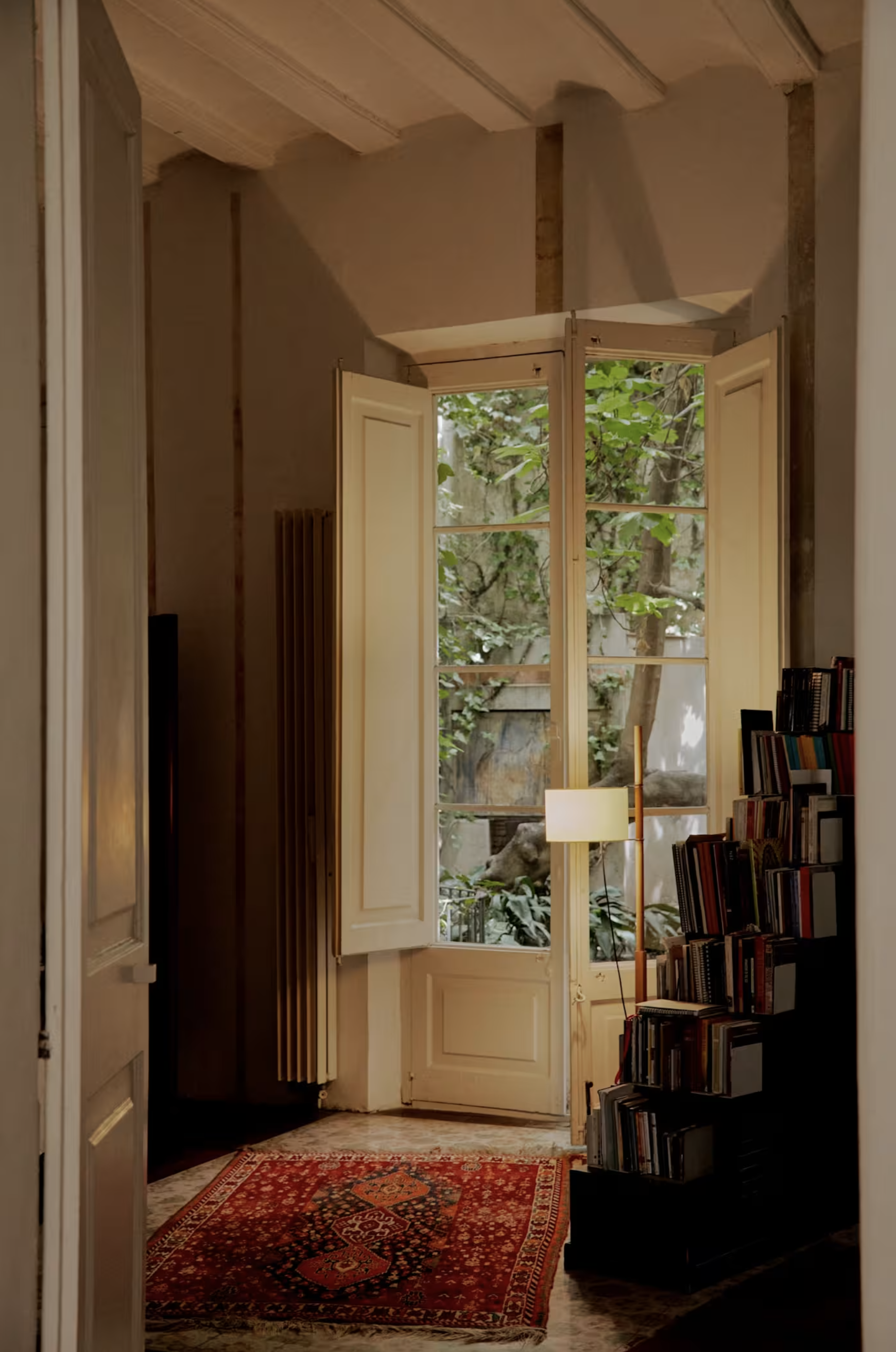
main apartment in the building, which featured an independ-
ent entrance and its own courtyard and garden in the back.
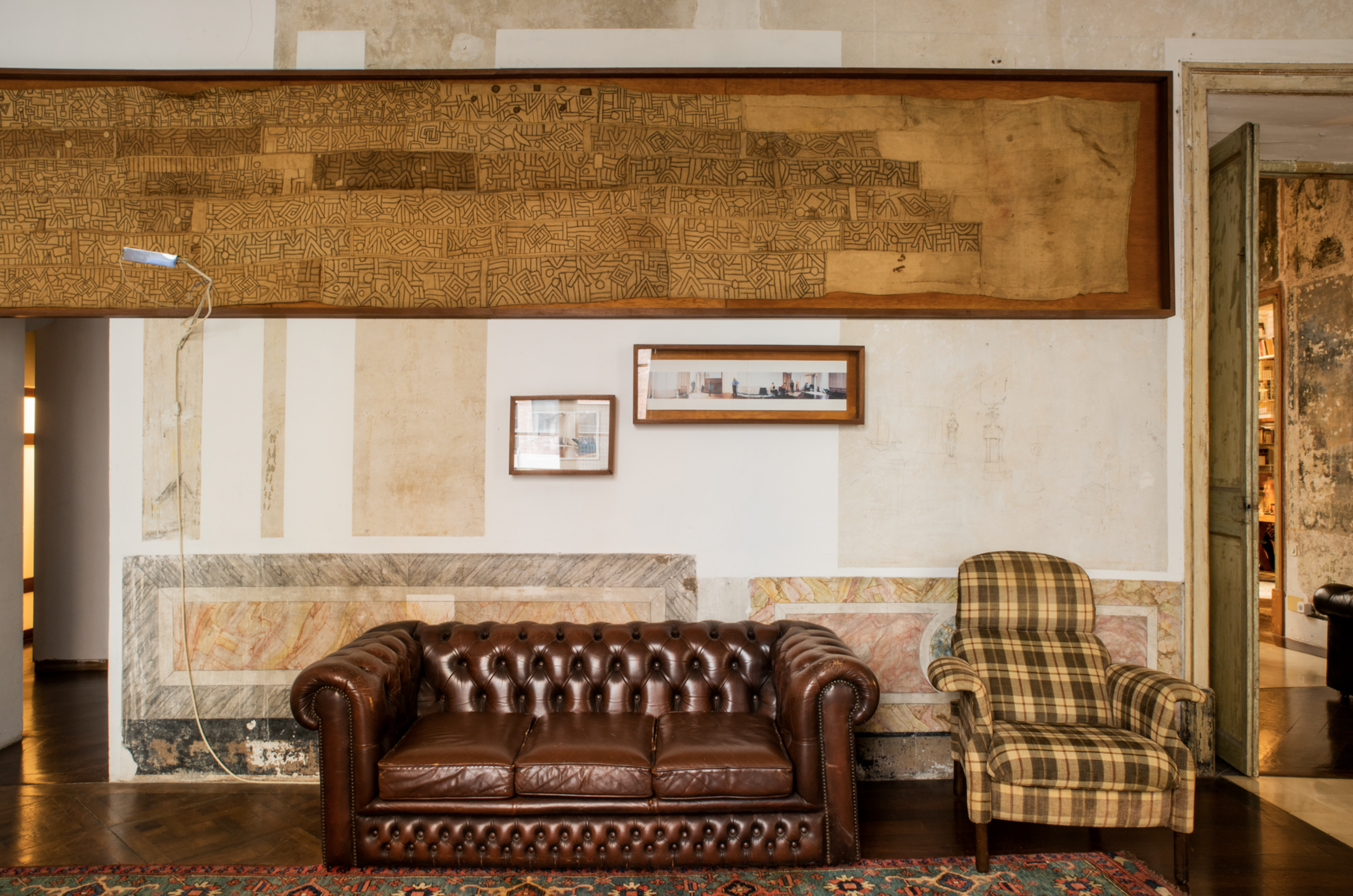
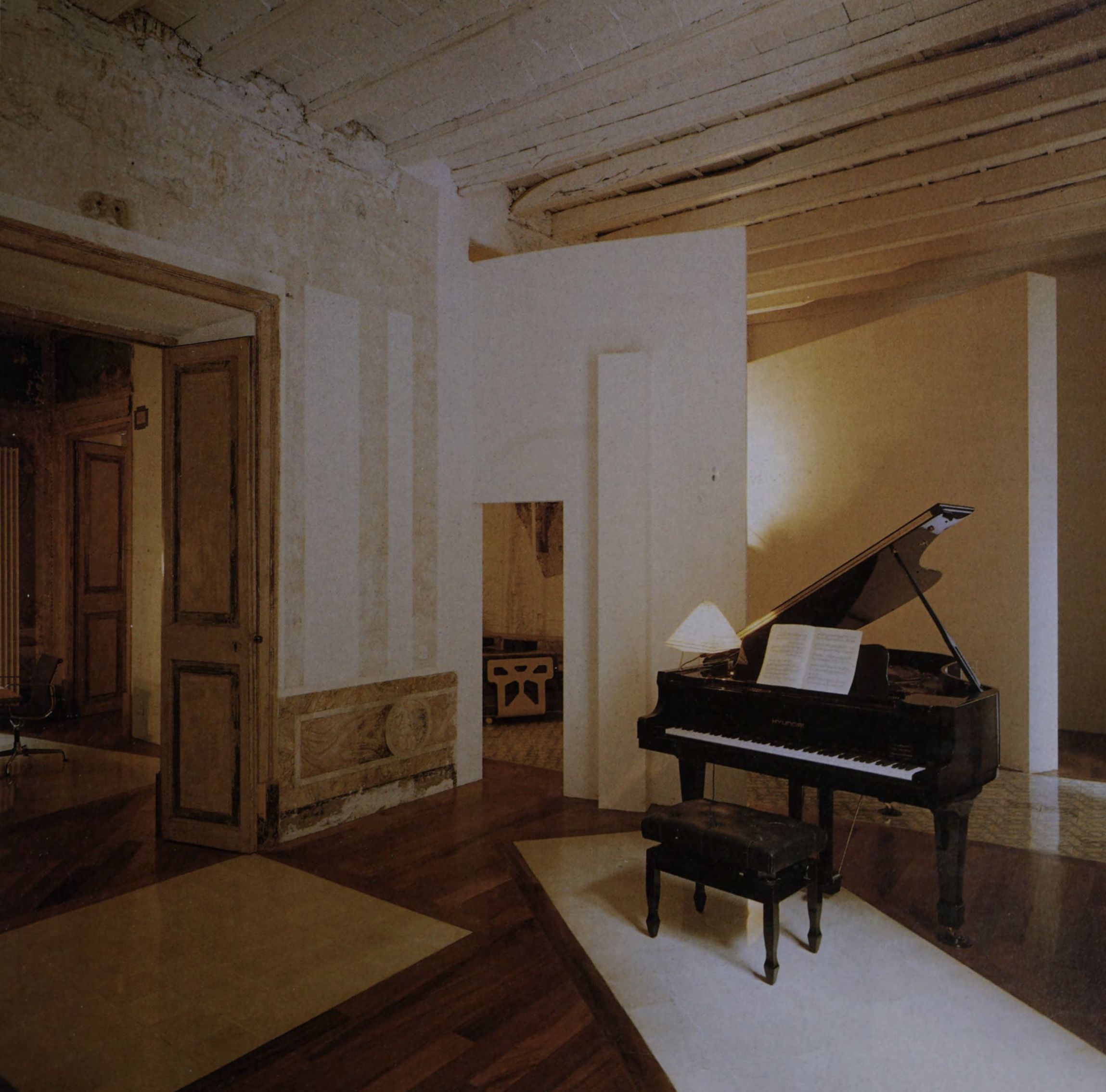
When they began remodeling, very little of the building’s past
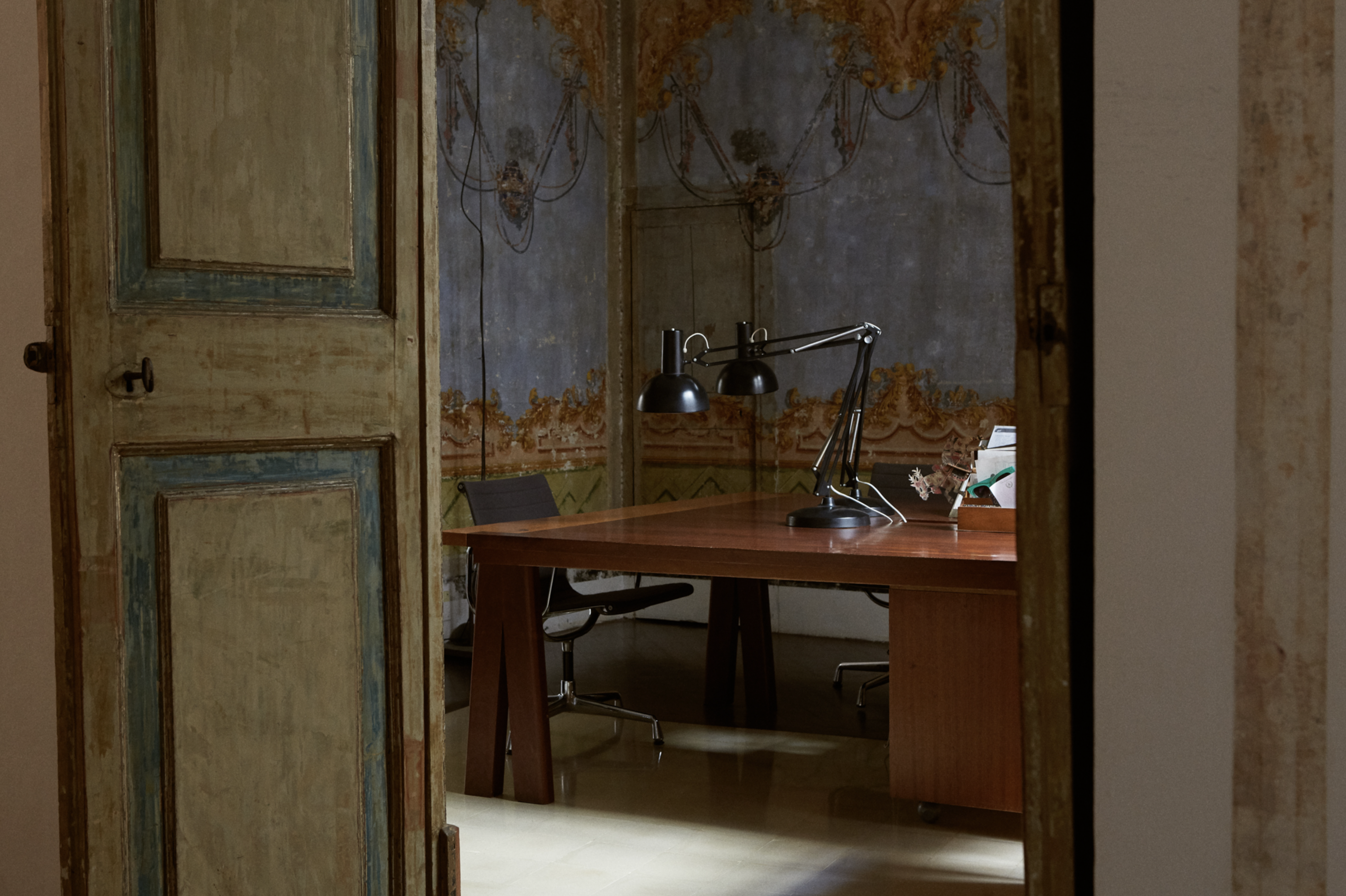
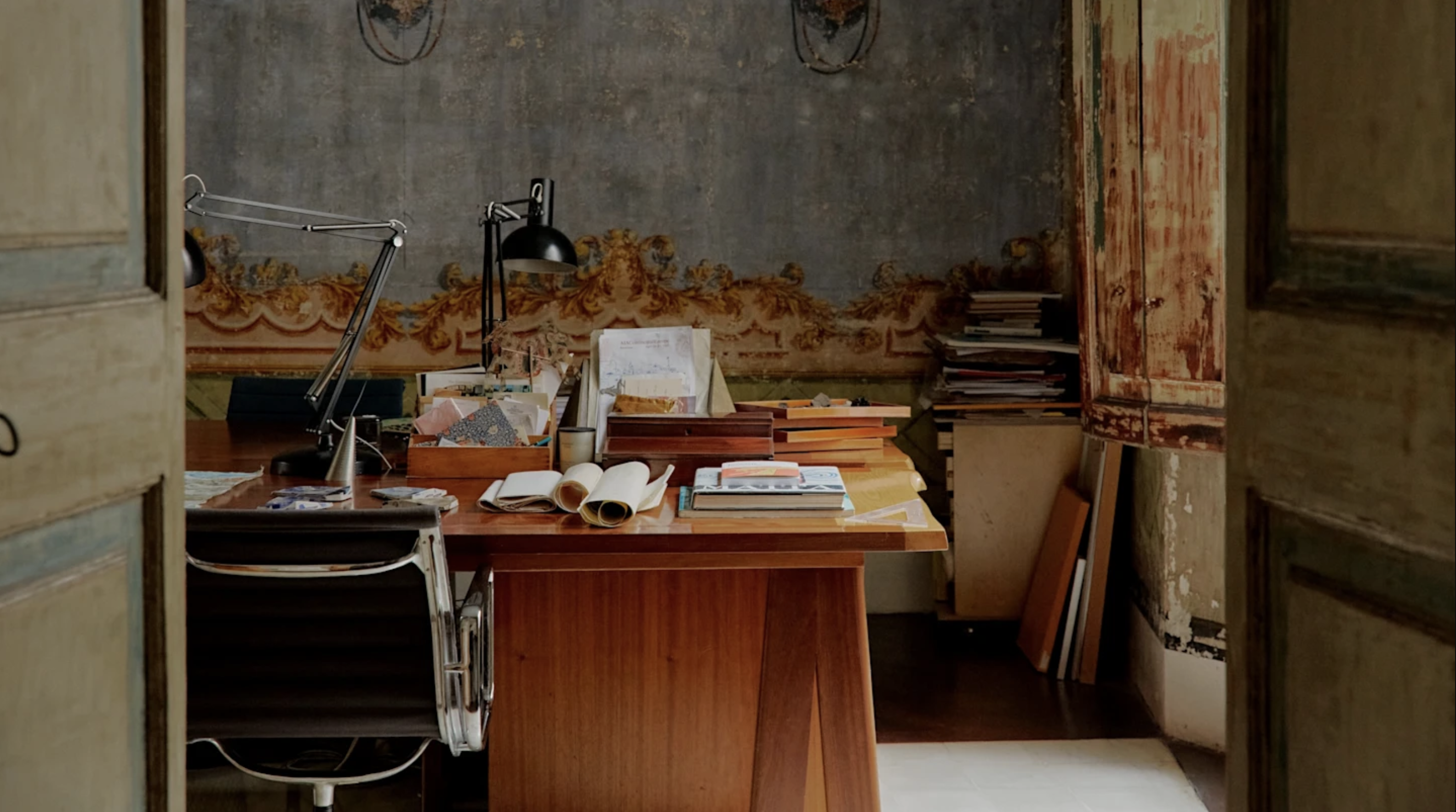
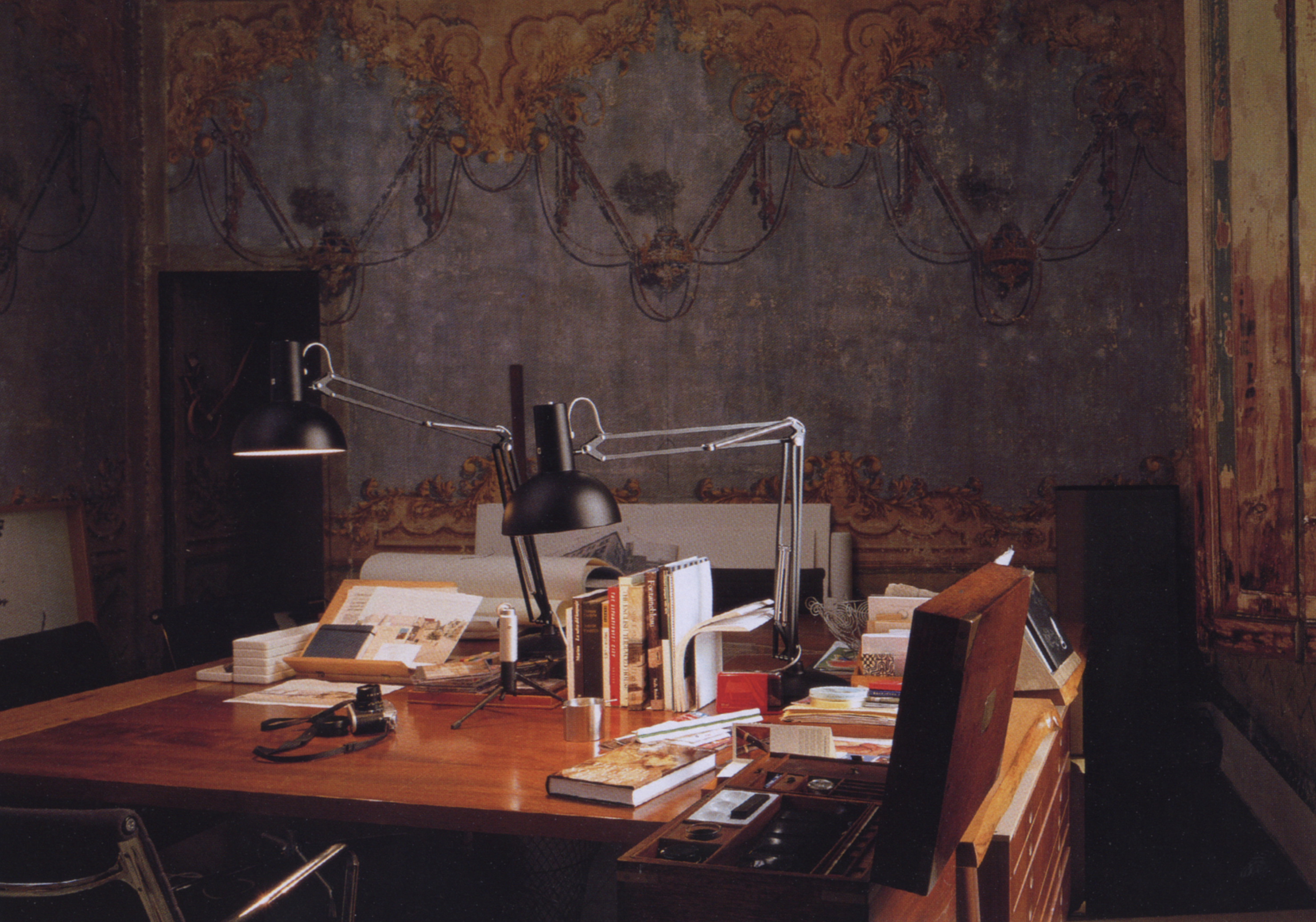
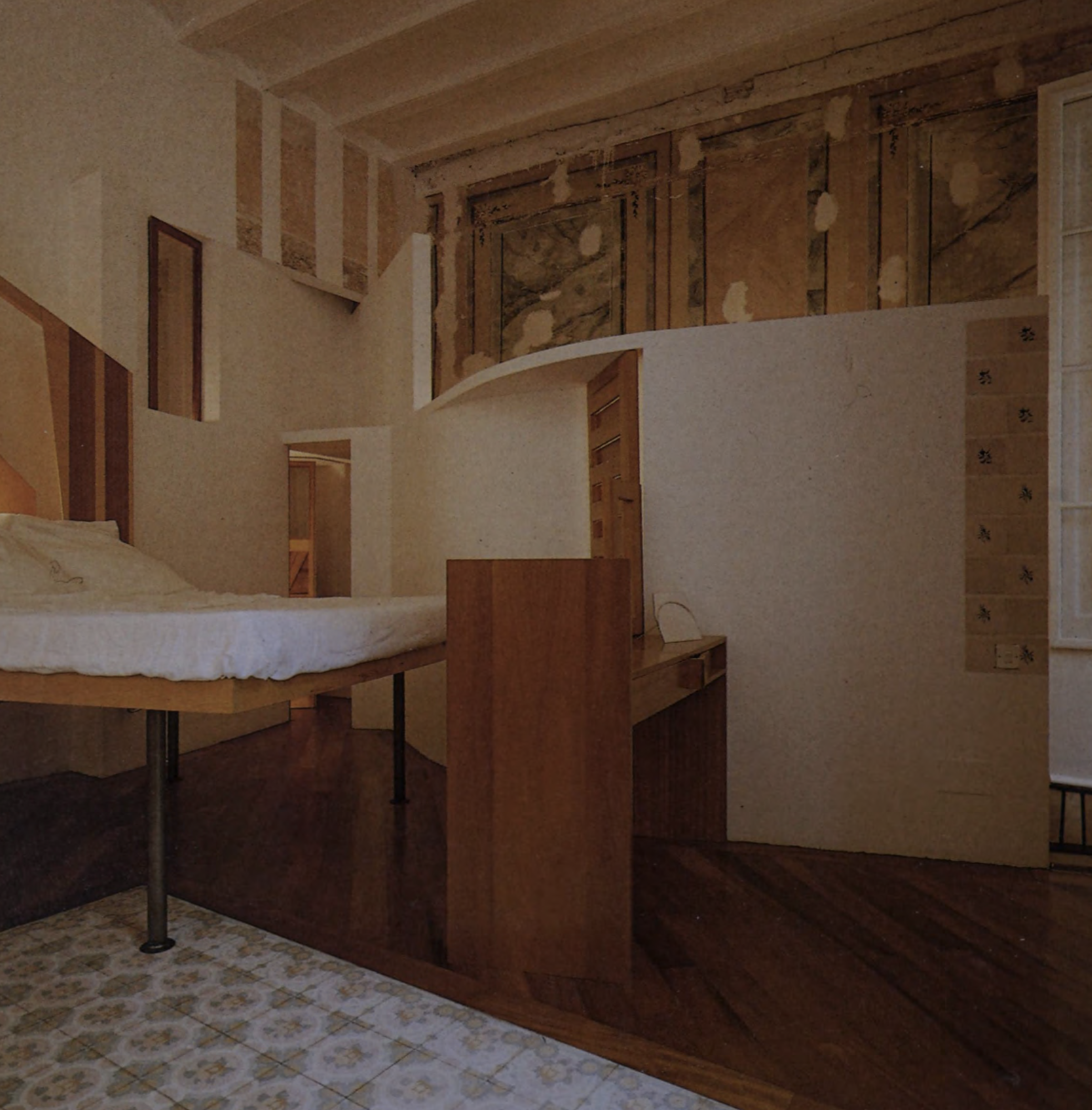
splendor remained. None of the partition walls was still
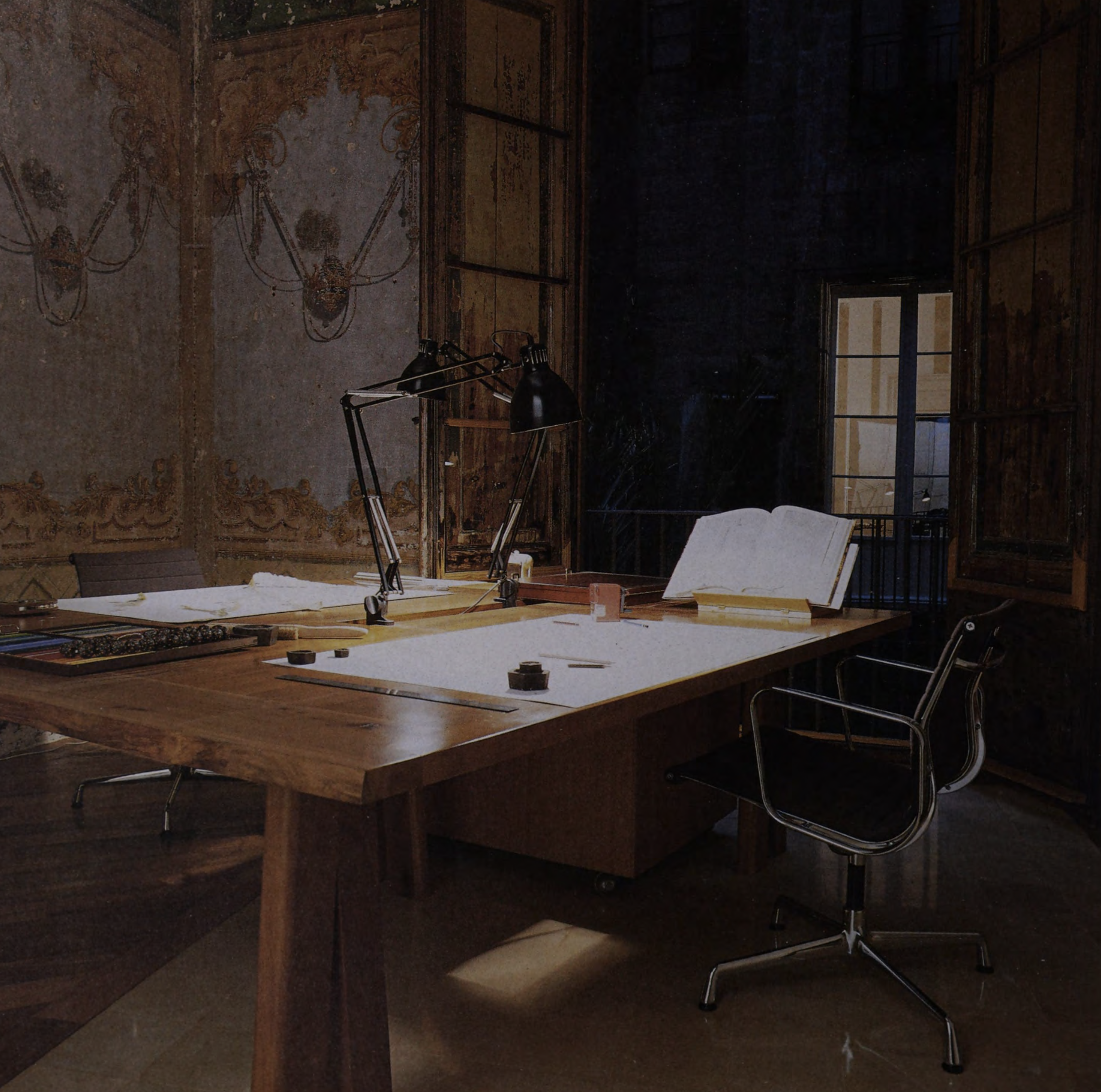
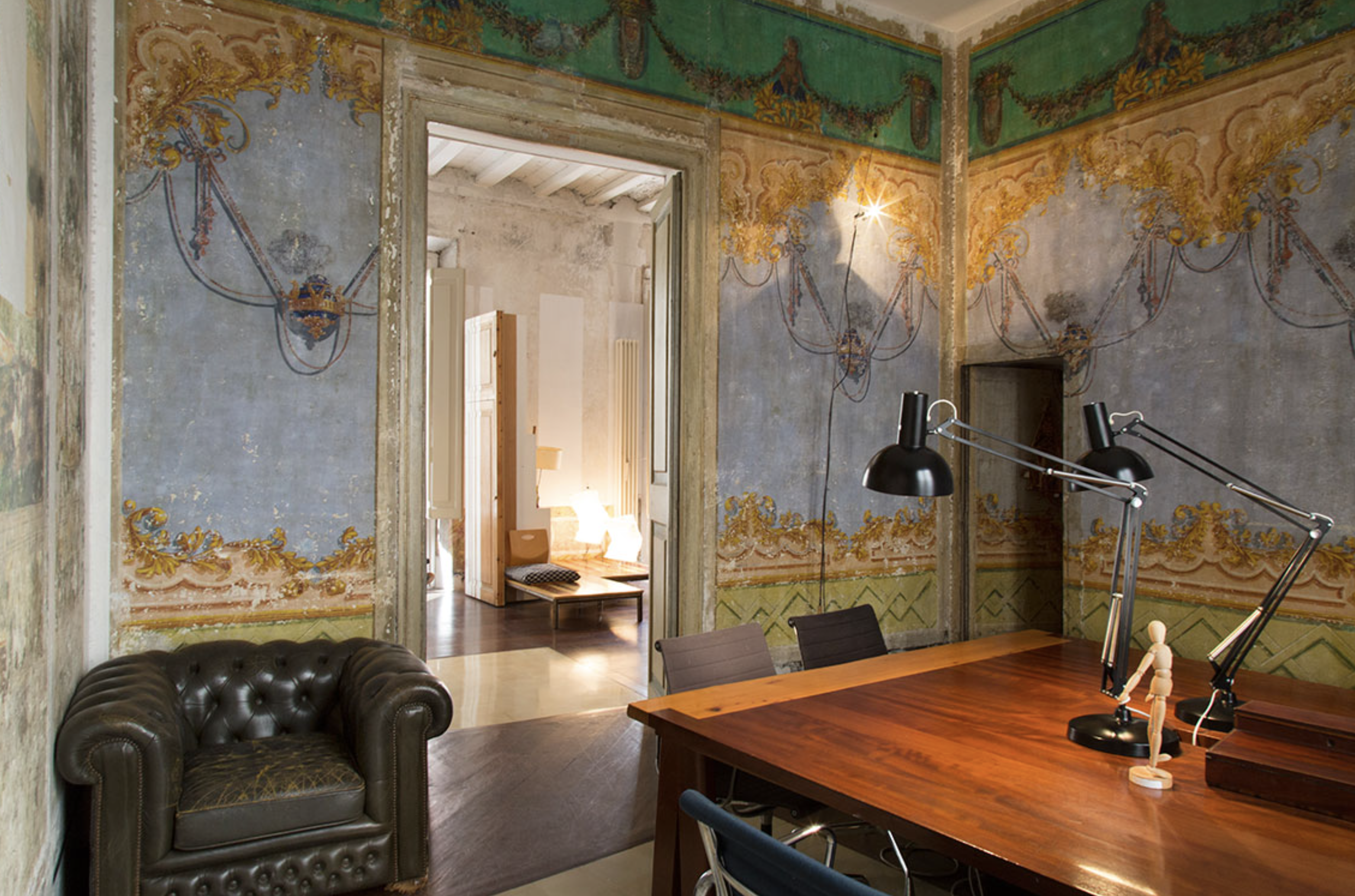
standing, and only the perimeter walls remained, decorated
with old paintings and bits and pieces of former details. This
raised the question of how best to divide the interior space.
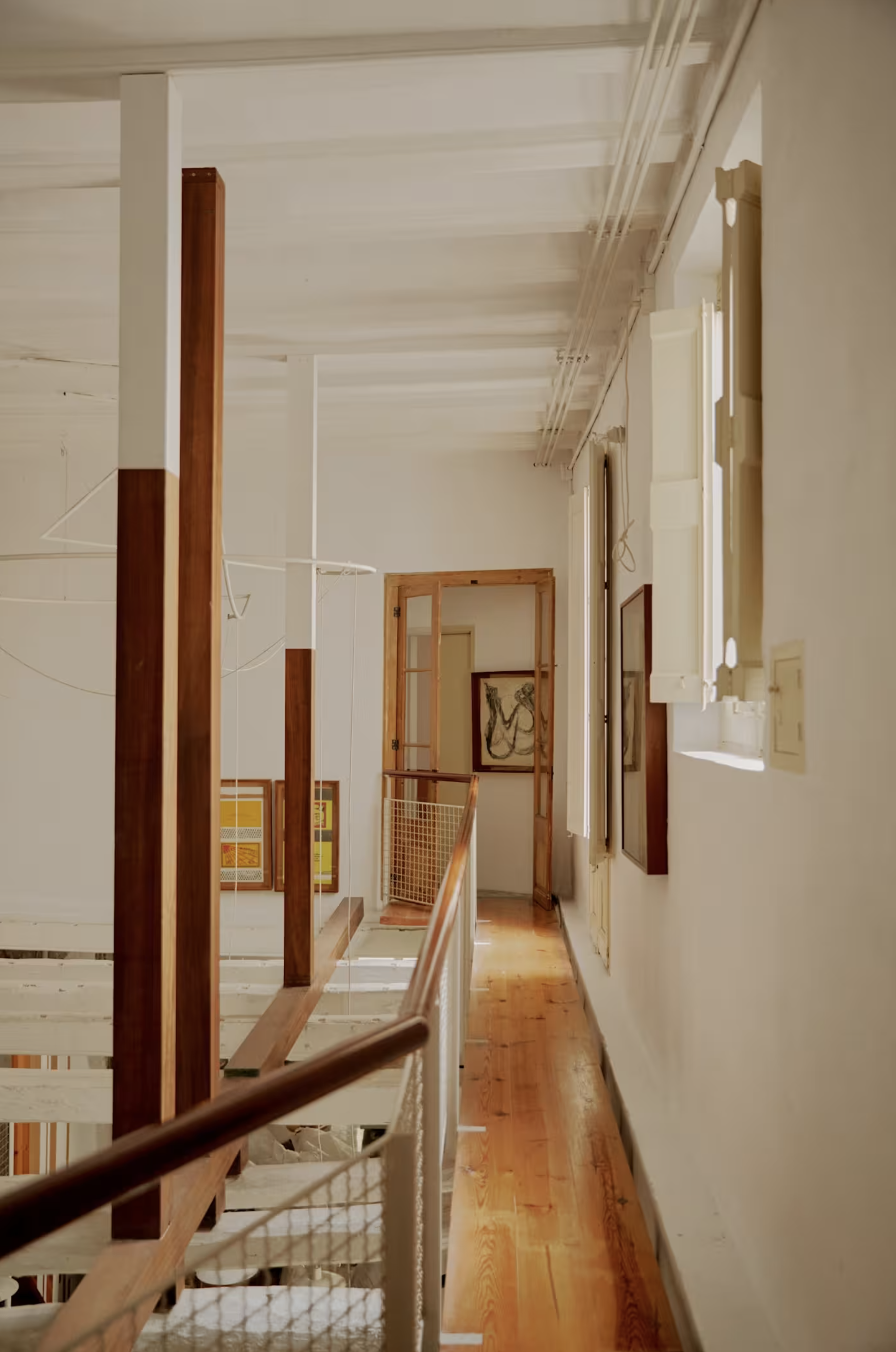
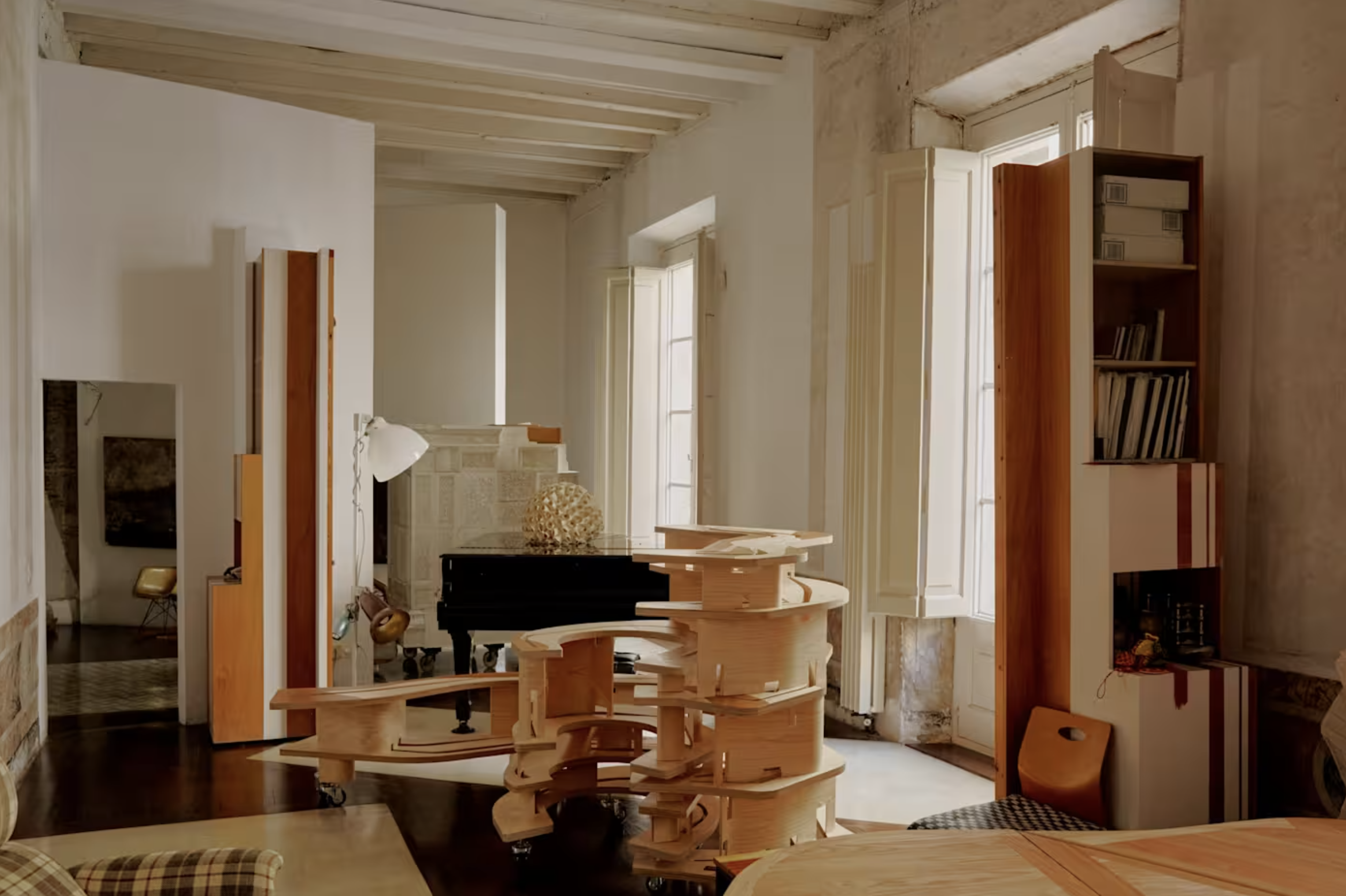
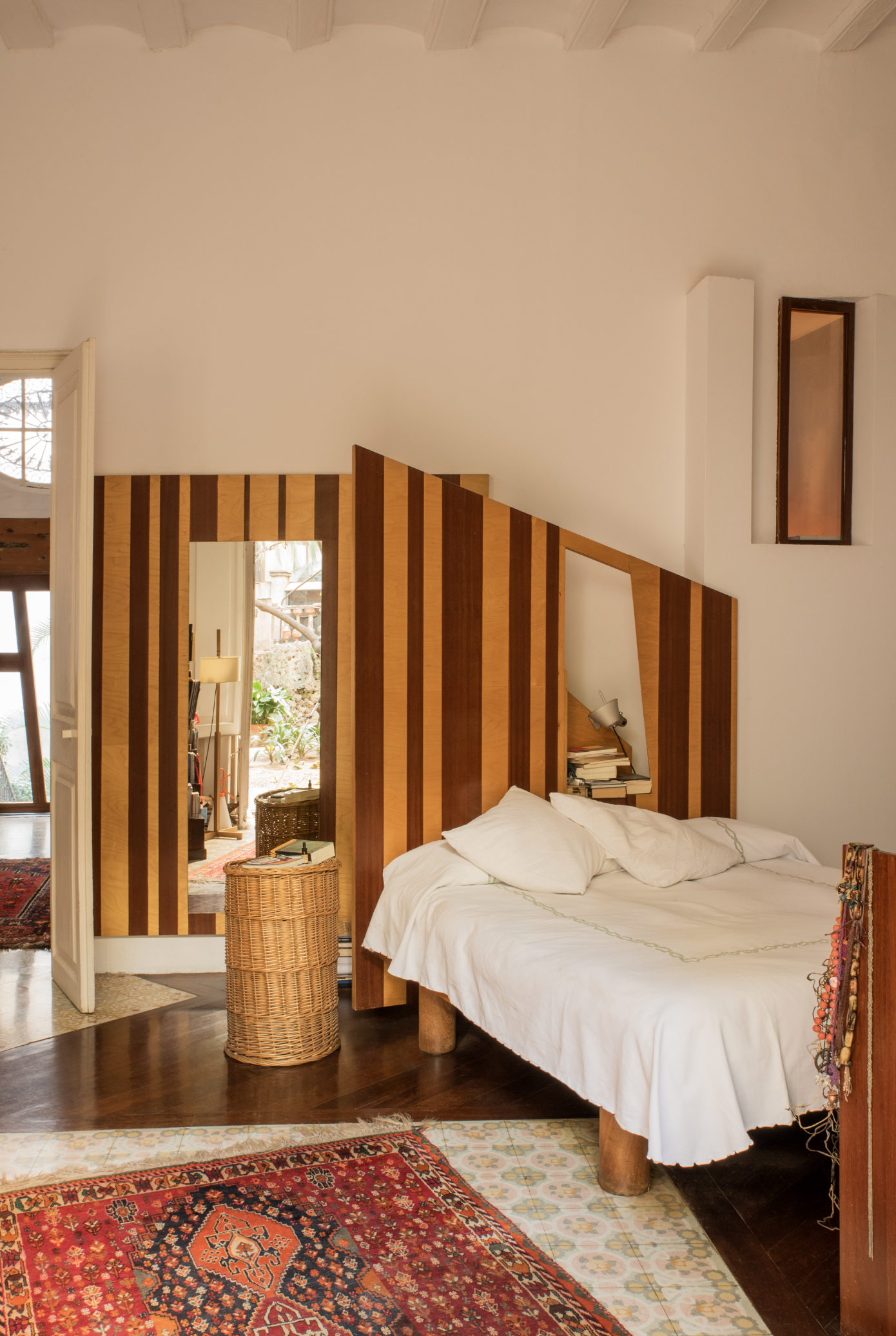
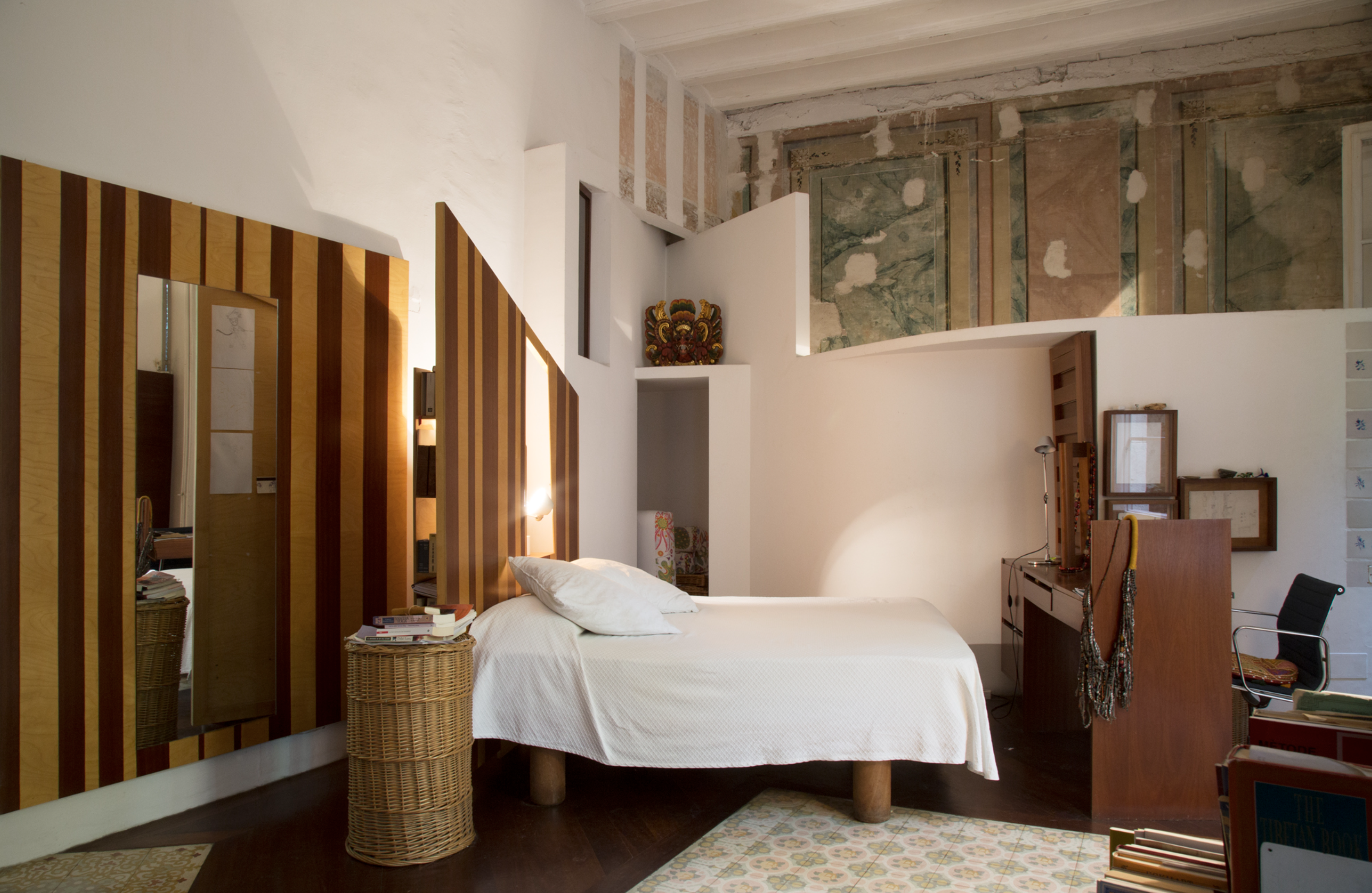
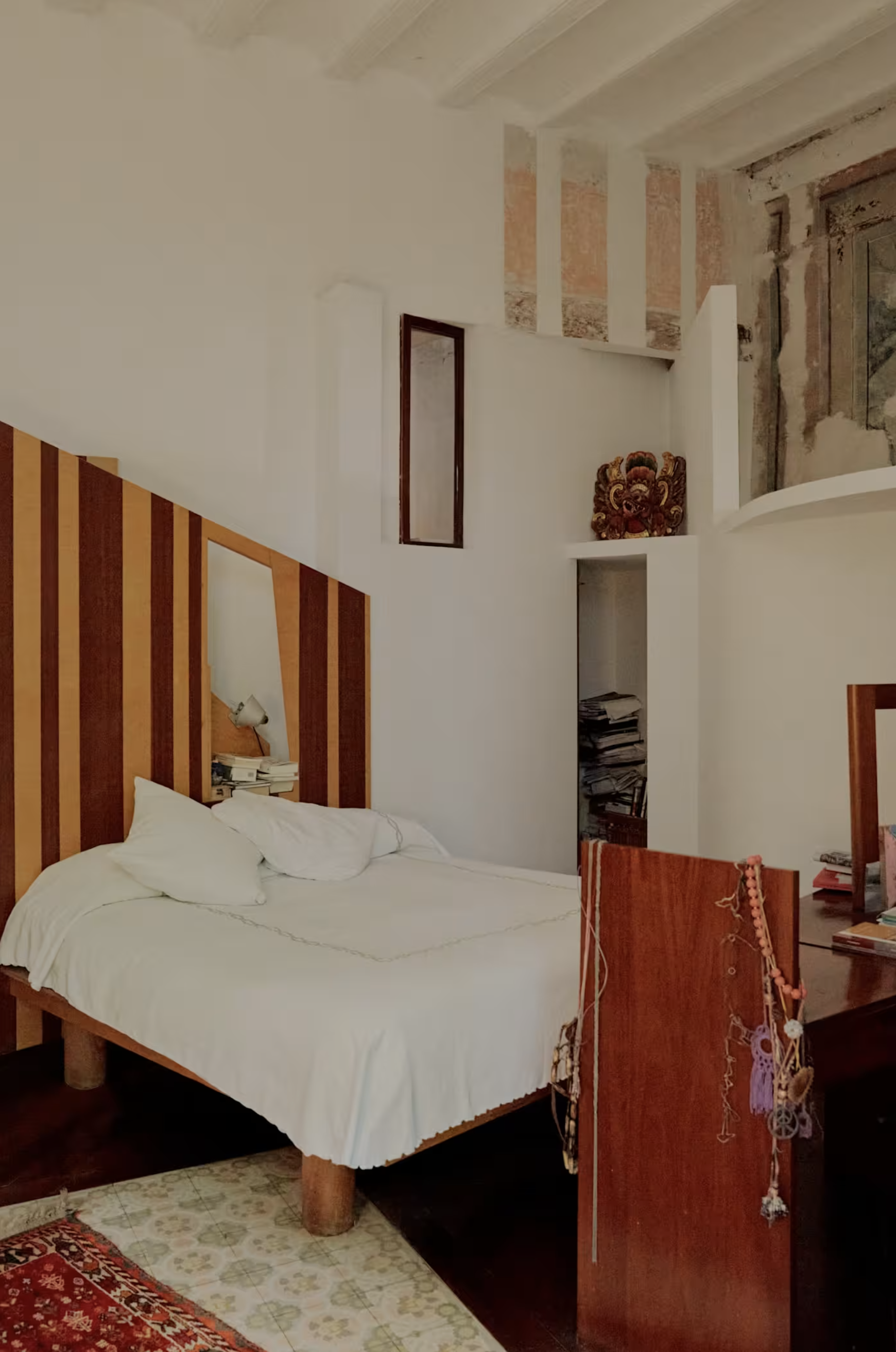
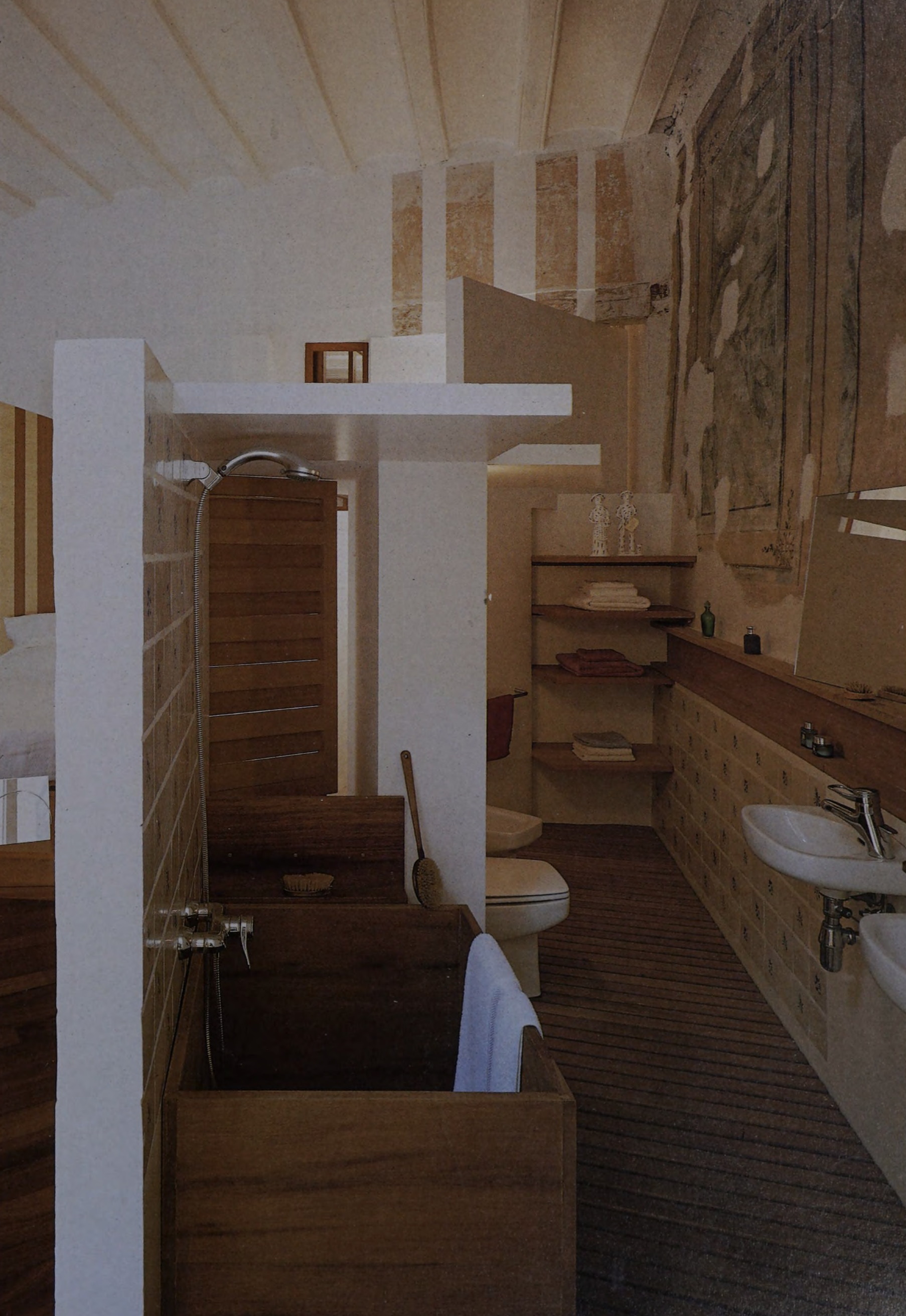
They first thought of curtains, but they finally opted for a few
new interior walls, movable wooden furniture, and wooden
doors as partitions.
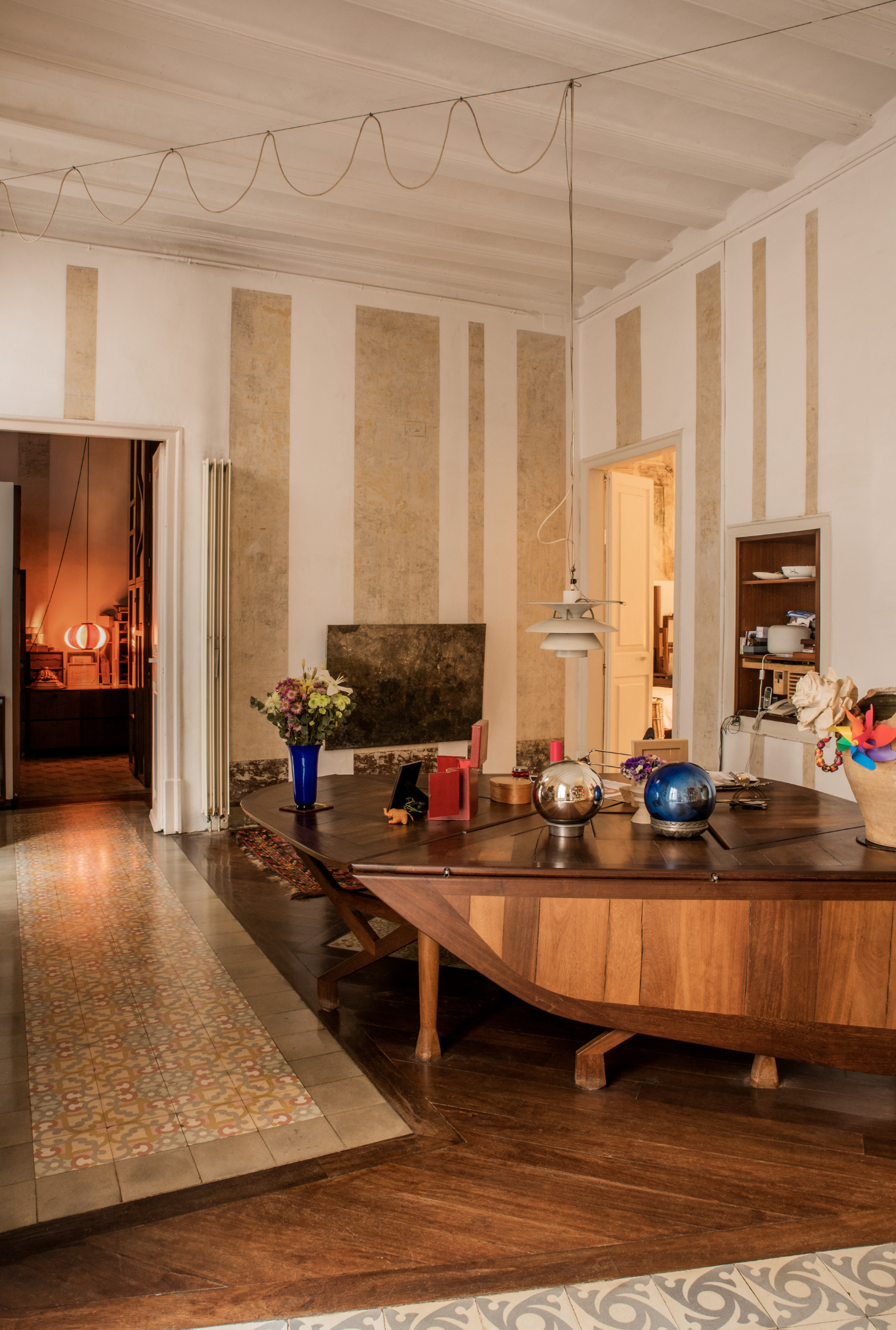
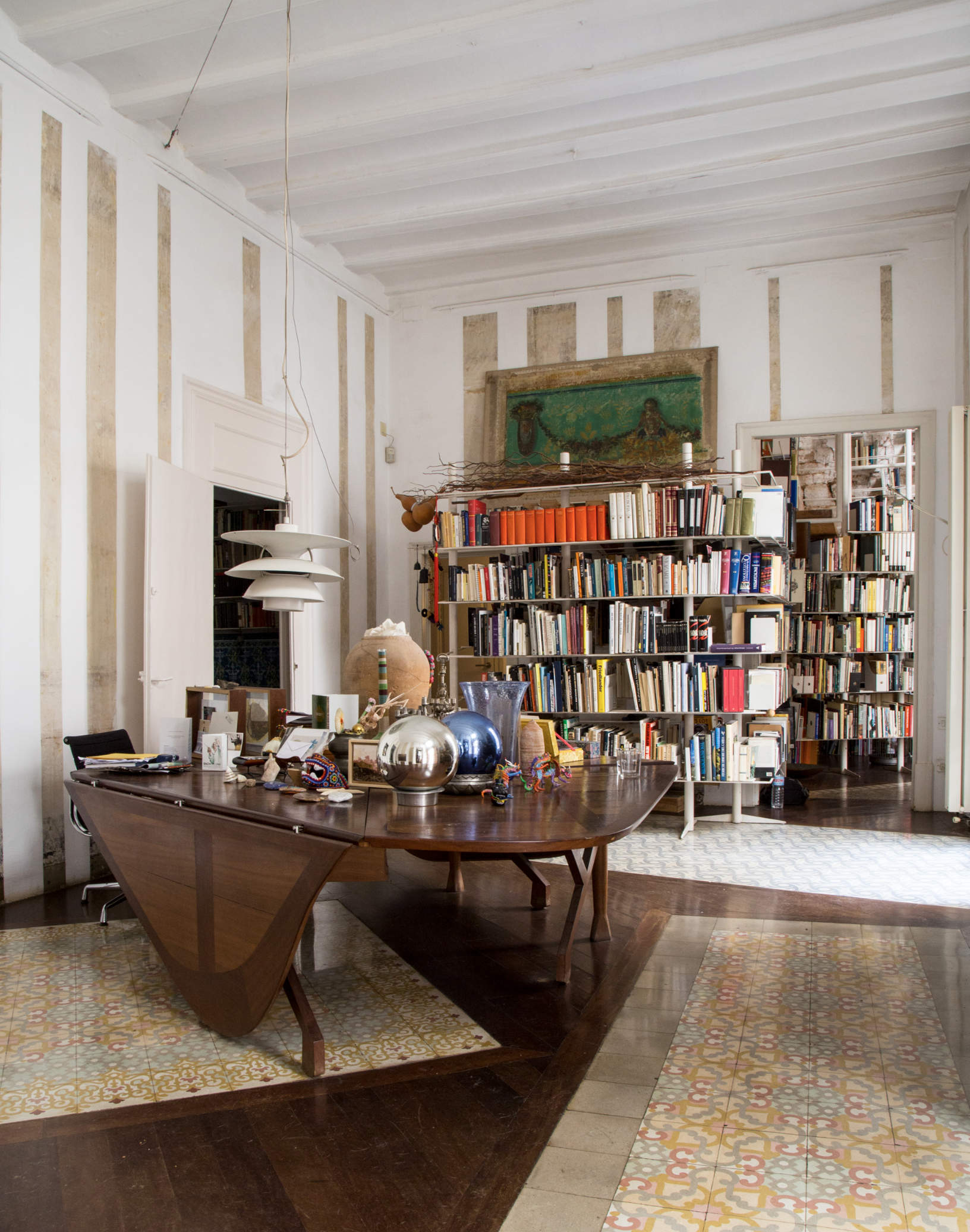
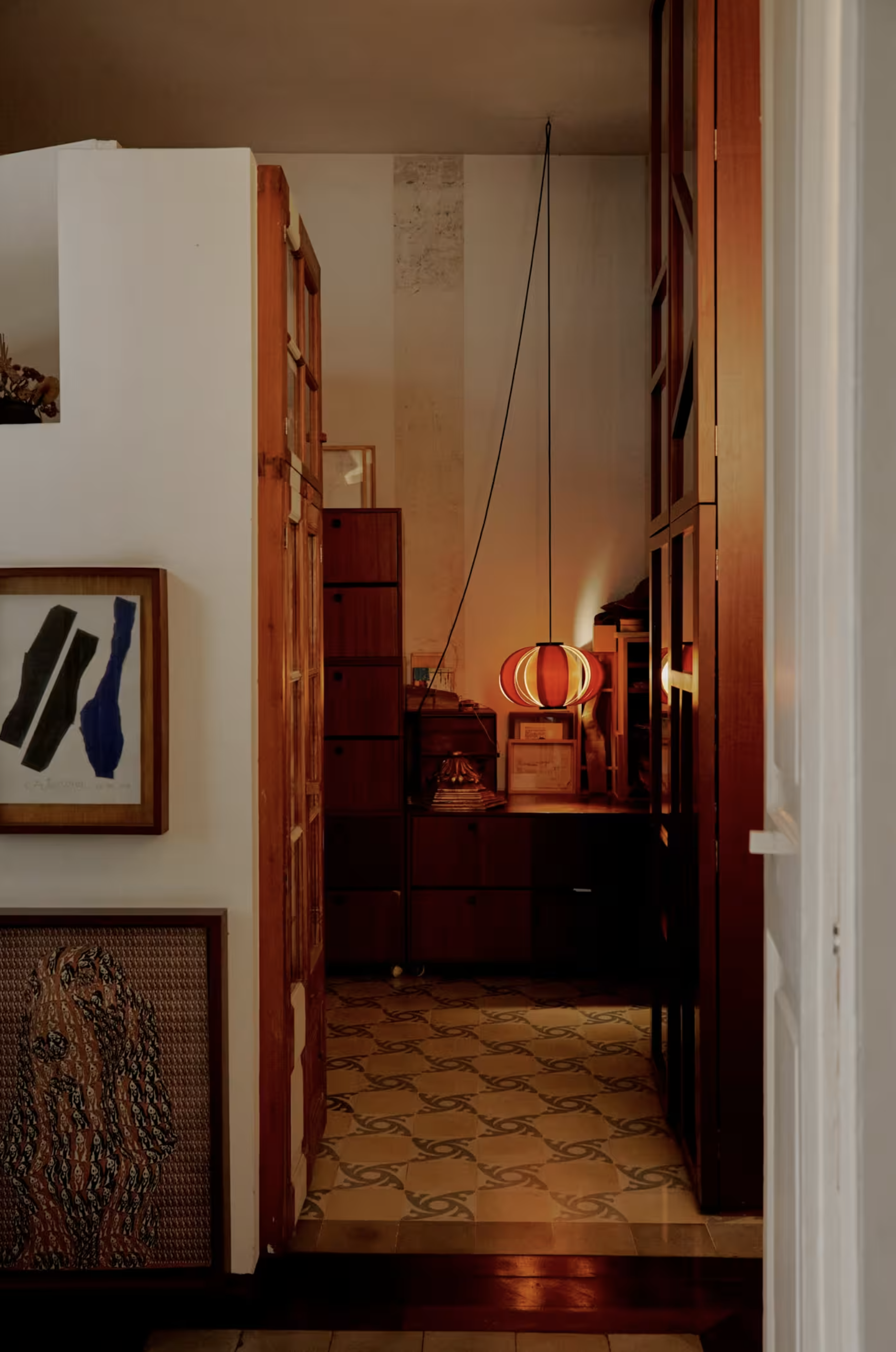
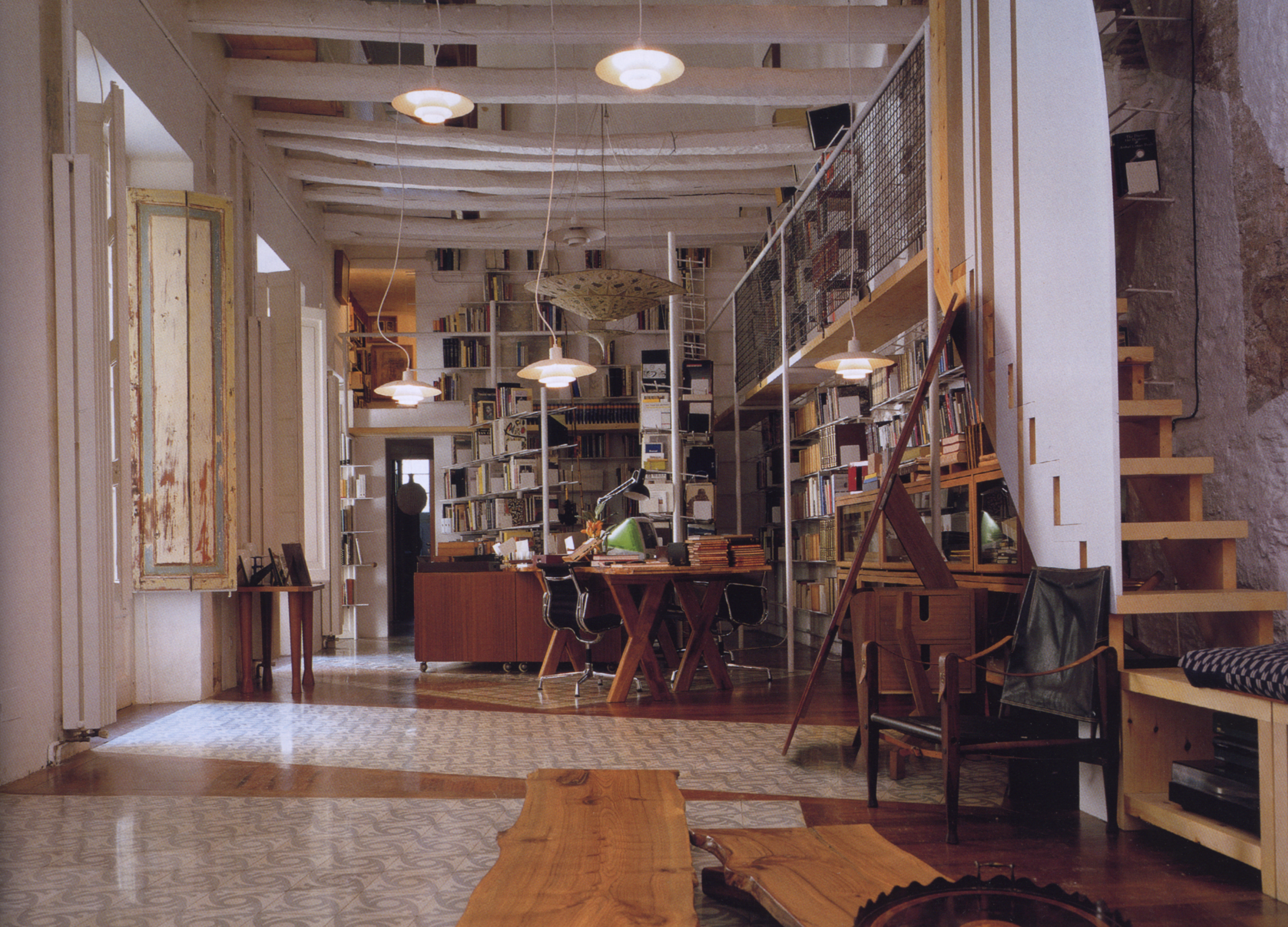
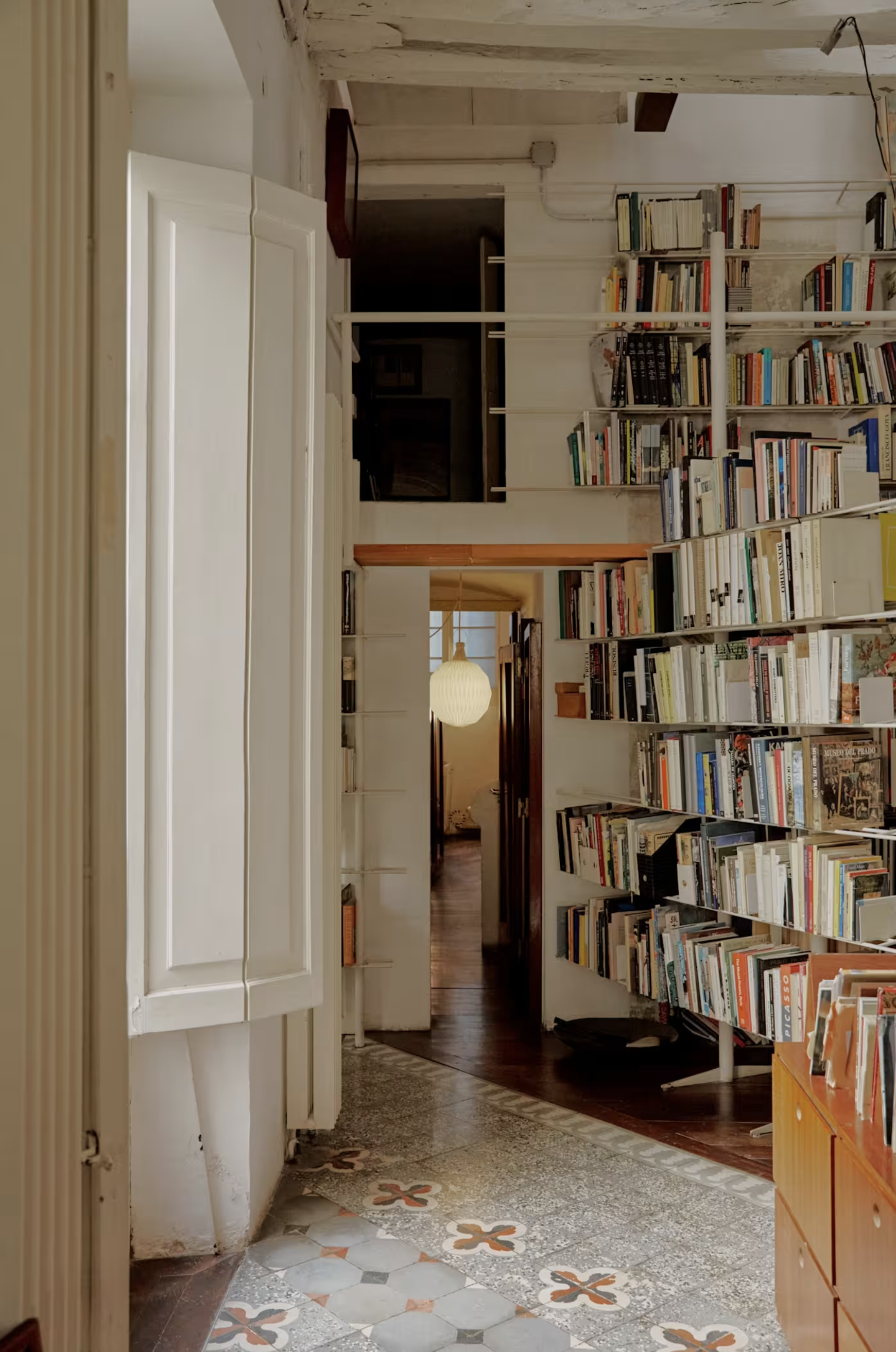
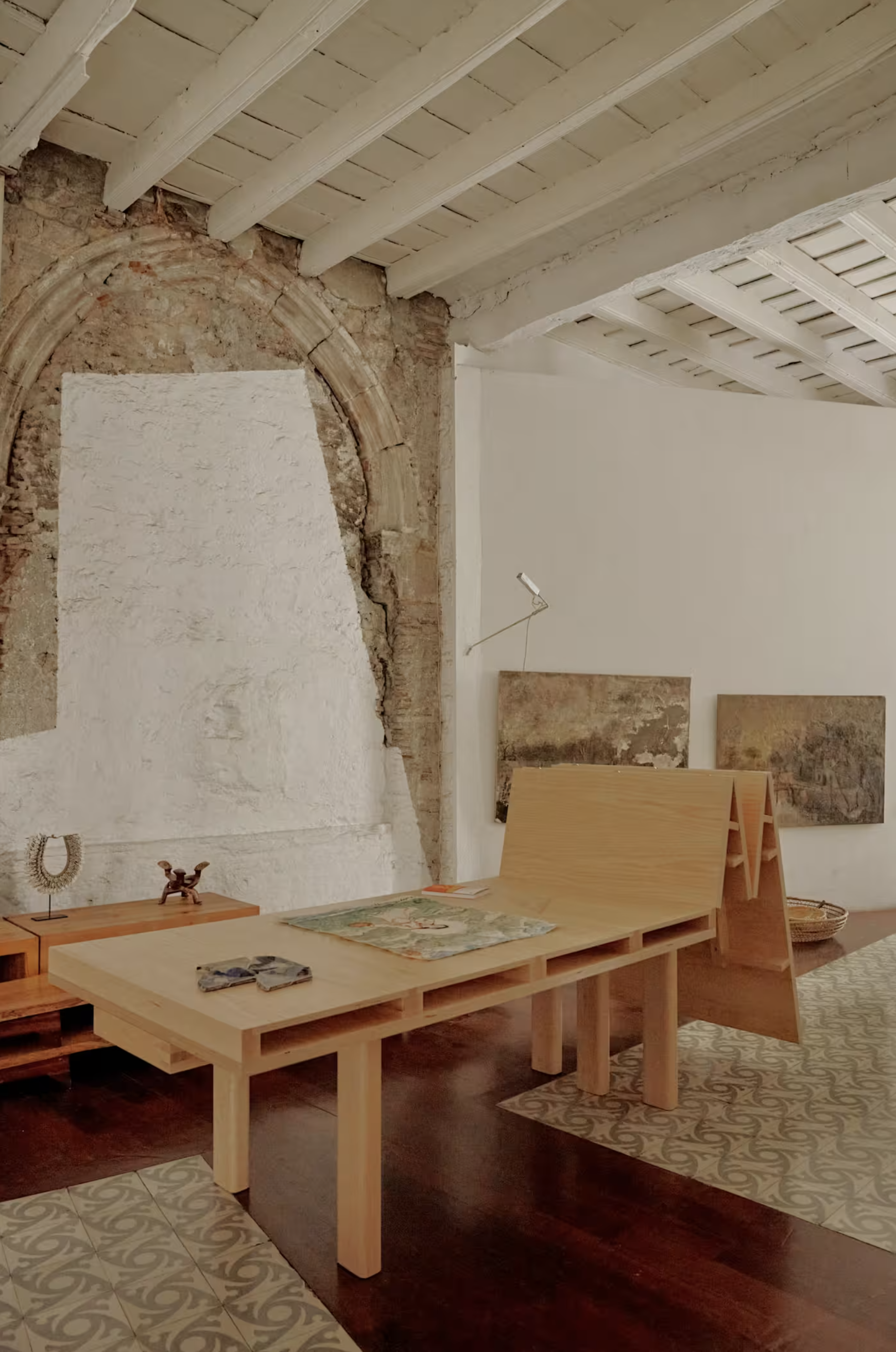
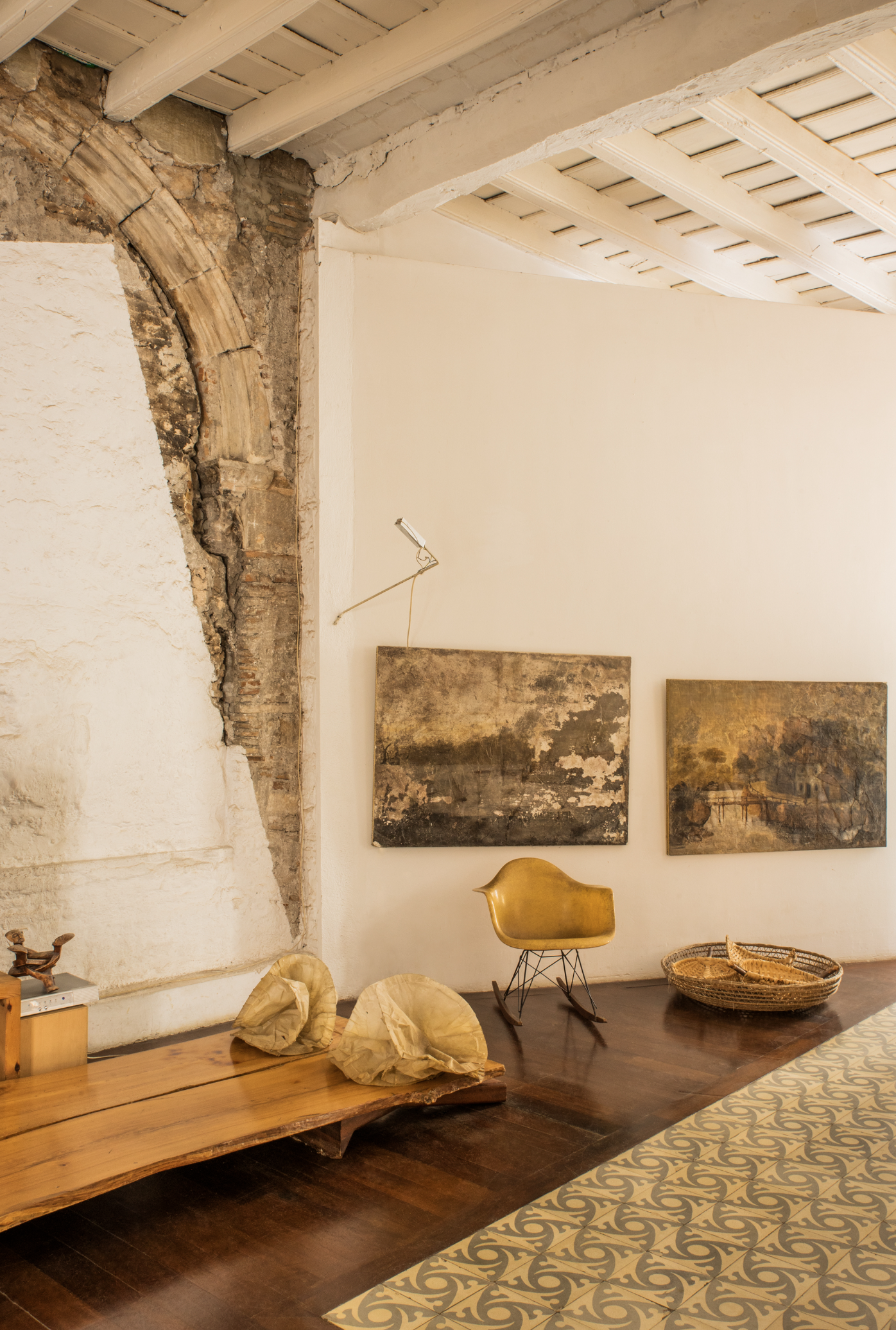
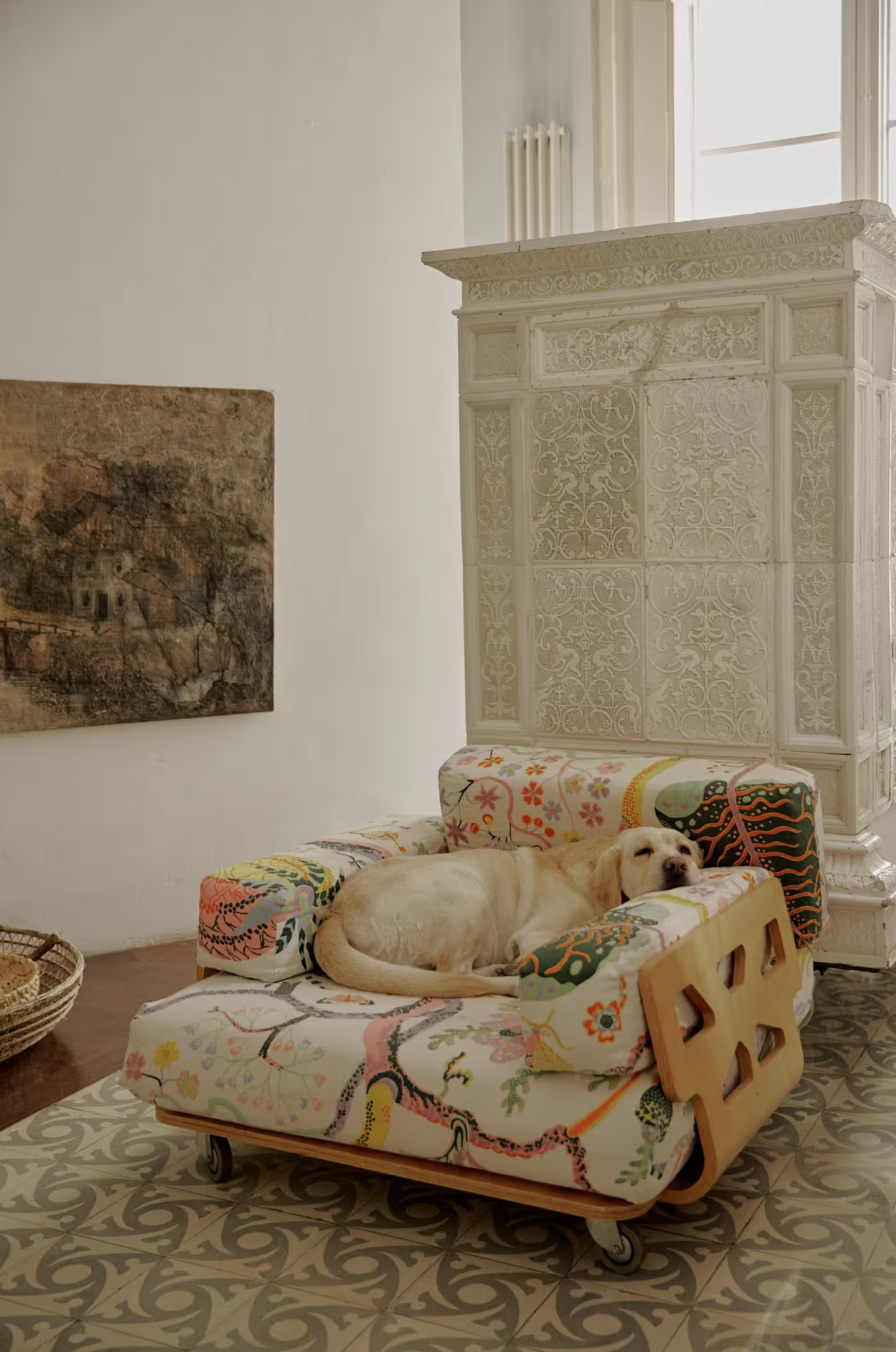
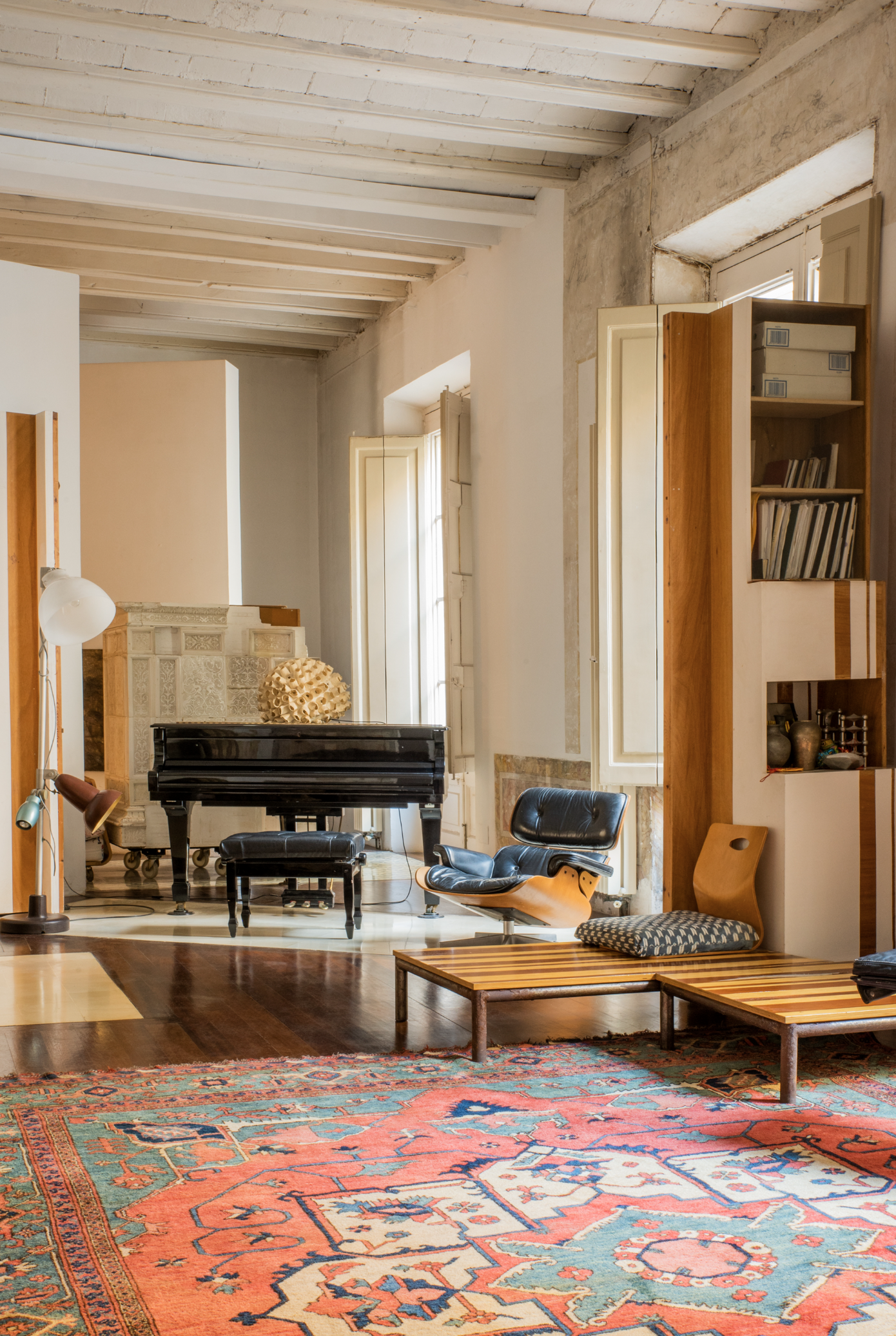
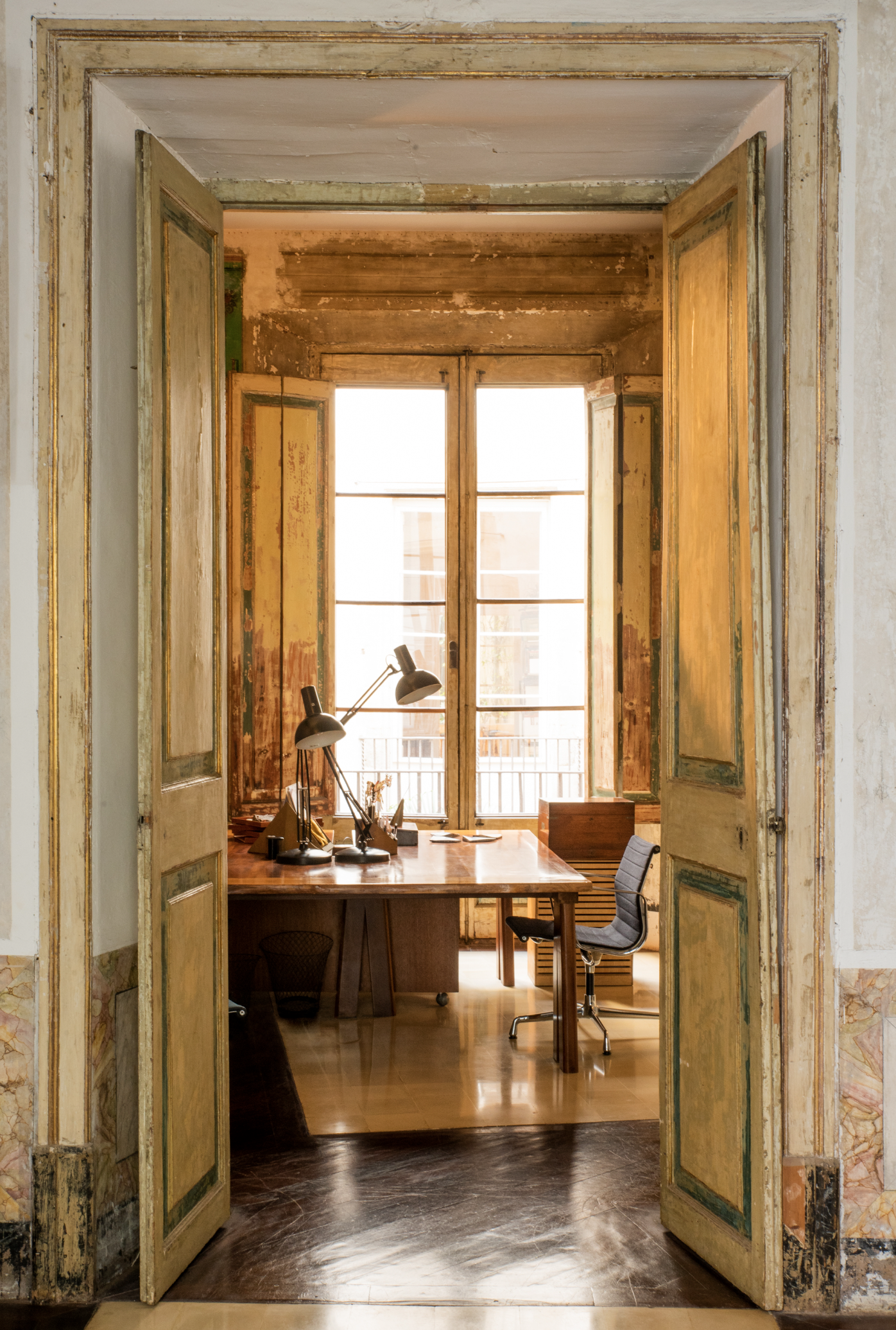
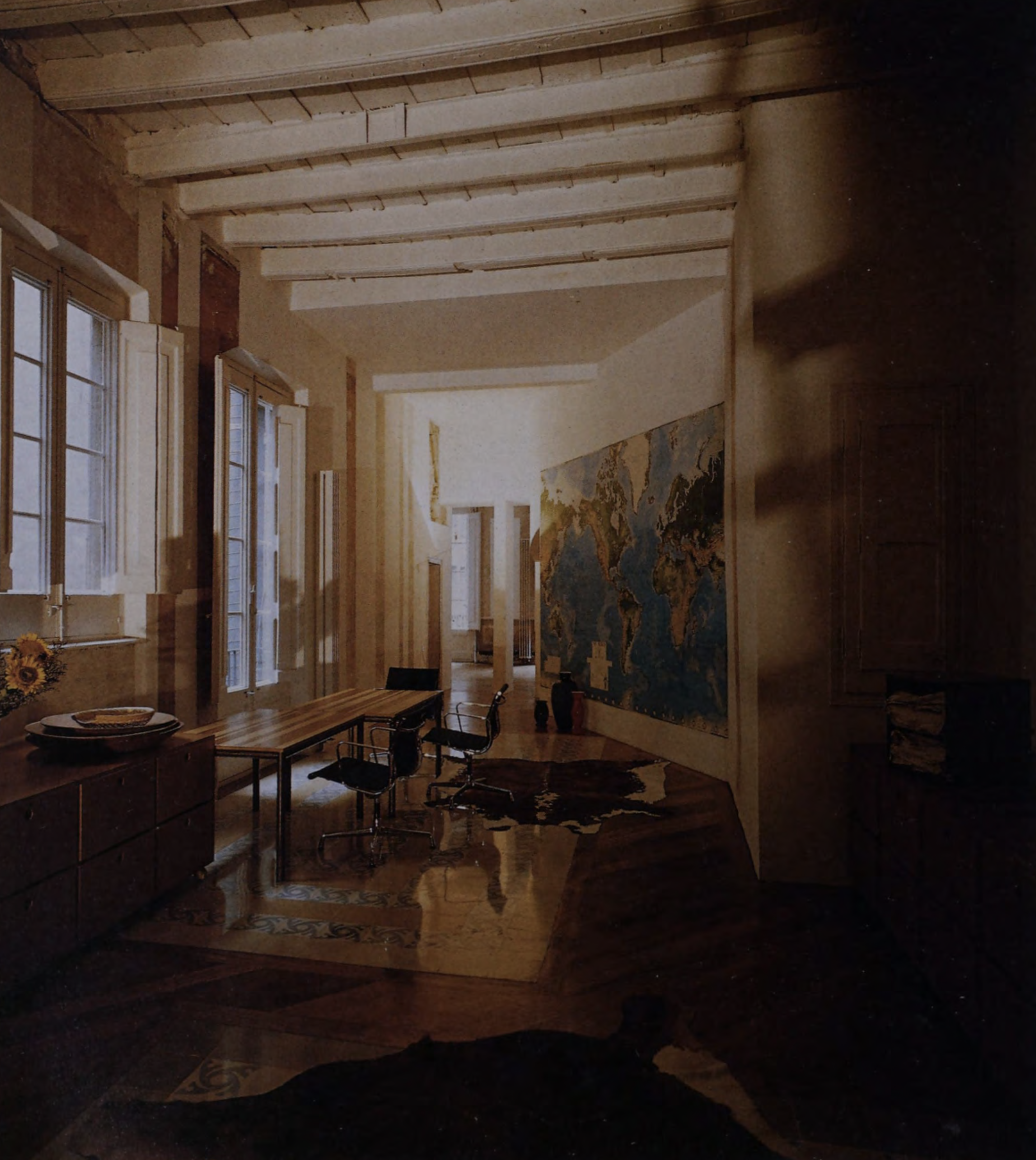
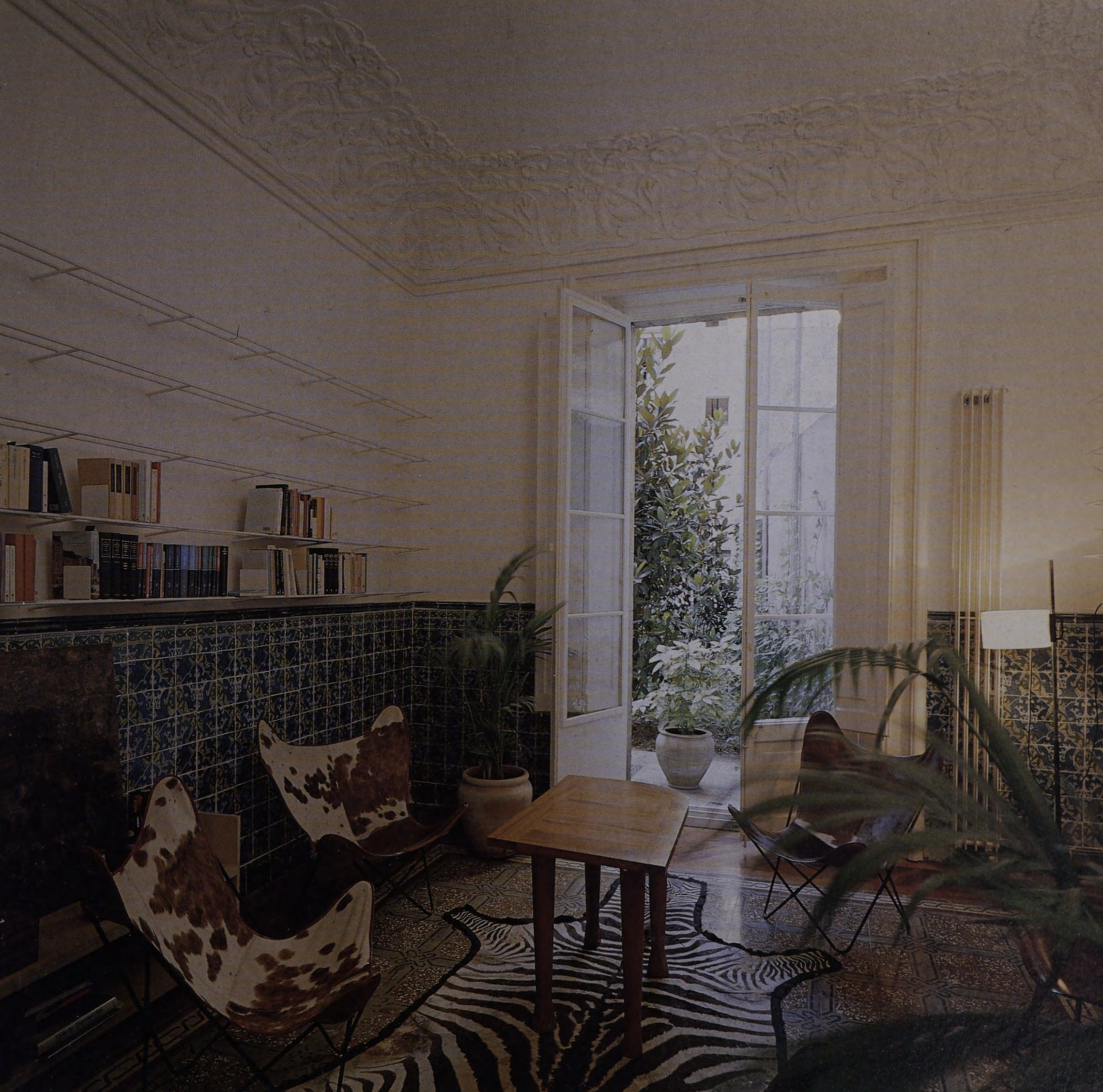
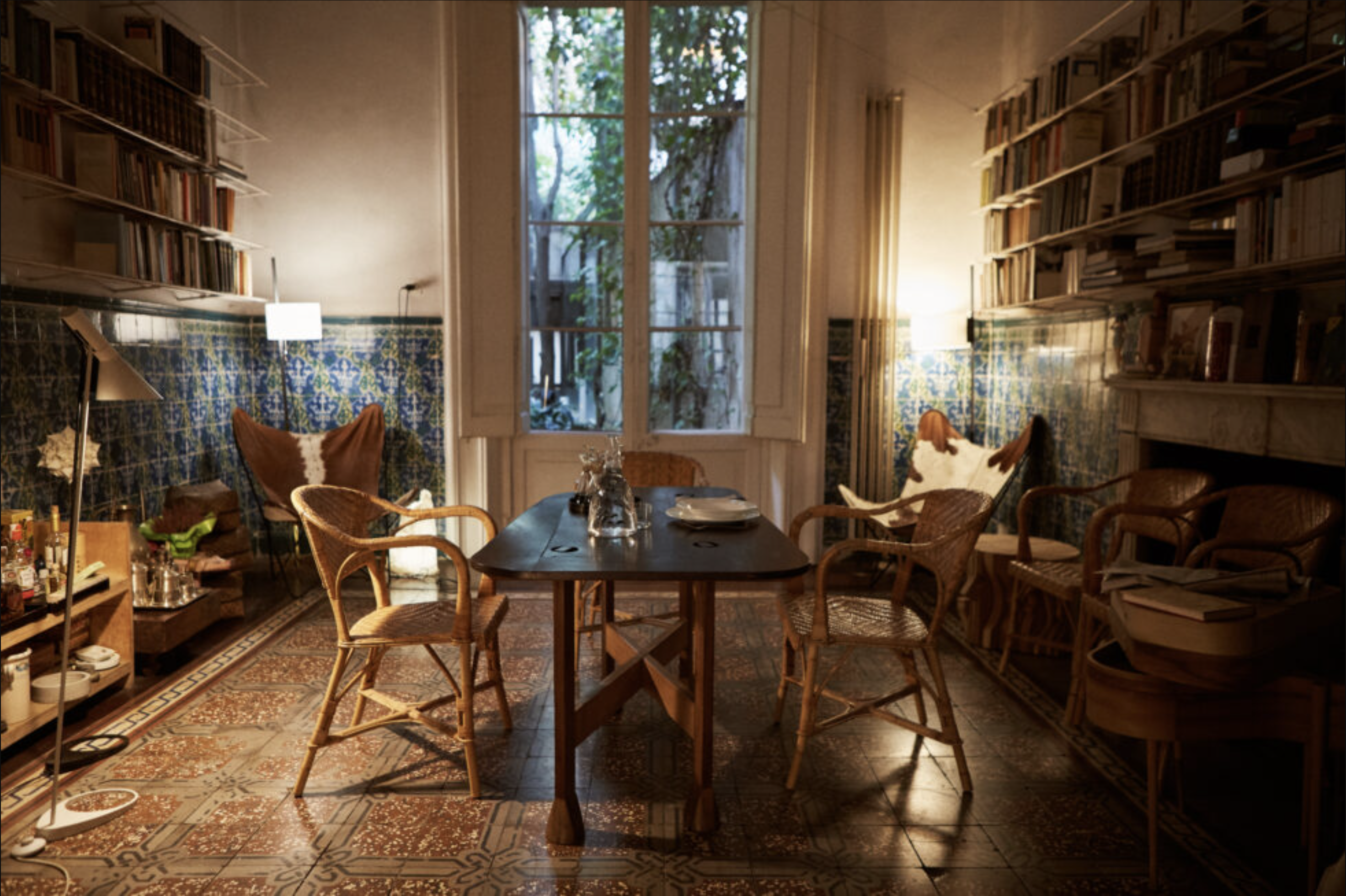
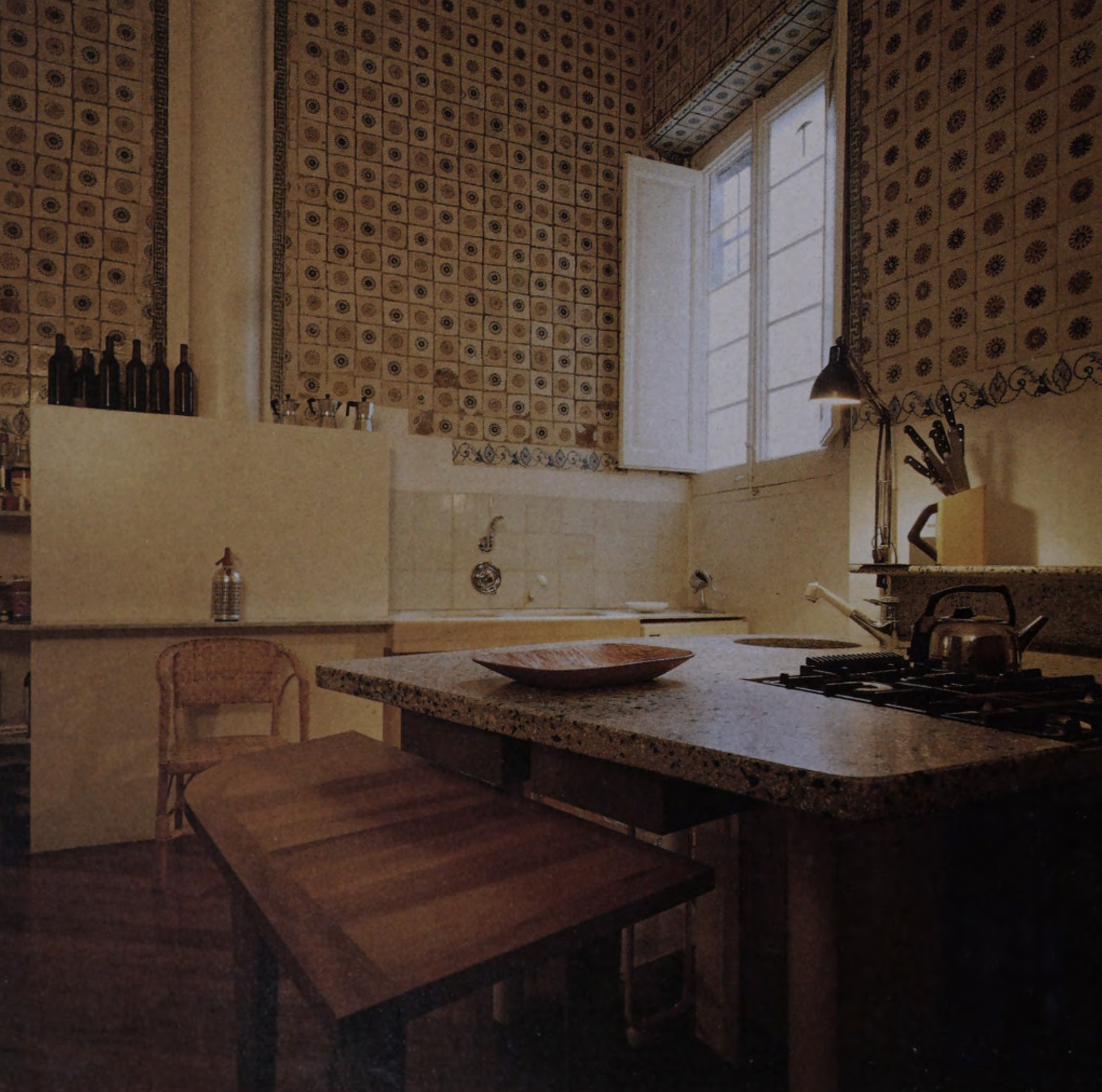
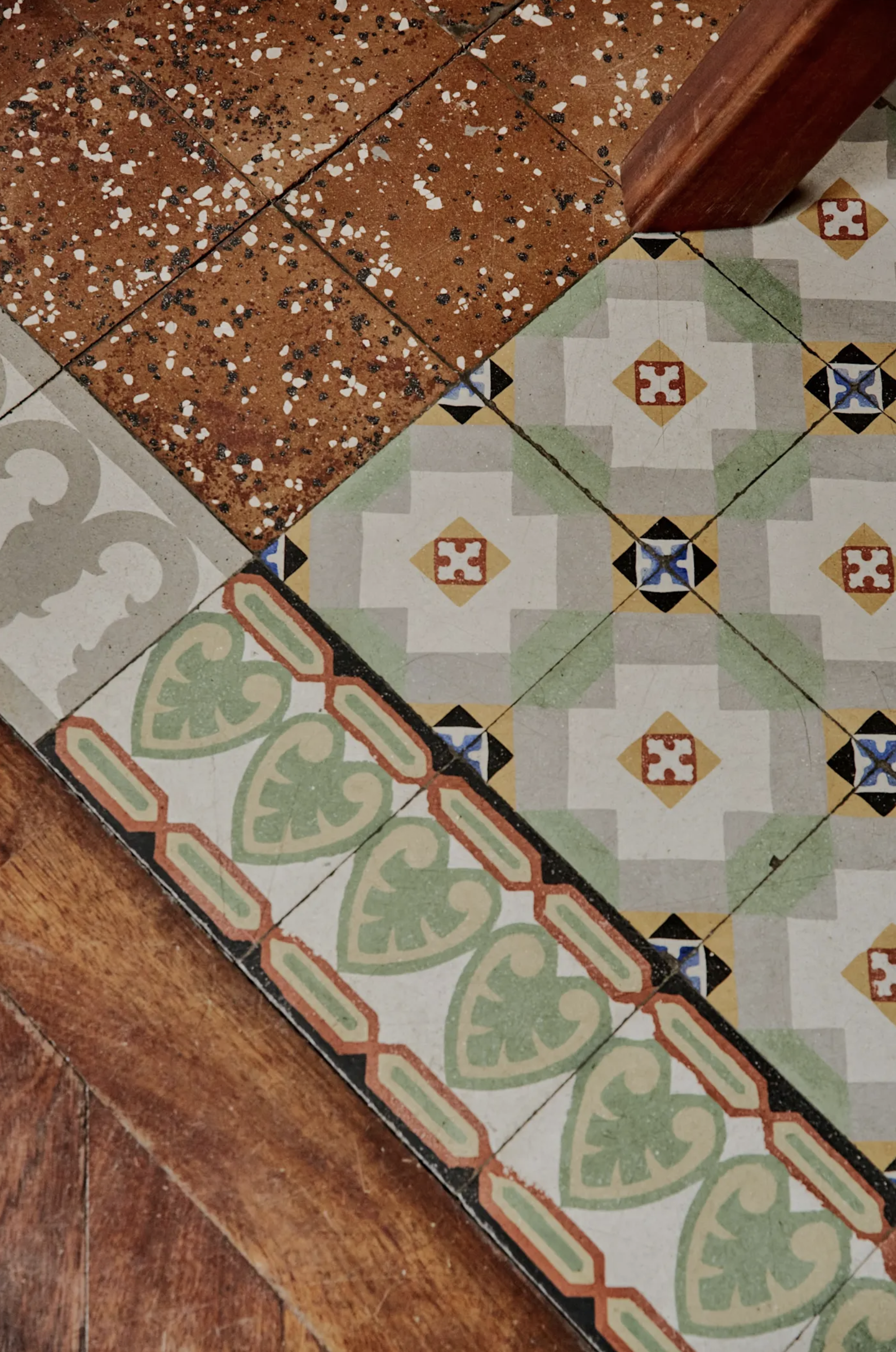
Old floor tiles look like carpets, and seem to repeat the pat-
terns of light and shadows produced beneath the windows.
The tiled patches set up directional signals and tensions
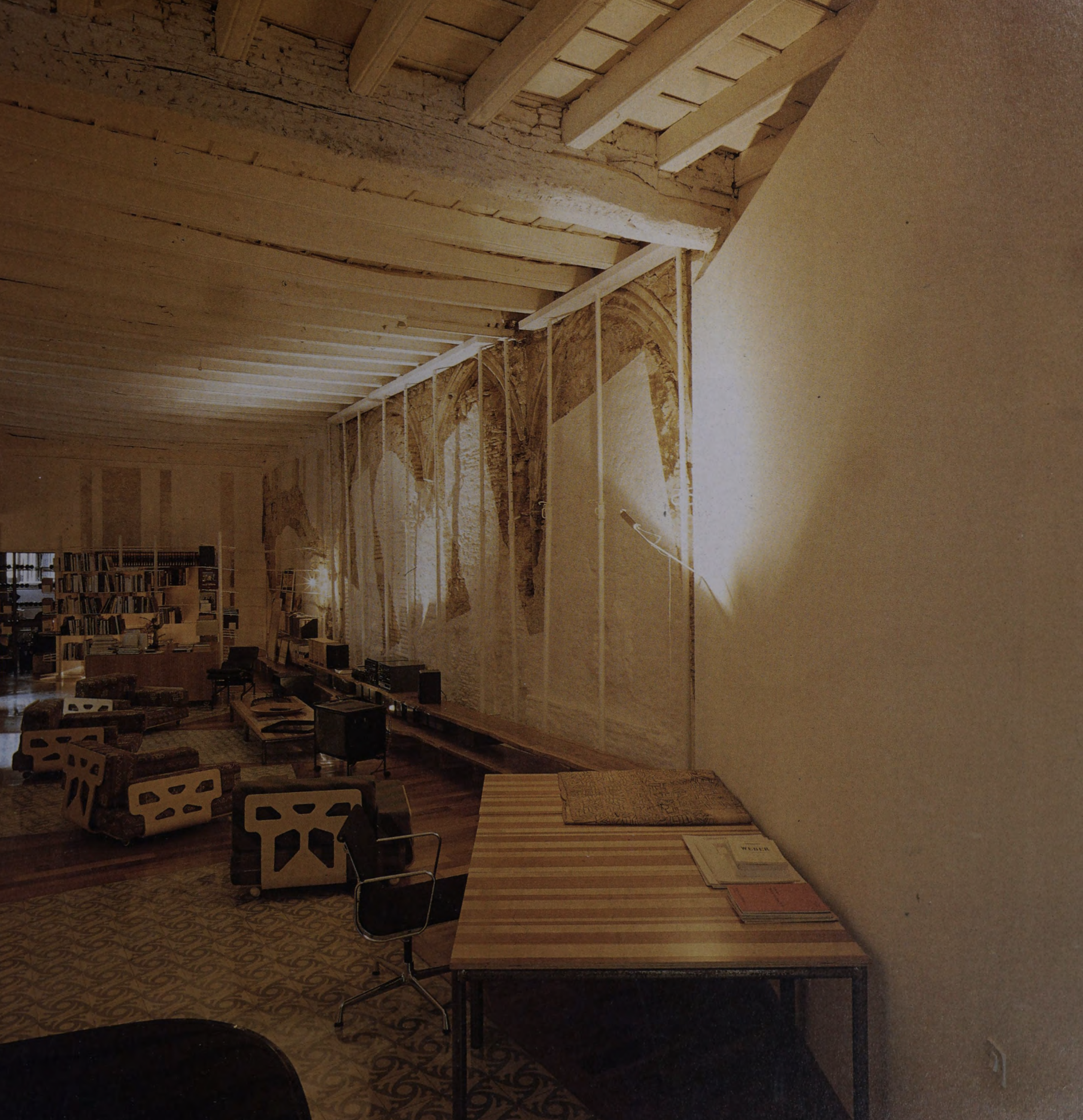
within the rooms. Everywhere, original patches of fresco
remain, along with original ceiling beams and decorations,
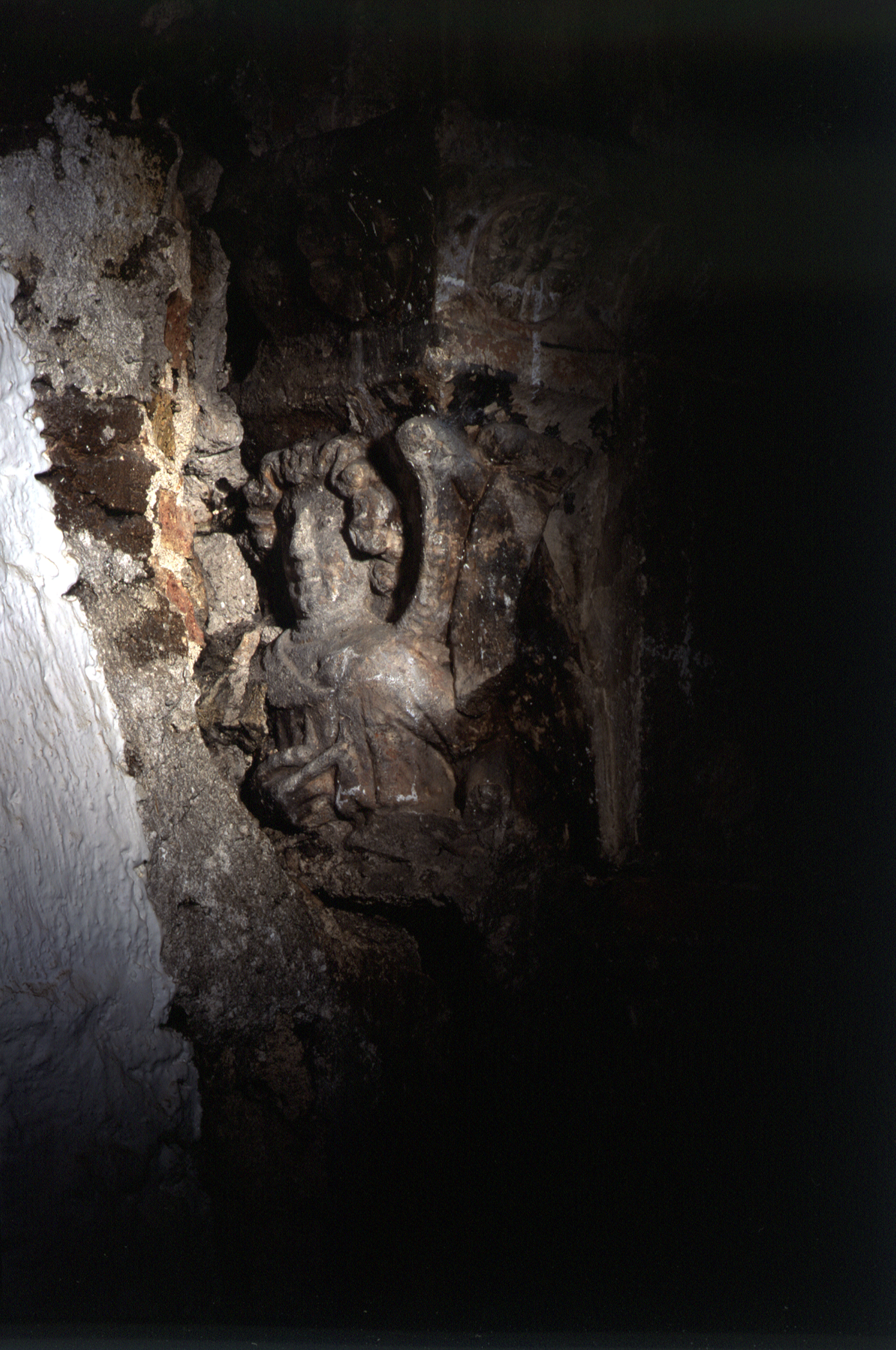
and gothic arches discovered during construction in the living
room. These details and the floor pavings, combined with the
contemporary furnishings, lend a patchwork look to the
interiors.
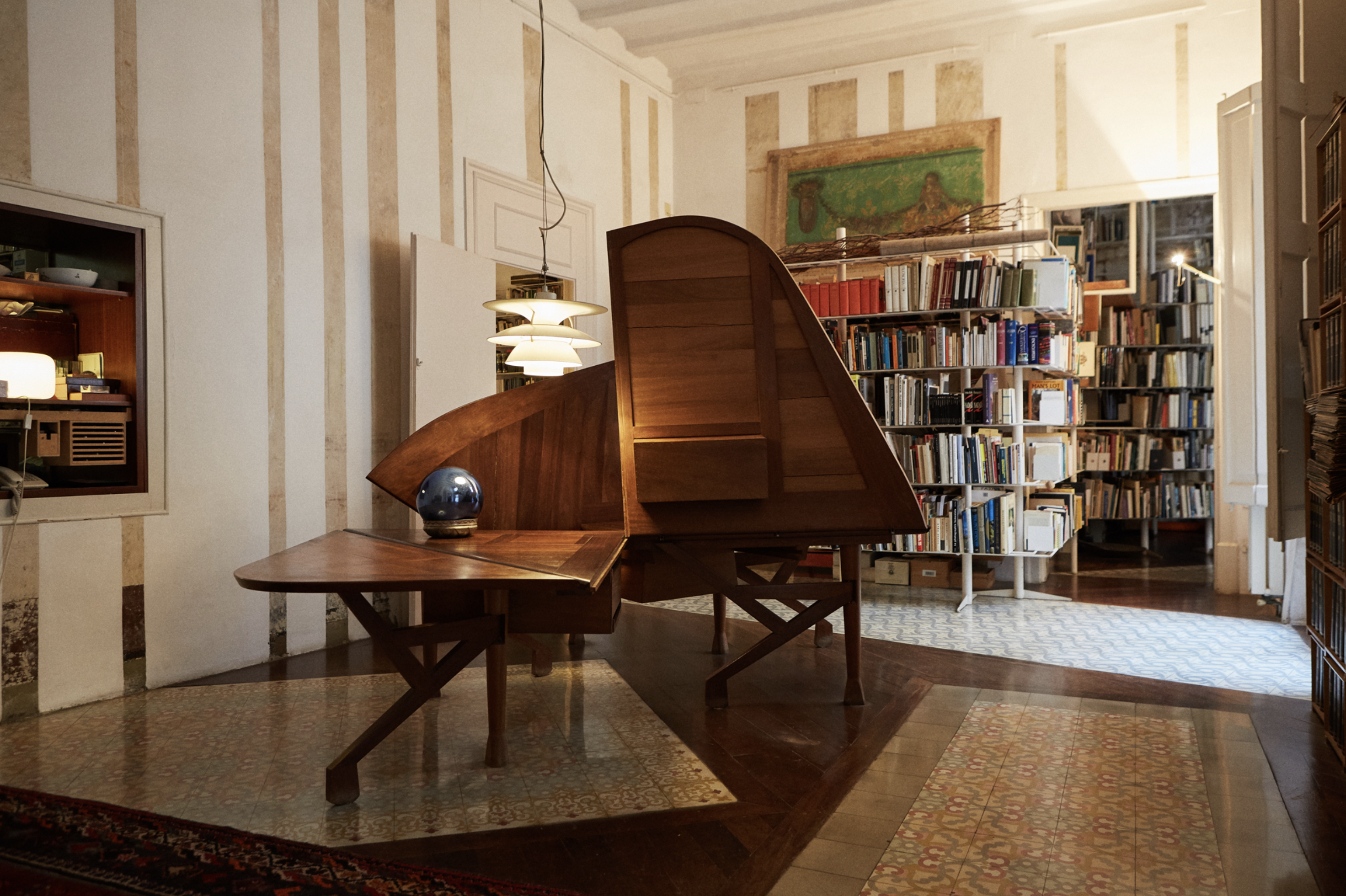
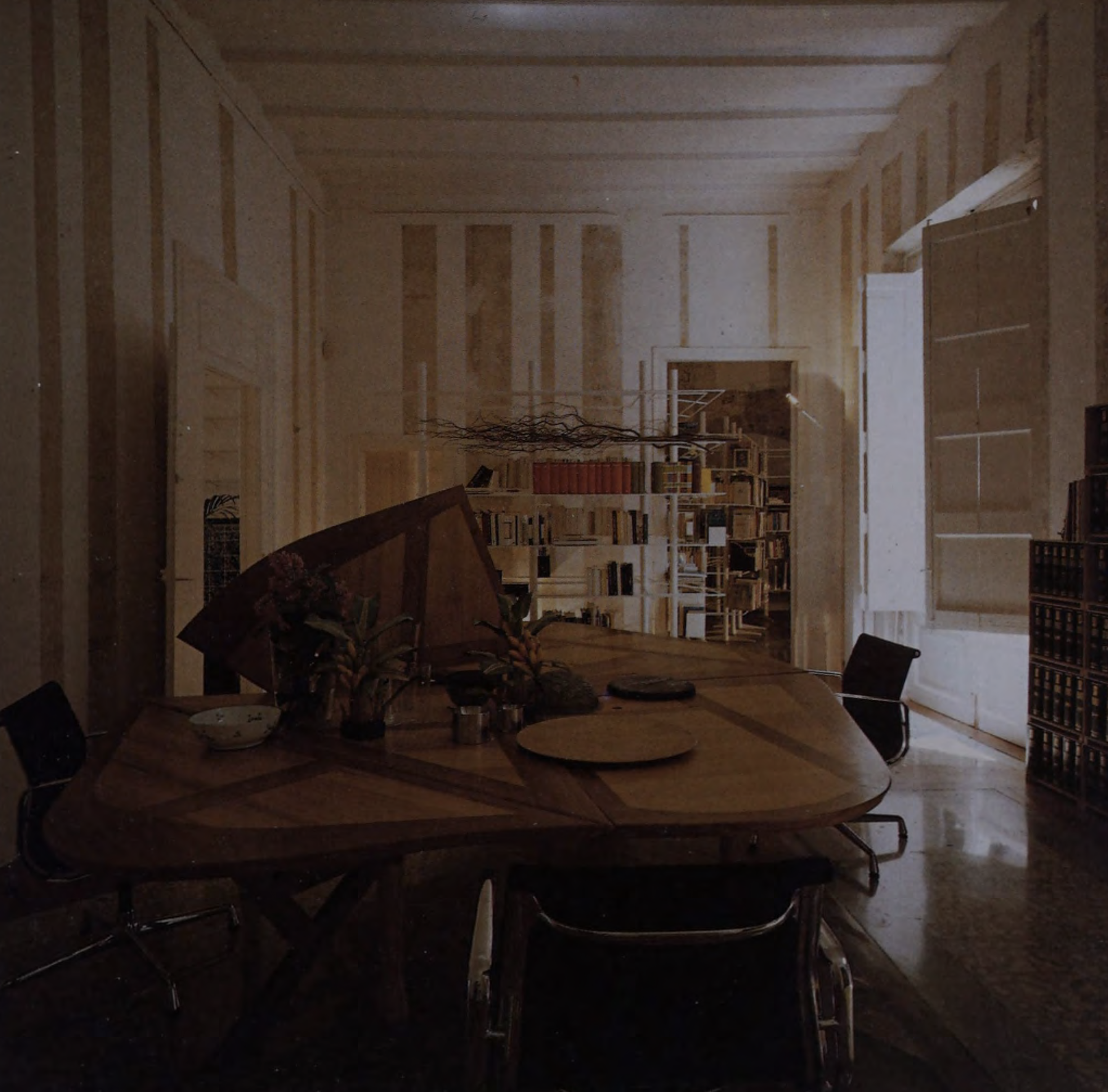
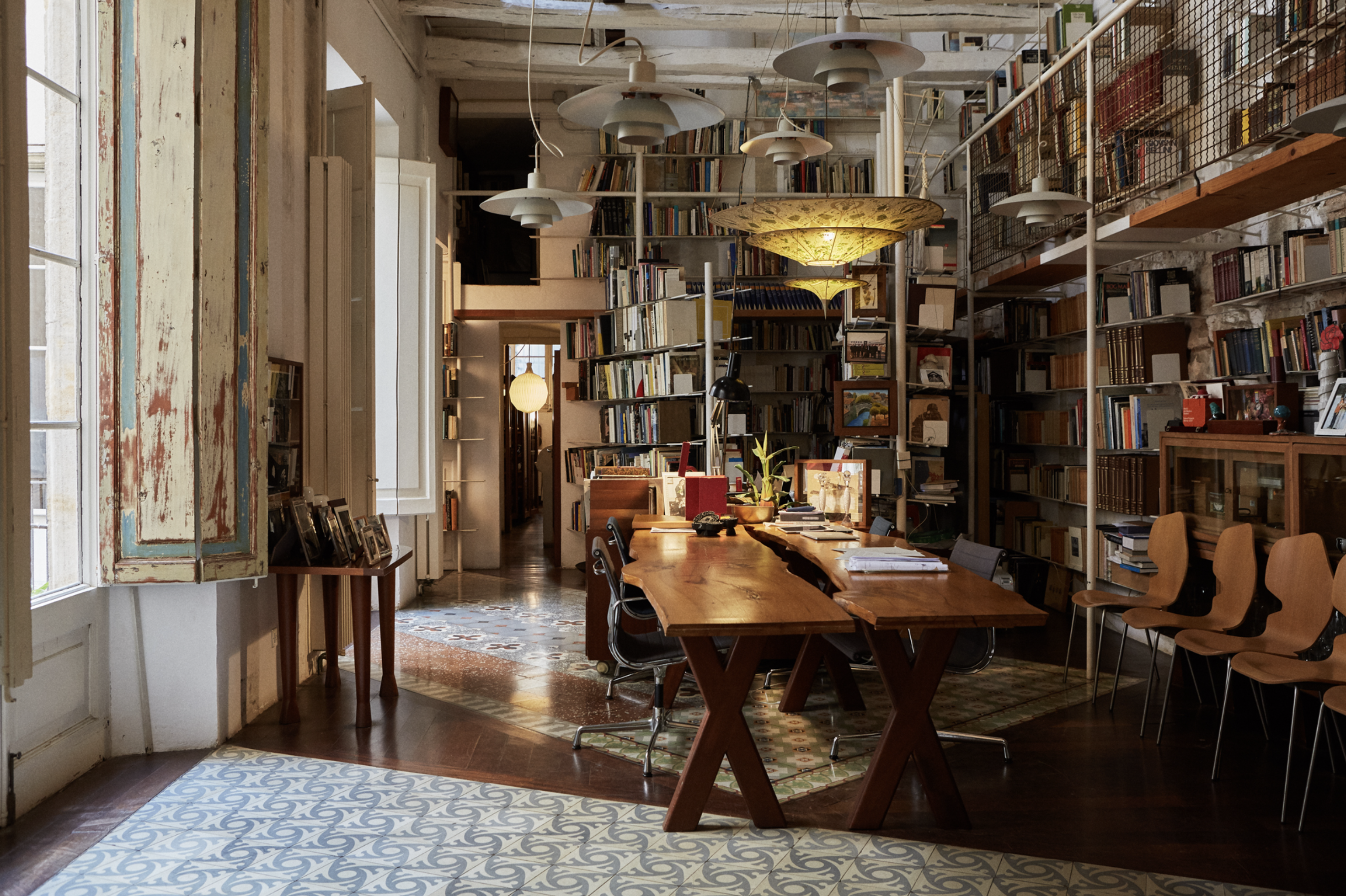
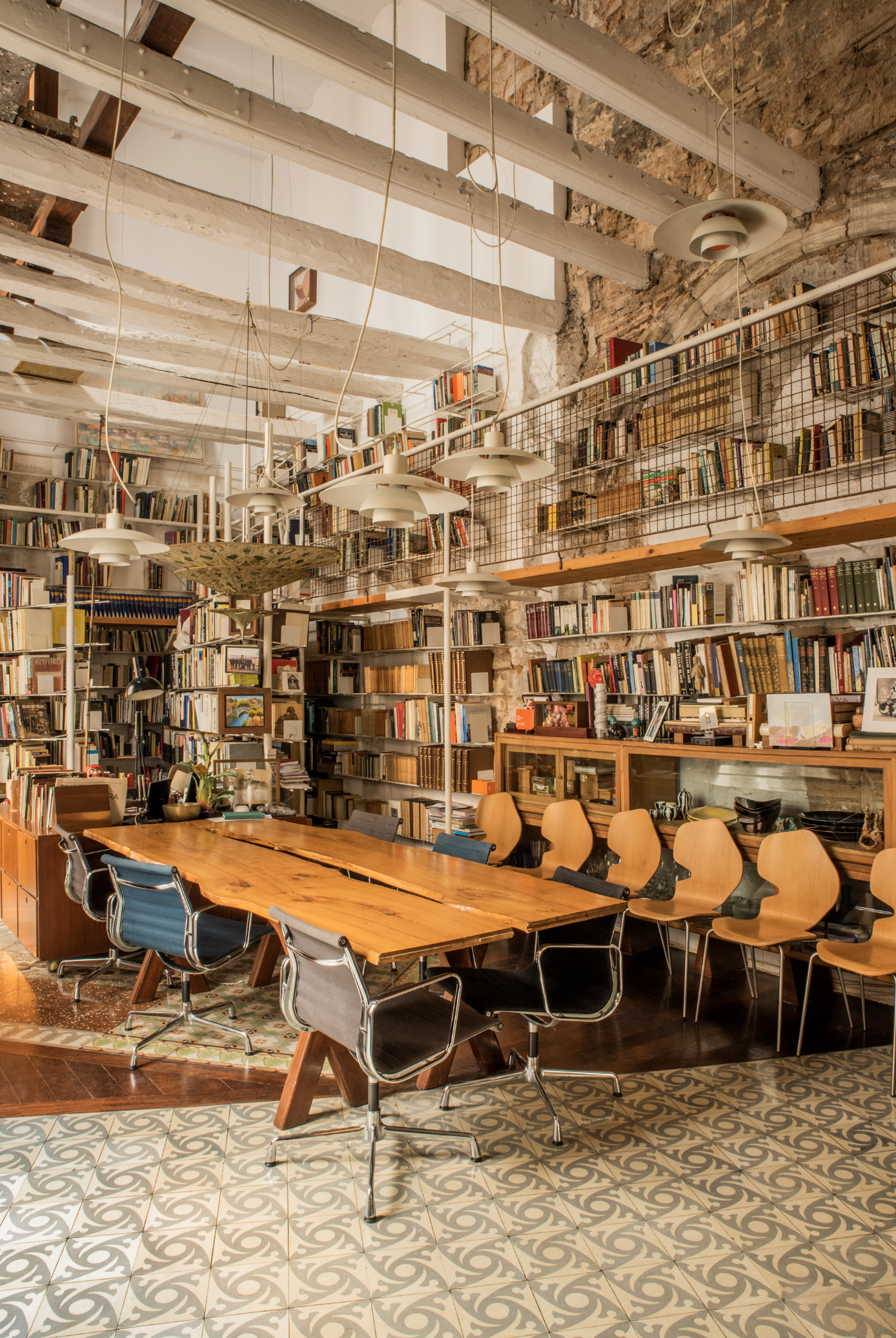
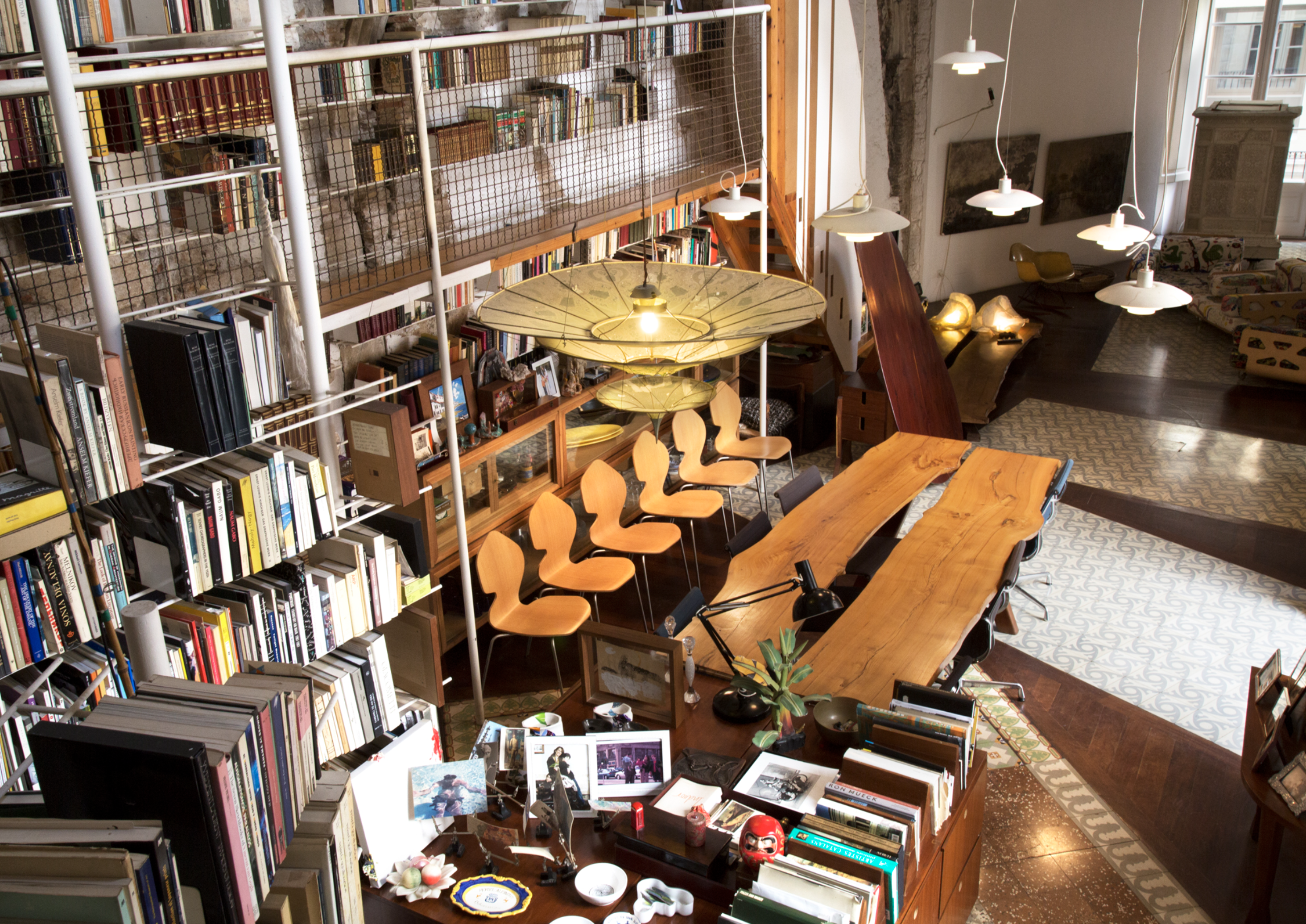
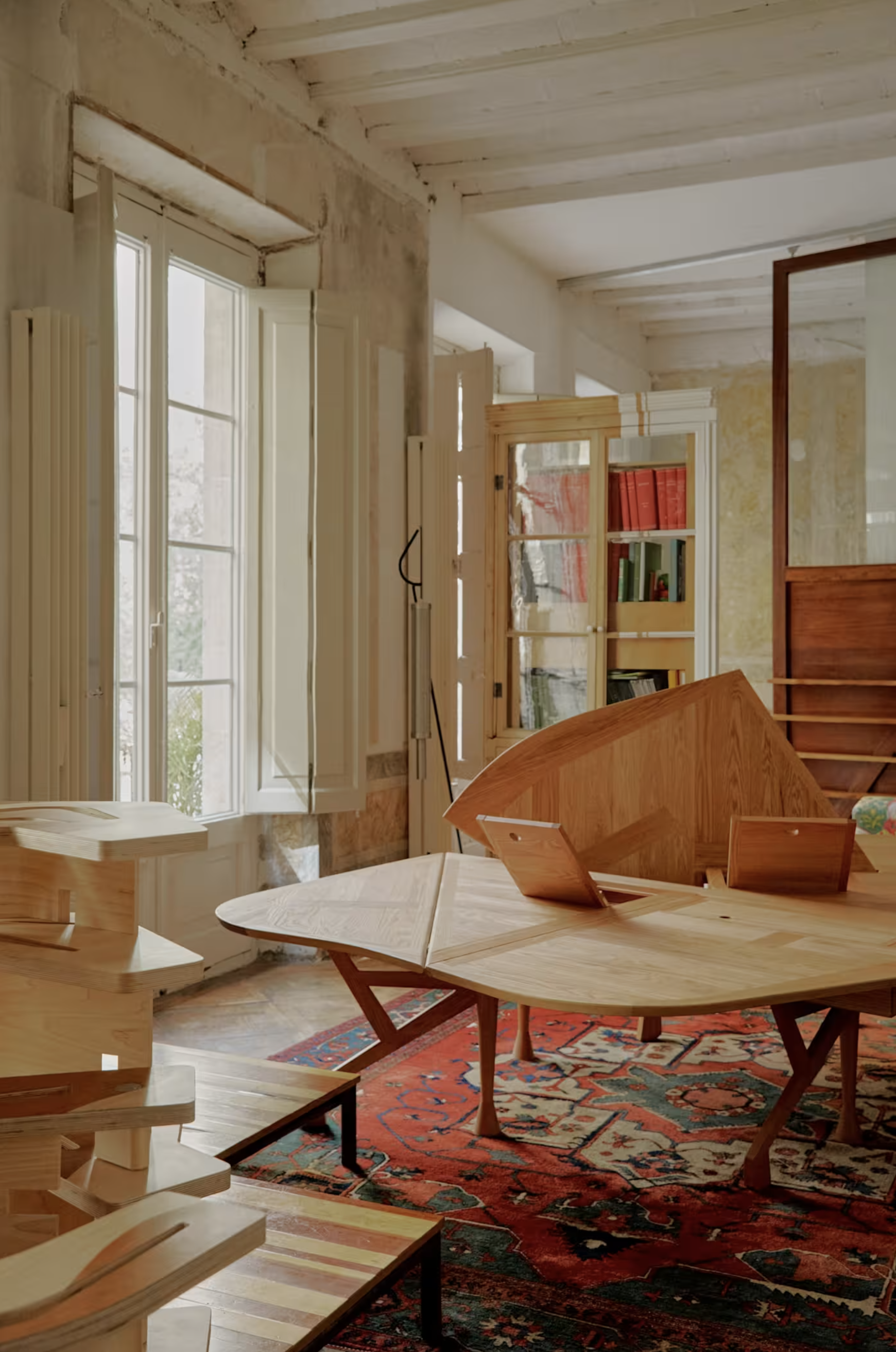
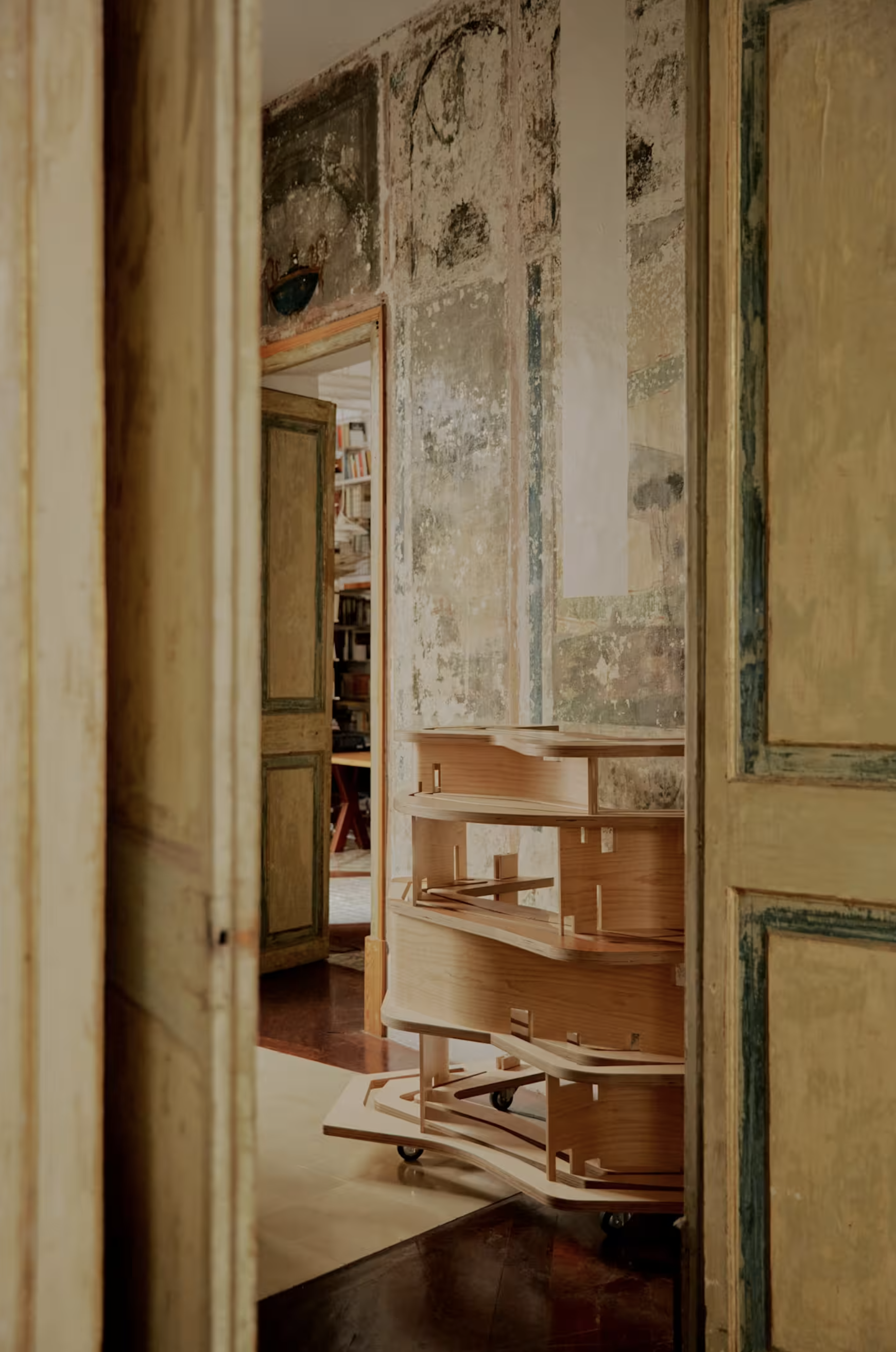
A large oak table placed in the hall acts as an indirect model of
the house. Made of detachable segments that predict and echo
the possible movements of people inside the house, the table
is meant as its metaphor. Pieces of this migratory table can
often be seen in different rooms, fulfilling various functions.
Zabalbeascoa, Anatxu, House of the Architect, Rizzoli, 1995 |