| |
|
We live in an age of globalized, commercialised and digitalized culture, and today even architectural practices are increasingly run as impersonal businesses. Facilitated by material and immaterial mobility and exchange, powerful computers, and the inherent disregard for the specificities of location and place in today's consumer culture, architectural practices have frequently adapted the same strategies of growth and borderless operations as capitalist businesses in general. The modernist view of autonomous architecture, detached from specific geographic, climatic and cultural realities and traditions, has been decisively strengthened by the universalising impact of technology which has gradually enabled construction around the world to adopt uniform functional, technical, formal and aesthetic objectives. As a consequence, instead of creating a sense of cultural and geographic specificity, architecture today increasingly contributes to worldwide uniformity and lack of rootedness. Edward Relph dramatically calls this experience of unrootedness, “existential outsiderness”.
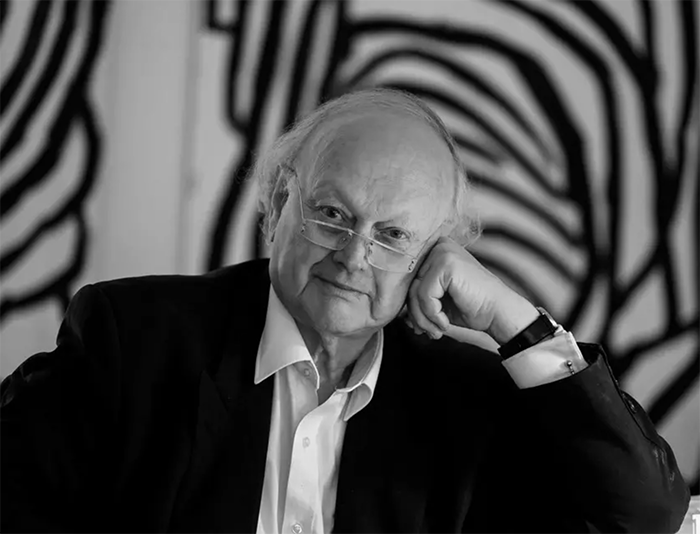
During the two decades of this accelerating tendency, Glenn Murcutt has become the most widely followed and respected model for an alternative ethical approach. He practices architecture as a personal and local craft, and epitomizes crucial cultural, ethical and ecological values of construction. During the period of his international recognition, Murcutt's work has provided worldwide inspiration and encouragement, particularly for architectural education and small practices.
Murcutt has determinedly refused to design outside his homeland, arguing that he wants to understand the physical, climatic and cultural circumstances of his projects thoroughly, and have personal control over all the aspects of his work, which would not be possible if he accepted commissions in alien situations outside Australia. By his personal example, Murcutt defends the essential traditions of architectural practice: thorough personal involvement, hand drawing and meticulous understanding and supervision of the construction processes.
In order to control all the aspects of the design process, he works alone and only occasionally in association with other architects, most notably with his architect wife Wendy Lewin, or he employs temporary assistants, often among his former students. He only accepts the number of commissions that he can manage through these principles and arrangements; clients have to wait for their turn, or Murcutt directs them to one of his trusted young colleagues. He even works without a secretary or computers, drawing every sketch by hand, and until recently, writing every letter longhand. Yet he is one of the most diligent letter writers I know, and responds promptly to all requests and promises. He also gives his time generously to his students and friends. When you are his guest at his Sydney home or his farmhouse at Kempsey, unlimited time seems to be available. The precise order of Murcutt's dense universe of work, friendships, travels and other interests seems to be based on his extraordinary memory and sense of responsibility and focus. This order is mental rather than physical, judging by the apparent visual disorder of the piles of papers in his office. Regardless of the personal nature of his operation, Murcutt has been surprisingly prolific; his oeuvre consists of over five hundred projects since he established his own office in 1979.
Early childhood experiences have strongly guided Murcutt's character, sensibilities, interests and attitudes. He still speaks with enthusiasm of the first six years of his life in Papua New Guinea, where his father Arthur Murcutt worked as a gold prospector and alluvial miner on the Upper Watut River among indigenous cannibal tribes. The life of his family was sometimes in danger and the children learned to watch the tall grass fields carefully for approaching cannibals. These early experiences certainly gave rise to the boy's independence, self-assurance and inventiveness. The family returned to Australia when the Japanese arrived in Papua New Guinea in WW 2. Arthur Murcutt had been very successful in his gold mining, and purchased about one hundred sites in Sydney, for which he designed and built about thirty buildings over the next 25 years.
"I grew up in a family of five children [three sons and two daughters]. There were seven pianos in a house of three levels. The noise was terrible. There were always something being designed and built around the house — canoes, racing skiffs, houses. I learned I needed silence, much silence, to work. This was a very important lesson for me. The amount of noise made me want silence", Murcutt recalls his later childhood.
He often reminisces about the tough personal lessons of his father, who was a self-made man, working mainly as a builder in Sydney constructing houses on the land he owned. He also ran a joinery shop where he manufactured timber stairs, windows, and domestic two storey timber curtain walls for his houses. The world of building was Glenn's environment early on and he used to work in his father's shop. His father was also a designer and an inventor —he developed roof-ventilation systems and swimming pool filters—. But he was also a man of principles, who could resolve all practical problems of daily life, and also had a strong ethical stance and pioneering ecological values. Arthur Murcutt educated and trained his two older sons rigorously, both physically and mentally. Glenn recalls his father as his sons' swimming trainer, giving instructions from a rowing boat gliding aside the swimmers.
Significantly, Arthur Murcutt was interested in new architecture, particularly the work of American modernist architects such as Frank Lloyd Wright, Mies van der Rohe, Richard Neutra, and Craig Ellwood. He subscribed to American architectural journals (Architectural Forum, Architectural Record and Progressive Architecture) which he made his eldest son study meticulously. Glenn still recalls an examination on various aspects of the Farnsworth House set by his father for his barely 15 year old son back in 1951.
Glenn became deeply interested in the series of Case Study Houses, commissioned and built from 1945 until the mid-1950s by the Arts & Architecture Magazine under the directorship of John Entenza. These houses projected a utopian air of optimism and cultured elegance. There was also a cinematic Hollywood air about these houses and their sophisticated occupants. Craig Ellwood became Glenn's early hero, and finally in 1973 he visited California and met the architect, who was touched by the Australian's interest in his work. Murcutt, however, was somewhat disappointed by Ellwood's buildings, particularly their total dependence on mechanical ventilation and heating, which evoked his criticism and probably initiated his own thinking about utilizing the forces of nature instead of energy-consuming machinery to create habitable conditions.
One of the Californian modernists whom Murcutt especially admired was the now somewhat forgotten Gordon Drake, who died at a young age. Murcutt even wrote the preface for the 2011 reprint of the monograph on Drake's work, originally published in 1956.
Although Murcutt personally remembers his admiration for Ellwood and Drake, the single Californian house that is closest in spirit to his later architecture is the Eames House in Santa Monica (1949) by Charles and Ray Eames. The Eames house is entirely made of commercially available parts, and the impression of the elegantly articulated lightweight skin is similar in ambience to Murcutt’s later architecture. The designs by the Eames couple, ranging from architecture to furniture and graphic design, as well as photography and cinema, have an exceptional feeling of optimism and joy, rationality and poetic subtlety, seriousness and play.
Considering Glenn Murcutt’s childhood influences, it was no surprise that he began to study architecture at Sydney Technical College in 1955, where he received his diploma six years later in 1961. Even today Murcutt remembers with excitement his early studies in ‘organic construction’, taught by Noel Bazeley: “We spent the entire first term … analysing continuity in nature … studying spider’s webs, leaves, blades of grass, natural arched forms … We progressed in the second term to analysing continuity in constructed forms: bridges, vaults, cellular formations, foundations, reinforcing. We were learning how you design from nature … There is a hierarchy of parts and a rational language in how the parts might fit together.”
Murcutt has recently suggested that even today, in an era of technology and virtual realities, architectural education should be based on observations of natural phenomena. No doubt, as we are now aiming at an architecture that arises from the understanding of ecological principles, biological awareness and inspiration are bound to replace the mechanistic metaphors of modernity. Interestingly and importantly, Murcutt’s architecture utilizes advanced technological ingredients combined with natural forces to create buildings that perform as instruments, or tools. His buildings never mimic forms of nature, but take advantage of the dynamic forces of the physical world and resonate with the values of the living world.
Murcutt has a wide knowledge of biology, botany and zoology, and when walking in a forest with him, he keeps recalling Latin names of plants and pointing out aspects of their botanical and structural specialities. He also reveals the hidden interdependences of soil and water conditions, climate and vegetation and their relationship to the presence of insects and animals. He always reads nature as an instruction book for efficient design. In his teaching around the world, Murcutt guides his students to observe the surroundings and nature: landforms, geology, the course of the sun, wind patterns, vegetation, and animal life. He points out that plants and animals can reveal aspects of the site, water levels and winds, that are hidden for an immediate and uninformed human observation.
During his student years in 1955-61, Murcutt worked for Neville Gruzman, a well-known ‘Sydney School’ architect, and he was also influenced by architects Bill and Ruth Lucas. Gruzman’s Montrose Apartments of 1954 projects an architecture that is surprisingly advanced for its time anywhere in the world, like the supremely lightweight ‘Glass House’ in Castlecrag of 1957 by Lucas. Murcutt also worked for the office of John Allen & Russell Jack. Jack in particular had an interest in traditional Japanese architecture, as well as Nordic and Californian architecture and the work of Frank Lloyd Wright. Besides offering Murcutt his first professional experiences, these Australian colleagues strengthened his interest in European and American architecture initiated by his father years earlier.
Murcutt’s first house, designed for the Olympic swimmer John Devitt (1960-62), projects his early professional influences. It is surprisingly determined and coherent for an architect barely 25 years old. After having finalized this first project of his own, Murcutt settled in London for two years to work for Frazer & Associates, and he also travelled through continental Europe and the Nordic countries. On this trip, the strongest impression on him was made by the work of Alvar Aalto. Significantly, thirty years later Murcutt was awarded the Alvar Aalto Medal which gave him an international name. Murcutt’s numerous later trips to Finland (for lecturing, teaching and jury memberships, or just to see friends) have strengthened his ties with this country, despite its extreme geographic distance from his own land.
In the early 1960’s, Murcutt also lived on the Greek islands for half a year. He was impressed by their vernacular architecture, minimal in its material means, but at the same time unexpectedly rich in its functional considerations and sensual qualities. “There were many lessons, such as the sheer integration of a material like slaked lime: it reflects the heat and light, it is a waterproofing agent, a disinfectant in the joints between paving stones and house and street; it endows continuity to all forms, and it is a local product. It is painted on the tree trunks to prevent attacks by borers and microbes, and to deter the donkeys from eating the bark and ringbarking the trees. Seeing all this taught me that you can really understand and use material comprehensively”, Murcutt recalls of this early experience. Still today, fifty years later, he recalls lessons of functional and behavioural subtleties, such as the walkable area on stone stairs without any handrails, which gradually gets further away from the edge and nearer to the protective wall as the stairs rise, or the cut-away wall corners at street intersections to accommodate the paths of donkeys with protruding loads, recessed corners that were also an invitation to sit and converse, strengthening this sense of community. These were important lessons in the subtle logic of form.
After returning from his two-year journey to Europe, he took a job as project architect in the office of Ancher, Mortlock, Murray & Woolley, and became close to Sydney Ancher, a representative of the International Style. Amongst the works by architects of Murcutt’s own generation, Richard Leplastrier’s Palm House in Sydney (1973-75) has been widely influential and clearly also inspirational for Murcutt.
Murcutt’s long friendship with Leplastrier, a former assistant to Jørn Utzon on the Sydney Opera House project, has been deepest and most influential. Even today, the two architects continue to share similar professional, ethical and aesthetic ideals. Leplastrier also runs a one-man practice arising from personal experiences, and he designs buildings of high technical sophistication and aesthetic elegance, based on the logic of use and performance. As a master sailor and craftsman, he has an especially good understanding of the interplay of structures and forces of nature.
The construction of his own house in Sydney in 1969 was the next important step in establishing Murcutt as an independent architect. This fairly modest extension on the courtyard side of a traditional Sydney house, reflects the architect’s modernist ideals deriving from Mies, Ellwood and Nordic modernism. This design won him the prize of a round-the-world plane ticket for another study tour. In late 1973 he travelled to Mexico, the United States and once again to Europe. In Mexico City he met Luis Barragan in his famous house, but the health of the Mexican alchemist of architecture was already rather fragile. However, Barragan’s metaphysically poetic architecture made a deep impression on Murcutt, and reflections of Barragan’s architecture of colourful plastered walls and enclosed courtyards can be detected in his own work, such as the Magney House (1983/1984/1999) and the Done House (1988/91).
On this trip, the most decisive experience was his visit to Pierre Chareau’s Maison de Verre in Paris. This masterpiece by Chareau and Bernard Bijvoët (in collaboration with metal craftsman Dalbet) concretized a richer architectural articulation than Miesian Classicism and the strictly modular approach of the Case Study Houses.
Although the French architect and engineer Jean Prouvé is not often mentioned in conjunction with Glenn Murcutt’s work, he is probably the closest precedent to Murcutt’s architecture in its inspired and technological virtuosity. Like Murcutt today, Prouvé developed a sensuous, humane and tactile architecture from intelligent and ingenious technical solutions for his time. The poetic ambience in the work of these two architects seems to be more important than their technical solutions as such.
The project which fused Murcutt’s early ideals, the influences of his extensive journeys abroad and his new interests in Australian vernacular architecture and aboriginal cultures was the Marie Short House in Kempsey (1974/1975). Murcutt actually later ended up owning the house, expanding it (1980) and building a small guest studio (1992) as a collage of re-cycled wood parts, metal and glass units and various technical devices. This farmhouse is a surprising and convincing blend of Rationalist influences and a distinct Australian ambience that evokes distant recollections of local vernacular and indigenous structures, as well as the spirit of a farmer’s inherent inventiveness. The house is unique and traditional, rational and emotive, tough and subtle, all at the same time.
In this project, Murcutt abandoned the flat roof which had dominated his early Miesian and Californian modernism. The flat roof reinforces the idea of universality and a certain ‘placelessness’, whereas a specific roof shape unavoidably suggests local and specific dynamics. Until this project, the plan had been the driving force in his projects, but now the main role was given to the section. As the flat roof and orthogonal geometry facilitate the experiential, visual and virtual movement of space through the structure, a purposefully modulated and shaped section facilitates the actual movement of air, in addition to giving the space a definite directionality and character. In orthogonal geometry, all horizontal directions tend to be of equal value, whereas a shaped section creates the directional hierarchy of front, back and sides. The dynamically articulated section served Murcutt’s decision to avoid mechanical ventilation and utilize natural air flows created in combination with positive and negative air pressure. Arguably, Murcutt’s architecture is primarily an architecture of the section, and most of his free-standing buildings are protrusions of a sectional solution, or two or more linear protrusions combined side by side (for example, the Marie Short House consists of two parallel bars, the Kempsey Museum three bars).
The Ball-Eastaway House in Glenorie, Sydney (1982/1983) and the Fredericks House in Jamberoo (1981/82), are examples of Murcutt’s protrusions of a symmetrical section. The Nicholas House in Mount Irvine (1977/80) utilizes a pitched roof to create a traditional farmhouse atmosphere, whereas the Museum of Local History and Tourist Office in Kempsey (1976-1979/1982 and 1986-1988), combine three parallel arched roofs to create a village-like setting with the casual feeling of a rural industrial structure. However, proportional and detail refinements elevate the structure from pure utility to a cultural status.
The next step in the evolution of the Murcutt section is the asymmetrical section of the Magney House at Bingie Point (1983/1984/1989). This wavelike section gives a completely different character to the row of dominant main spaces and the various secondary service and auxiliary spaces. Visually, the house appears as a low horizontal line, as if to create a resonance with the endless horizon of the adjacent ocean. Another variation in Murcutt’s roof shapes is the single slope roof, like the House in Blue Mountains (1989/1994), and the House in Bowral (1990/1992), which also appears in the project for a Minerals and Mining Museum (1987/1989).
In his later work, Murcutt has only used flat roofs in contextually restricted urban situations such as the Ockens House, Sydney (1977/1978), the Done House in Mosman, Sydney (1988/1981) and the current Mosque project. However, he has used shaped roofs even on urban sites such as the Littlomore House in Woollahra, Sydney (1983/1986), the Magney House in Paddington, Sydney (1986/1990) and the Murcutt-Lewin House in Mosman, Sydney (2000).
Murcutt’s sectional strategy has been enriched by special window solutions: windows push out from the house and are inclined to guide the views, receive light and create a wide working surface in front, or they penetrate the roof, often with curved reflecting surfaces in the manner of Aalto’s roof lights. The gentle curved and sensuously detailed rooflight scoops with louvers in the Murcutt-Lewin House create a most dramatic illumination.
Murcutt’s meticulous design process is demonstrated by the House for an Aboriginal Community (Eastern Arnhem Land [Dos Palabras], 1992/1994) in the Northern Territory, a house for an Aboriginal client and her husband. Although the architect was generally familiar with Aboriginal cultures, he spent three years researching before the actual design phase and spent periods of up to a week with the client’s family in the Yirrkala Community and their Homelands — remote communal areas used by Aboriginal people to return to their traditional lifestyles. The building is entirely prefabricated and the components were transported all the way from Sydney to Arnhem Land in the north. The structure consists of a steel frame and elements made of Australian hardwoods; no glass is used. The house accommodates fundamental aspects of the client’s cultural beliefs and codes as well as modern comforts. The structure can also resist cyclones of up to 200 kilometers per hour. In this house, the design’s tool-like precision turns into a poetic air that exudes a deep sense of authentic life. During the design process, the architect prepared a list of nearly twenty culture-specific requirements, which were carefully met by the house.
Murcutt’s projects are predominantly houses, and his institutional buildings are applications and adaptations of the principles he has gradually perfected in his residential designs. The lay-out of his institutional structures also tends to be linear with a carefully articulated section. At the Arthur and Yvonne Boyd Education Centre in association with Wendy Lewin and Reg Lark (1994/1999), the part containing individual residential units derives from a similar aspect of the House for an Aboriginal Community, completed a couple of years before the design of the larger building began. The Centre is an exceptionally subtle dialogue with the beautiful landscape, and it provides a superb setting for meditative learning. The Bowali Visitors Information Centre in the Kakadu National Park in the Northern Territory (1993/1999), designed in association with Troppo Architects, is also an elongated structure with varying sectional treatments along the way. The image of the project looks like a huge aeroplane wing placed in the desert.
Murcutt’s recent projects show that his architectural language is moving into new areas. The Australian Opal Centre in Lighting Ridge (2006-), NSW, designed in collaboration with Wendy Lewin, will be built for the purpose of preserving, displaying and researching the unique collection of Australian opalized fossils and presenting the history of the opal fields. The building is largely underground in order to stabilize internal temperatures. A number of courtyards adjoin the museum spaces, and some of them are water courts used as part of the cooling system. The repetition of the long-span triangular structures, sun reflectors, triangulated walls, and malqaf wind scoops give the building a structuralist character. At the same time, it appropriately reflects the air of an industrial setting.
Murcutt received the surprise commission to design the New Mosque for the Newport Islamic Society (2008-) in Melbourne, Victoria (currently under construction in collaboration with Hakan Elevli) as a consequence of his participation in the Aga Khan Award Jury. In addition to meeting the traditions of Islamic orders, the project addresses the local community and respects people of all faiths. The brief includes the imam’s residence, a library, basketball court, offices, education facilities, courtyards and car park. It is being constructed in phases. The design follows Islamic conventions, except that the traditional Minaret element is replaced by a symbolic Crescent attached to the end of the entry wall, and the Dome by triangular lanterns rising above the roof, oriented in four directions. The differently coloured lanterns capture light at different times of each day and create a rich, dynamic symphony of colours, “yellows directed towards the eastern morning light, greens to the northern daylight, vermillions to the afternoon western day light, and blues to the southern lights. The lanterns are glazed on one of the three planes and coloured gold on their roof and their two solid outer surfaces”.
Some of Murcutt’s larger commissions have regrettably remained unbuilt, such as the village-like Aboriginal Alcoholic Rehabilitation Centre in Bennelong’s Haven, NSW (1983-85), and the Minerals and Mining Museum (1986) in Broken Hill, NSW. The latter is Murcutt’s first institutional project in an urban context. With the malqafs (wind scoops fed with air cooled by beds of charcoal and water), it exudes the tough poetry of an industrial operation. The current project for the Opal Centre picks up on some of the ideas of the Mining Museum but pushes them further into new expressions.
There are architects who work primarily through physical models and/or digital modelling, but Murcutt’s working method is dominated by drawings made by hand. He believes that the methods and tools which we use are not exchangeable; each practical approach, or design tool, tends to guide our attention and thought in a specific way. He is sceptical about the extensive and uncritical use of new electronic and digital devices, and relies completely on the conceptualizing power of his imagination and hand in combination. In the early design phase, his drawings are quick notational sketches which capture, in a few lines, the basic scheme and its dynamics in relation to the landscape and climatic factors of the site, whereas his working drawings are laconic, precise and dense with verbal information. Contrary to the normal design method that advances through gradually increased scales and detail rendition, Murcutt’s projects seem to emerge from the very beginning as images of entire buildings with their functional lay-out, structure, materiality and detail. The detail aspects simply need to be brought to focus later. The building seems to exist fully in his imagination when he begins the working drawings, and he simply keeps shifting his mind’s eye from one aspect to the next, recording them through the lines of his pencil.
Finally, a carefully drawn 1:20 scale section pulls together all the ideas, materiality, connections, details and dimensions. While working on this main sectional drawing, Murcutt actually constructs the entire building in his mind, and the drawing not only shows the finished building but also silently simulates its assembly. “As I am making the working drawings, I am laying the bricks and thinking, ‘Is it a fat or thin joint?’”, he says.
Usually Murcutt uses standard products and components, sometimes modified slightly to suit his purposes or to obtain the desired visual effect. The use of commercial components was part of his strategy early on: “Right from the outset of my practice, even before I had any work, I rang the manufacturers of standard componentry for buildings and yachting and requested their product literature. I was looking to apply standard systems in new ways. In 1969 I researched and modified a dry glazing system intended for commercial greenhouses ….”
When visiting the Maison du Verre in Paris in 1973, he was impressed by Chareau’s modifications of standard products as well as his combination of industrially produced and craft elements. The sensuality and sense of uniqueness in Alvar Aalto’s architecture also arises largely from his skilful combination of industrial and craft processes. In Aalto’s case, his capacity for last minute changes and improvisations to cover mistakes in design or execution adds another sense of freshness and immediacy. In Murcutt’s case, however, no changes are normally made because the entire building is already assembled as a mental simulation by the architect before the drawing is completed.
Murcutt distances himself from the romanticized idea of the architect as a creative hero, as expressed by Howard Roark in Ayn Rand’s Fountainhead and supported by today’s media. He sees architecture as discovery. “Any work of architecture that has been designed, any work of architecture that exists or has the potential to exist, was discovered. It wasn’t created … Architecture is a path of discovery”. Here Murcutt shares the humble attitude expressed by Alvaro Siza: “Architects don’t invent anything, they transform reality”. In the case of Murcutt’s friend, Renzo Piano, the projects are the collective work of the Renzo Piano Building Workshop, which continuously refines aspects of previous work, whereas Murcutt’s buildings arise from the continuum of his individual career and ever-expanding experience.
Murcutt compares design with a game with rules: “Design is a chess game, and from rationalism and the aesthetic expression of building construction you can perhaps derive poetry. Design is not dependent on inspiration. We have to overcome this great twin myth of the architectural idea and the architectural ego. In fact anyone can design. Anyone can be taught to investigate and discover. It doesn’t take great flair.” Murcutt’s father advised his son early on “to do ordinary things extraordinarily well”, and this simple advice has become Murcutt’s moral principle. His design thinking is based on concrete, utilitarian facts. His pragmatic approach reflects the thinking of Henry David Thoreau, the American writer, whose poetically pragmatic attitudes Arthur Murcutt admired and taught to his eldest son with such a deep effect that on one of his trips in the United States, the architect actually visited Thoreau’s mythical Walden Pond in Concord, Massachusetts.
“I love buildings with order. I find chaotic buildings too close to my real nature. I am an untidy human without a frame of reference. I’m like a bag-person. I get great pleasure in having a frame of reference that establishes what I can and cannot do. The zones developed by framing allow an ease of order yet can provide great flexibility. It’s like structure in music, an order which the composer will develop as layers of complexity that add richness within the established order”, he explains his personal character and his view of architecture as an ordering device of life.
Having myself stayed at Murcutt’s houses in Sydney and Kempsey, travelled with him in various parts of the world, and taught together at several occasions, I must say that here Murcutt seems to exaggerate his disorderliness. In truth, Murcutt is exceptionally precise (he arrives at an appointment on the second), he has a superb organizational skill and memory, and is absolutely reliable (he never makes empty promises).
Murcutt’s projects, which are mostly houses, always arise from a meticulous study of the context and circumstances. Aesthetically he has developed a simultaneously laconic and poetic language aiming at perfect functional performance, a dialogue with the landscape, and a sense of minimal effort and lightness. He follows the Aboriginal attitude of ‘touching the earth lightly’, a principle that expresses Murcutt’s ecological ethics: to use resources efficiently without waste and with minimal negative ecological consequences, both natural and human. Minimal lightness and minimal use of materials is for him an ethical aspiration as much as an aesthetic one. Interestingly, ‘Lightness’ is also one of the literary virtues in Italo Calvino’s Six Memos for the Next Millennium.
Murcutt’s structures and details aim to create an impression of weightless hovering, almost as if the roofs, often reminiscent of aircraft wings, were held up by a flow of air. A characteristic aesthetic detail of Murcutt is to thin the edges of structures and to reveal their layering. He calls this detail ‘feathering’, in reference to the way that leaves, branches and the wings of birds get thinner towards their edges. “A tough landscape produces delicate flora: plants that grow in shallow leached soils, where rains intersperse with long periods of drought, develop in such a way that the leaves and branches feather towards their extremities, he observes.” Murcutt’s appreciation of lightness and thinness also reflects his early experiences: “I used to design and build model aircraft and boats, and build 4-metre racing skiffs. Both disciplines develop an awareness of the importance of edges”.
In an earlier essay, I compared Murcutt’s houses to tools. Tools are utilitarian objects which usually possess a striking beauty. This is a beauty that arises from inevitability, causation and performance, not from an independent aspiration for aestheticization or given ideals of beauty. “Glenn Murcutt’s buildings possess an indisputable prestige and beauty of causality and reason. His houses are instruments for inhabiting the landscape and the elements. They are the tools of dwelling to meet the practicalities of life, but in the Bachelardian sense they are also ‘instruments with which to confront the cosmos’.” In addition to responding meticulously to the functional demands of use and life, his houses create human horizons for the reading of geography, nature and natural phenomena.
The design logic of his details sometimes arises from unexpected requirements. For instance, the excessively wide conical mouths of his rainwater downpipes have a clear functional motivation: “The size was due to the heavy rainfall in that district, and the diameter, shape and angle of the almost 80 cm diameter conical ‘head’ was because 30 centimetres was the length of a eucalyptus leaf, and this size and angle feeds leaves vertically into the down-pipe so that they do not block the flow of rainwater. But, the form of the downpipes is also knowingly, very consciously, symbolic.” Elevating his houses in the countryside on stilts is motivated by the need to prevent snakes and rodents from getting into the house. Also the consideration of frequent forest fires has resulted in a number of practical solutions, in addition to the frequently appearing pools and rainwater tanks next to his houses, to store water for the purpose of extinguishing fires.
While architects’ project descriptions tend to focus on the visual, architectural and aesthetic choices or effects, Murcutt’s descriptions usually focus on the site and climatic conditions (with seasonal variations in temperatures, sun angles, winds, moisture content of the air, etc.), functional performance and issues of natural ventilation. An excerpt from the project description for the Australian Opal Centre, Lightning Ridge, NSW, (currently awaiting funding), exemplifies this: “Wind extract/intake towers are designed to create negative pressure to the leeward side of the prevailing summer northwest winds, positive pressure into the prevailing wind, combined with sprayed water within the positive pressured towers, cooled air will be drawn through the building. During winter, the wind shifts towards the south so the introduction of water within the towers is not required. We may also tap into the existing adjacent mine tunnels that run considerable distances, to draw the 21-degree Celsius cooled air through the negatively pressurised spaces of the building.”
Due to the self-imposed restrictions on his work, Murcutt’s practice is extraordinarily efficient. He needs only a few precisely conceived and drafted drawings, filled with verbal explanations and specifications, for each house project. The efficiency and precision of his projects also arises from the fact that instead of having made randomly formal and aesthetic experiments, he has persistently kept refining his principles, and through this evolutionary attitude, been able to continuously improve on the multitude of design aspects, as well as his personal performance. One of the inherent problems brought about by the modernist obsession with novelty and uniqueness is the lack of systematic functional and technical improvement from one project to the next, or from one generation of architects to the next. During the era of modernity, architects have kept repeatedly building prototypes, both technical and aesthetic.
Murcutt’s production is clearly an evolving and improving continuum in which various aspects are gradually developed further. This attitude introduces a biological and evolutionary aspect to his externally highly technological architecture. The fact that he has mostly worked with one structural engineer (in fact, father and son), Dick and James Taylor, has reinforced the gradual accumulation of ideas and skills into an evolutionary line. He has also used the same trusted builders whenever possible in order to minimize misunderstandings and to maintain an atmosphere of confidence and reliability. Here again Murcutt’s manner of thinking and working resembles the collective working method of the Renzo Piano Building Workshop, which is also based on situationally adapted variations of a system of architectural logic that has evolved through decades and a great number of different projects, large and small.
Murcutt’s architectural imagery seems to remain open-ended instead of closing down around a singular type. The fact that his buildings always arise from exact, specific local and individual conditions provides a wide set of design variables which tend to create a sense of unique fit, regardless of the repeated use of general principles.
In his studio teaching, Murcutt often points out how trees and other plants grow in accordance with strict principles and patterns, but due to the specific local conditions they take on varying configurations and shapes. Regardless of this logic, Murcutt has not designed prefabricated building types. His buildings are constructed on-site, and they are unique assemblies with the exception of occasional parts produced in a workshop. Yet many of his houses could have been built as an assembly from an industrially produced system.
In his designs, Murcutt clearly appreciates simplicity. However, simplicity for him is not a stylistic issue or an artistic principle in the sense of the Minimalist style. For him, the value of reduction is in revealing the essences of things. “I see simplicity not so much as a disregard for complexity but as the clarification of the significant”, Murcutt wrote already in 1980. His attitude towards simplicity is parallel to the view of Constantin Brancusi: “I never seek to make what they call a pure or abstract form. Pureness, simplicity is never in my mind; to arrive at the sense of things is the one aim”, he confessed. In another context, the master sculptor articulated his position further: “Simplicity is not an end of art, but one arrives at simplicity in spite of oneself, in approaching the real essence of things. Simplicity is essentially complexity, and one must be nourished on its essence to understand its essence”.
Murcutt admires the skills and aesthetics of the Eskimos of Greenland and North Alaska, particularly the way they stretch animal skins over driftwood frames to make their canoes. He also speaks enthusiastically of the extraordinary whalebone structures in Alaska, which he deliberately flew across the northern Alaskan tundra to see.
Murcutt also speaks enthusiastically of the respectful relationships of the Australian Aboriginals to their land and their extraordinary ability to read the causalities and secrets of nature: to find hidden sources of water, never exploit or over-use natural resources, grasp the hidden chains of causation in biological life, and treat land and nature in spiritual terms. Explaining the intimacy of his relationship with Aboriginal culture in a 1992 interview in 1992, Murcutt said, “[These are] Aboriginal people who still have a high degree of cultural connections with their past … people who still go hunting and gathering. I have been gathering turtle eggs, and nuts and fruit of all sorts. I have eaten foods including stingray and stingray liver, turtle, native red meat, fish, crab. I have lived with my client and lived with the people in a very first-hand way. It is an extraordinary experience”.
These crucial wells of silent wisdom are rapidly being lost in all parts of the world as our lifestyles become increasingly detached and distanced from nature through our insensitive technologies and artificialities. We are losing our natural understanding of the world. We are also losing our natural talent for survival.
Murcutt’s environmentally responsible and conscious design approach could be called ‘ecological functionalism’, an orientation that is concerned with actual ecological performance rather than merely metaphorical and biomorphic aesthetics. Somewhat surprisingly, Murcutt’s ecological orientation returns to the ‘biorealism’ of his father’s hero, Richard Neutra, whose formal language also had a strong impact on him in his youth.
This down-to-earth pragmatism becomes evident when one sees the happy smile on his face as he mounts his decades-old rusty tractor at his farm in Kempsey in his rubber boots. I believe that we have all had a natural sense of correctness and beauty — I have never seen a really ugly traditional farm object, for instance —, but in the urbanized and technological world, we have been forcefully detached from these natural causalities and the tacit knowledge of our body and senses. Beauty is not an invention of human civilizations, it is an important means of natural selection. “The purpose of evolution, believe it or not, is beauty”, Joseph Brodsky, the Nobel laureate, argues with poetic conviction.
Pallasmaa, Juhani , El Croquis 163-164: Glenn Murcutt Feathers Of Metal, El Croquis Editorial, 2012 |