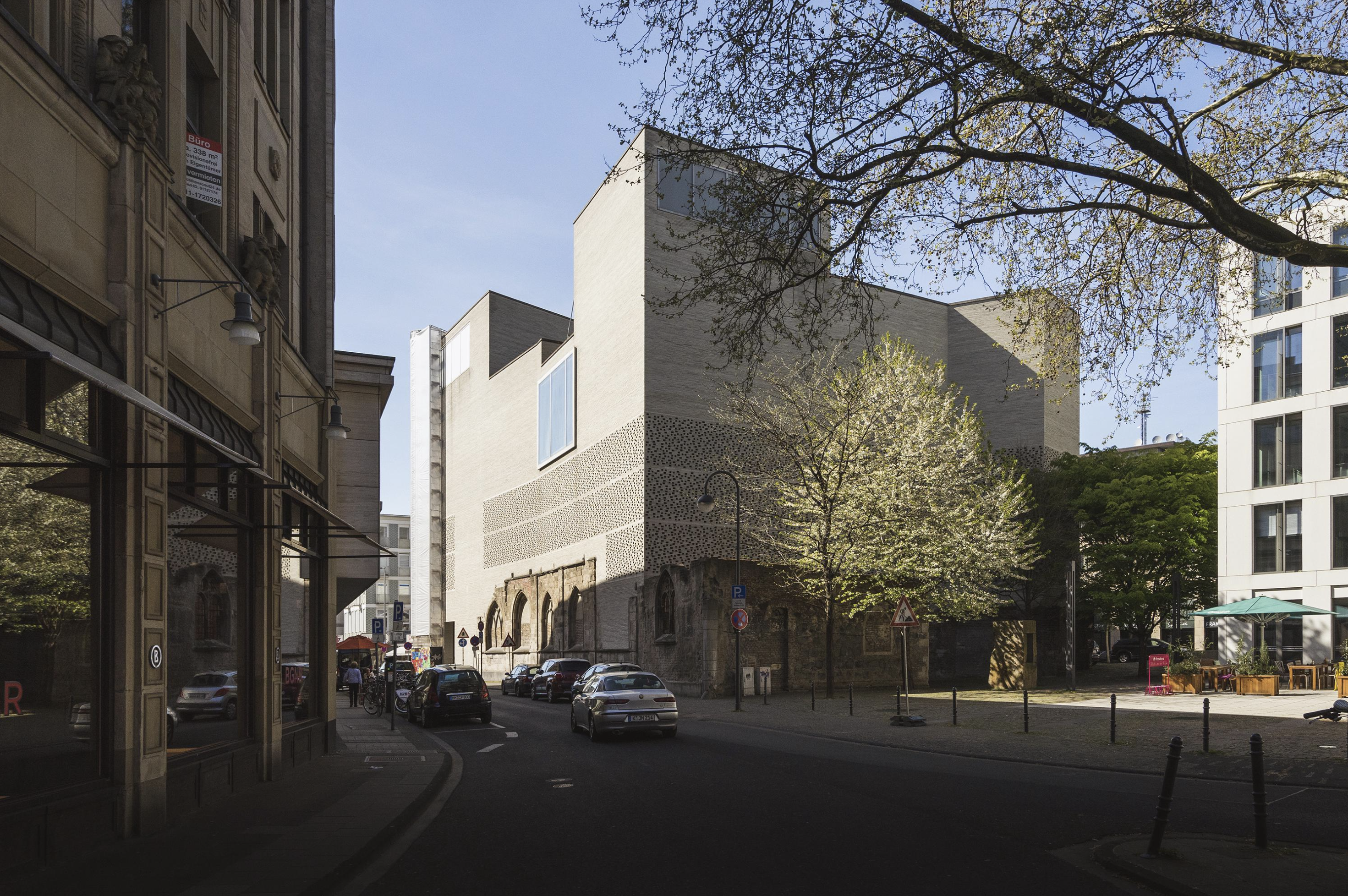
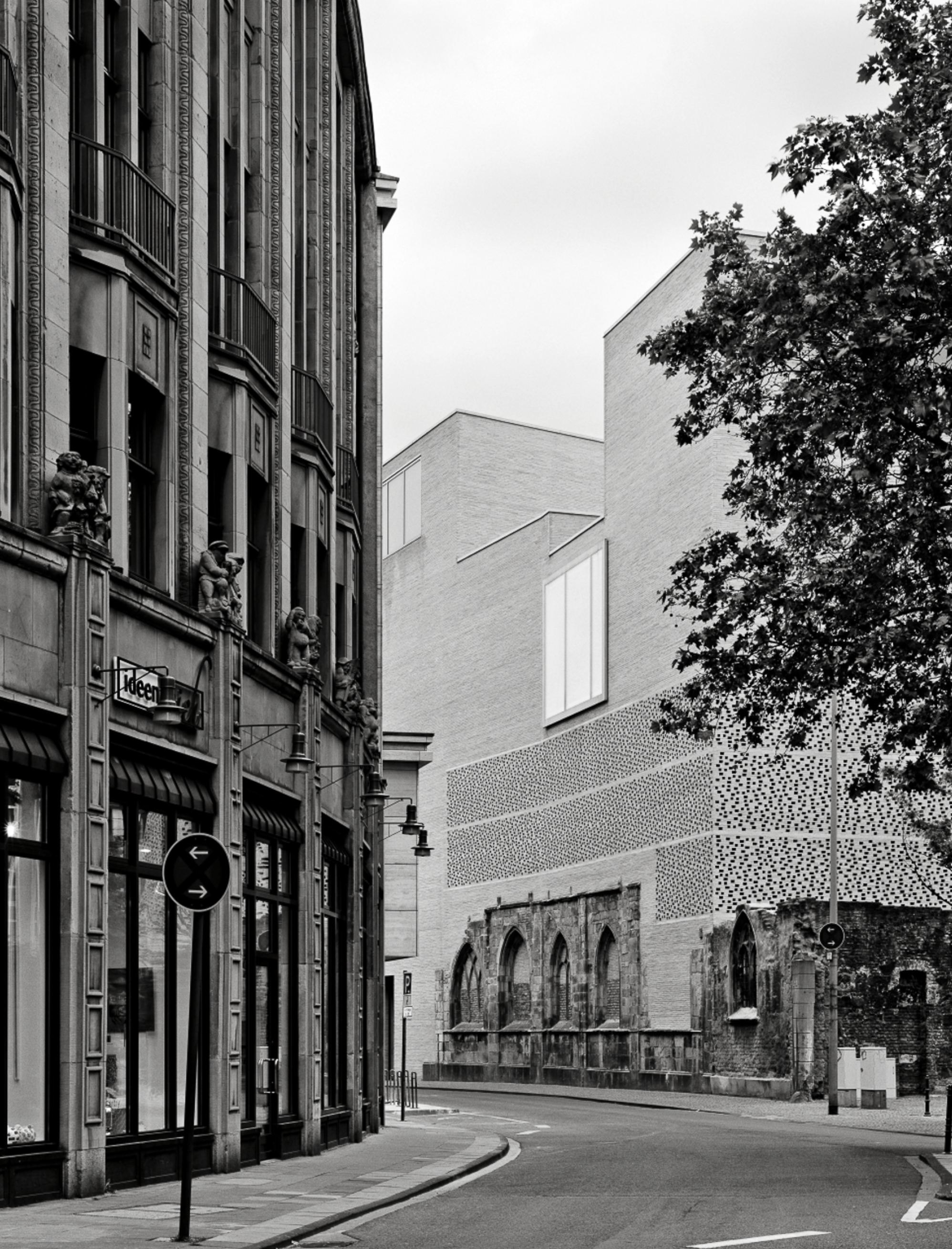
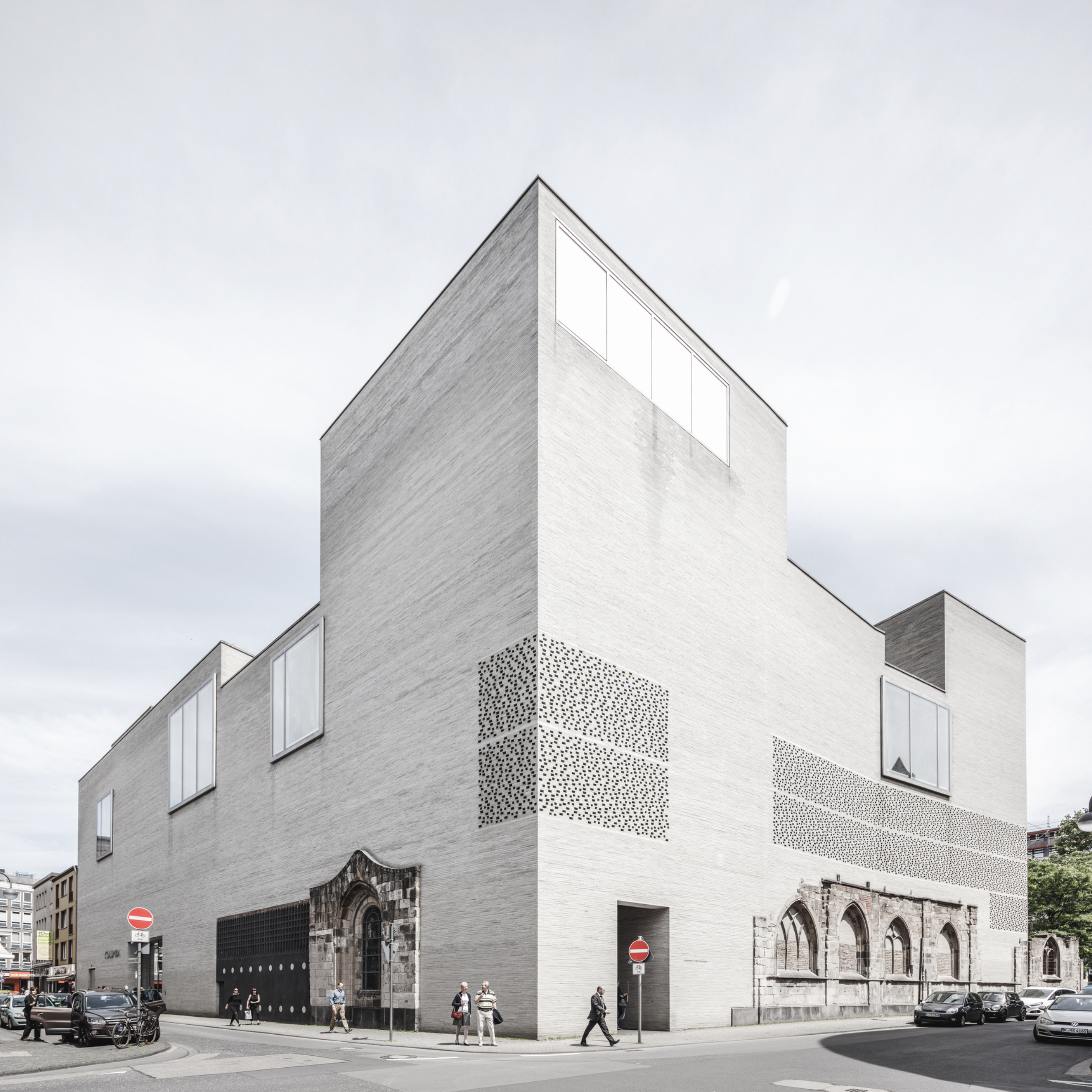
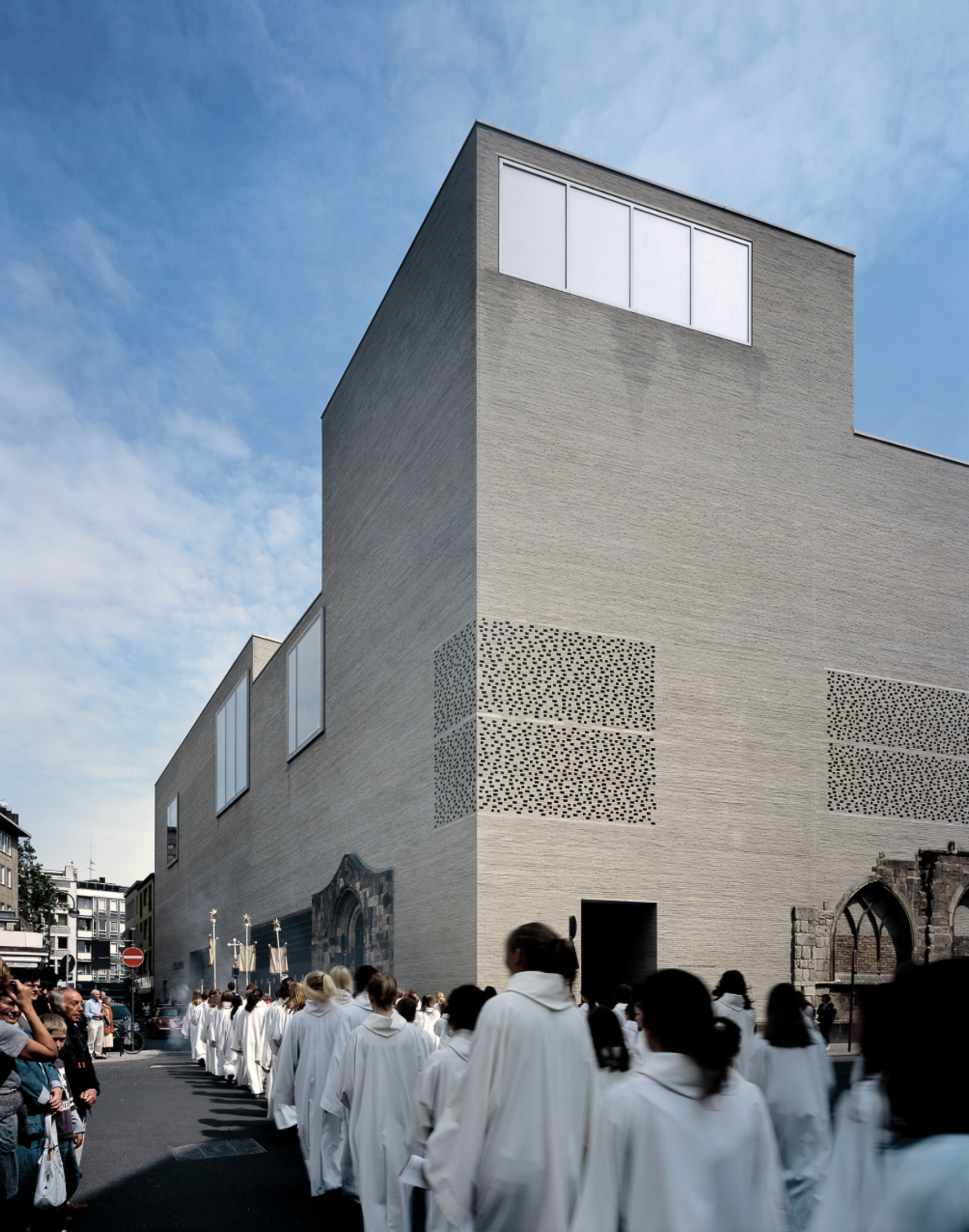
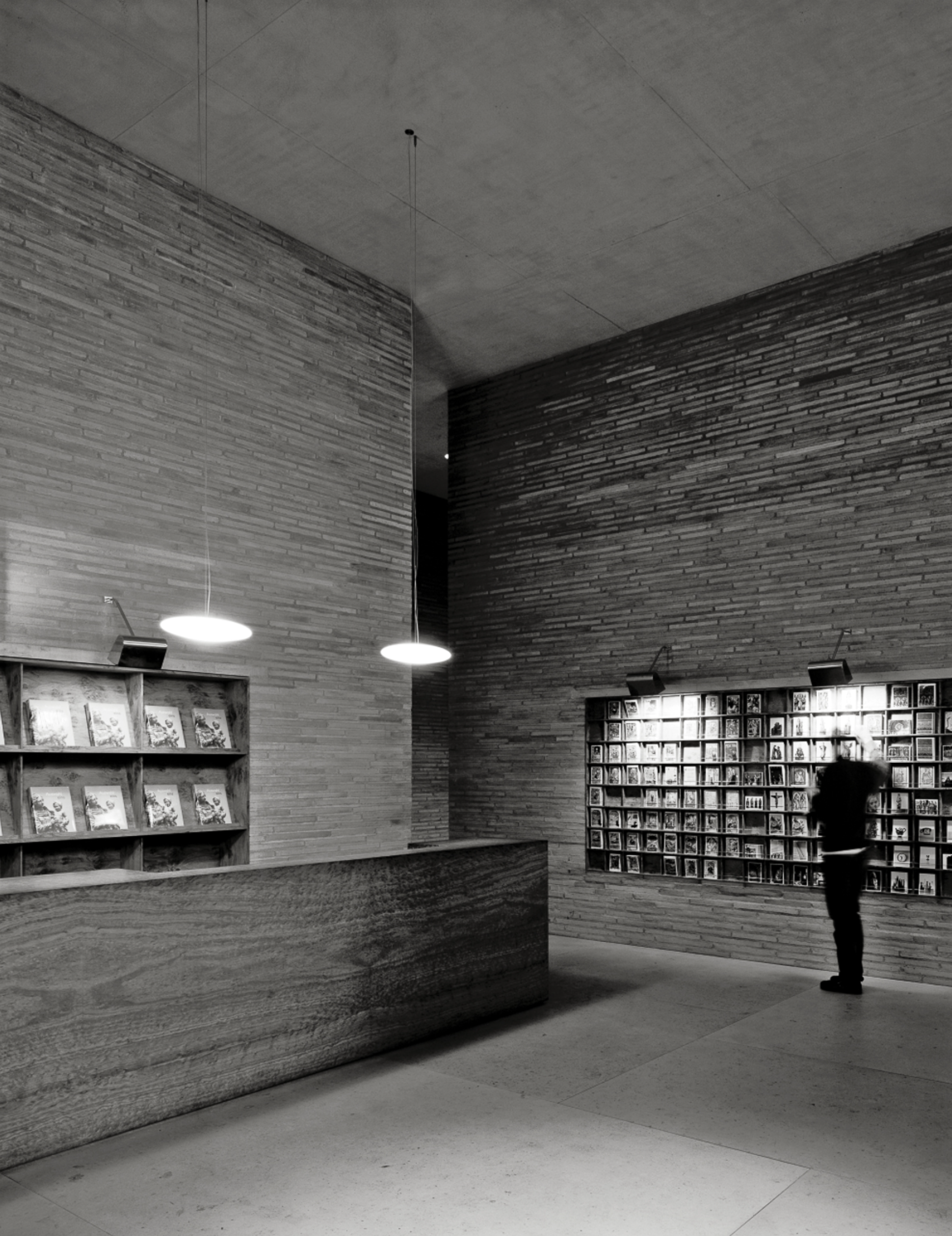
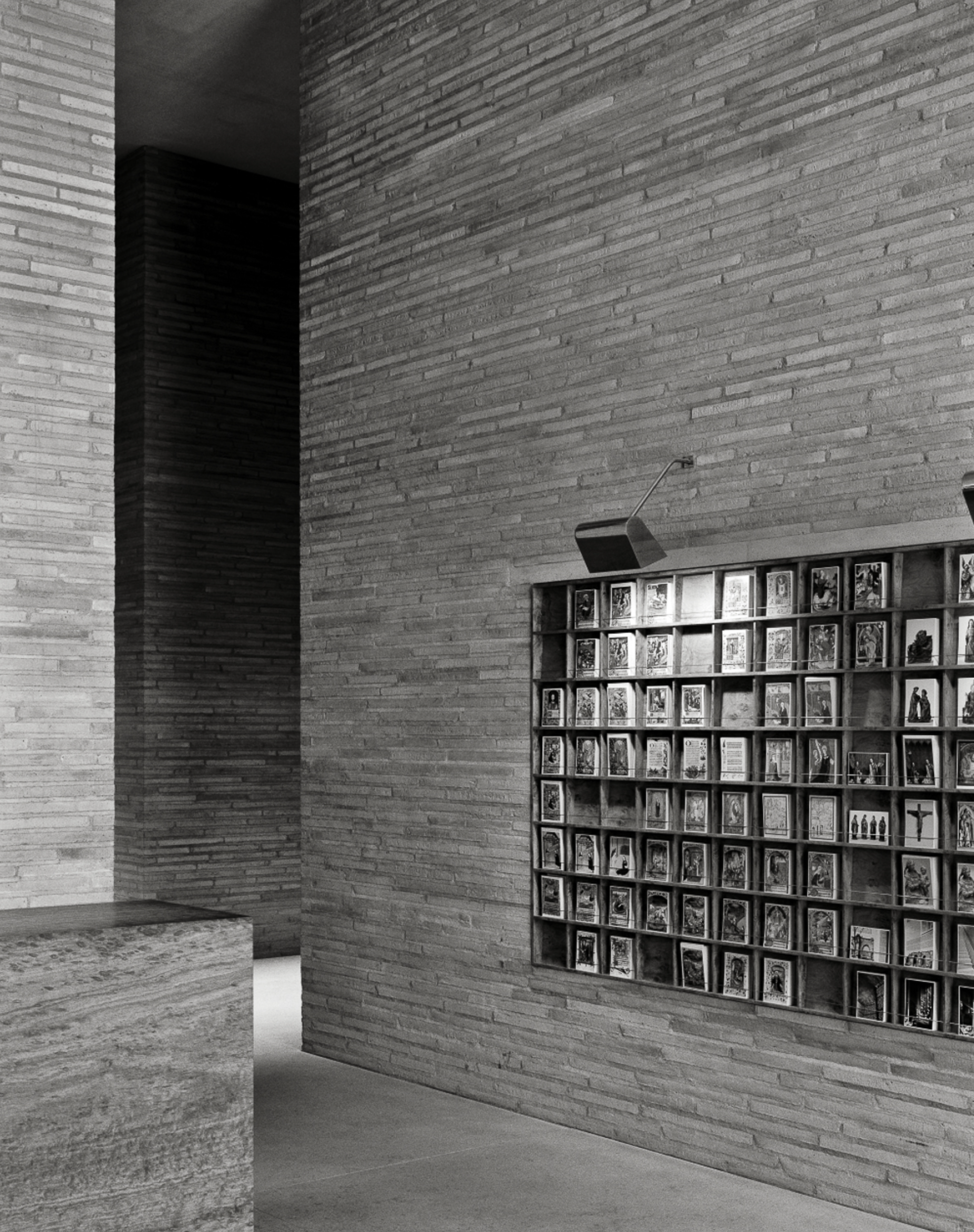
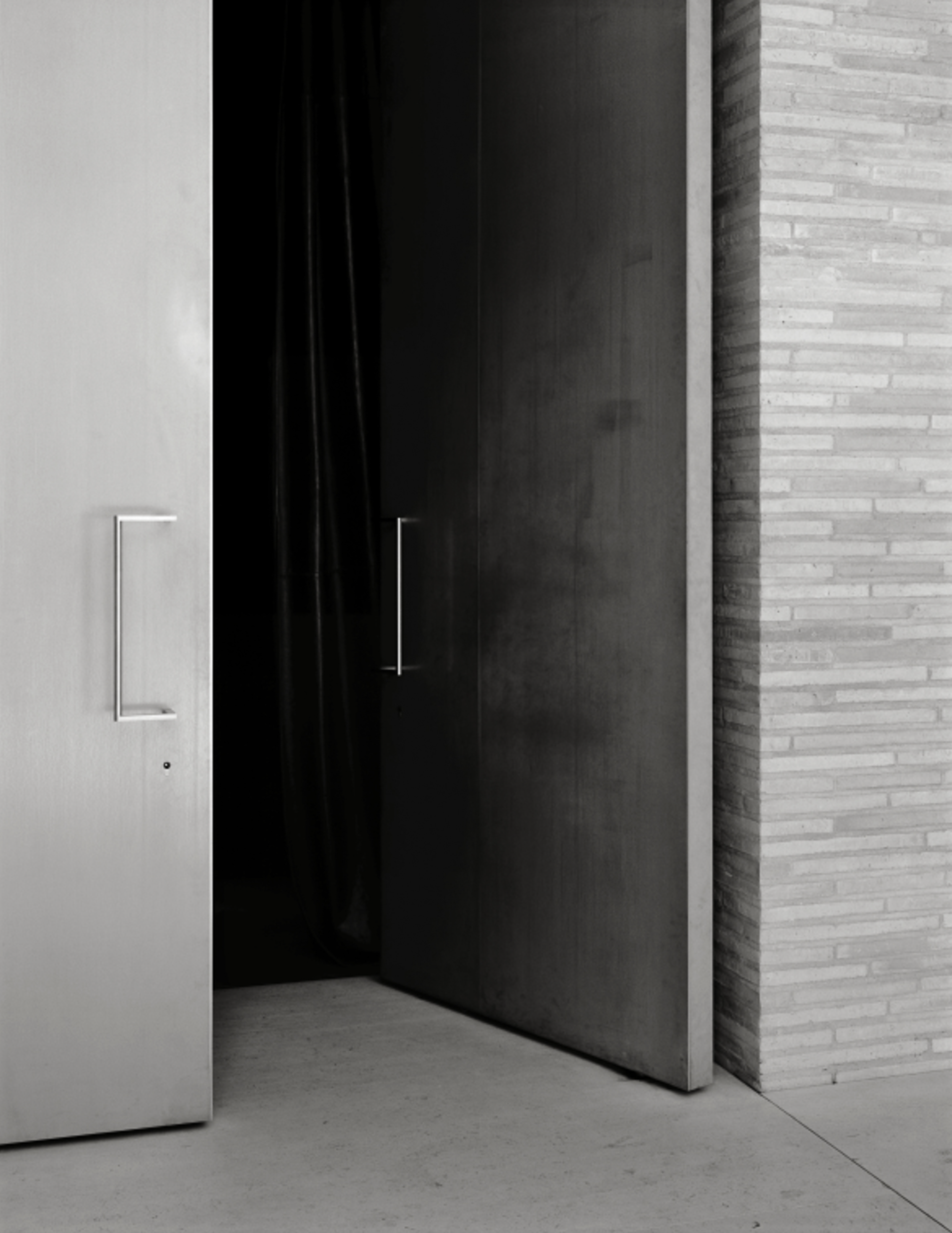
| We had never expected to win the competition to build a new art museum in the center of Cologne on the site of the Church of St. Columba, which was bombed out in the Second World War. At the time, architects generally held the opinion that new construction should present as great a contrast as possible to old buildings. As a rule, they responded to massive old walls by designing lighter constructions of steel and glass. But the jury liked our impulse for an older-style architectural stance that would bring old and new together in a new whole geared toward harmony rather than contrast.
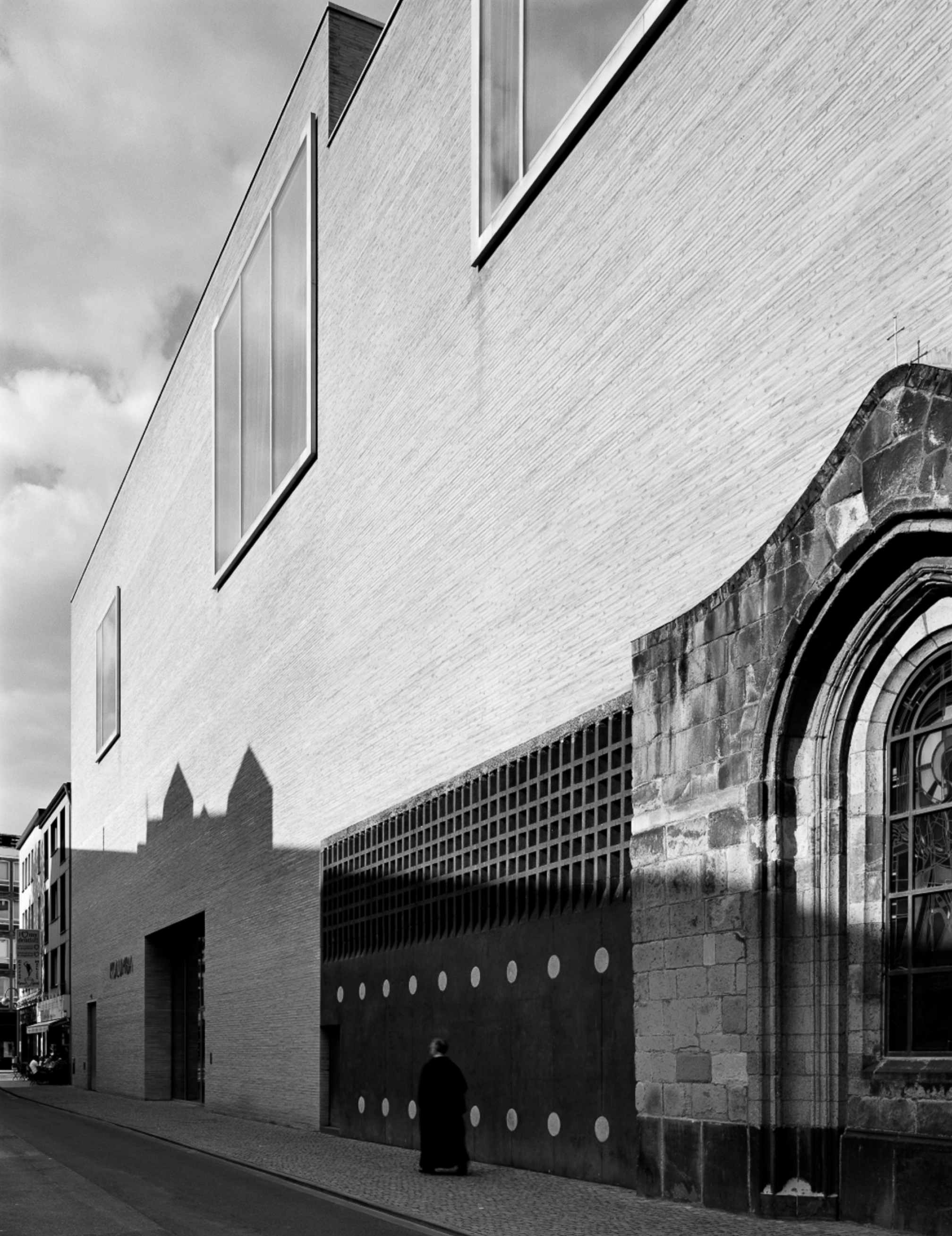
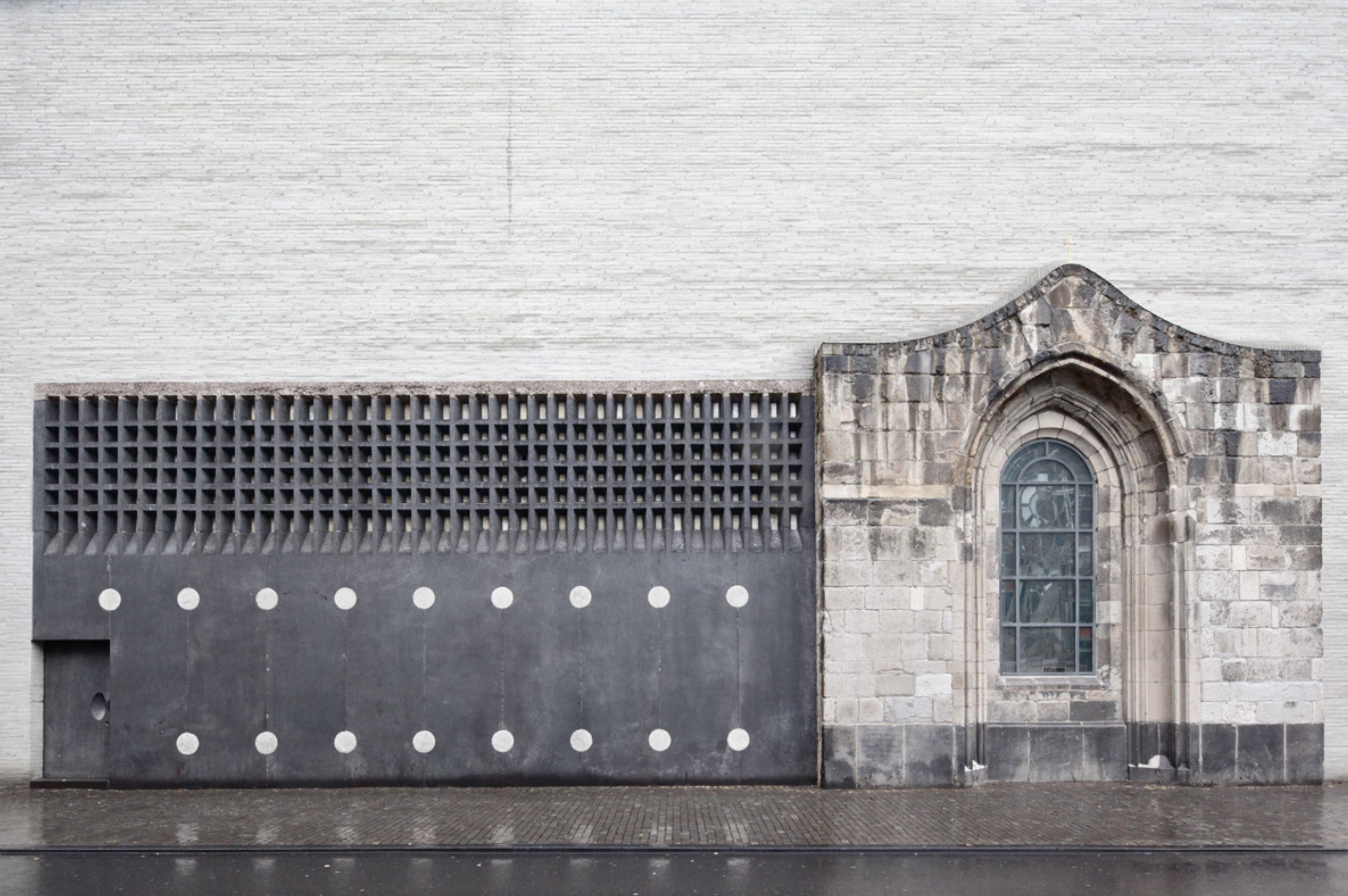
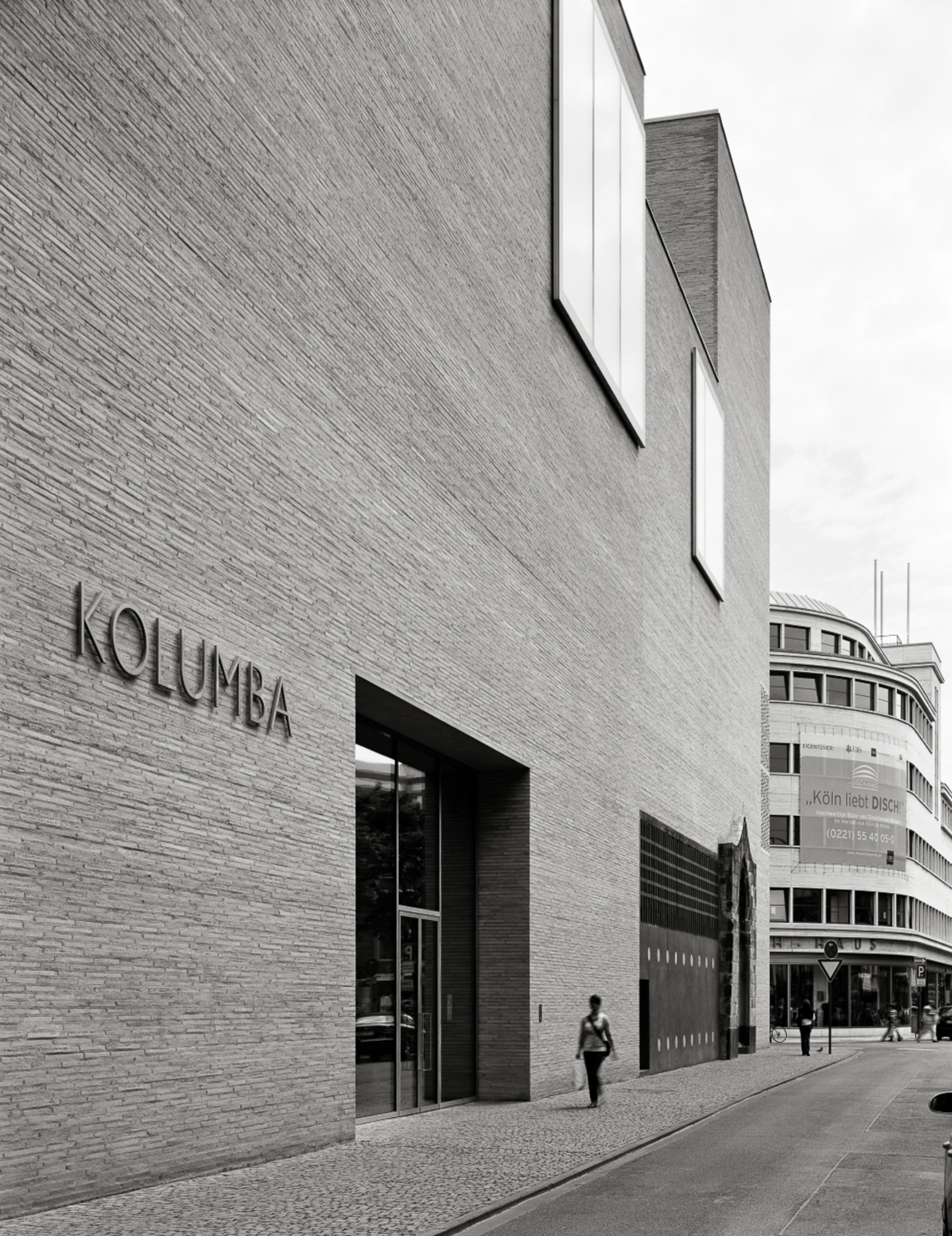
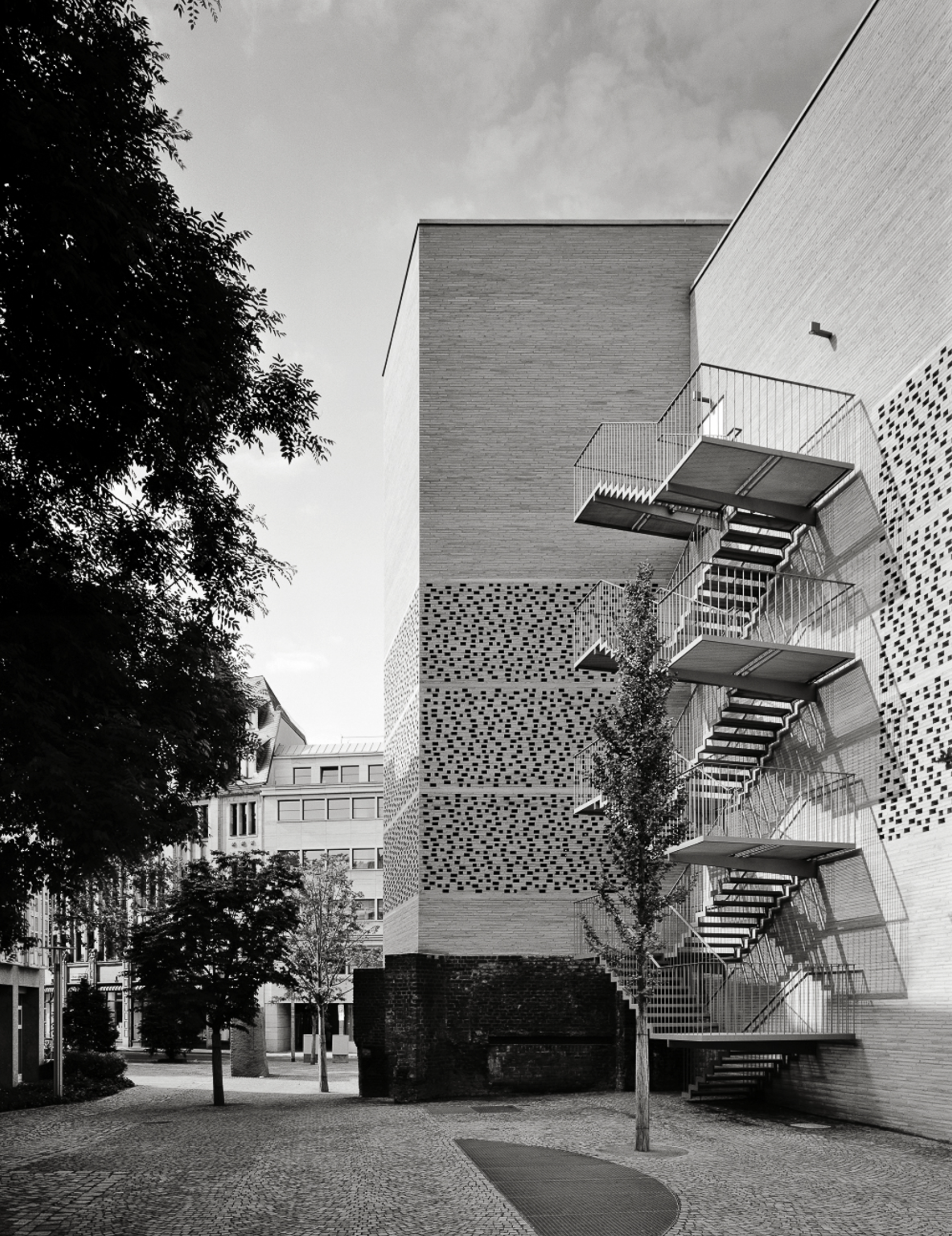
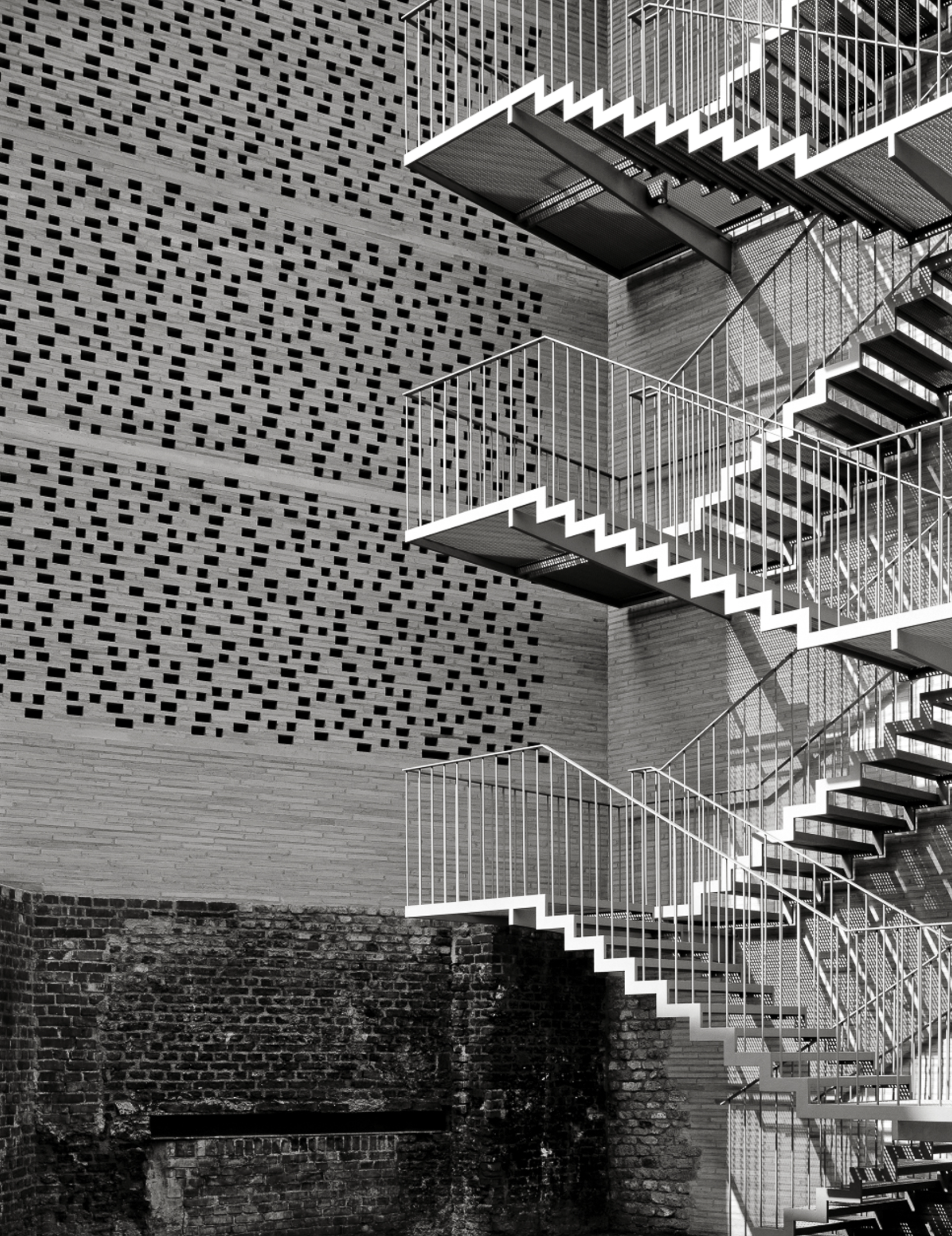
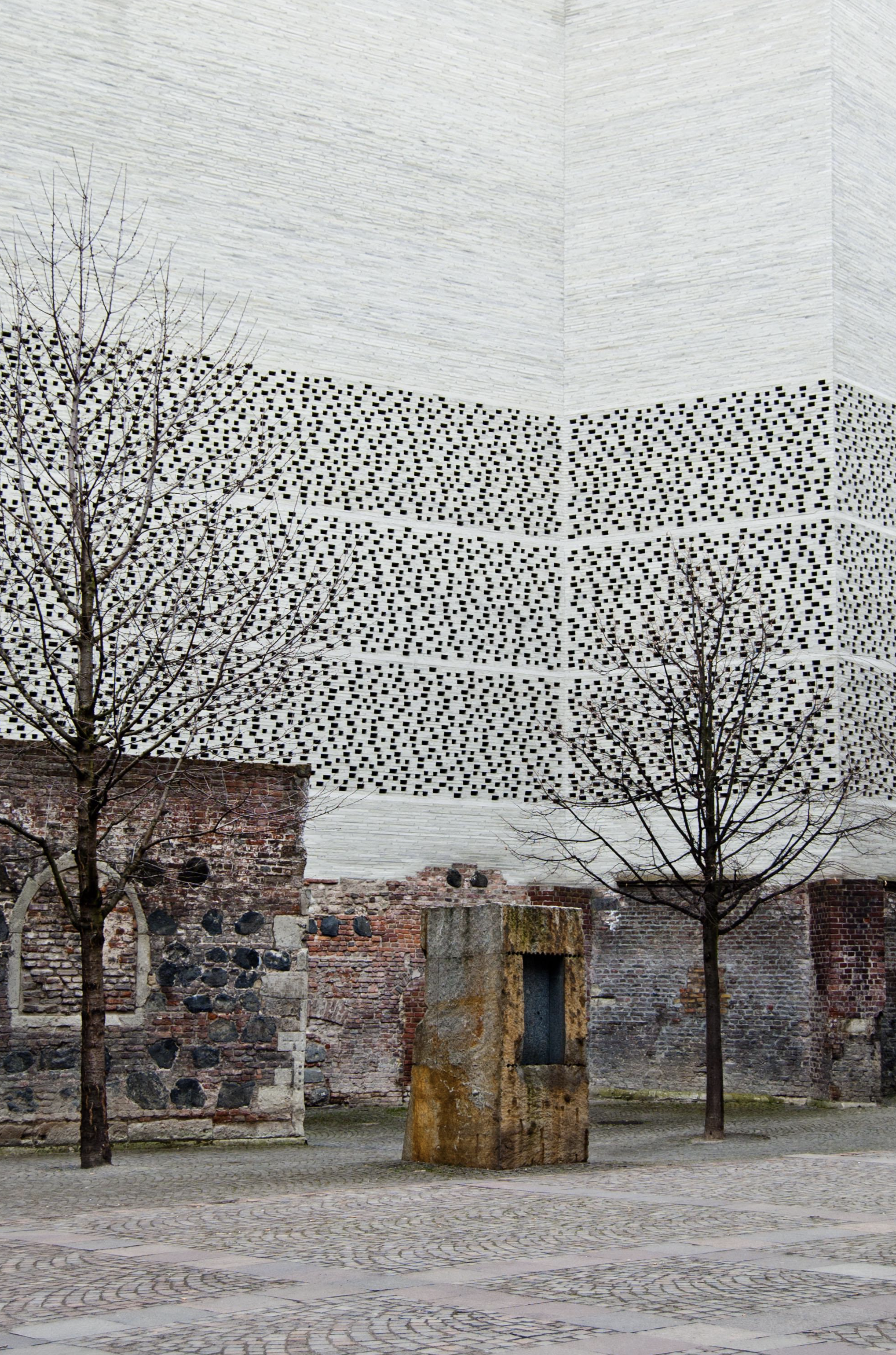
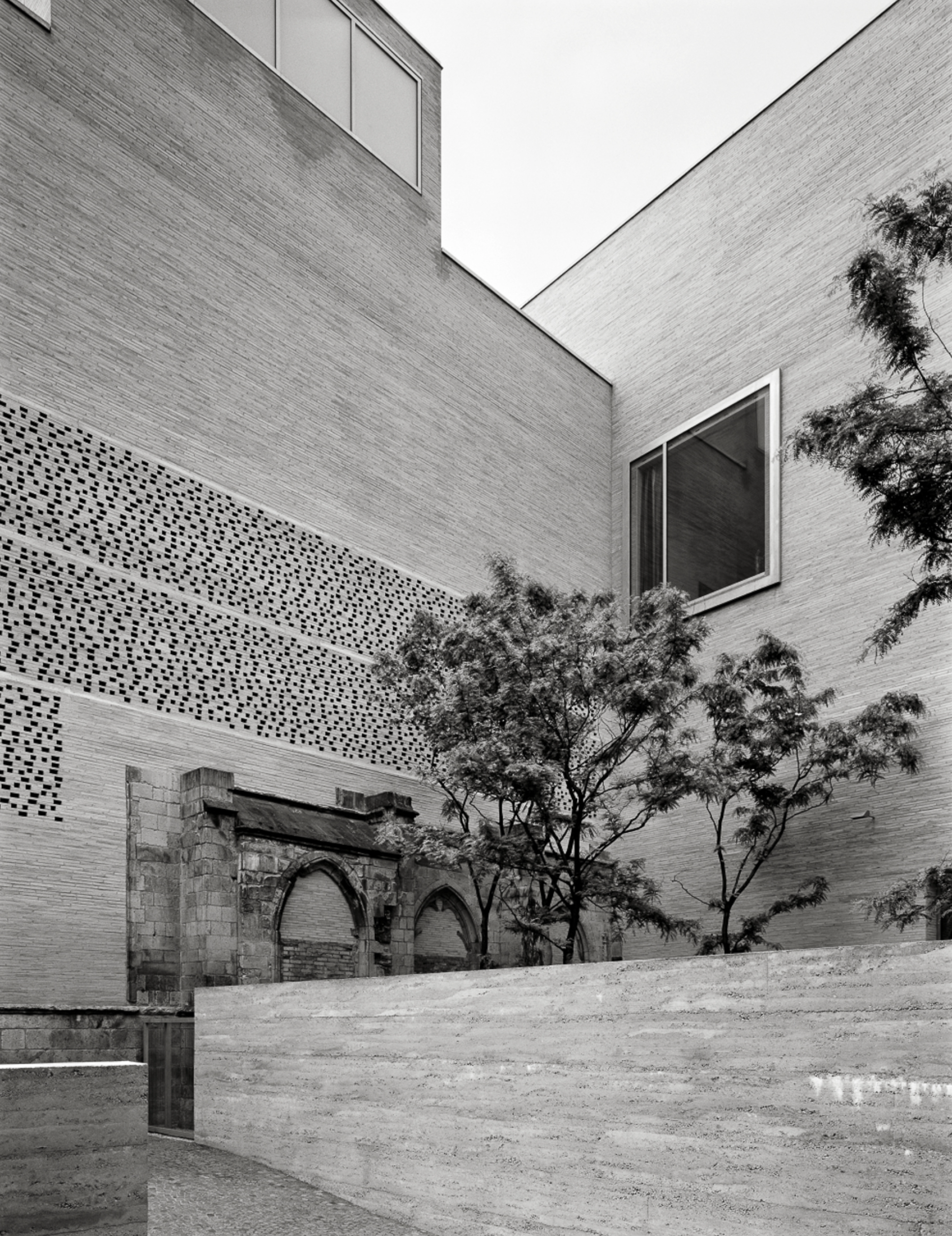
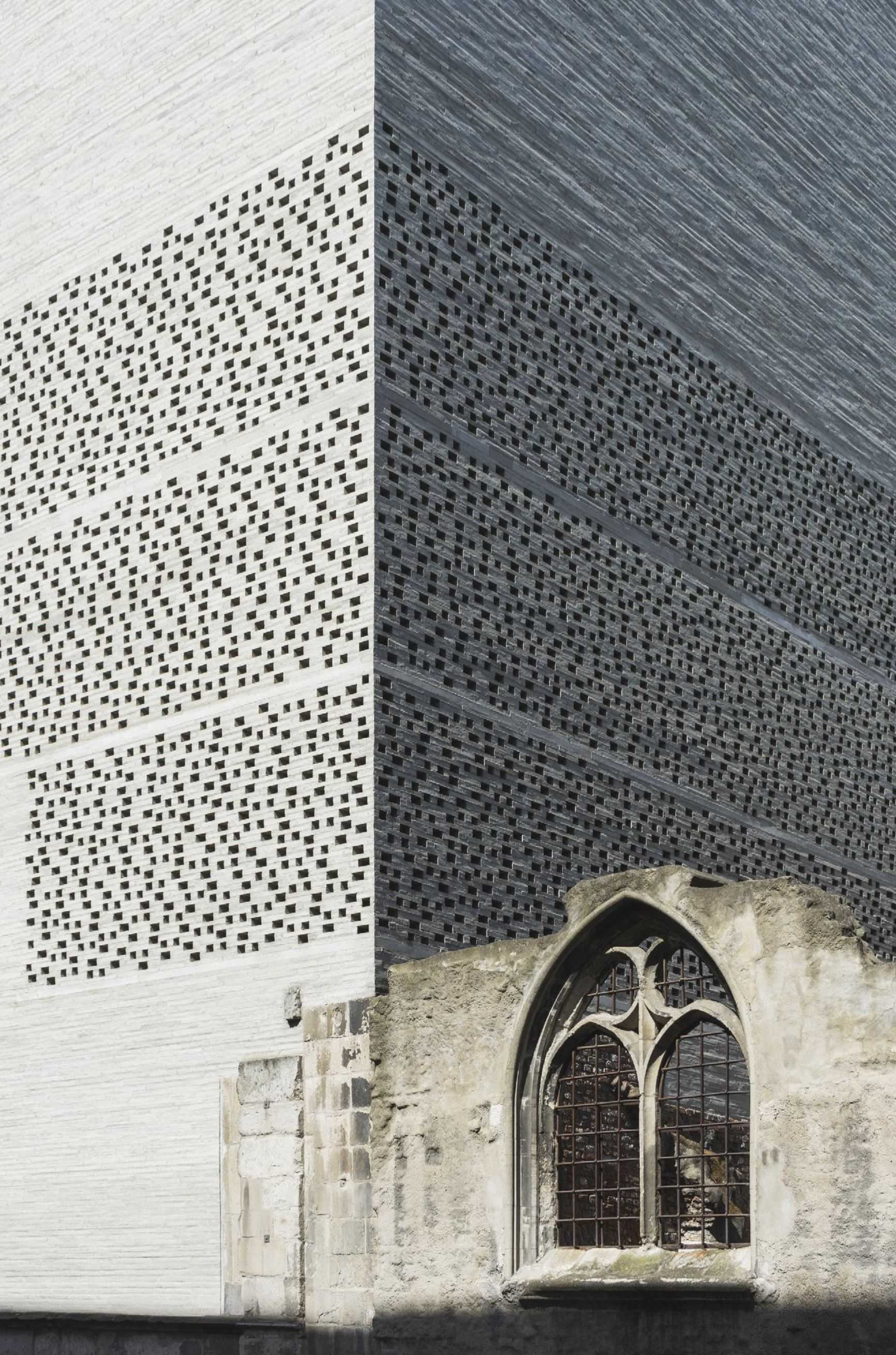
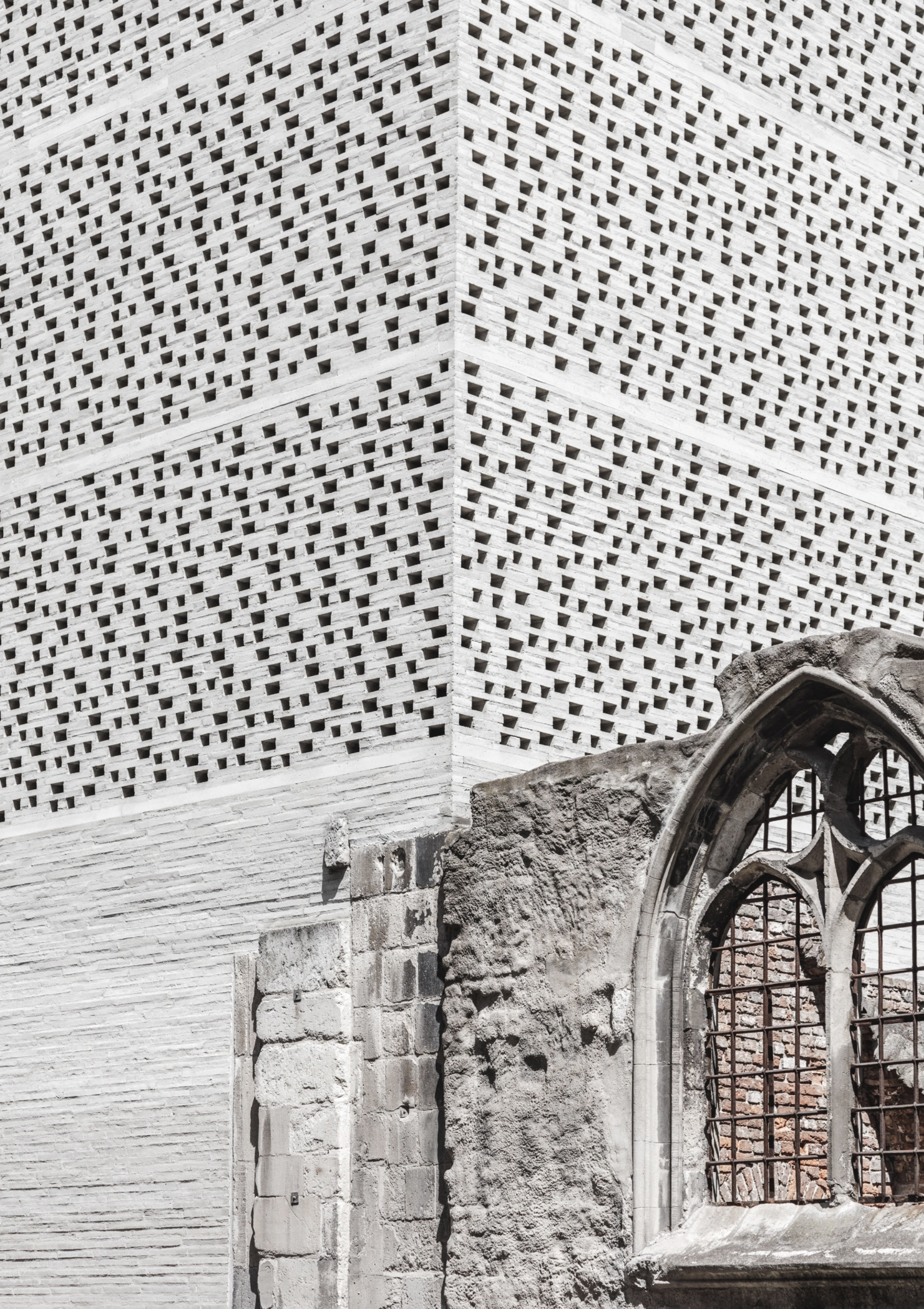
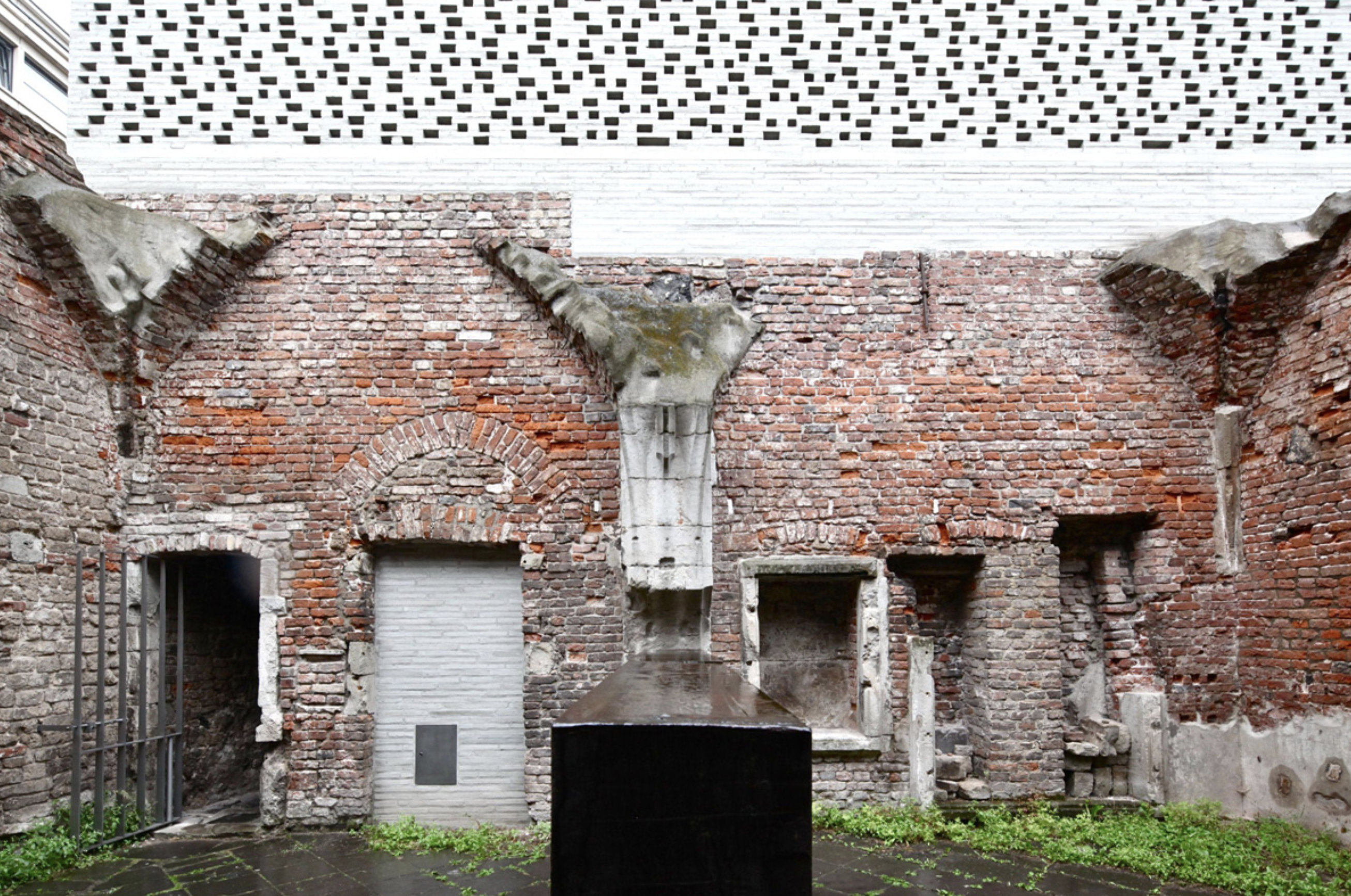
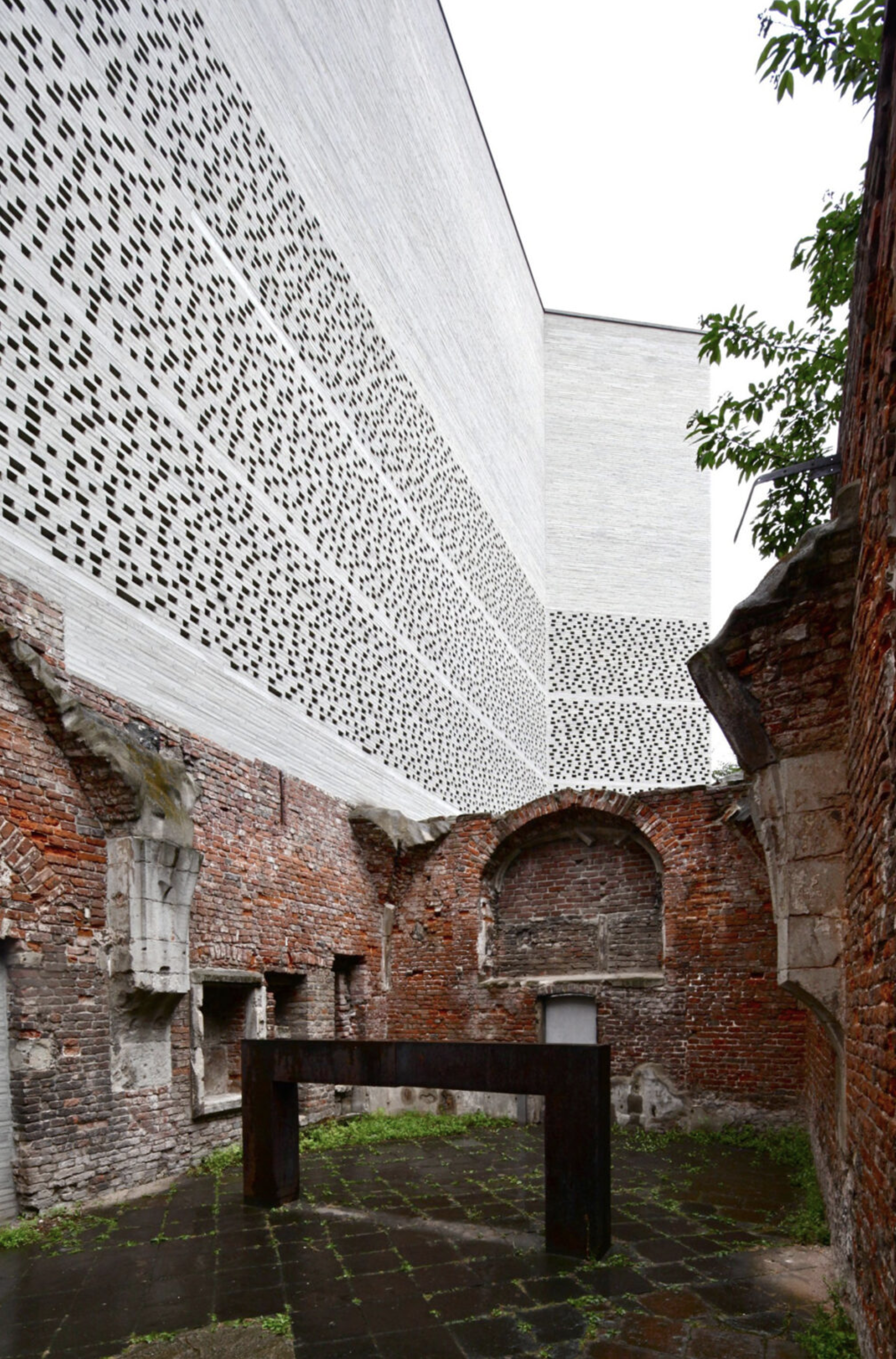
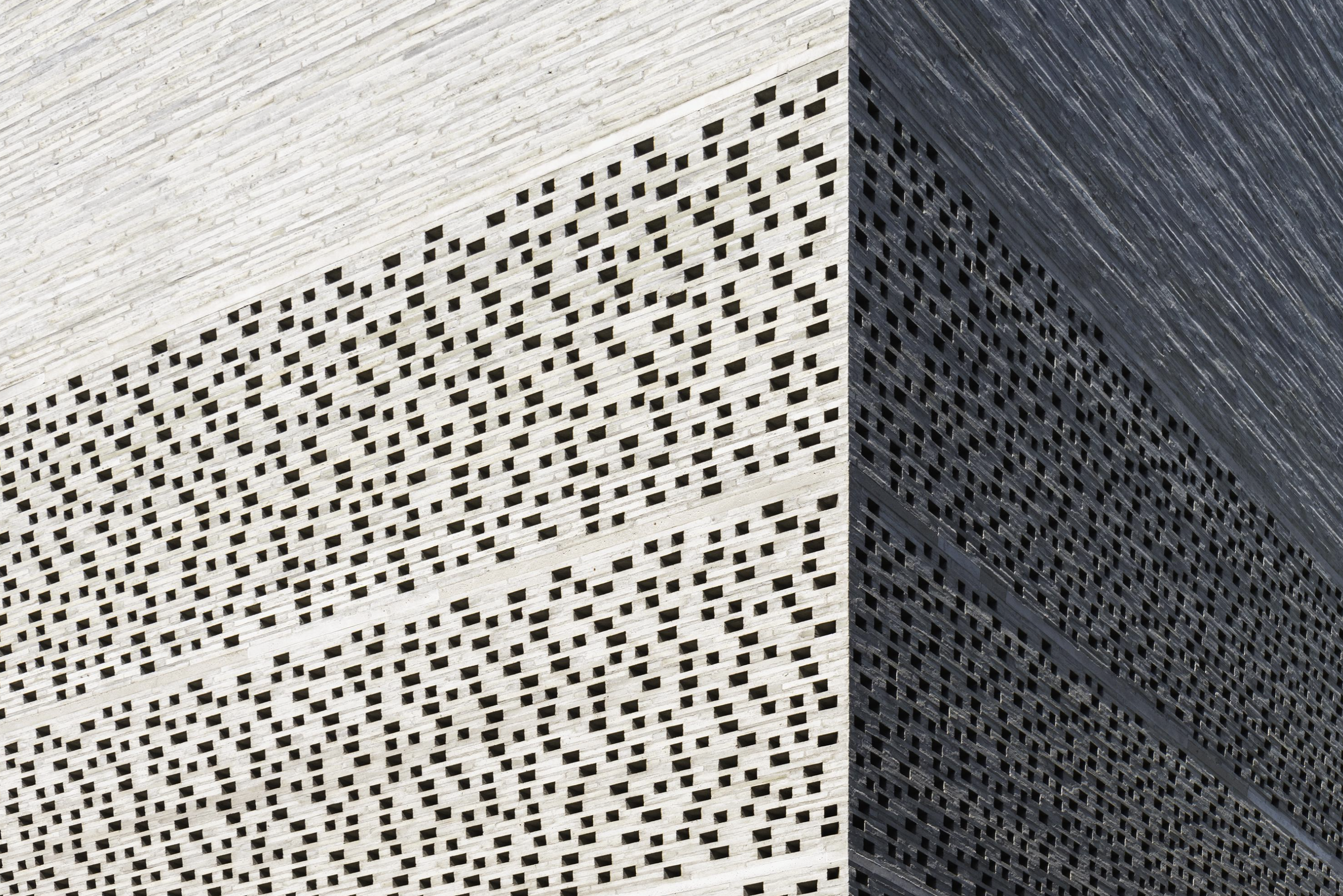
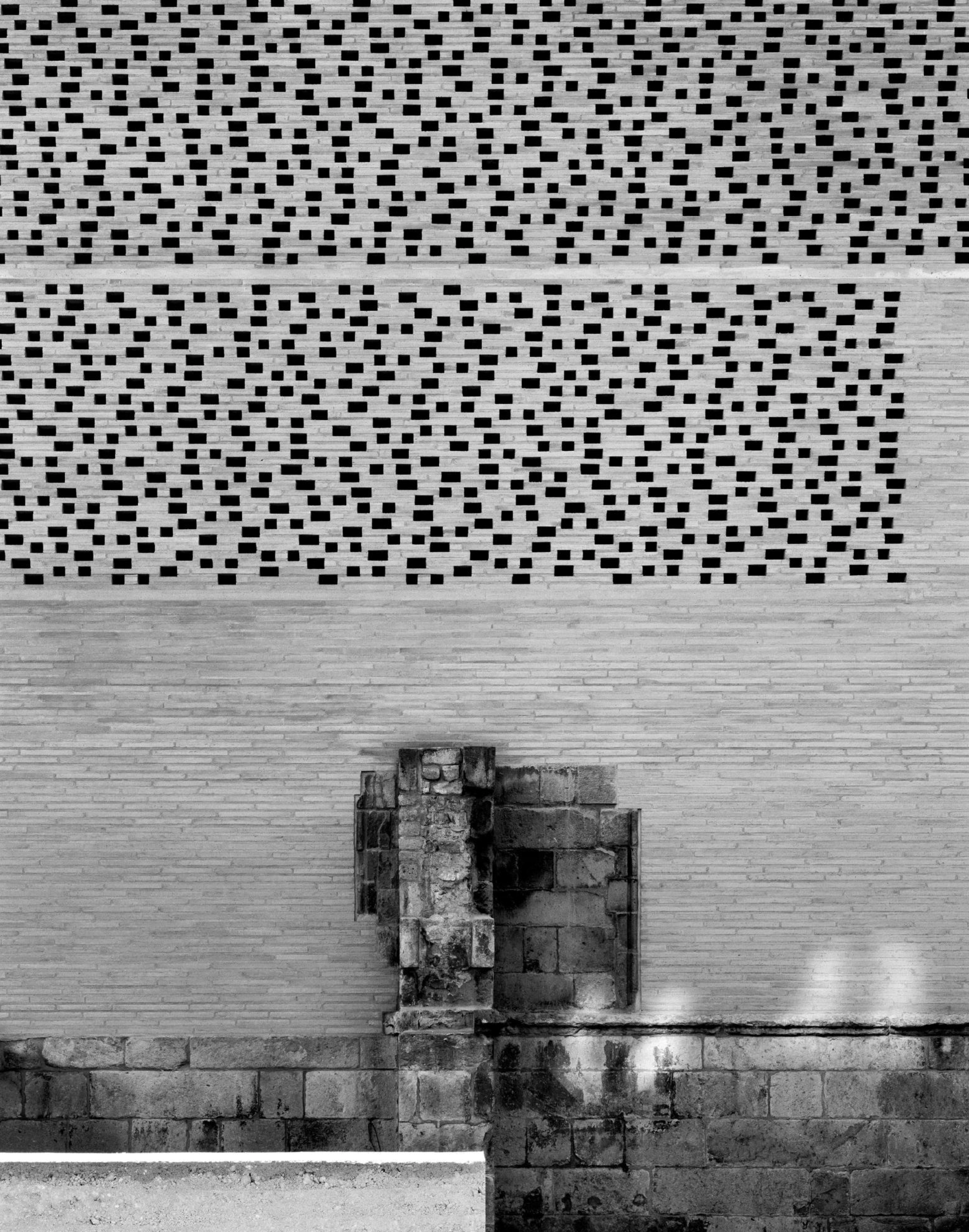
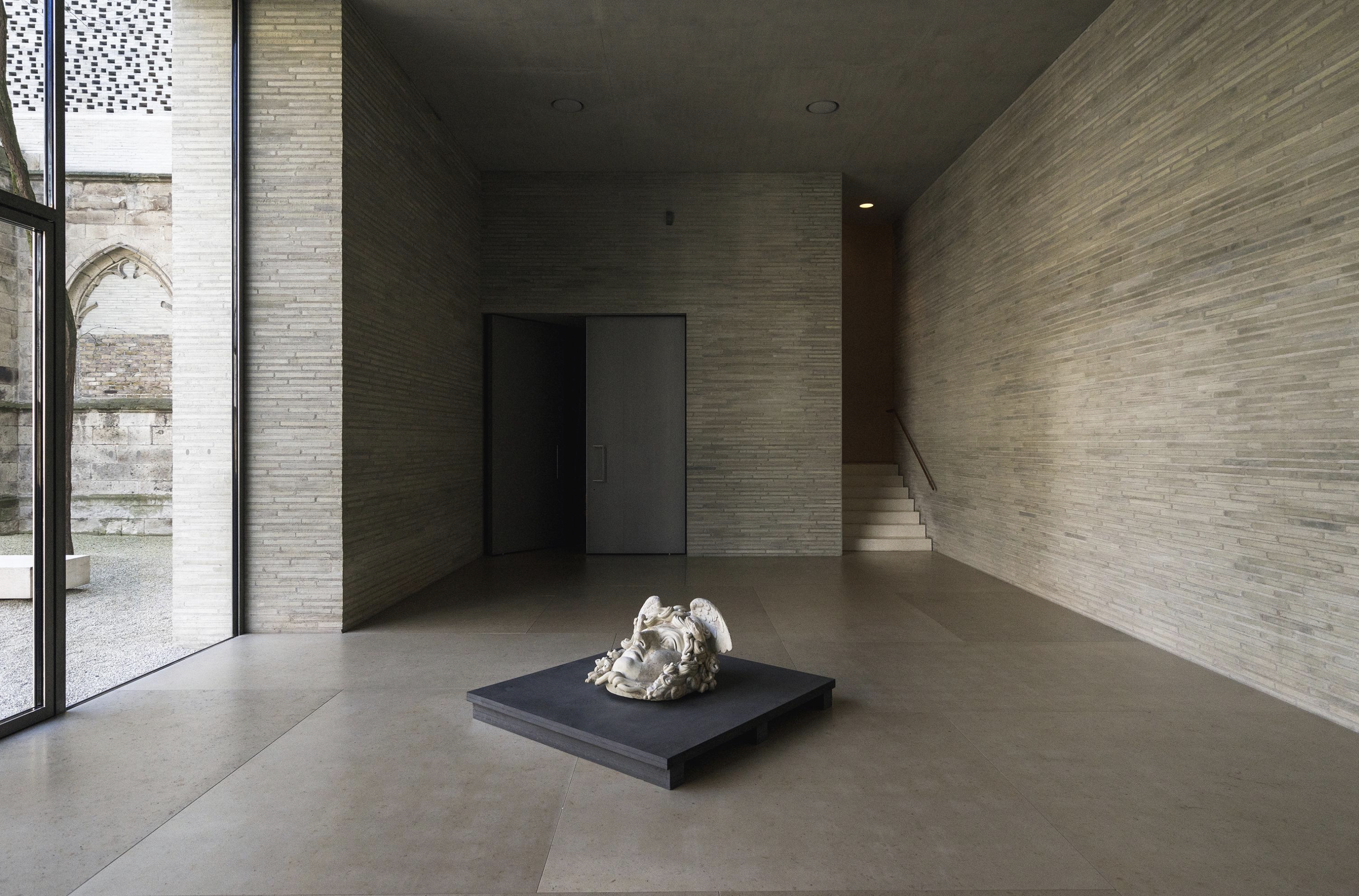
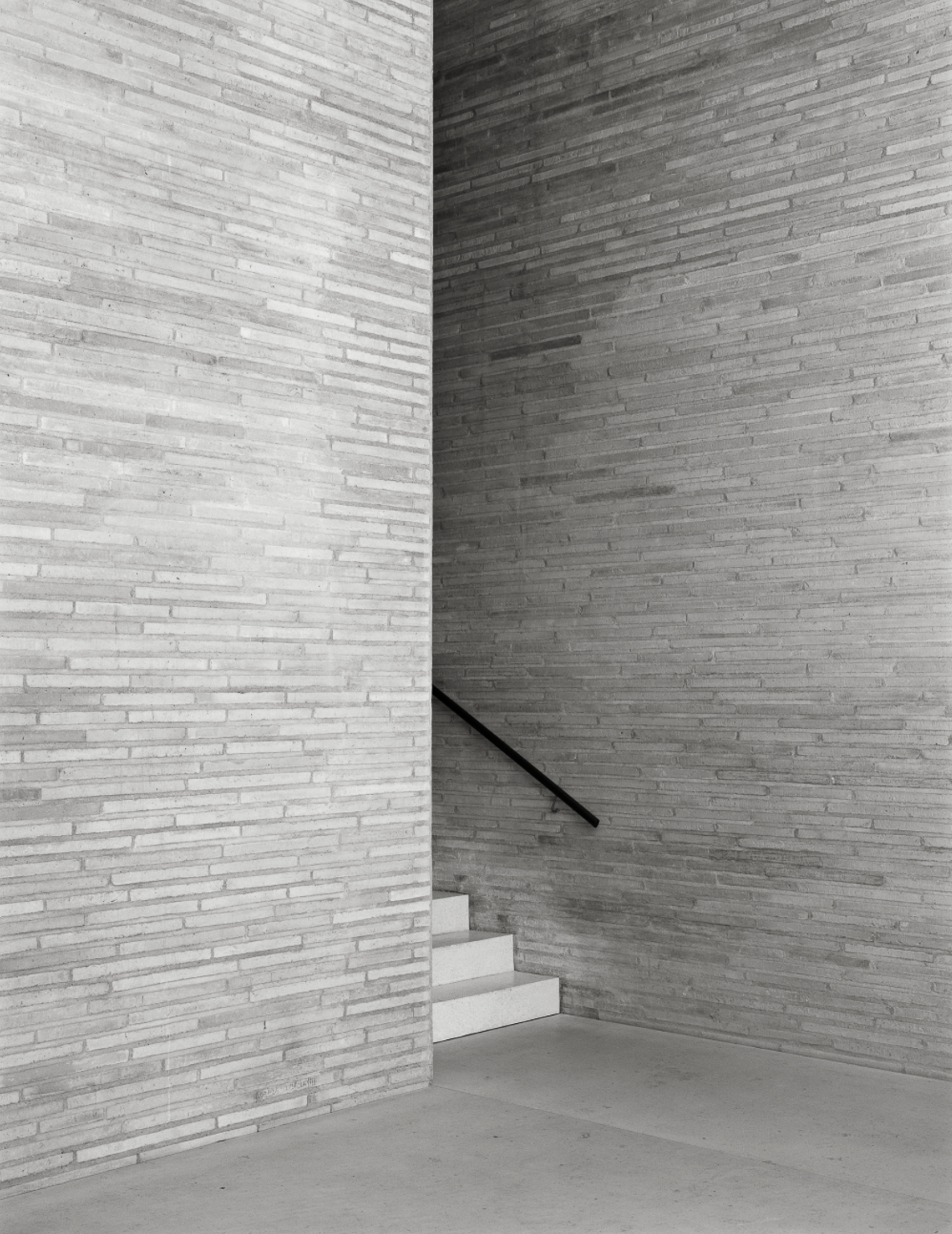
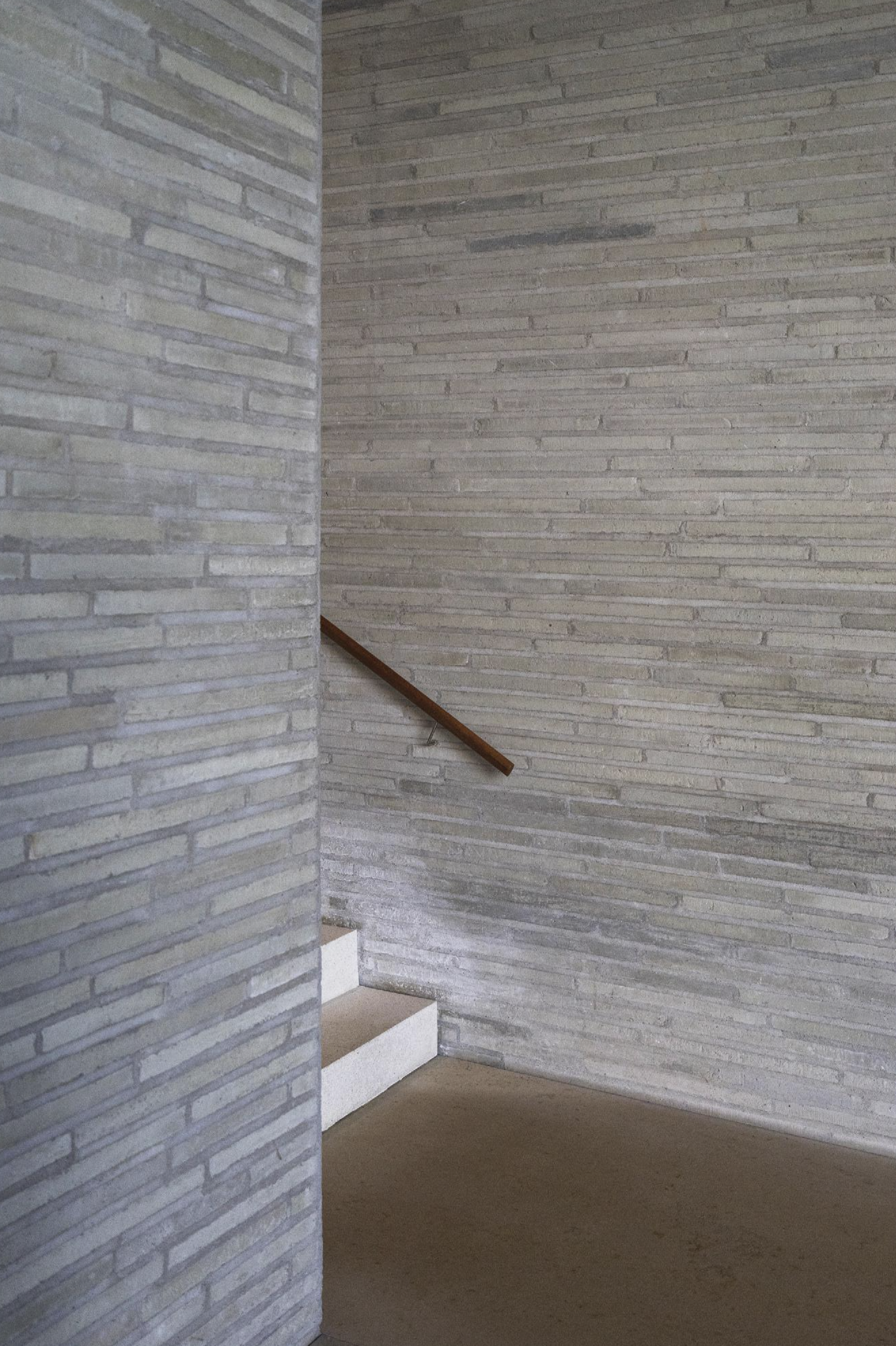
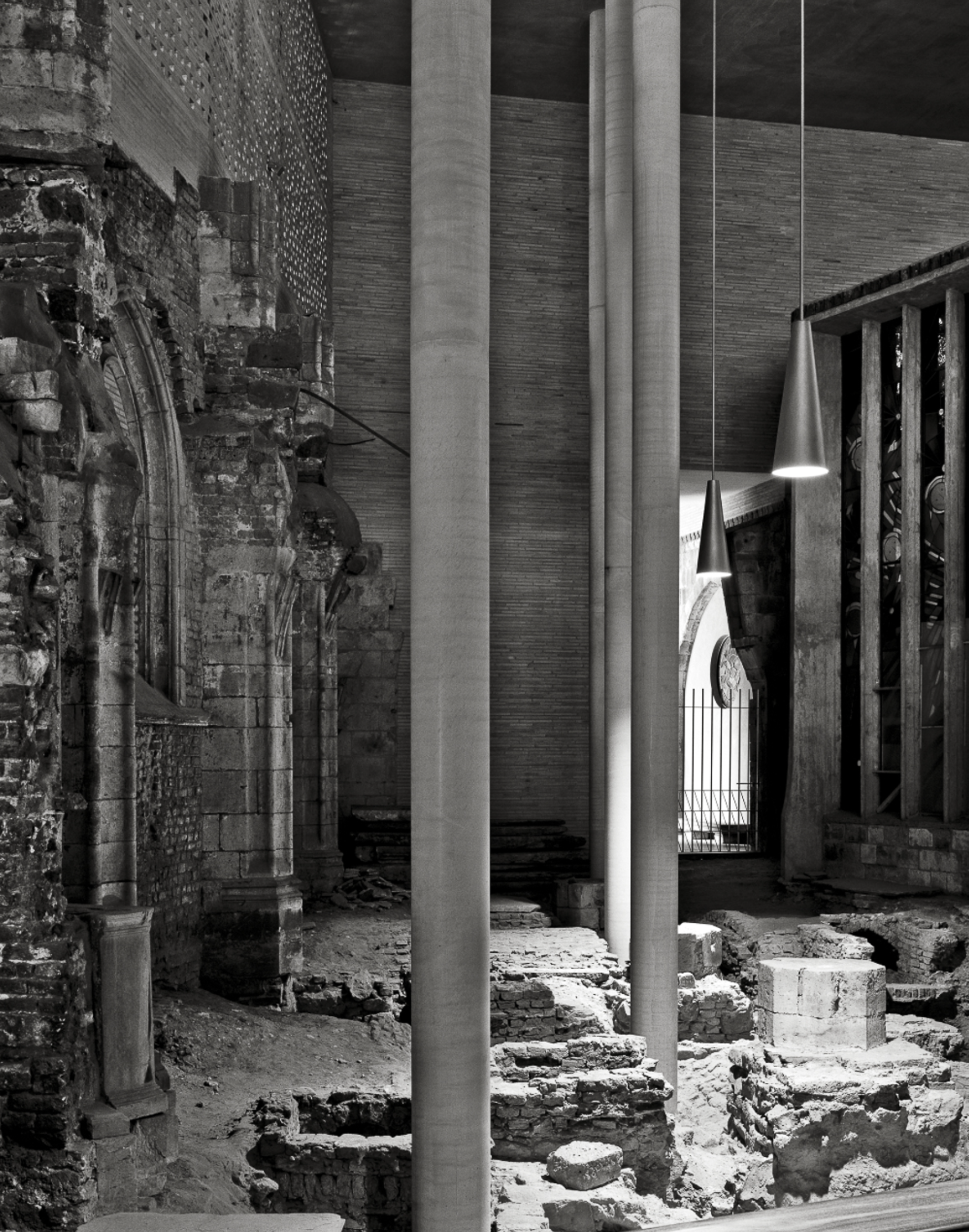
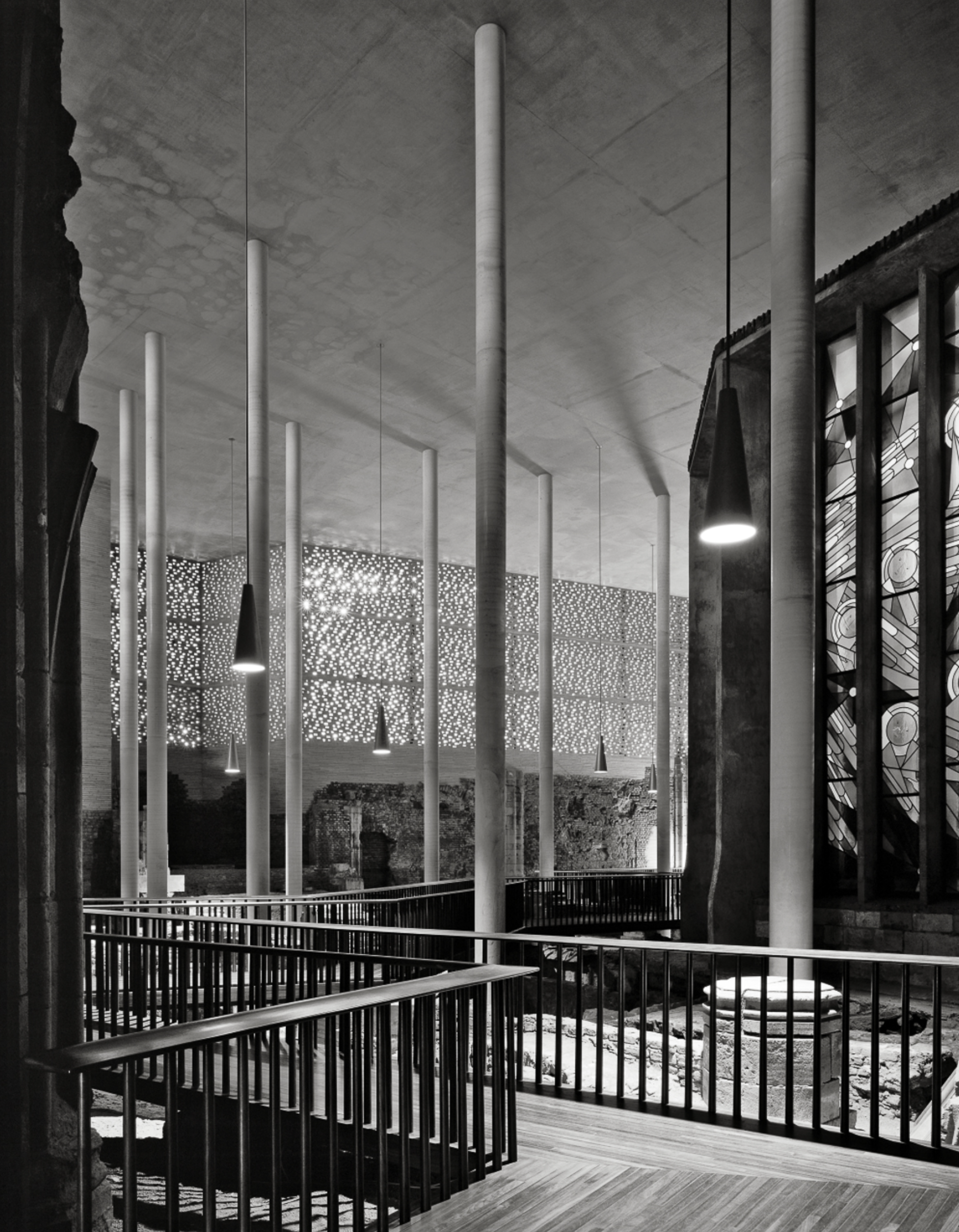
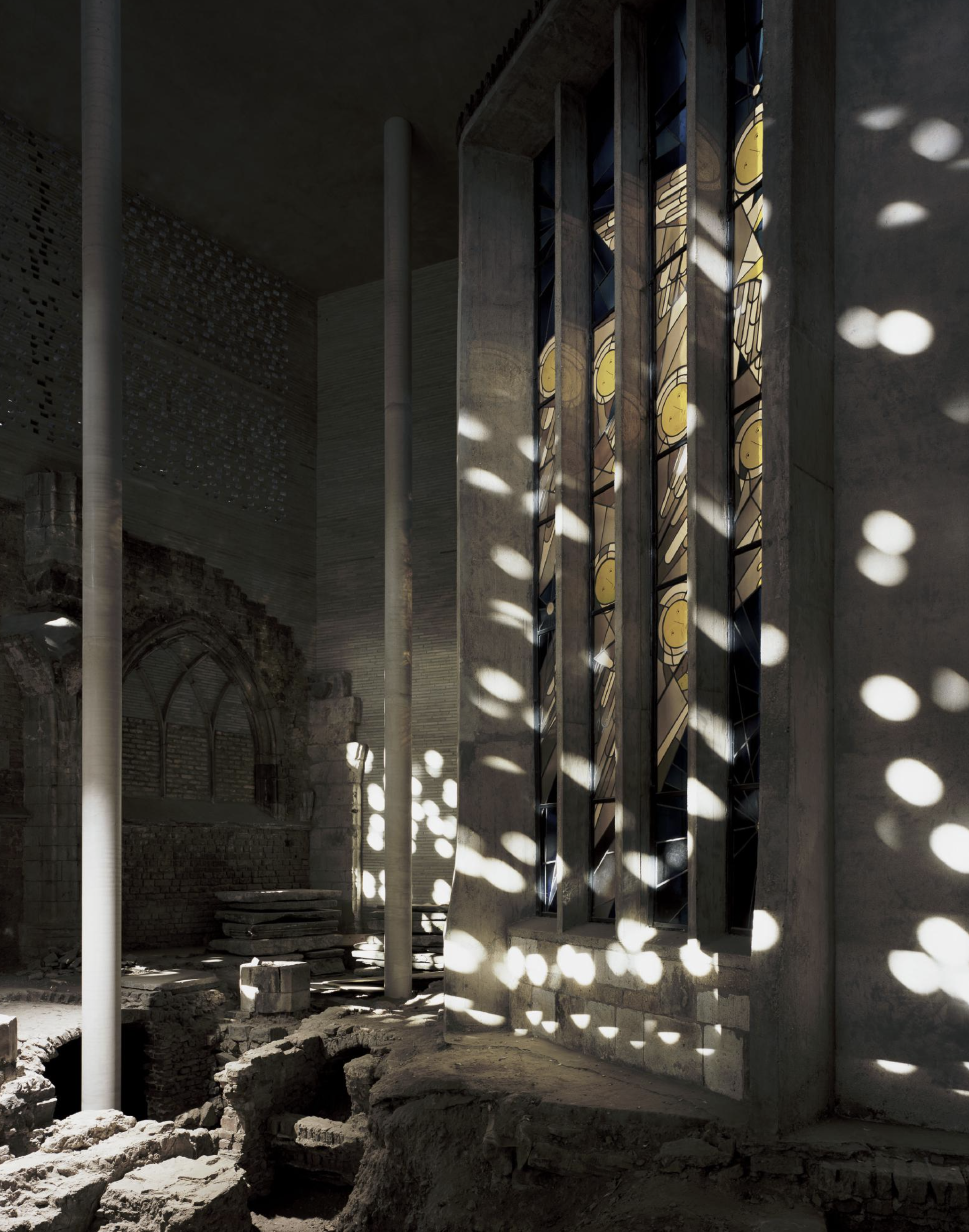
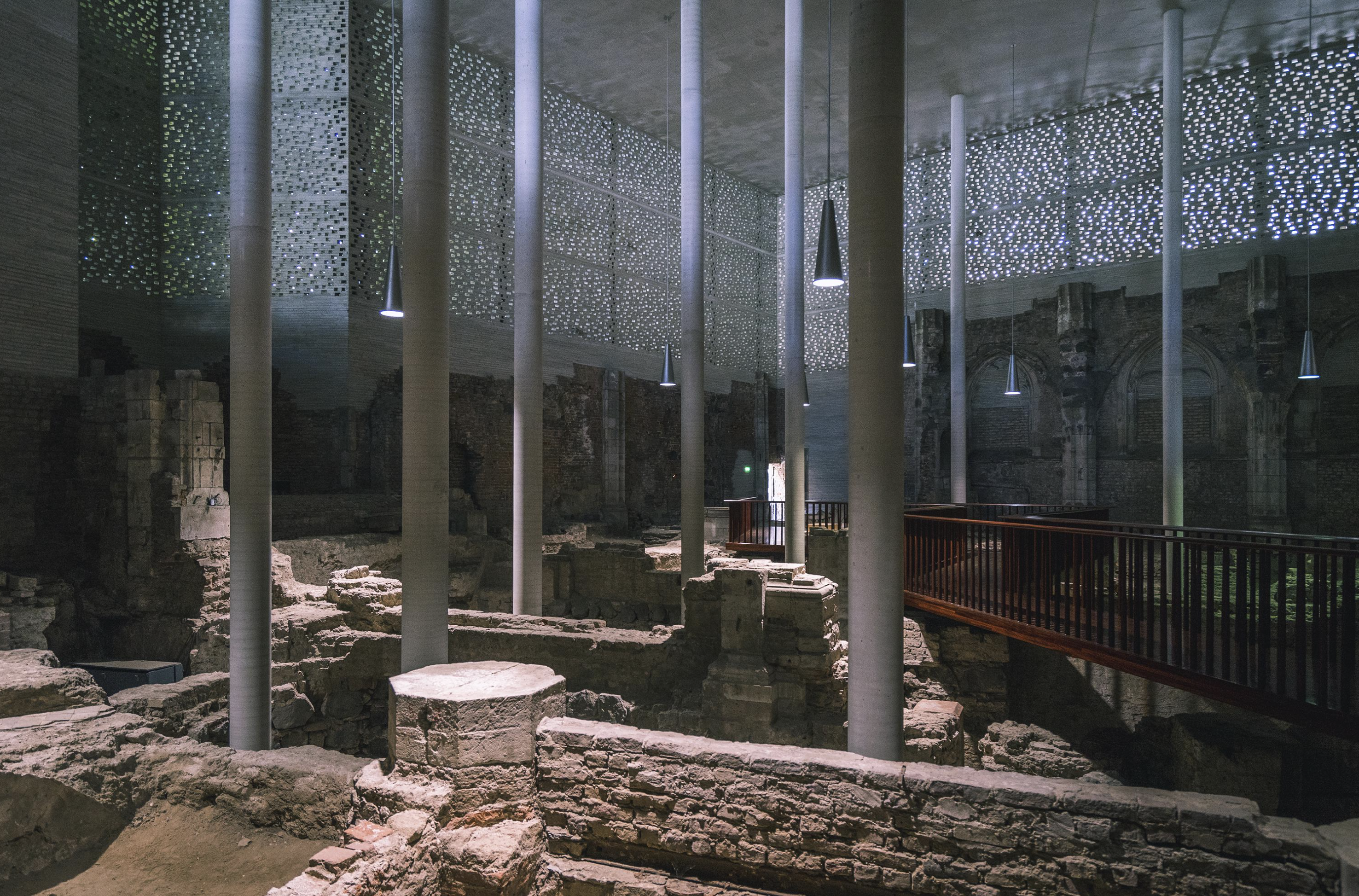
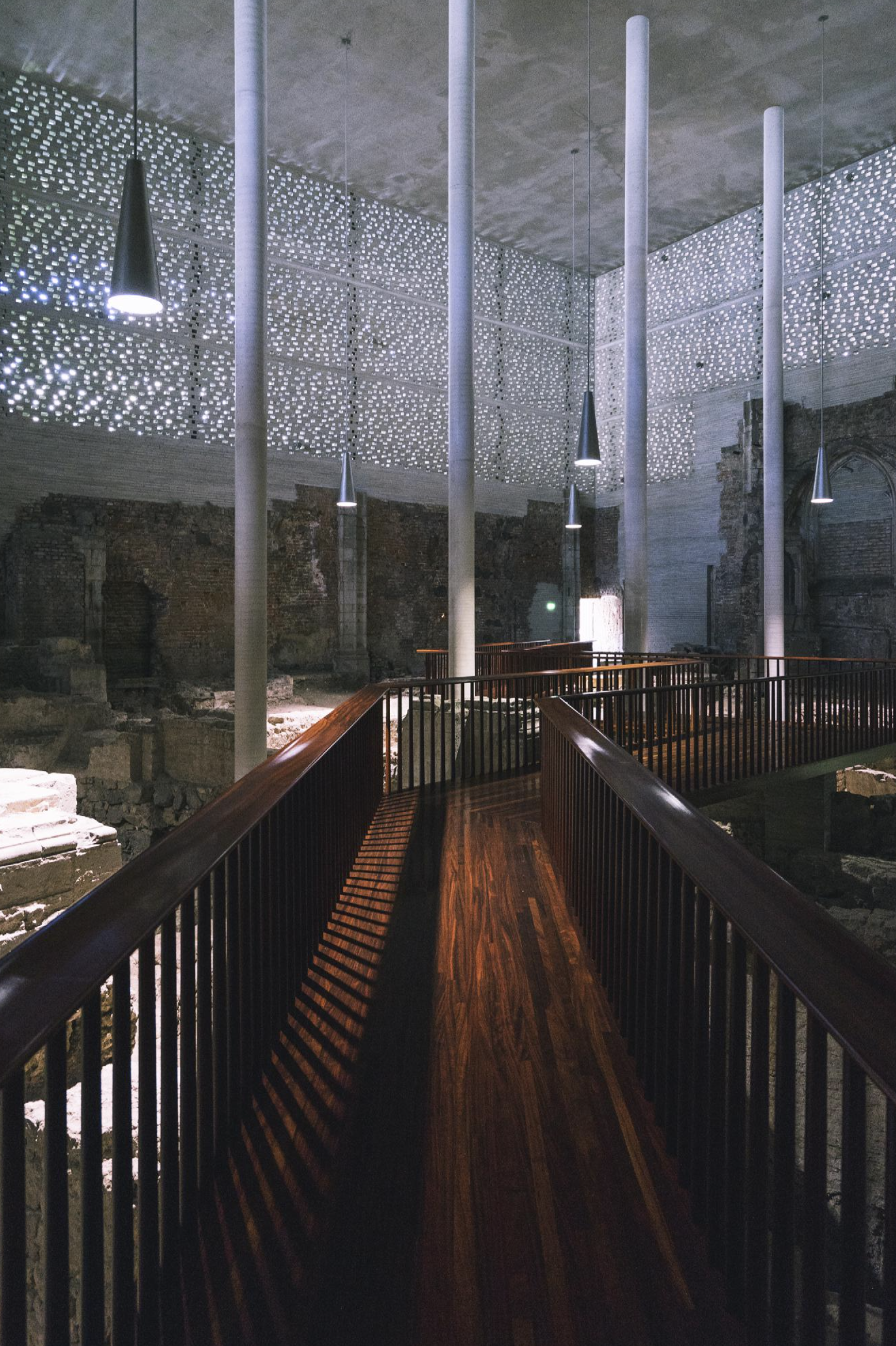
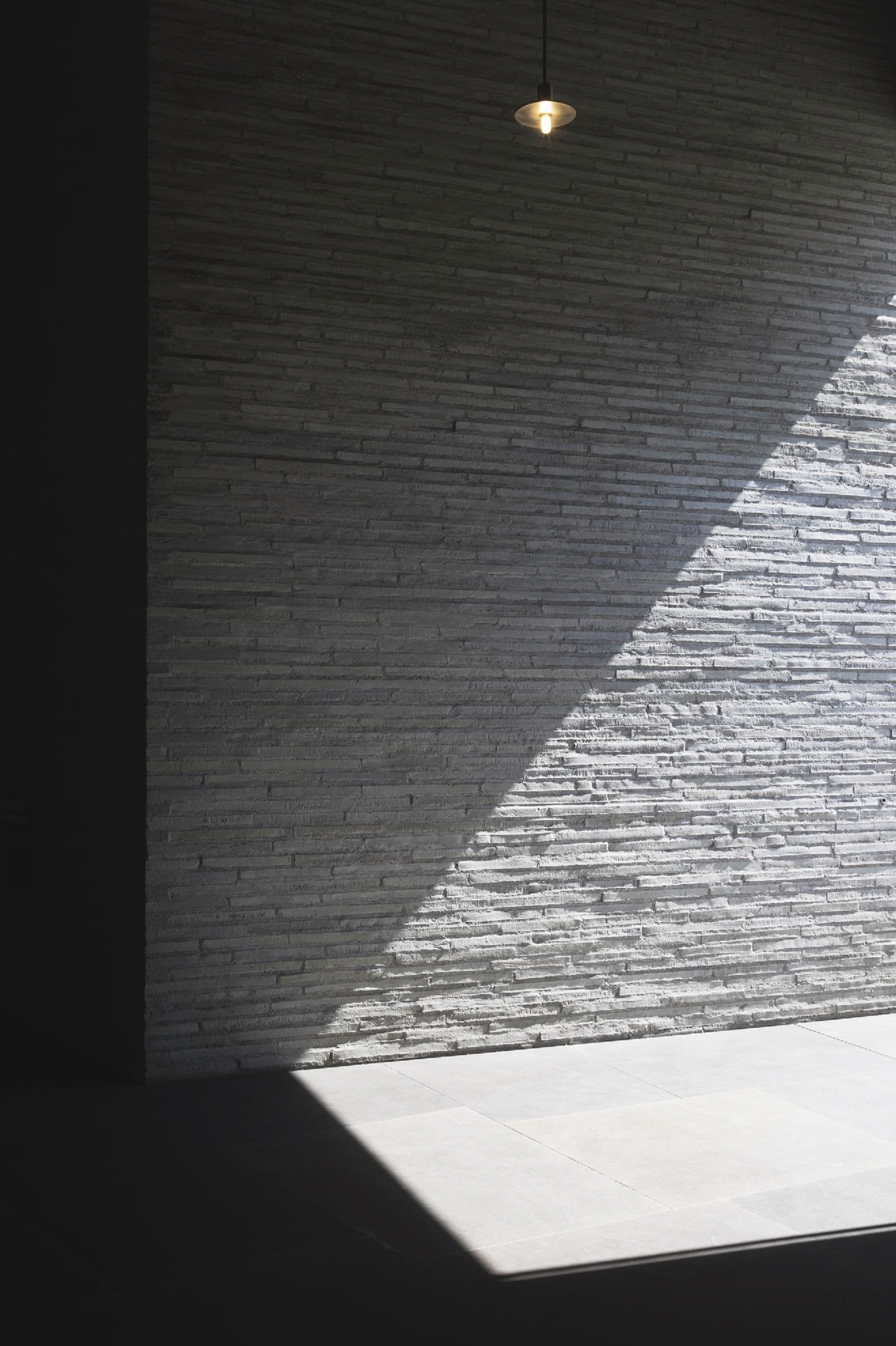
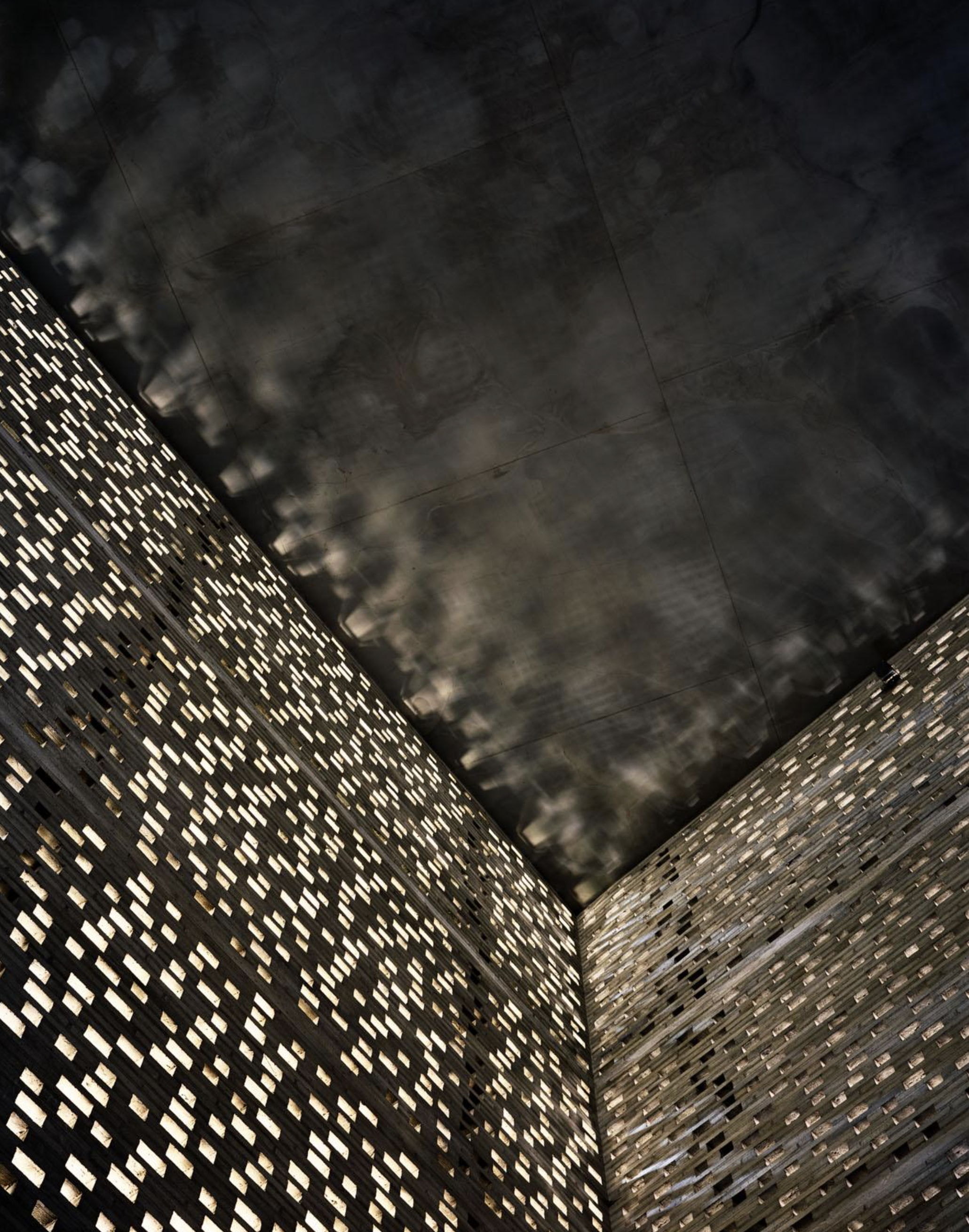
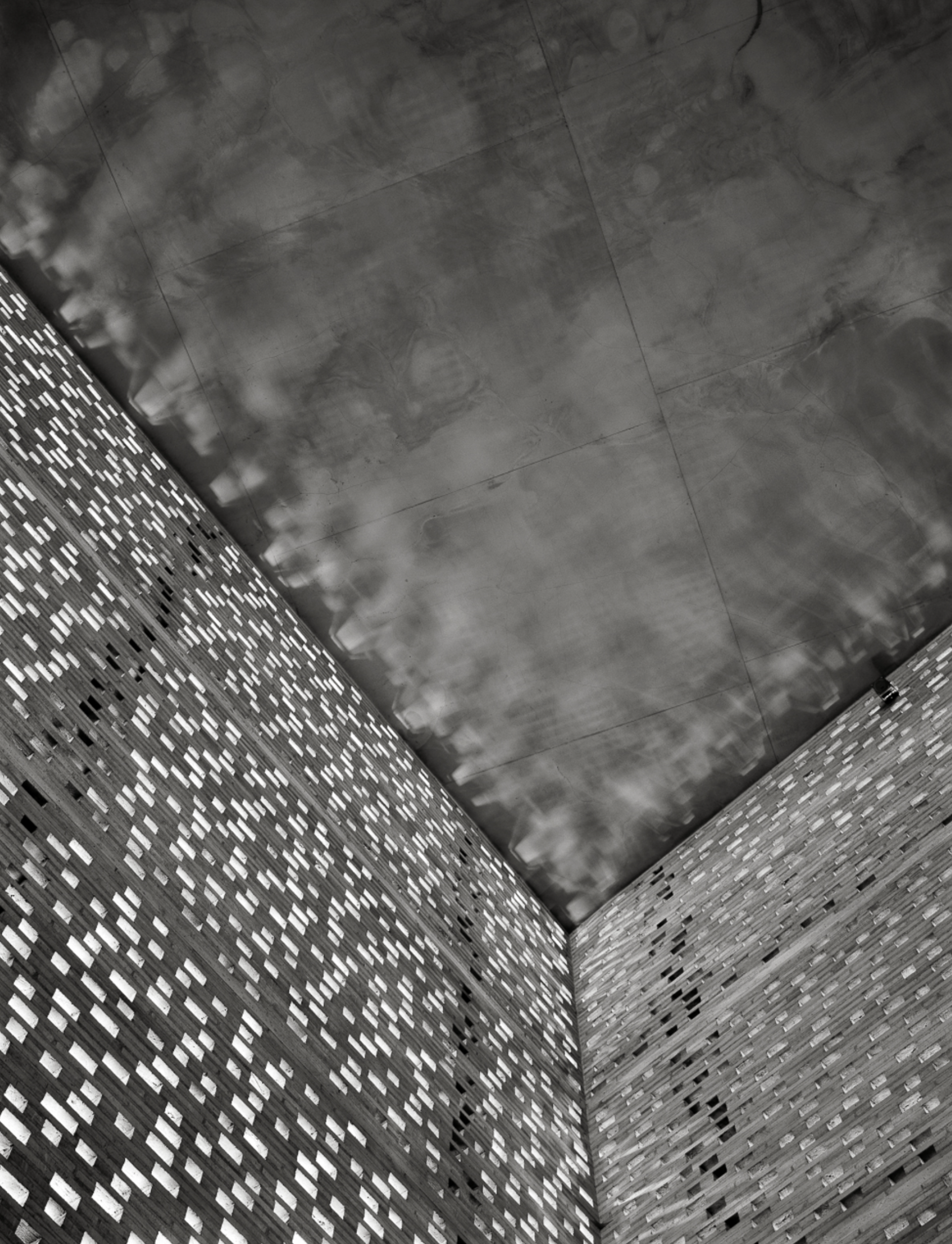
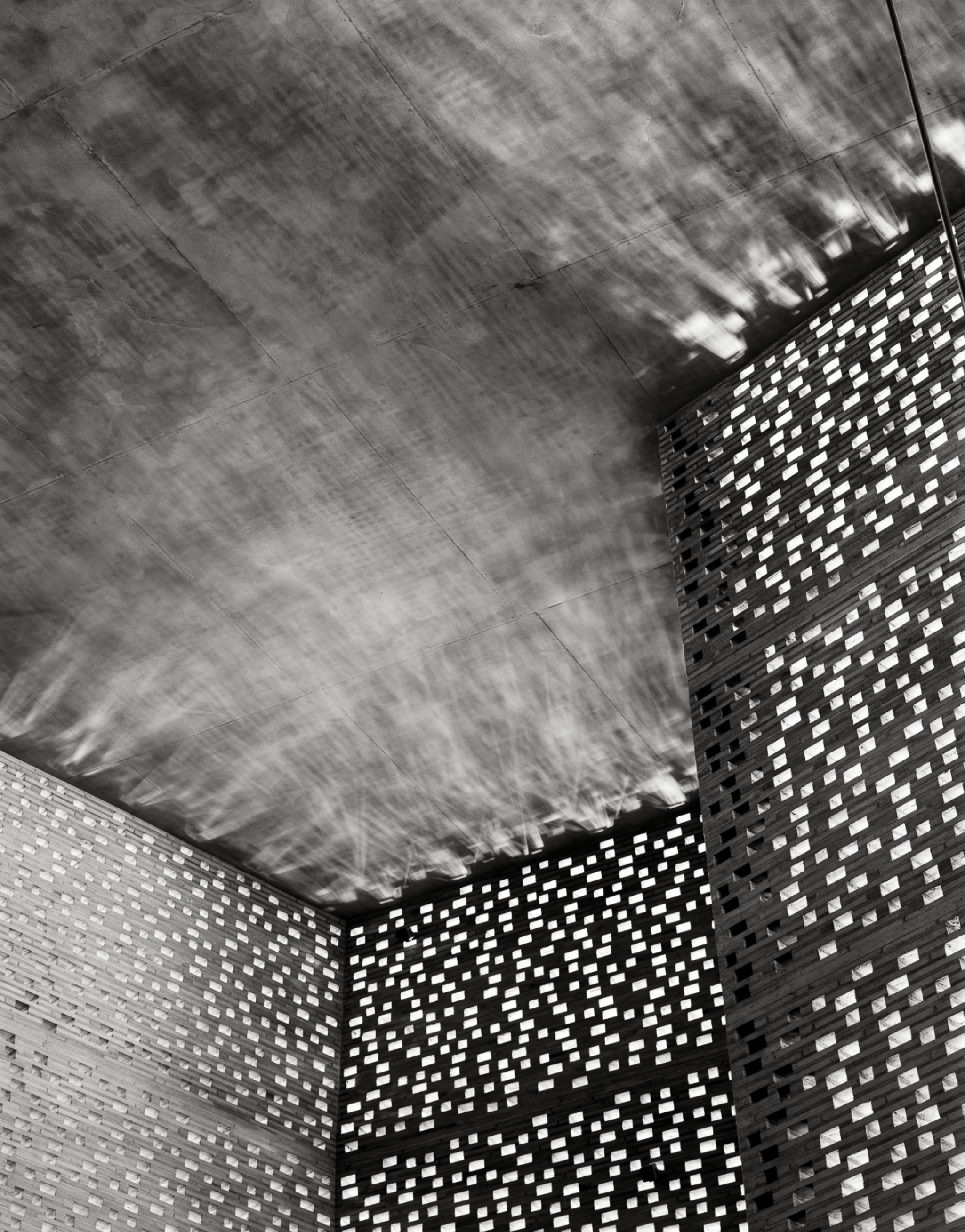
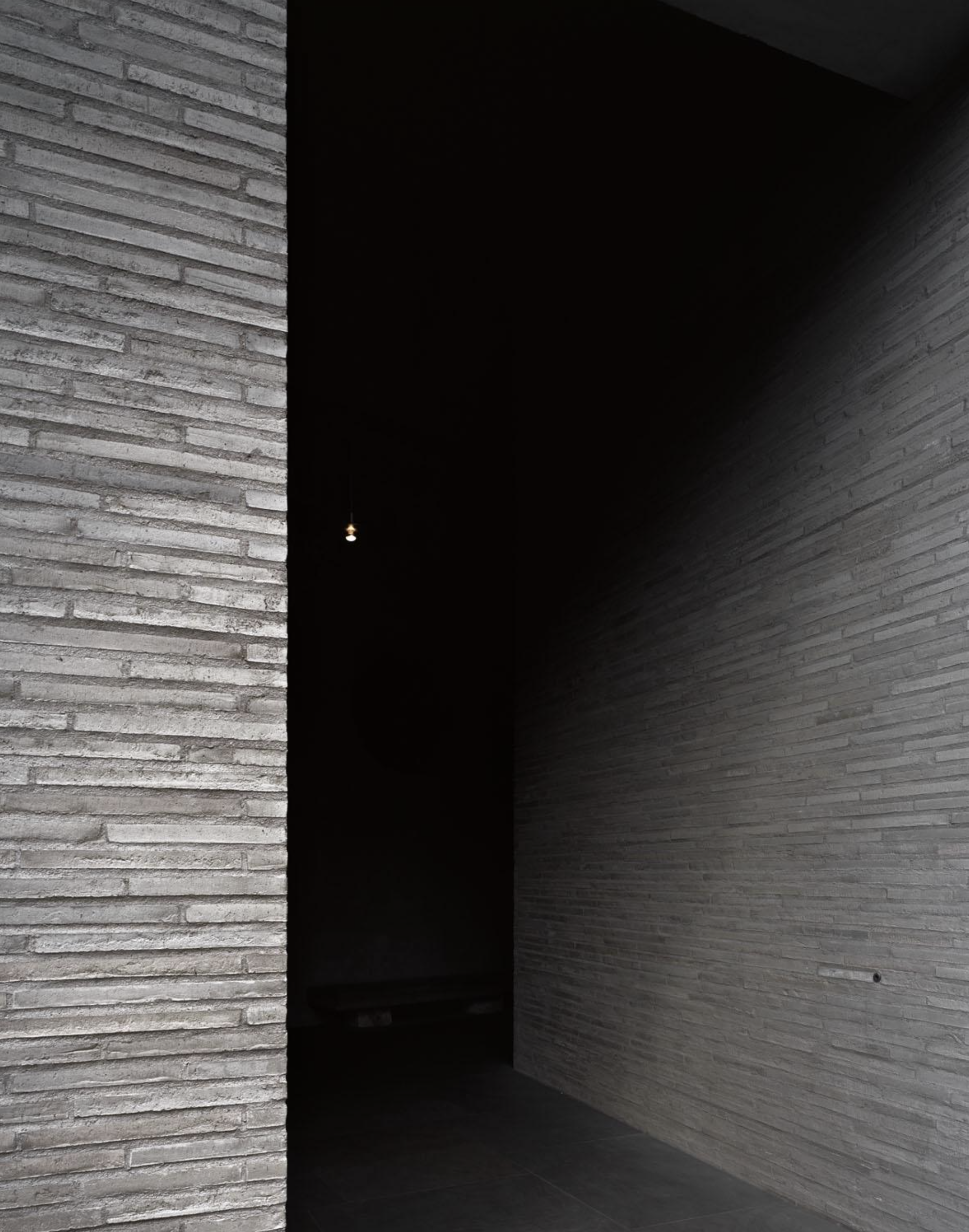
Our design for Cologne respects what remains of the church, and leaves it in view. In putting up the new construction we did not remove a single stone from the ruins. Our building material was brick; this was the material used for the first repairs made after the destruction of the war, and we found it as a lining around the old church windows and as a temporary covering for the broken-off capstones. We also knew that brick has a long tradition in the area, including the buildings by Rudolf Schwarz from the middle of the last century. The Danish brickmaker Christian Petersen was able to manufacture a new, slimmer brick for us, which allowed us to make a good join with the Gothic tracery work and the broken-off butts of the walls, and to build up on top of the old walls. These “Kolumba bricks,” as they are now called, have a shape that reminds us of Roman bricks. We used them to build the openwork, double-layered outer wall, permeable to light and air, which surrounds the excavated space of the lost Church of St. Columba and forms the massive sheathing of the museum. Civil engineer Jürg Buchli helped us construct this wall without expansion joints and made sure that the old walls could bear some of the load of the new walls built on top of them.
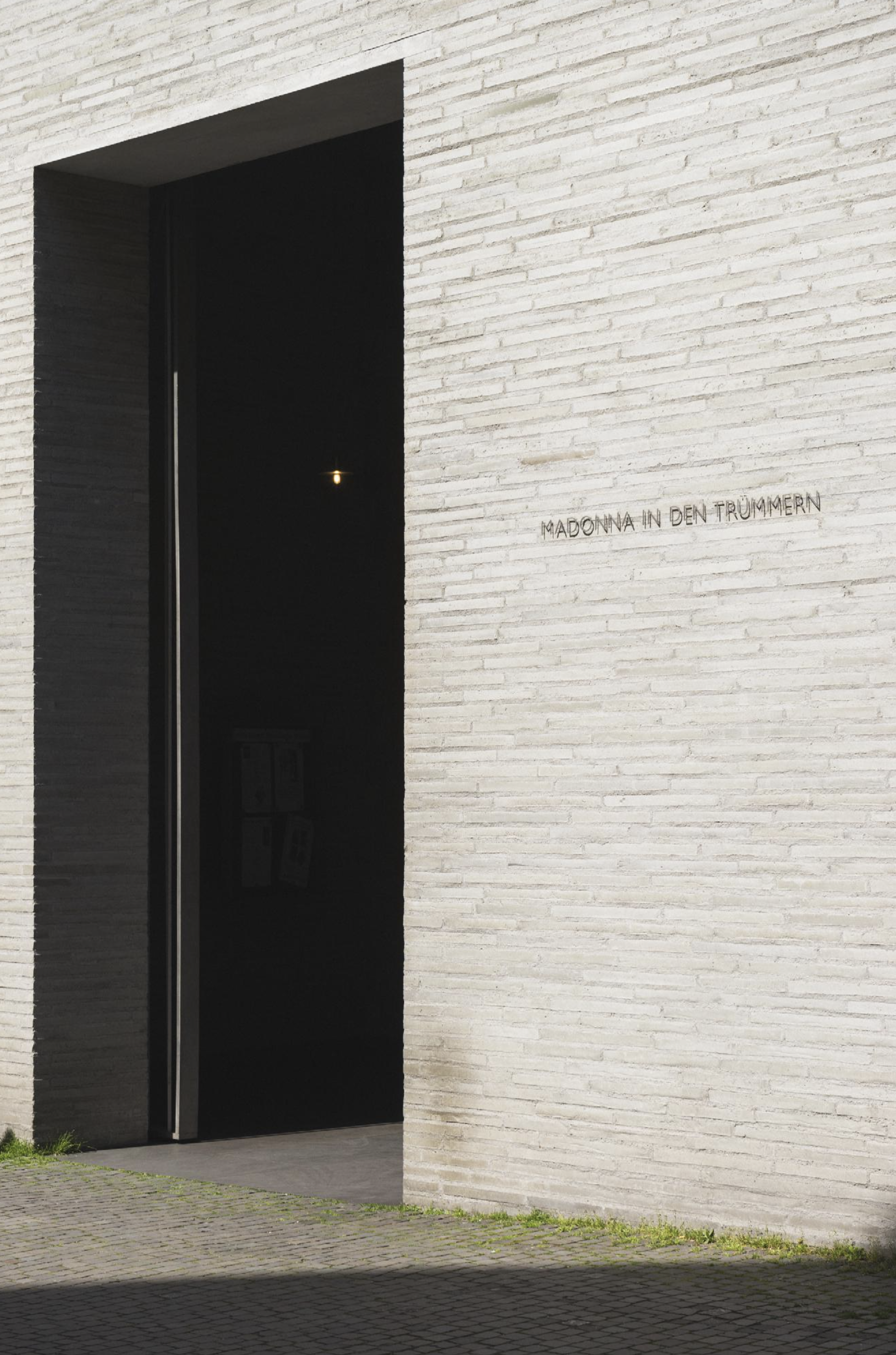
The new building evolved from the foundations of the original church. We followed the late Gothic footprint exactly and expanded it to take advantage of an adjoining empty lot on Kolumbastrasse. Thus the shape of the new museum not only speaks of its contents as a museum of art, but also reflects to a high degree its historic origins. Kolumba is a time machine. This must have been clear to the then officials of the archdiocese, Norbert Feldhoff, Joachim Plotzek, Josef Rüenauver, and Cardinal Meisner, when they chose St. Columba’s Church as the site for their new museum: a bombed-out late Gothic church, with the earth floor inside removed and the original foundations exposed layer by layer down to the remains of Roman walls; church ruins in which Gottfried Böhm built a little chapel after the war for the “Madonna in the Rubble,” the statue that had miraculously survived intact. A place with such a profound historical aura was predestined to become an art museum.
This assignment was everything at once: unique, seductive, and challenging. It was an ongoing project with us for ten years. There was joy in the shared ideas at the start and at the ground-breaking, there were the difficulties of engineering and building the project, and there was the pleasure of success which outshone all that had gone before.
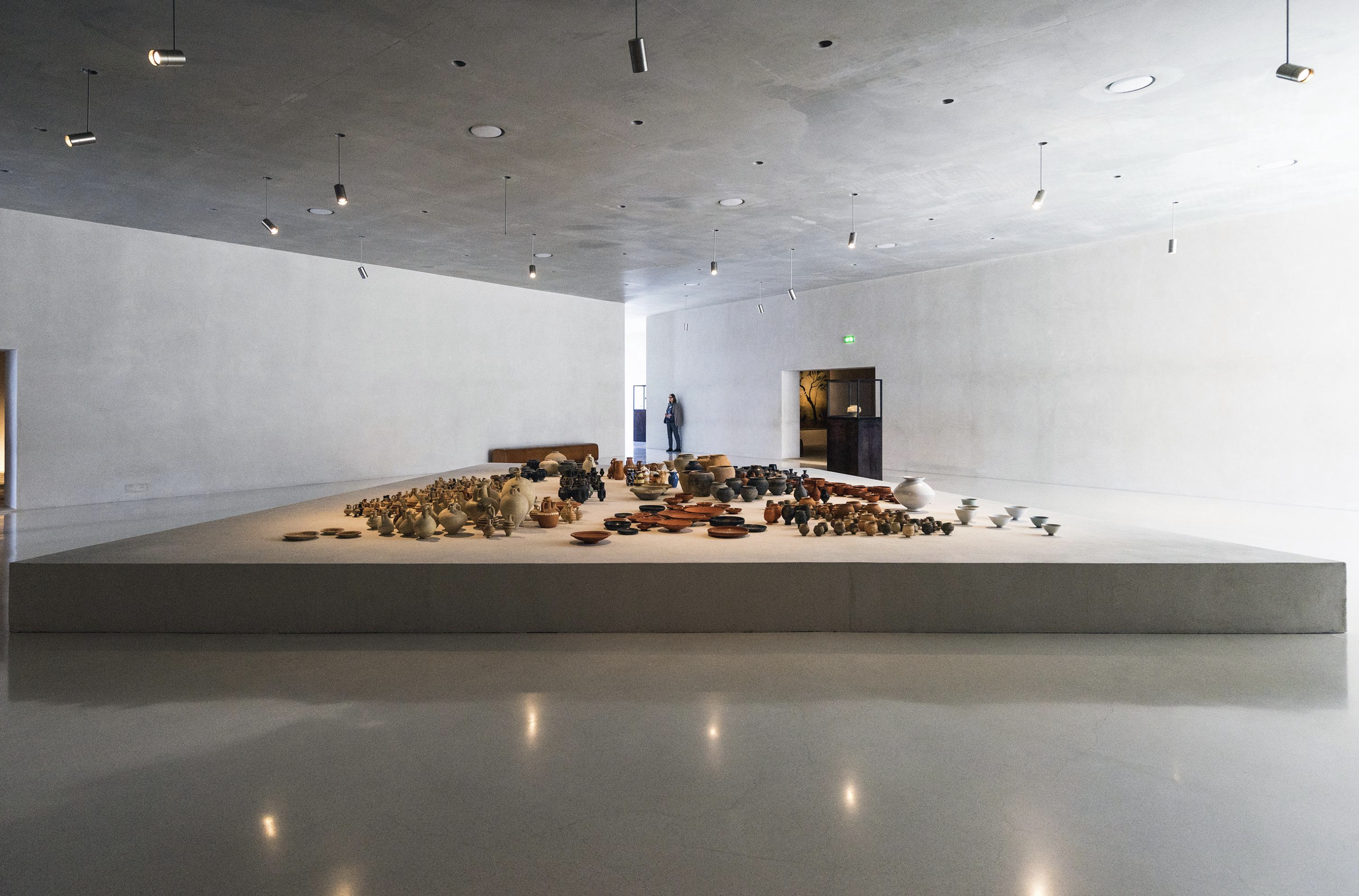
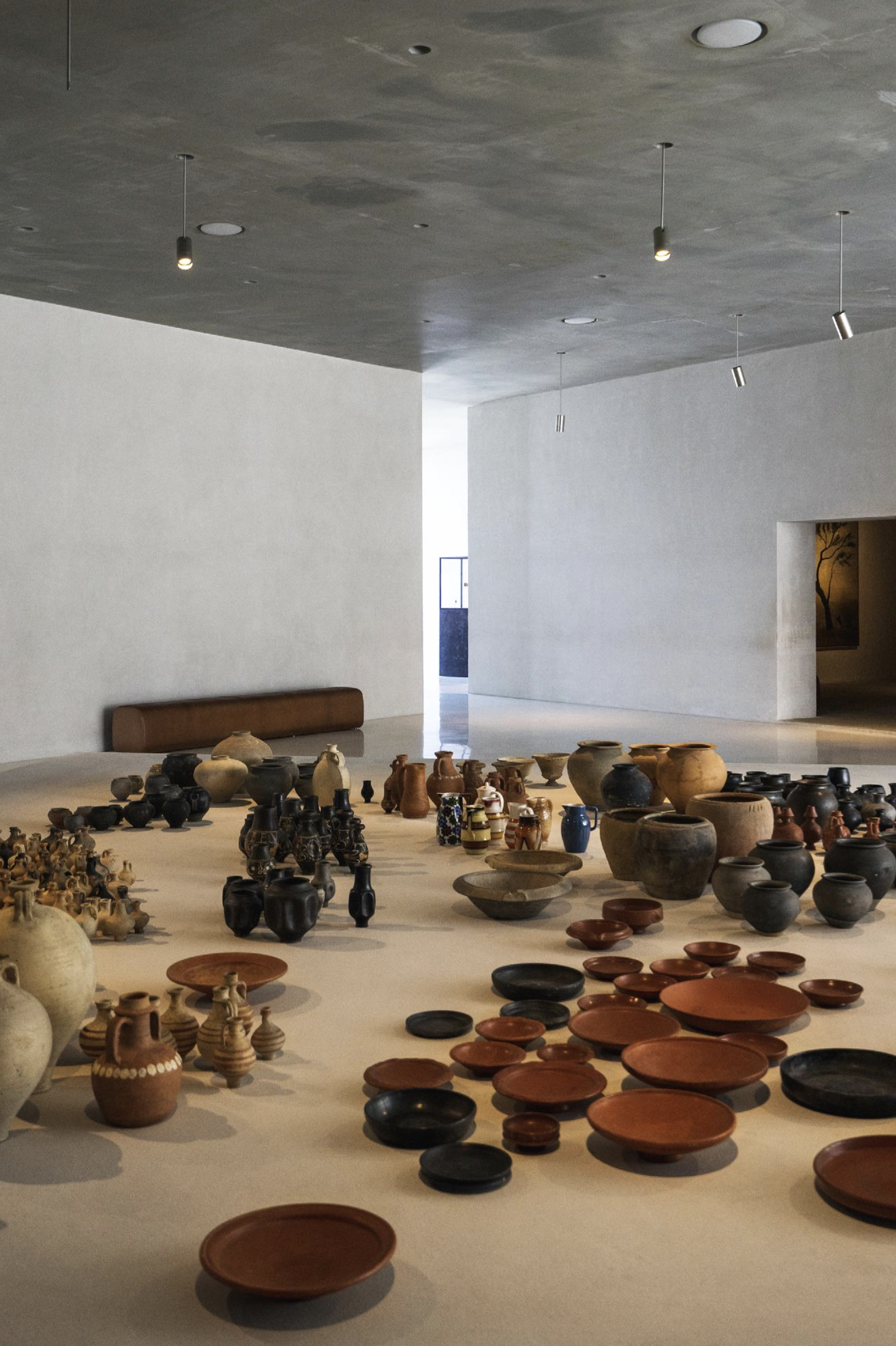
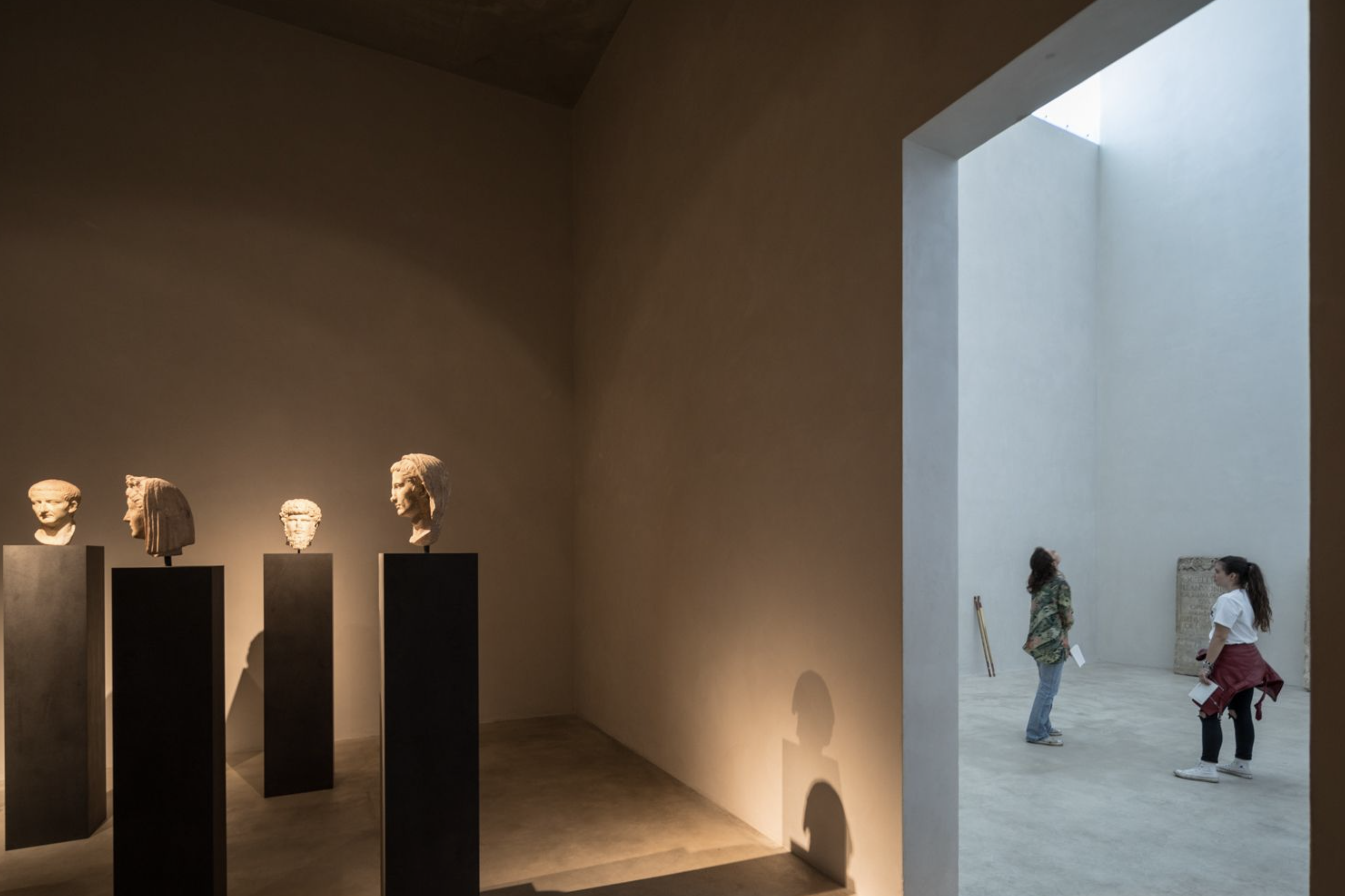
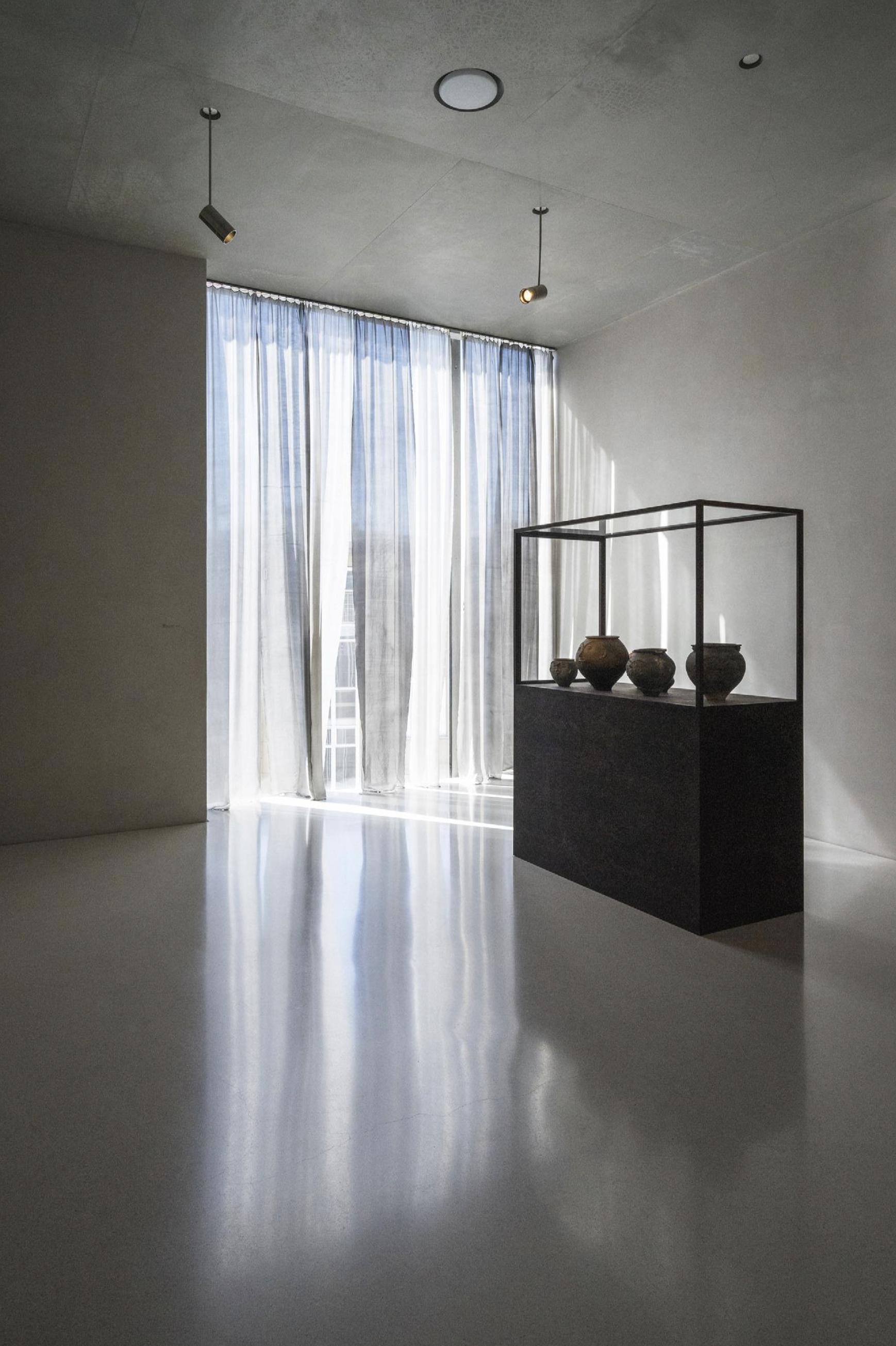
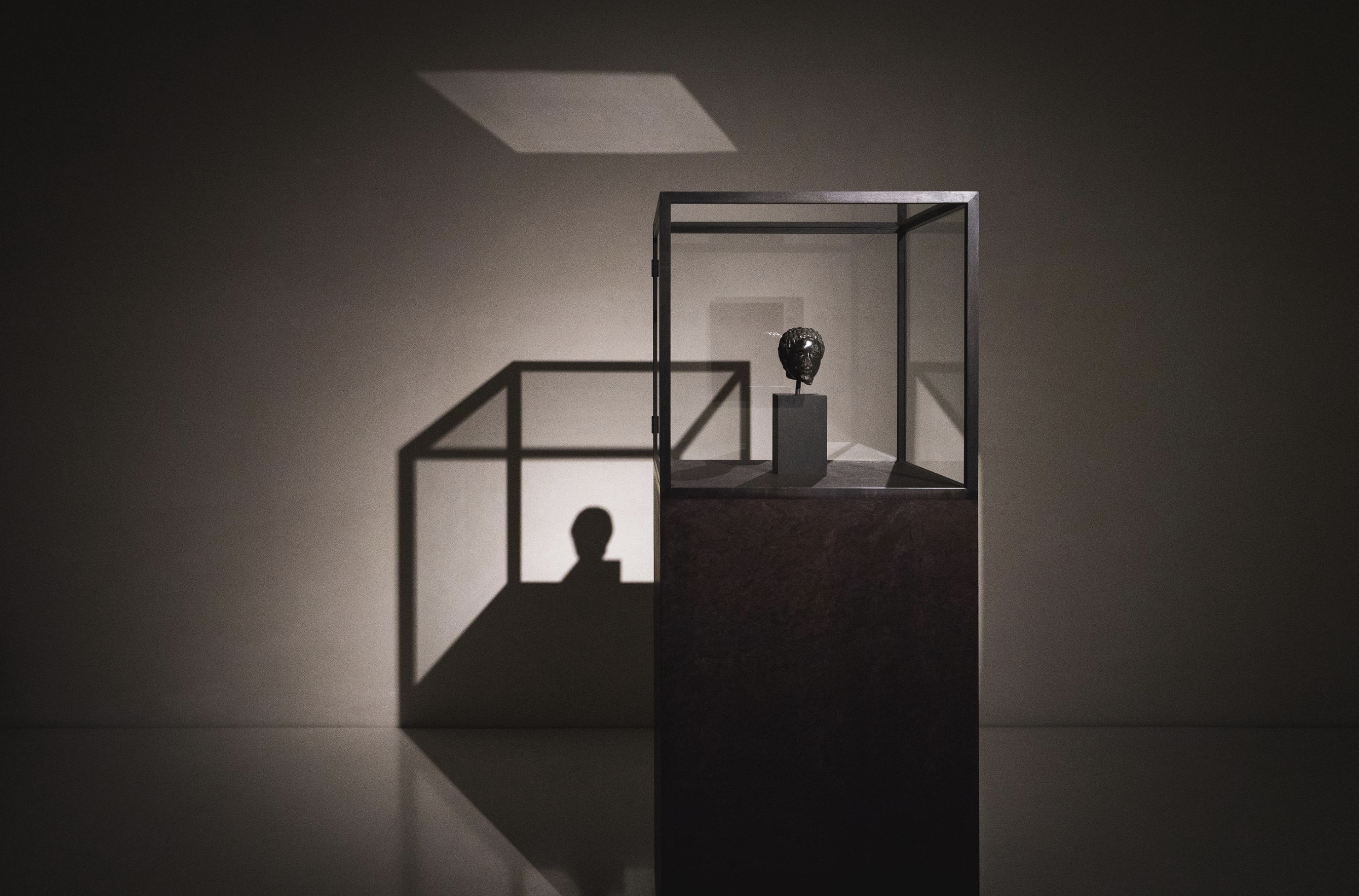
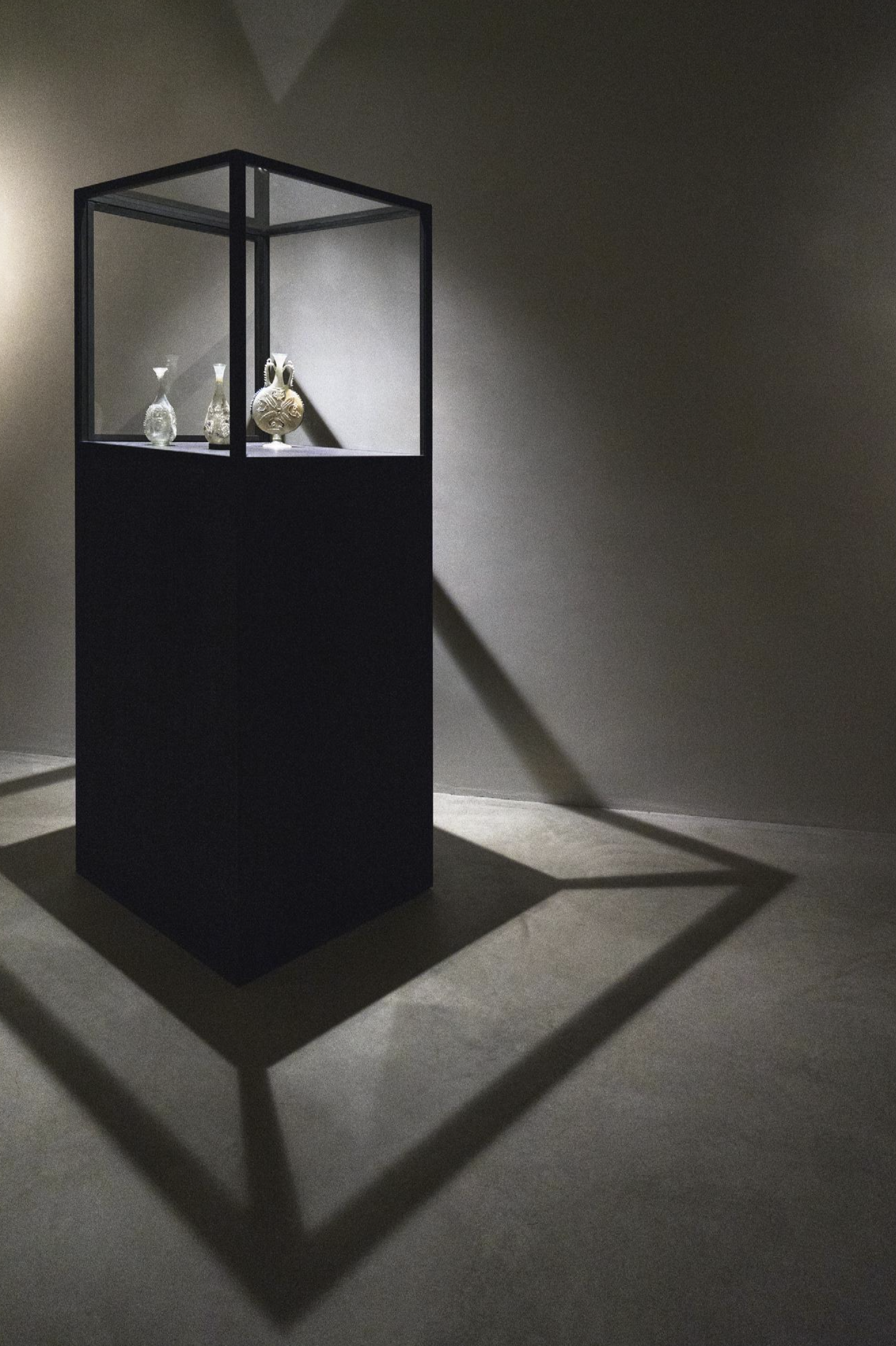
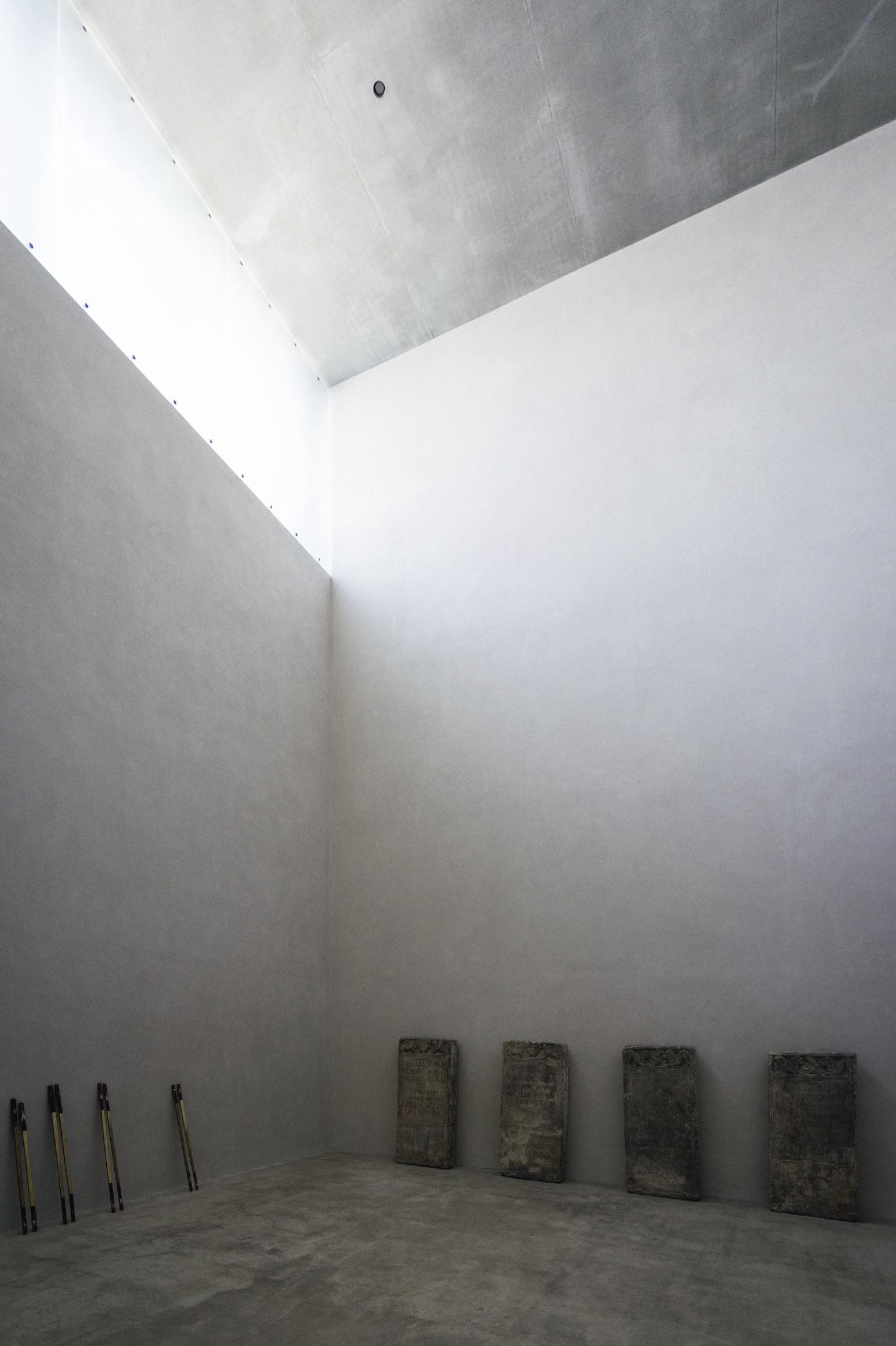
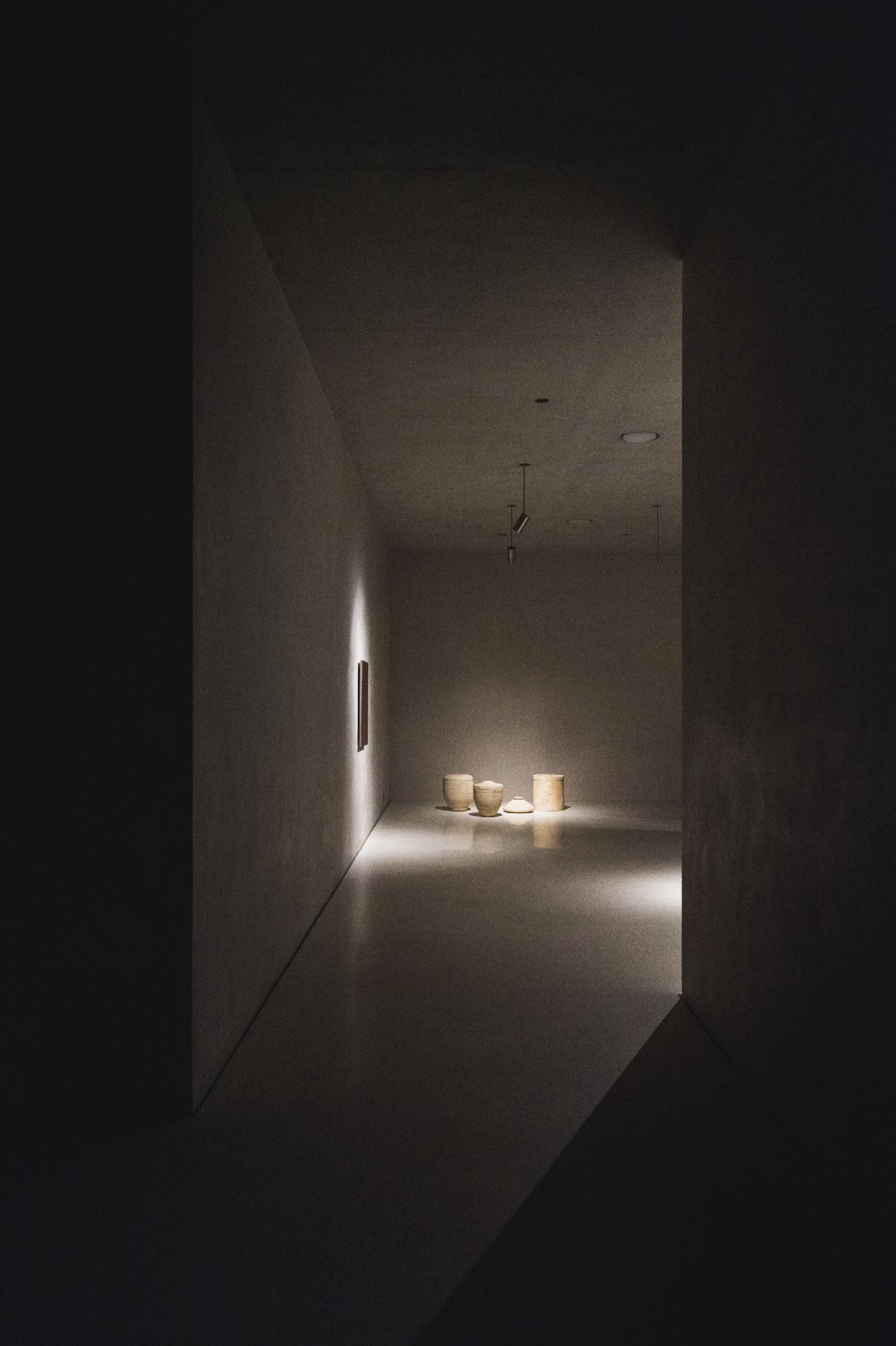
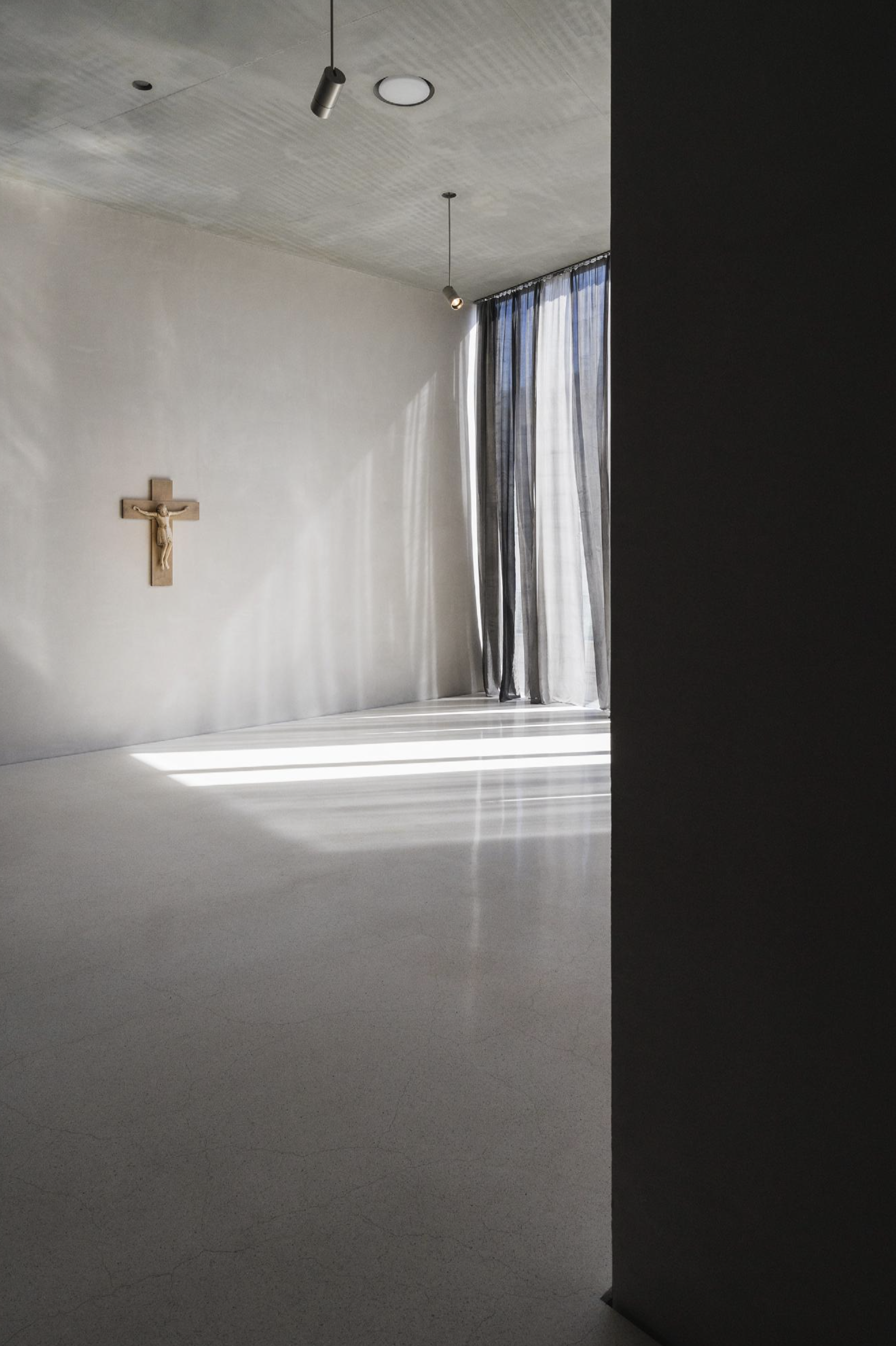
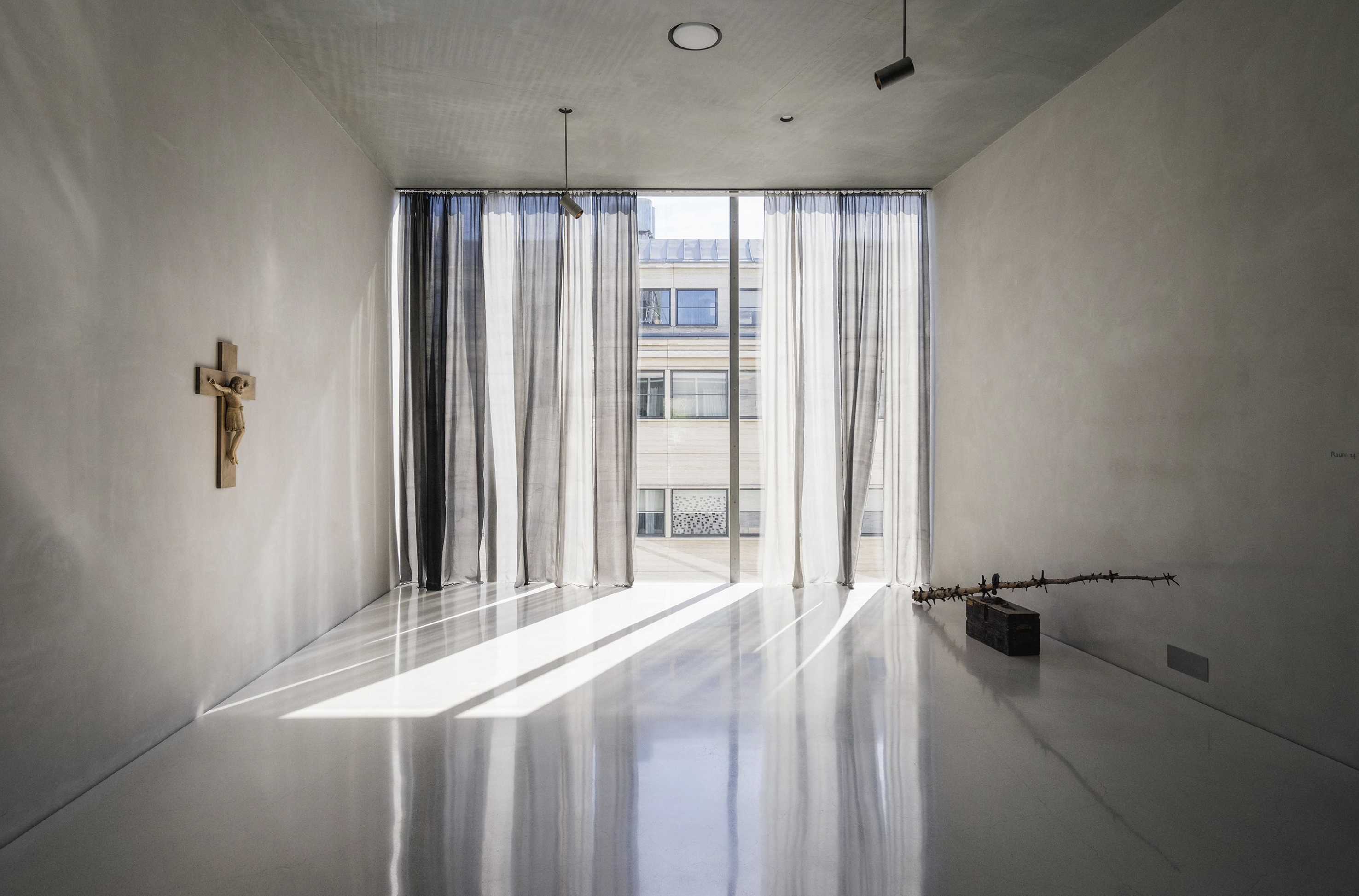
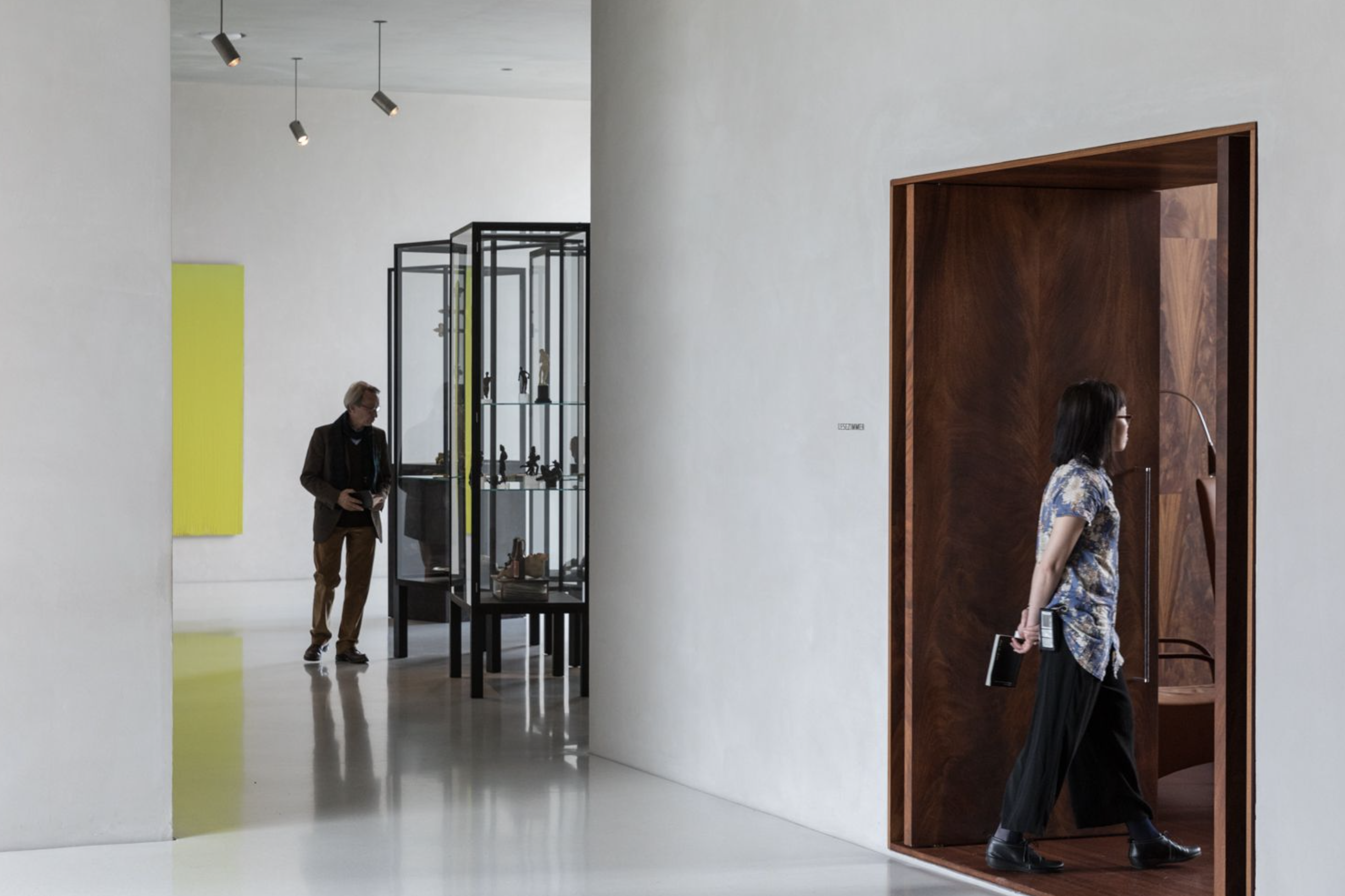
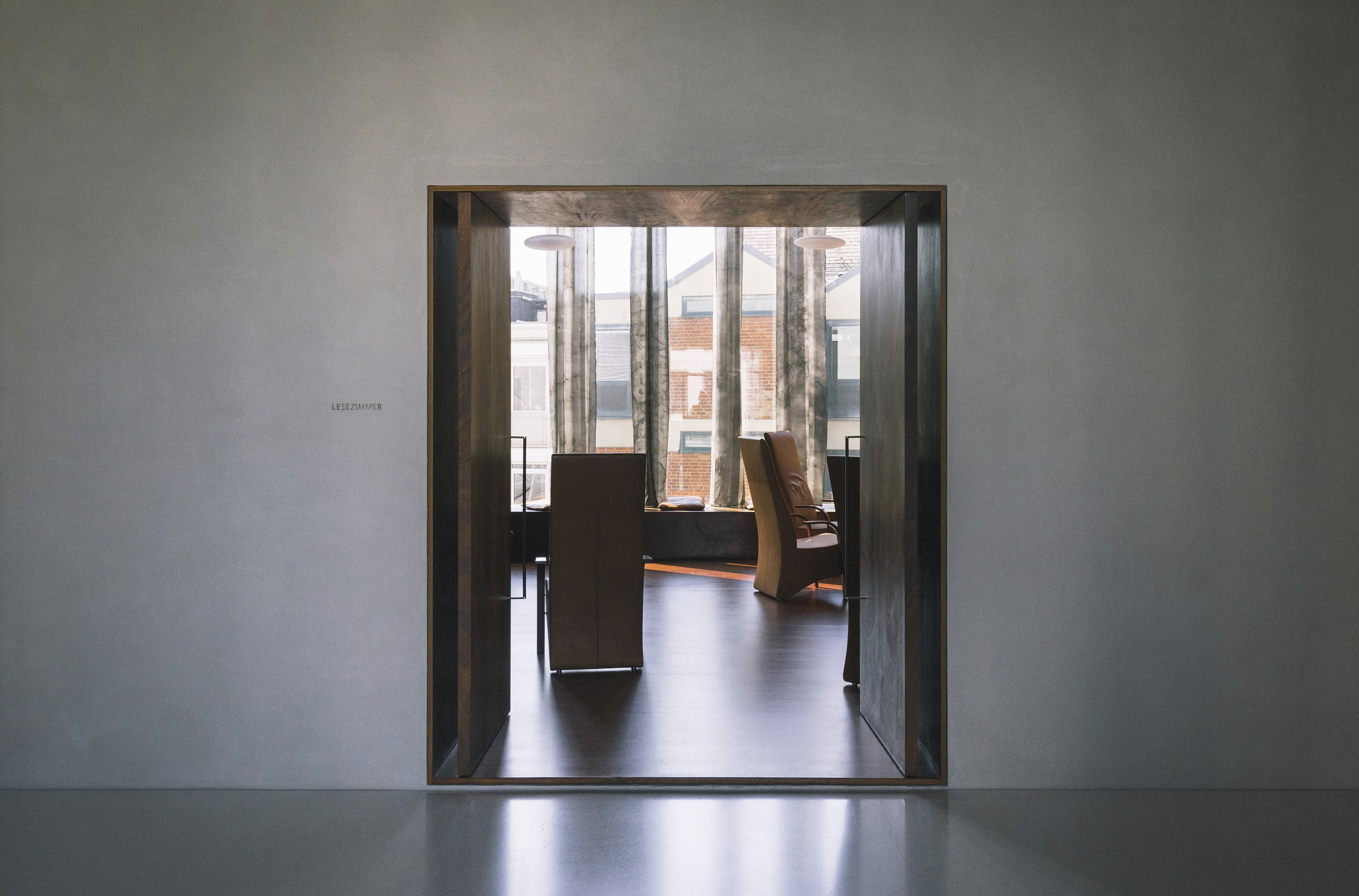
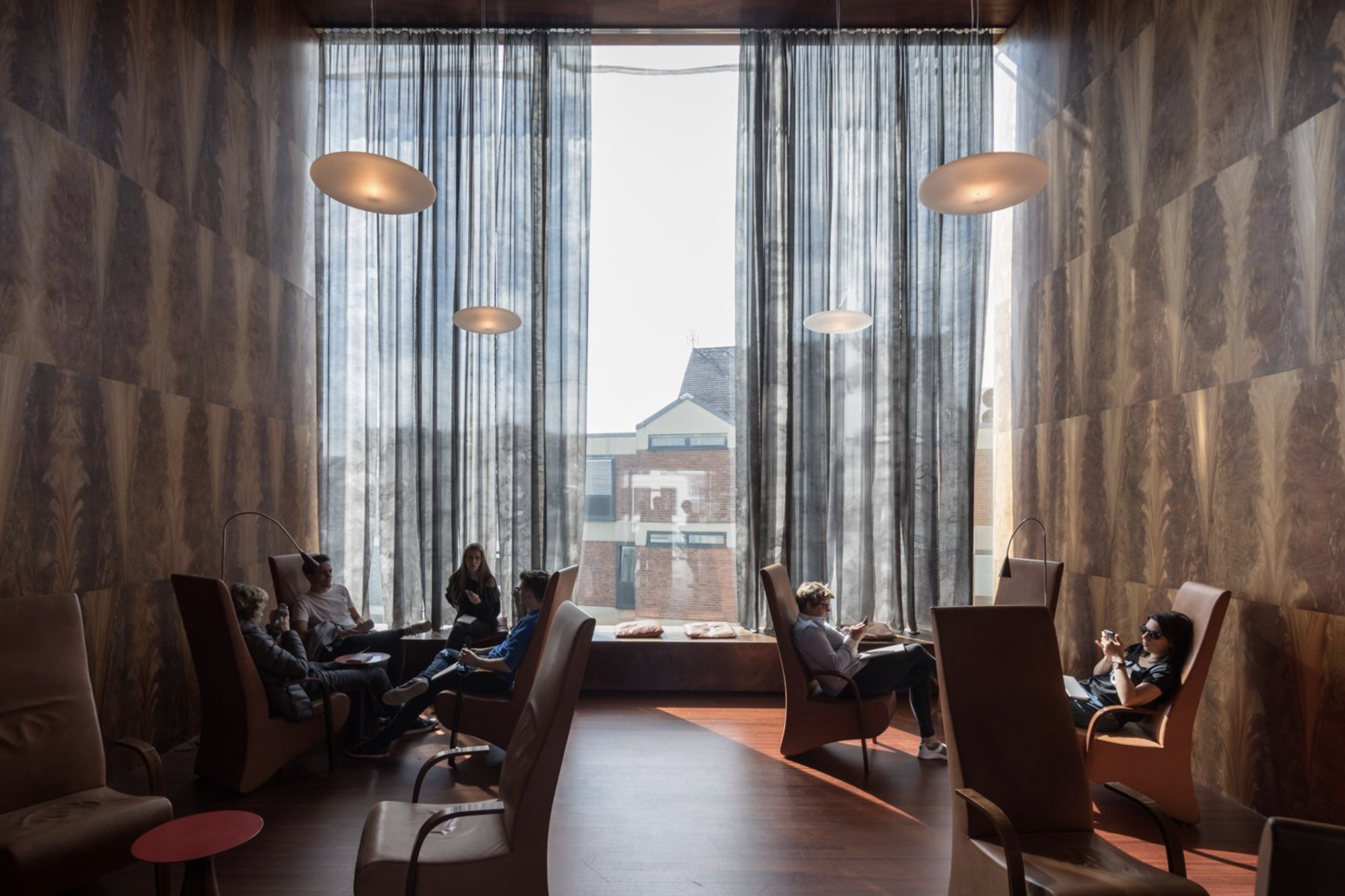
The work on Kolumba had the intimate feeling of a family venture. In considering, designing, and building the project we did not have the sense that our client was an institution, waiting for results to study and judge, but rather it was a group of like-minded colleagues who took part in the process of creating the building and had a conscious influence on its development. I love this kind of collaboration, which I sometimes feel is lacking when clients are interested in results only and not in the process of shaping the outcome. Nowhere else have we been able to create a spatial organism out of historical remains as we have here with the Kolumba Museum. The curators’ only specification was that it contain a rich variety of exhibition spaces in different shapes, sizes, and light qualities in which the pieces of the collection would in time come to find their natural homes.
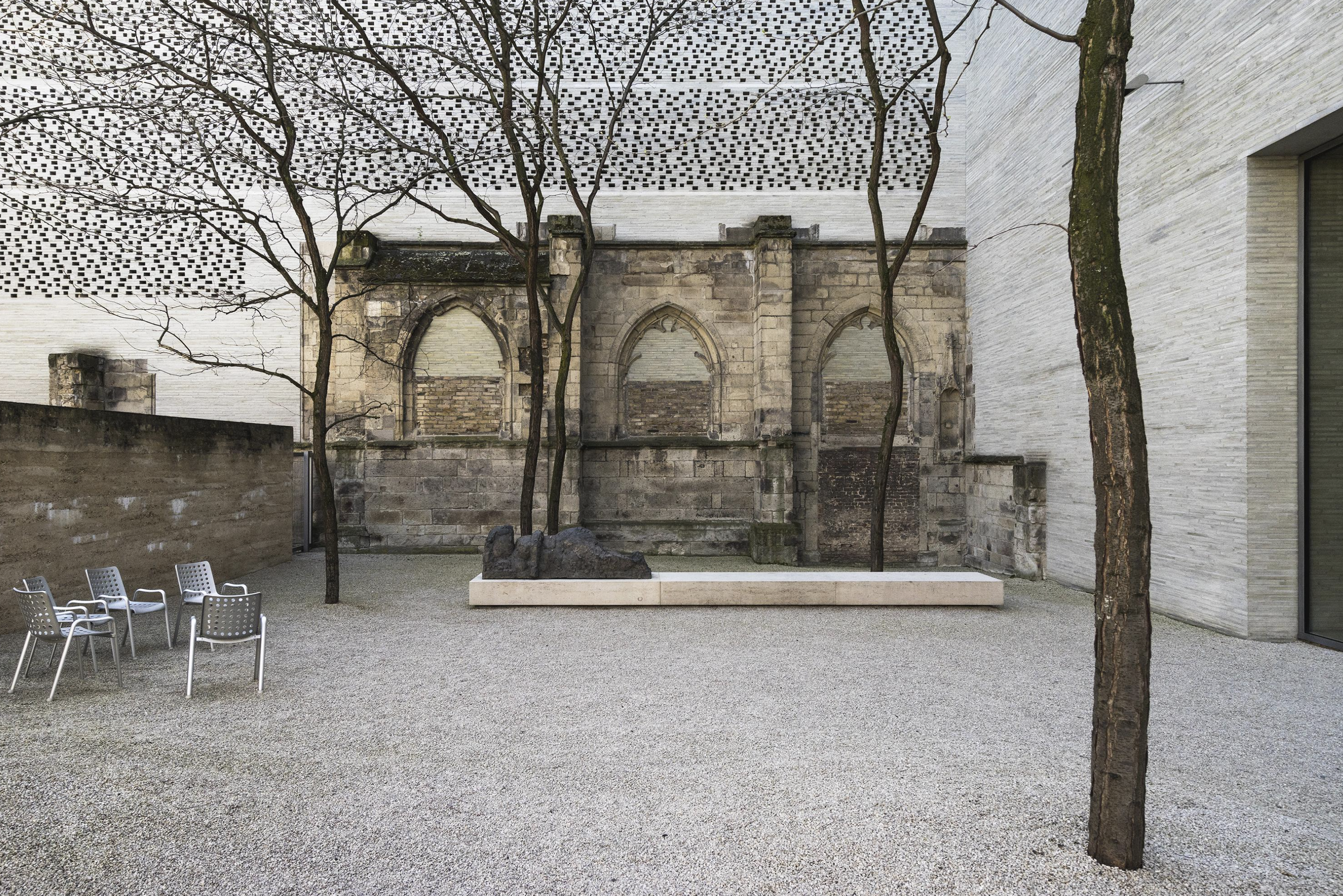
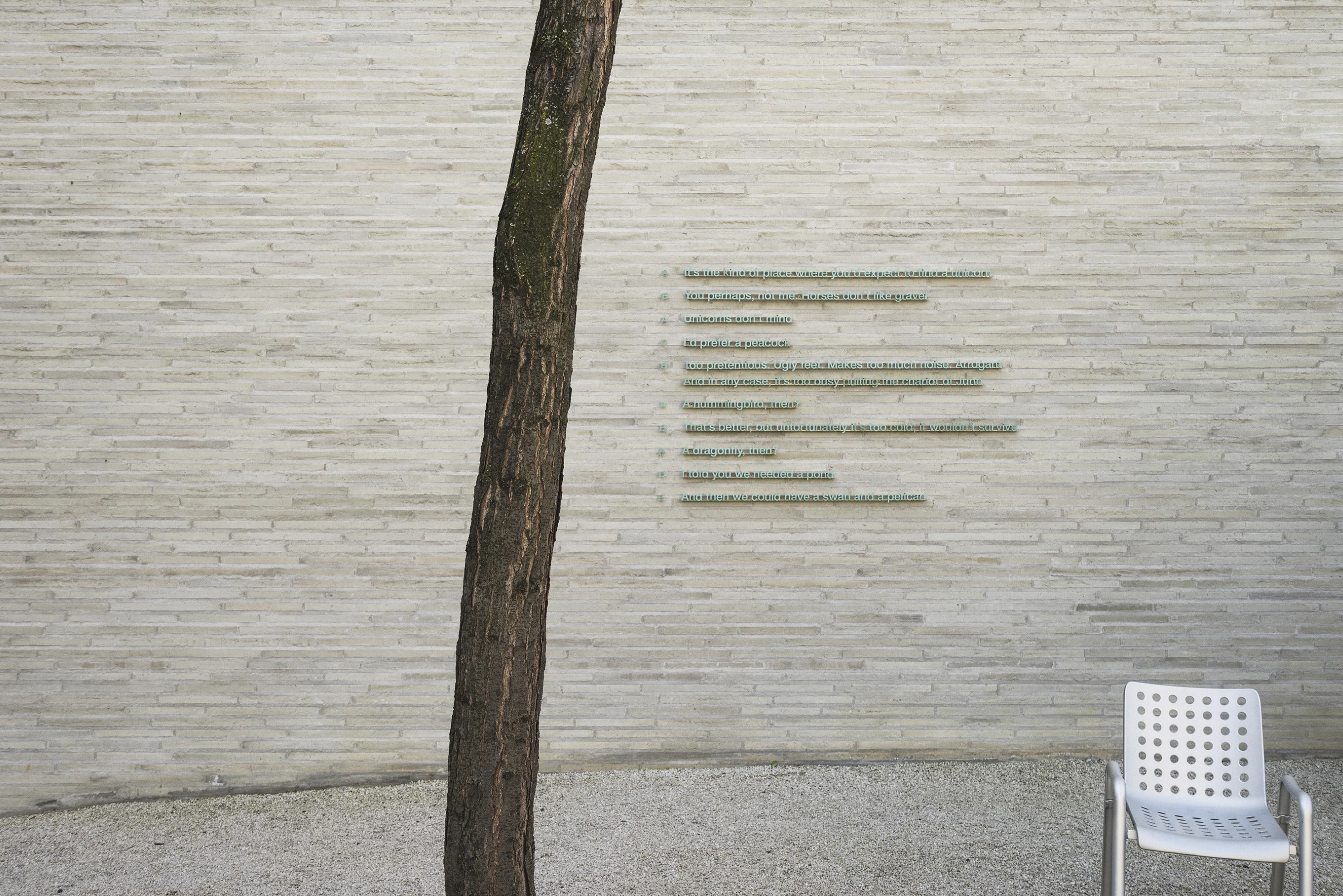
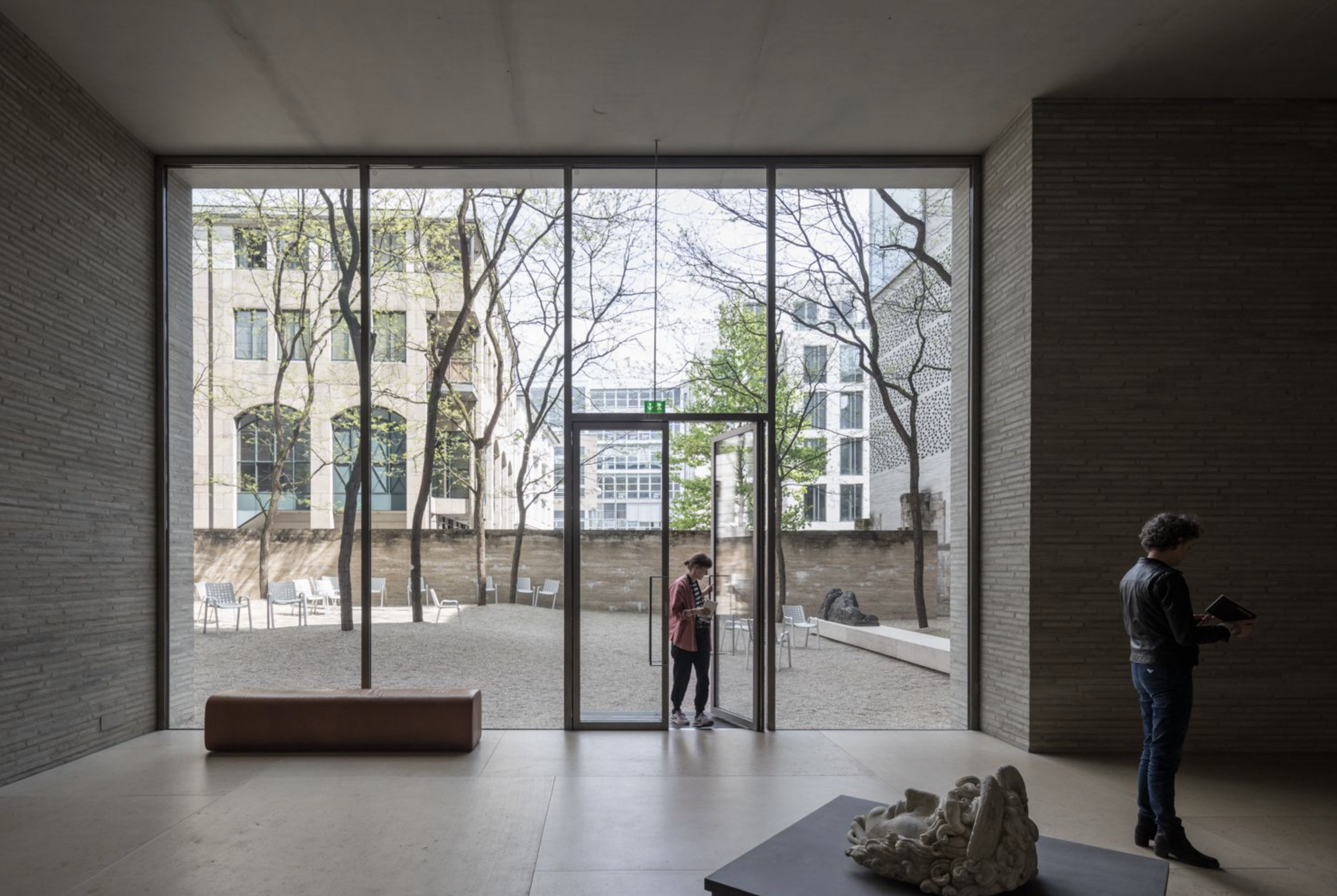
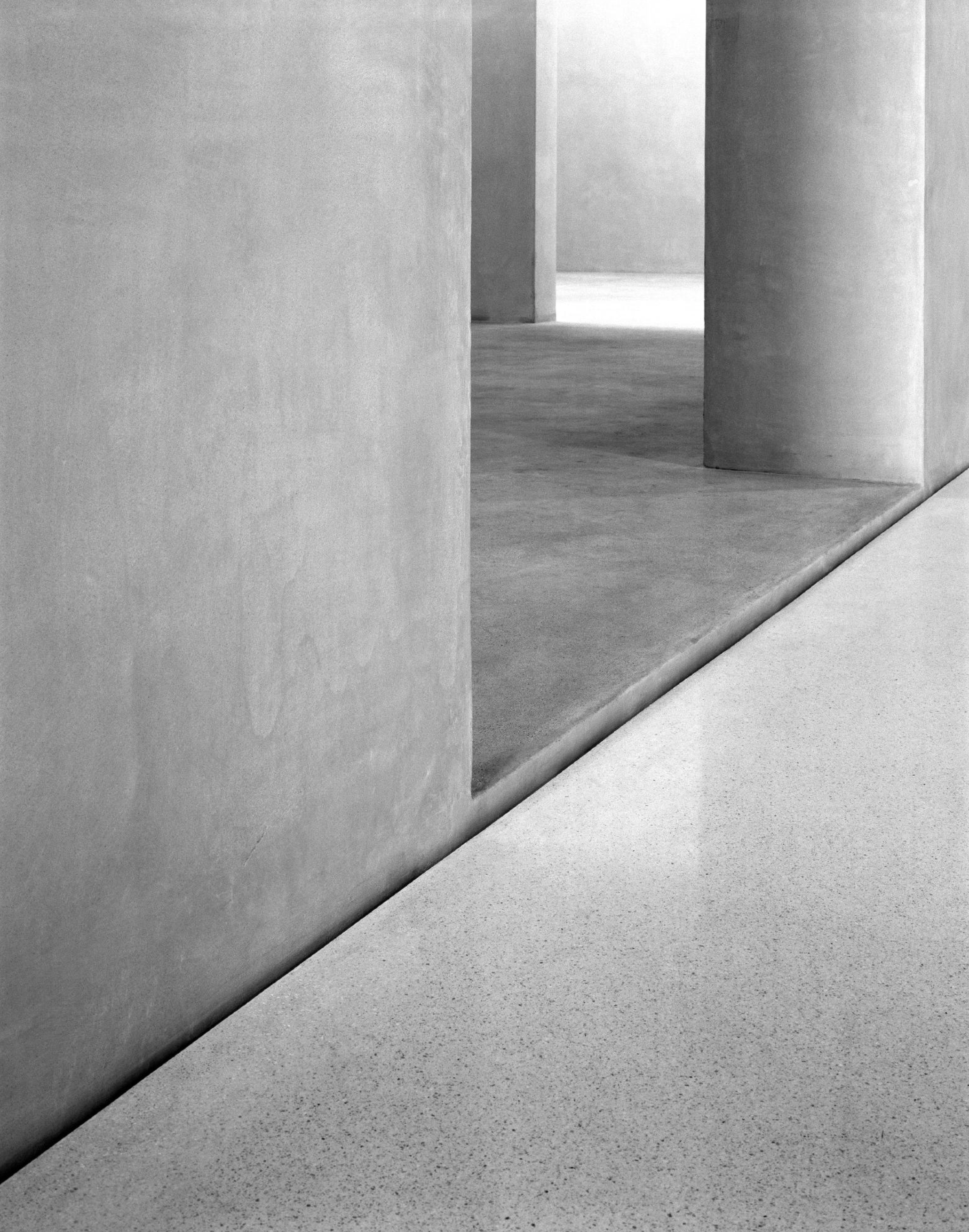
This gave rise to a walkway that tours the museum starting on Kolumbastrasse, turning briefly into the main mass of the new space, and then, after an initial twist, opening up to face the new courtyard space with its pebble paving, tall trees-of-heaven, and bench with Hans Josephsohn’s sculpture of a reclining female figure, before moving back into the main space of the building and ascending in ever greater sweeping curves to the level of the main floor. Here, in the central space over the old church, the tour comes to an end, surrounded by three pairs of rooms which each terminate in tower-like spaces to the north, east, and south.
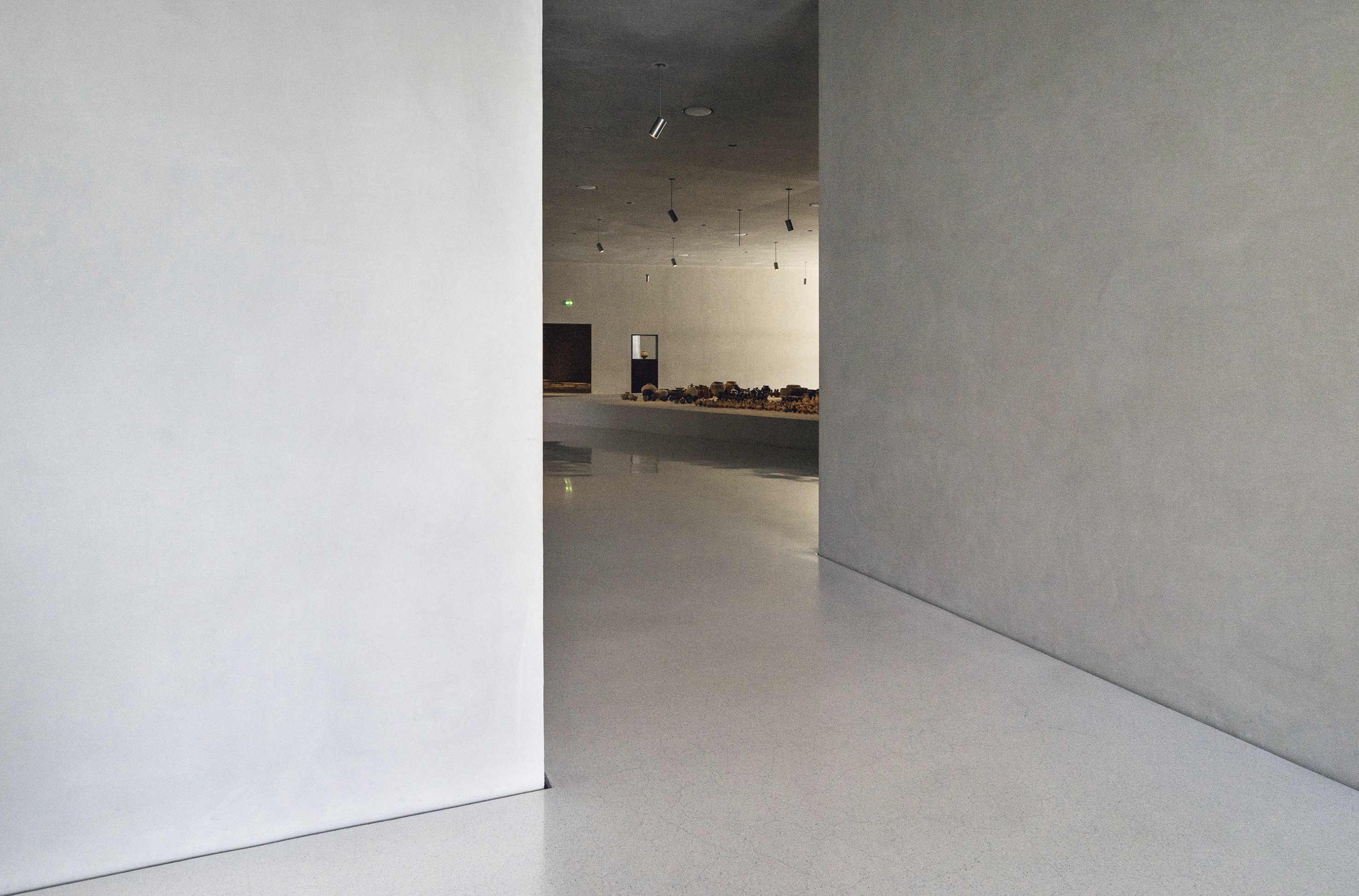
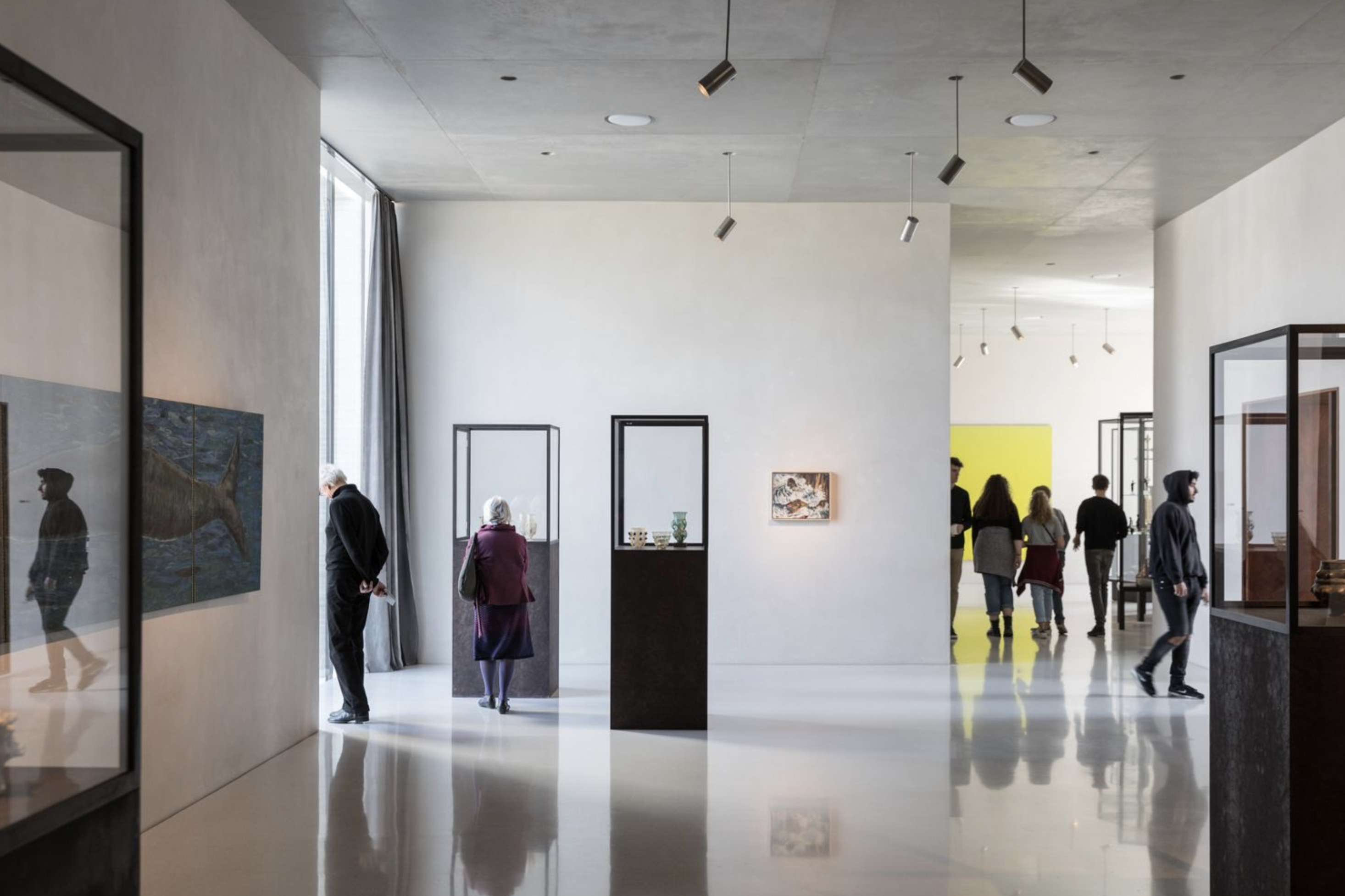
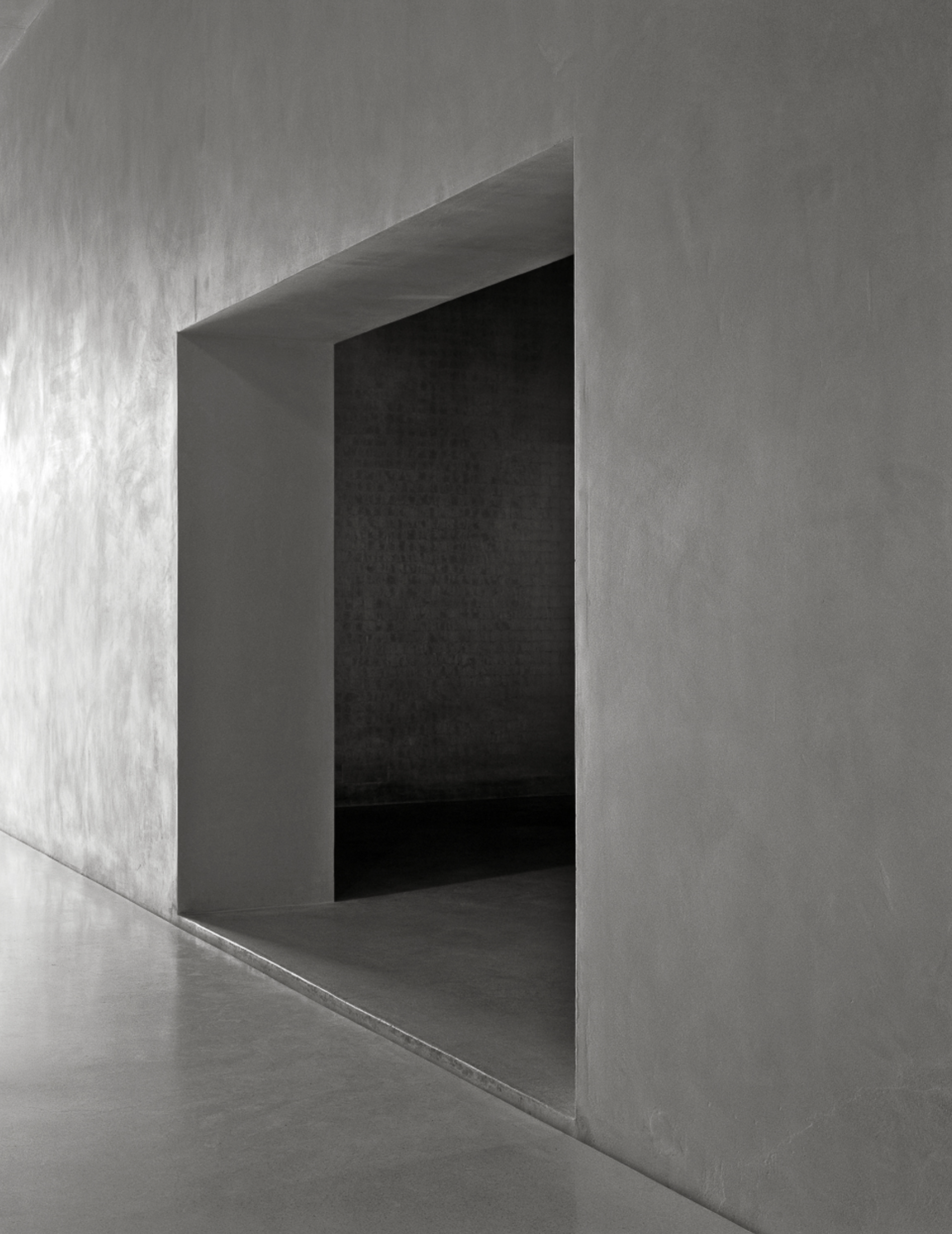
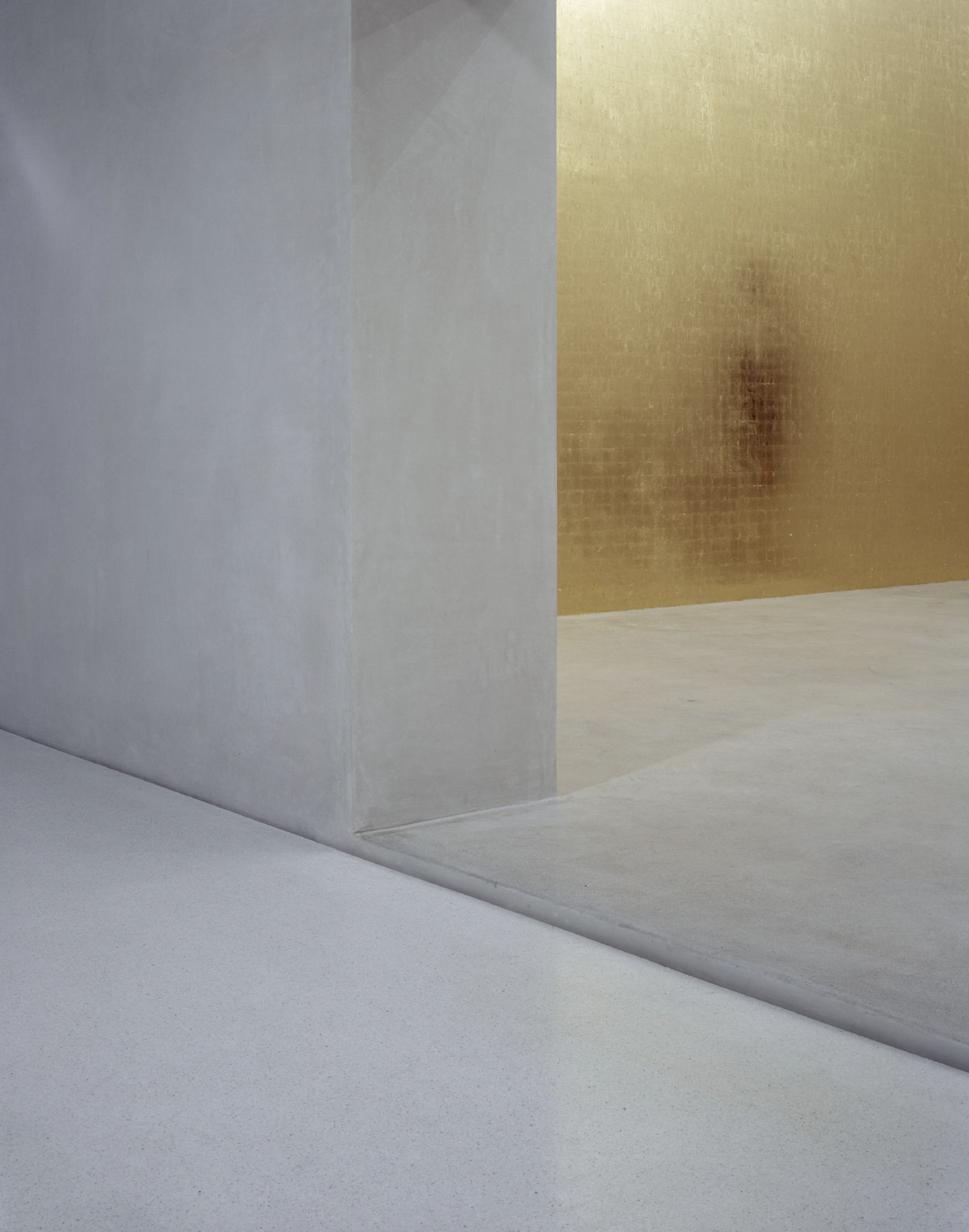
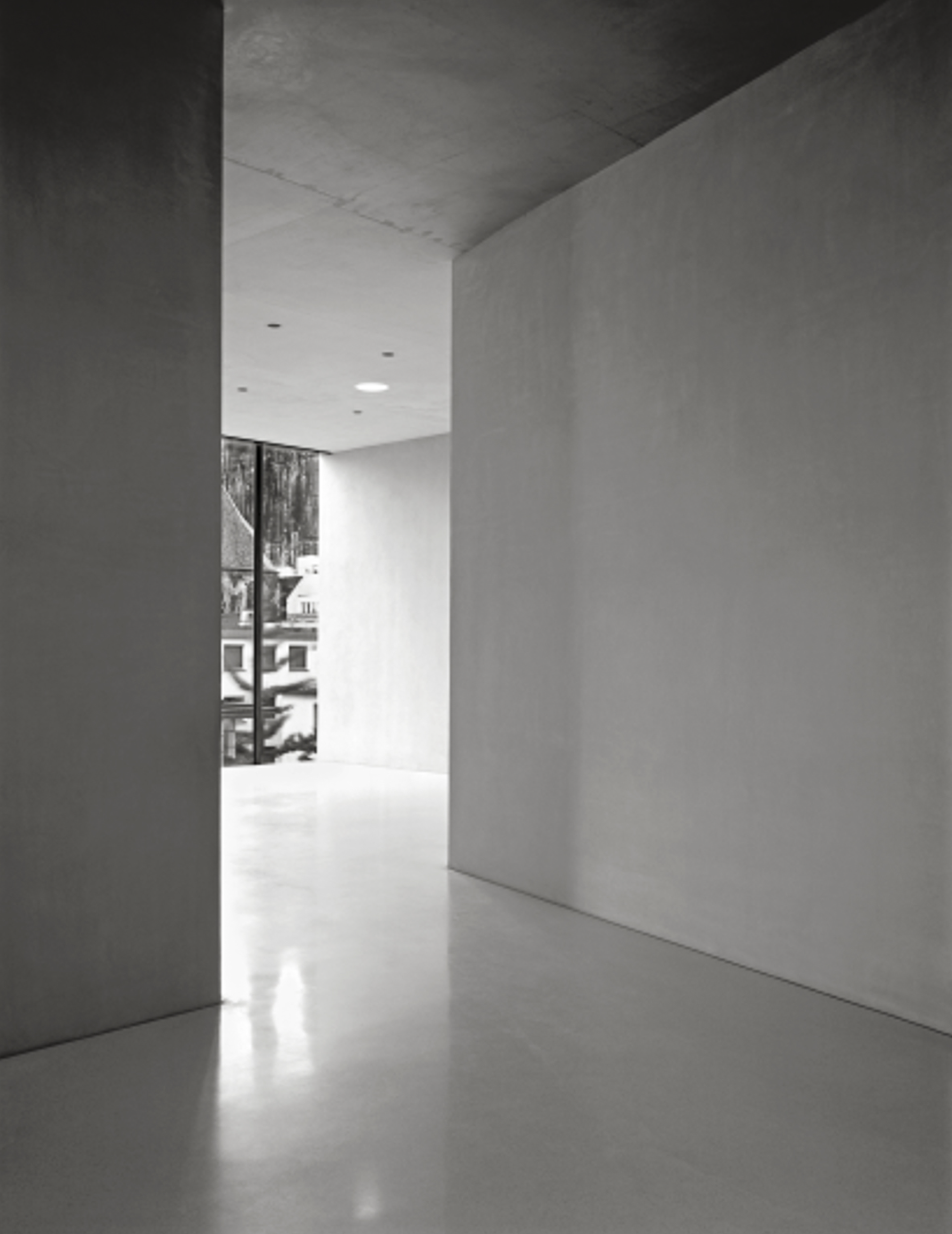
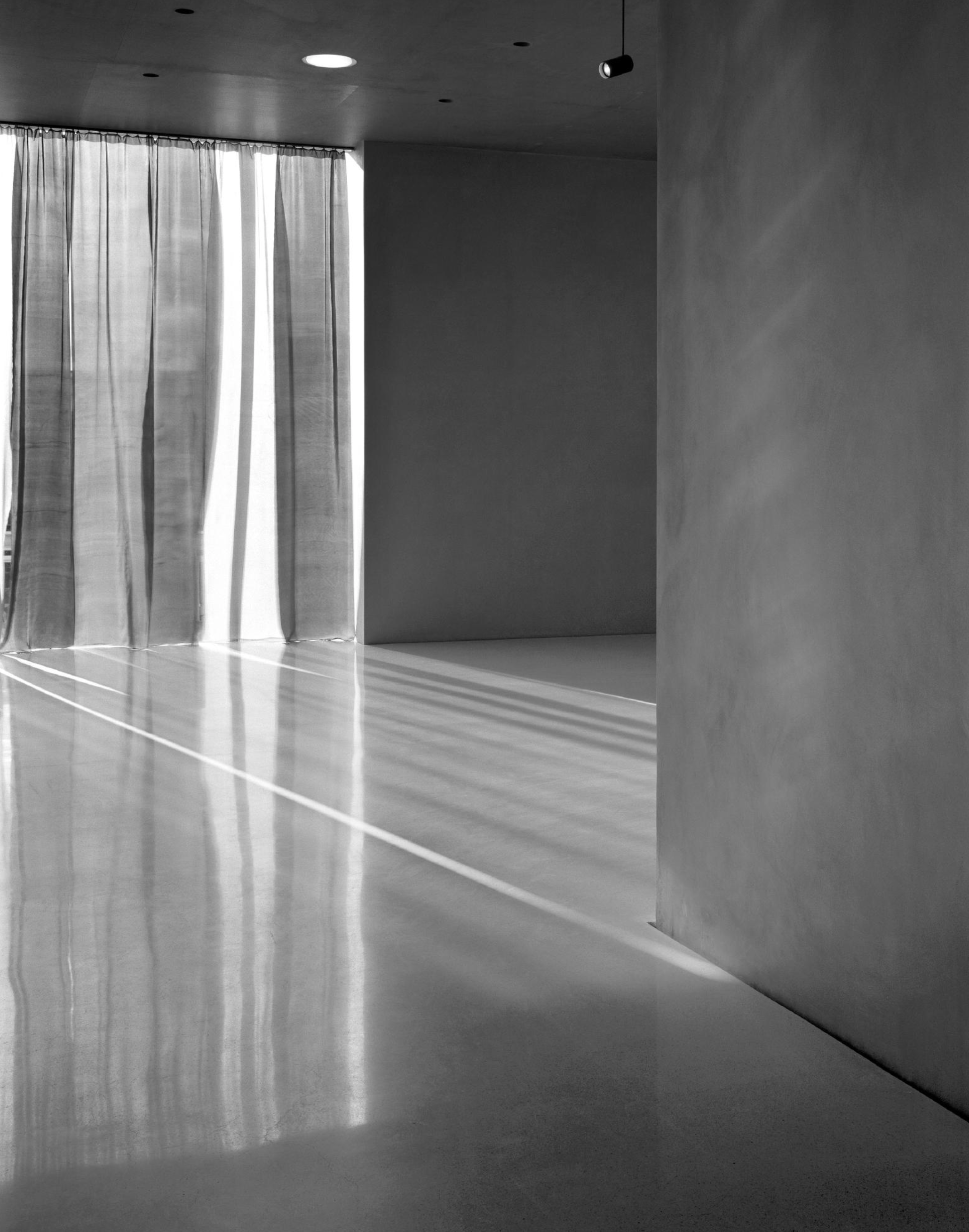
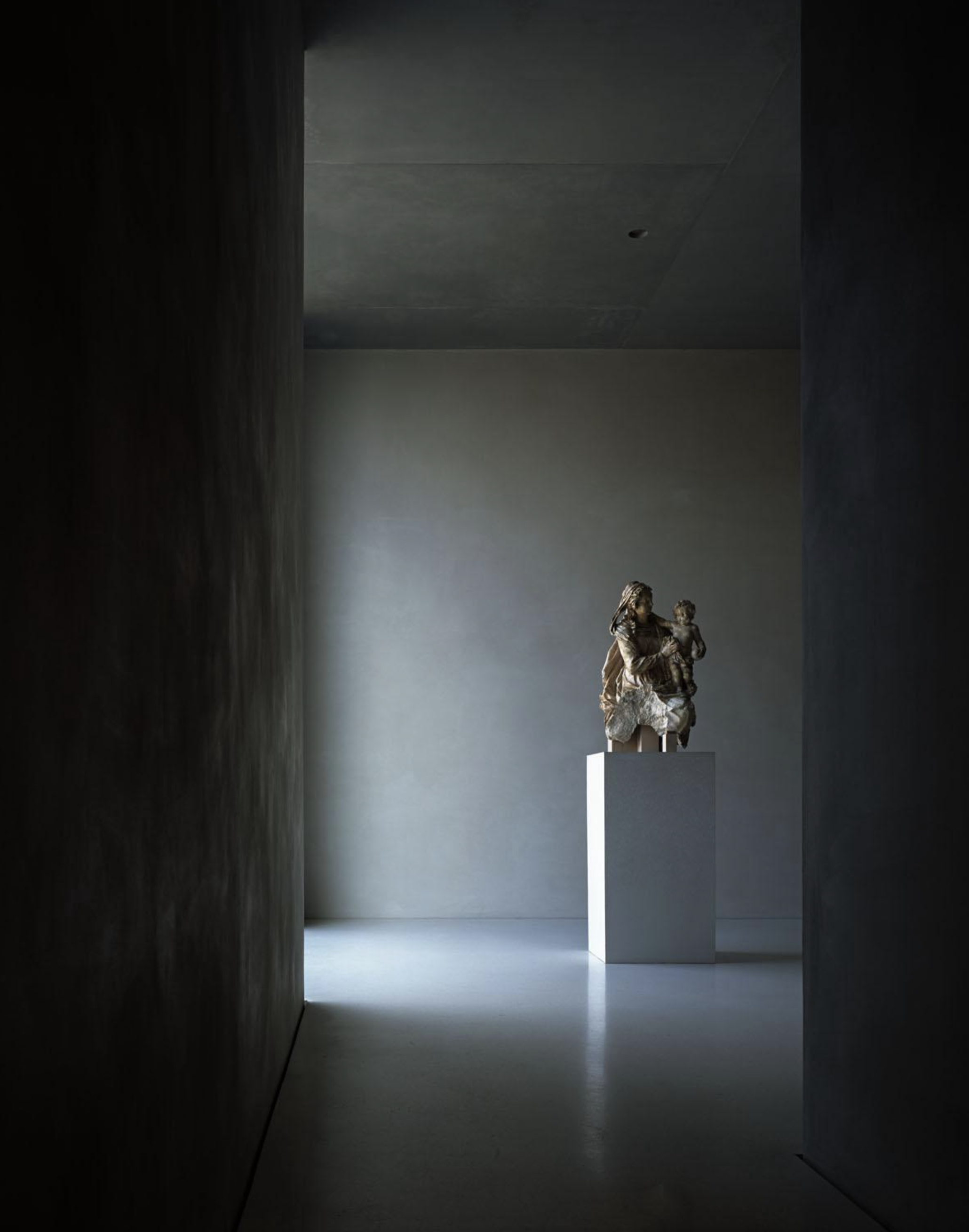
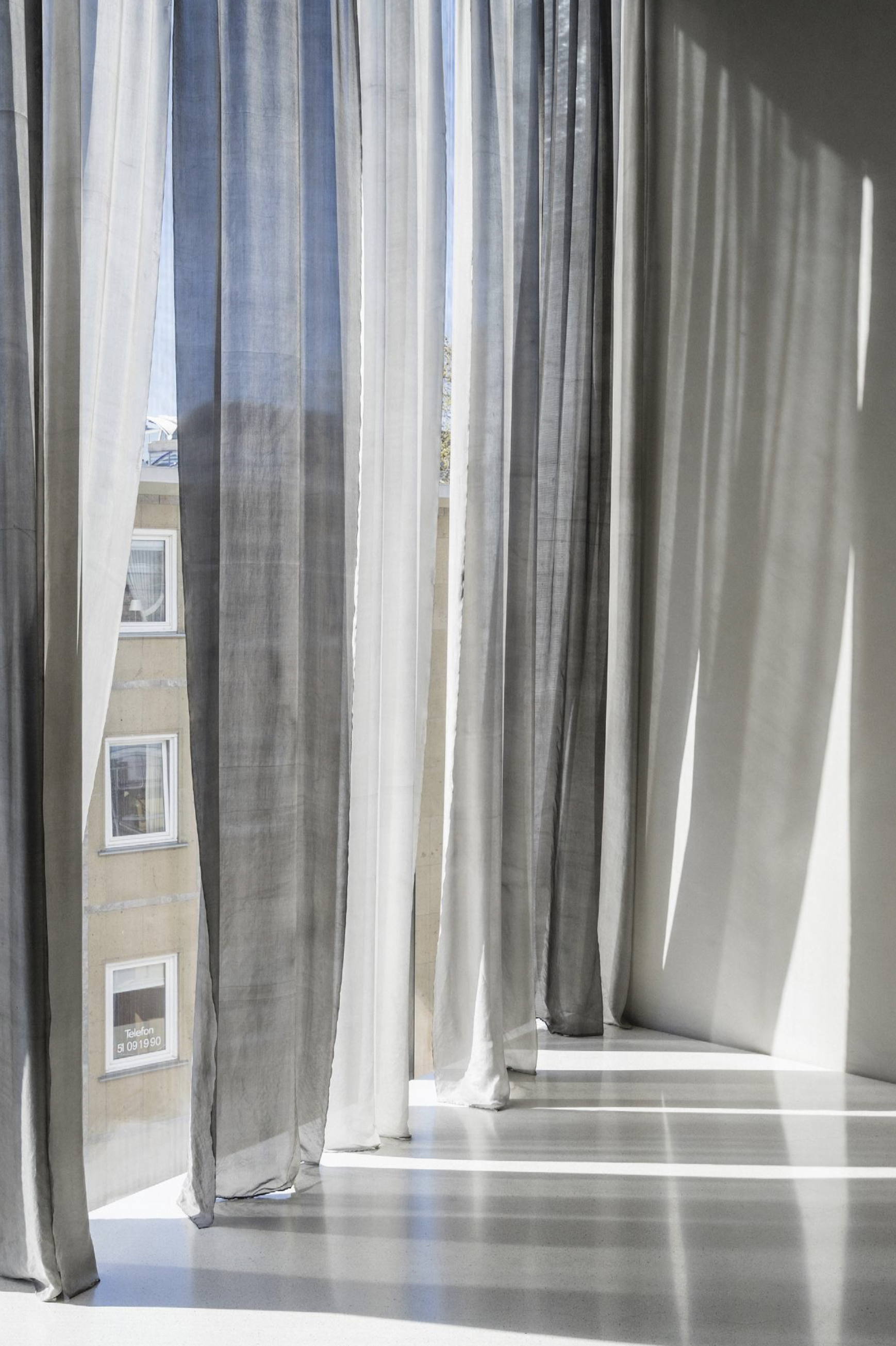
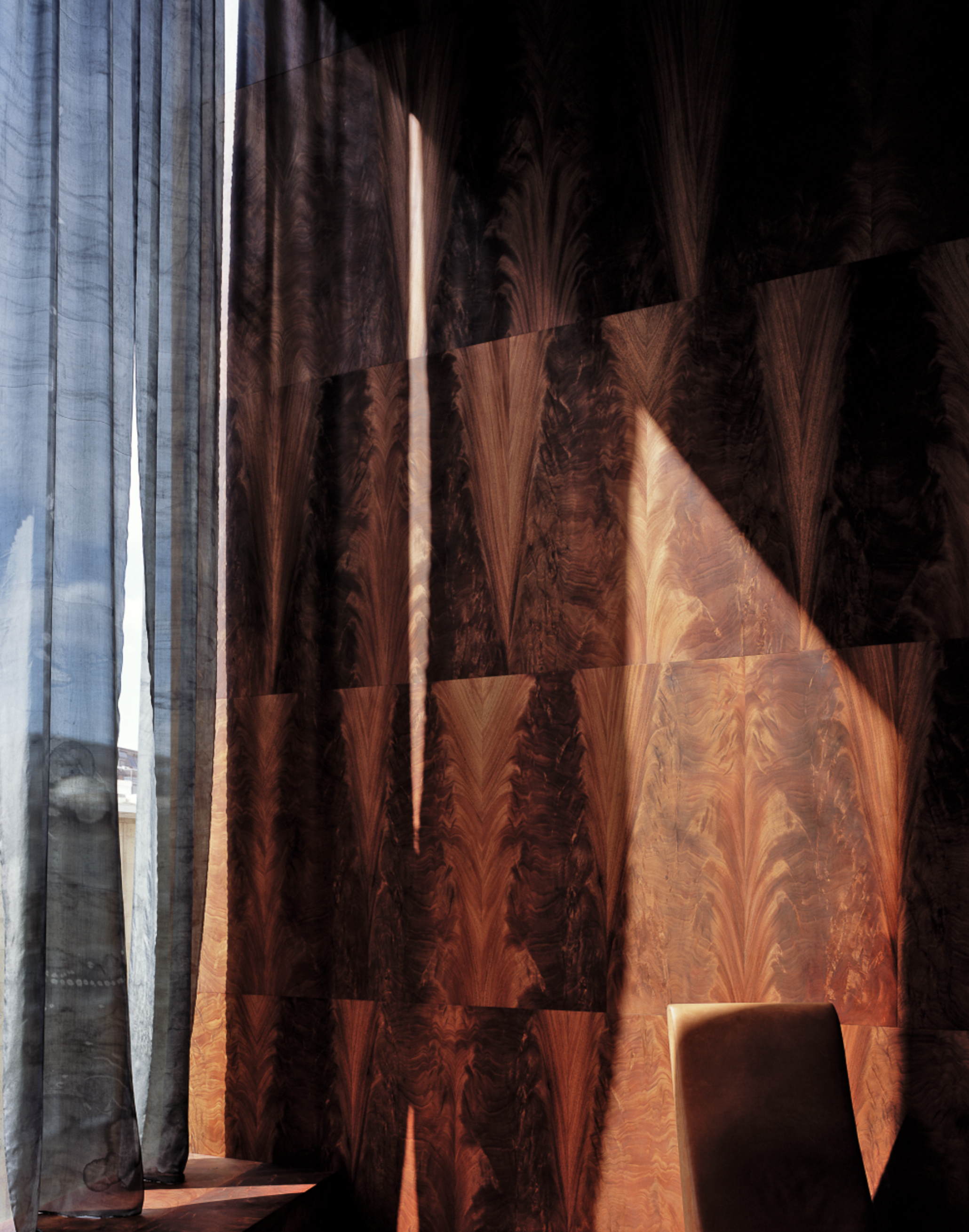
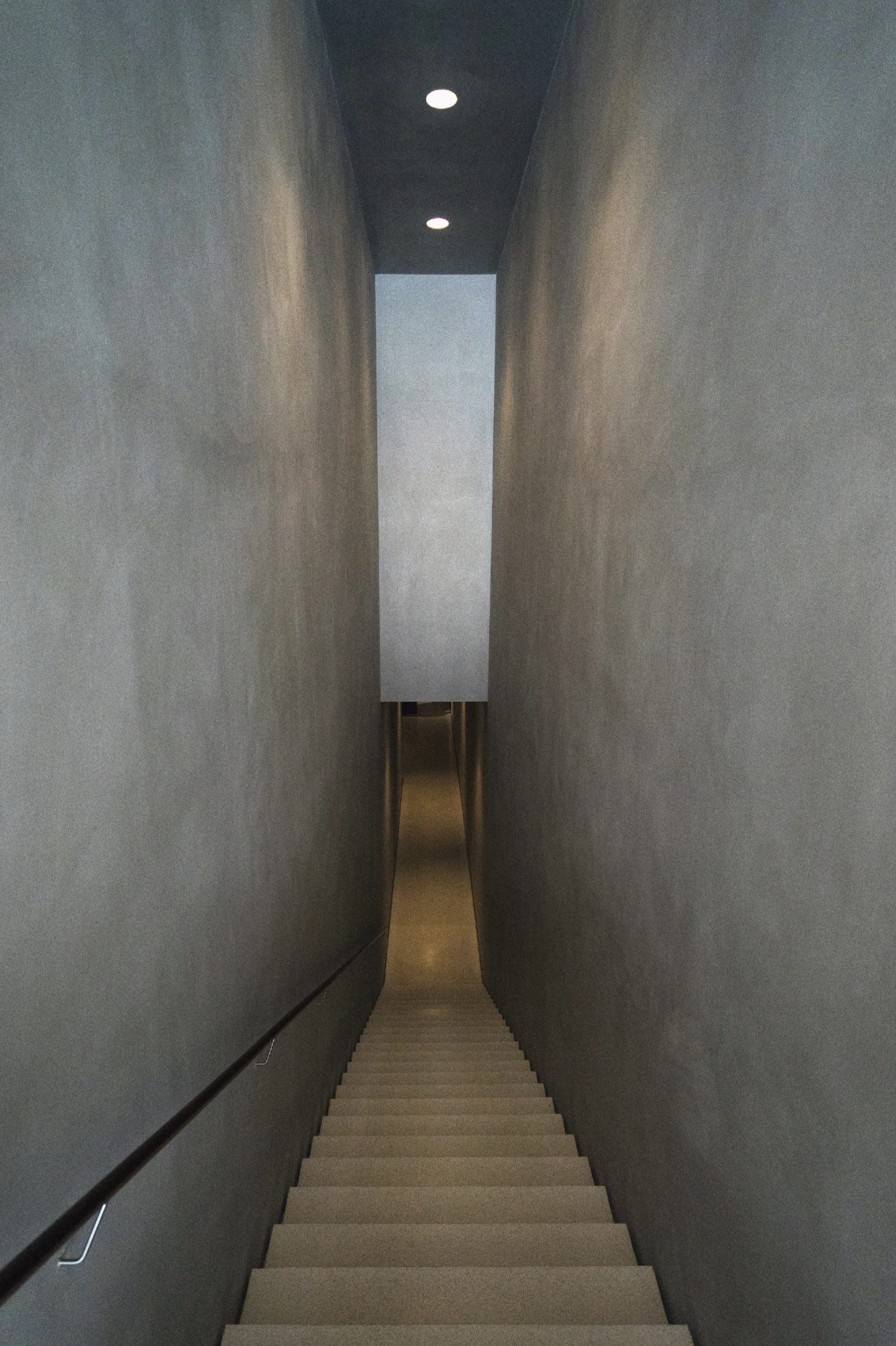
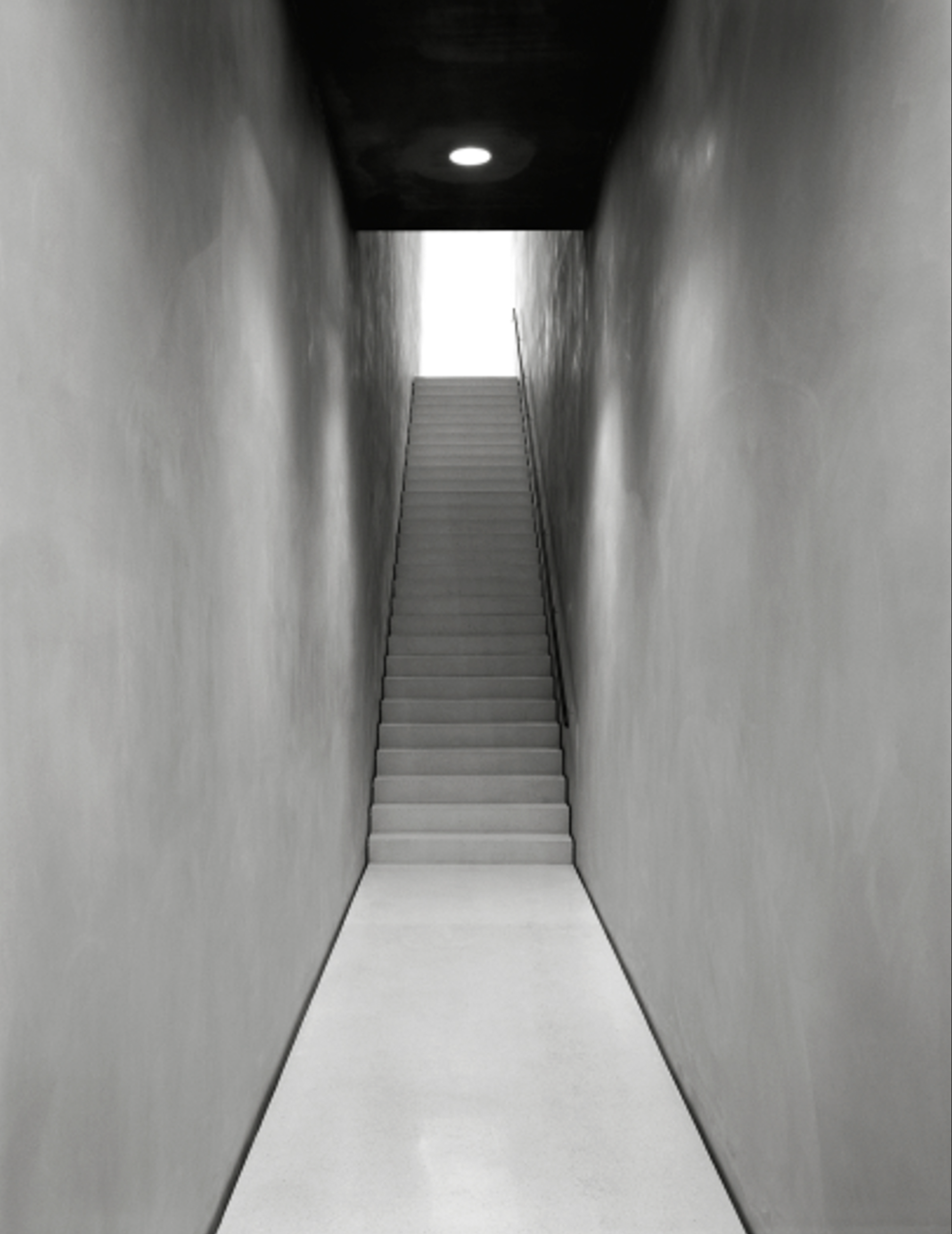
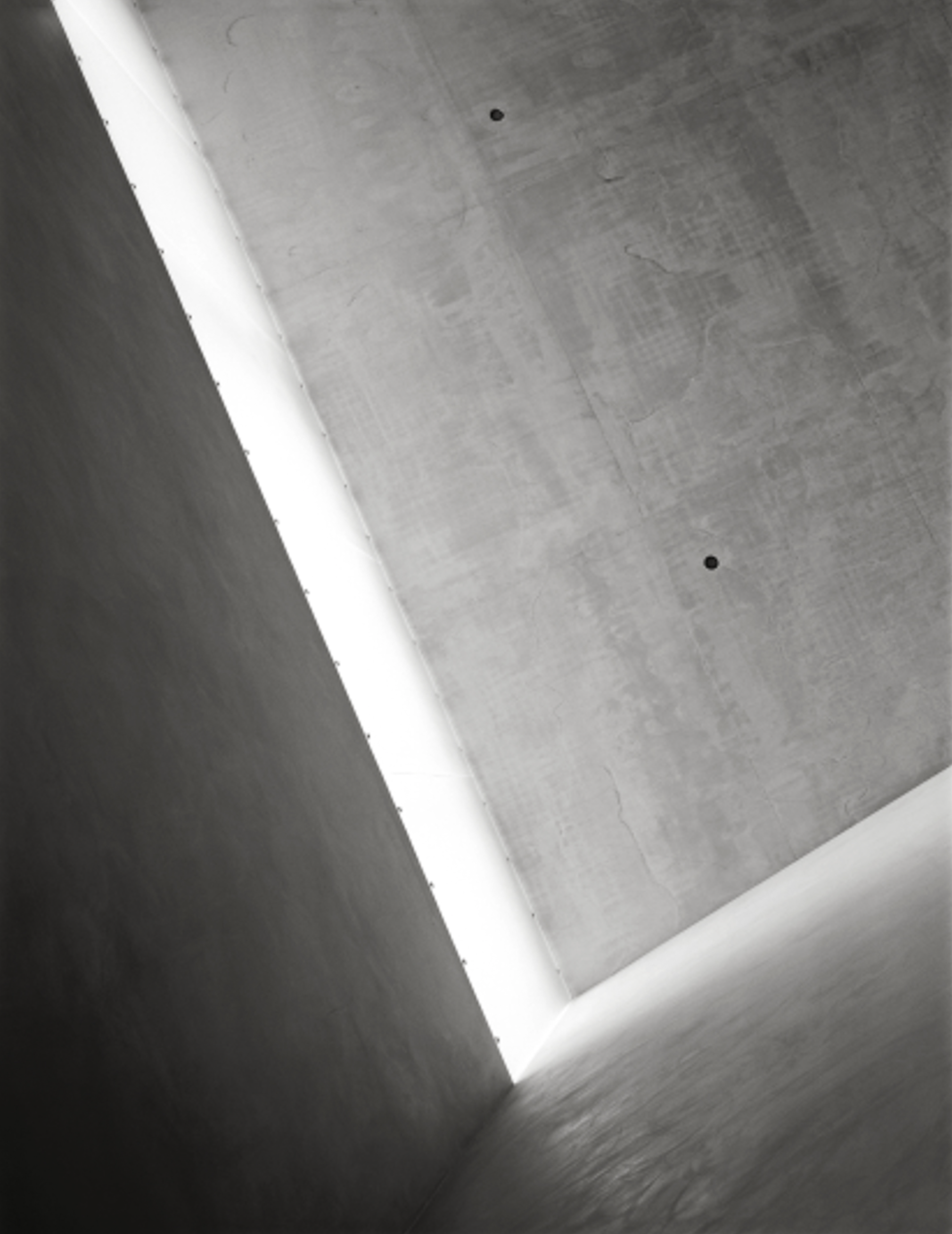
This tour through the museum is also a path from the historical ruins at ground level up towards the light and the view. Gradually windows appear along the way, letting daylight warmly illuminate the clay-plaster coating of the walls: we look out into the city, along with the quietly smiling seventeenth-century Madonna and Child at the end of the first long stairway.
Durisch, Thomas, Peter Zumthor 1990-1997 - Buildings and Projects, Volume 2, Scheidegger and Spiess, 2014 |