|
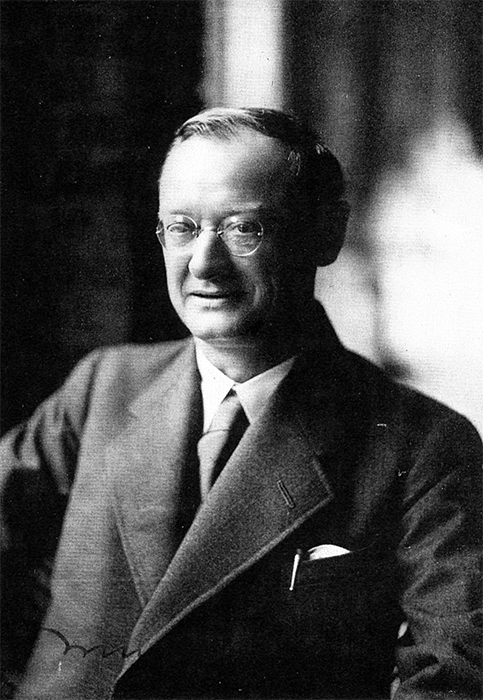
| BRUNO TAUT |
| |
| |
|
| |
| |
 |
|
Name |
|
Bruno Julius Florian Taut |
| |
|
|
|
| |
Born |
|
May 4, 1880 |
| |
|
|
|
| |
Died |
|
December 24, 1938 |
| |
|
|
|
| |
Nationality |
|
Germany |
| |
|
|
|
| |
School |
|
EXPRESSIONISM |
| |
|
|
|
| |
Official website |
|
|
| |
|
|
| |
| BIOGRAPHY |
|
|
|
|
| |
|
Bruno Taut was one of the leading architects in the development of a modern
architecture in Germany. He worked from a traditional historicist style to a colorful Expressionism before World War I and then helped create a rationalized “New Building” in which he maintained a sense of color and creativity that transcended the austere machine aesthetic and objectivity of his International Style peers. His career can best be divided into four major phases: training and early works, 1903–12; Expressionist experiments, 1912–23; large-scale social housing projects in Berlin, 1924–31; and exile in Russia, Japan, and Turkey, 1932–38.
Taut was born in Königsberg, East Prussia (present-day Kaliningrad, Russia), the son of a merchant and older brother of prominent architect Max Taut. He was educated at the local building college and received further training in the offices of leading contemporary architects Bruno Möhring in Berlin (1903), Theodor Fischer in Stuttgart (1904–08), and the urban designer Theodor Goecke at the Technical University in Berlin (1909). In 1909 Taut opened an office in Berlin with Franz Hoffmann and was joined by his brother Max in 1914, although they maintained separate design practices. The first commissions were for apartment buildings in Berlin in which Taut created abstracted, Secessionist-style compositions within a traditional framework.
In 1912 Taut was appointed advisory architect to the reform-oriented German Garden City Association, which led to commissions for two housing developments: the “Reform” Siedlung (housing estate) in Magdeburg, Germany (1913–14, 1921–23), and the Falkenberg Garden City southeast of Berlin (1913–14). In both developments Taut combined traditional garden city ideals and small, plain pitched-roof houses with brightly colored facades as an inexpensive, expressive way to enliven architecture without traditional historicist ornament.
Beginning in 1912, Taut also received a series of commissions for important experimental exhibition pavilions to advertise new construction materials, including the “Monument to Iron” in Leipzig (1913) and the famous “Glass House” at the Werkbund Exhibition in Cologne (1914). The Glass House, a propaganda building for the German glass industry, contained glass-block floors, a sparkling waterfall, walls lined with brightly colored tiles and prism glass, and a multifaceted, colored-glass dome with reinforced-concrete ribs. The pavilion was dedicated to the poet Paul Scheerbart, whose fantastical writings praised glass as the material of the future. The important critic and Taut’s friend Adolf Behne championed glass in the popular press as the harbinger of a new, modern architecture for the future.
As a committed pacifist, Taut refused to participate in World War I, but in December 1918, within days of the German surrender, he and Walter Gropius formed the short-lived revolutionary Working Council for Art. This was an organization of young artists and architects intent on promoting a visionary new architecture of colorful, magical forms that were free of all the burdens of past traditions, ornament, and materials. Taut publicized his own dreams in several books, including Alpine Architektur (1919; Alpine Architecture) and Die Auflösung der Städte (1920; The Dissolution of Cities), and a series of utopian writings circulated among his friends that were later dubbed the “Crystal Chain Letters.” All advocated the dissolution of existing cities in favor of a purified, crystalline architecture of colored glass. Throughout his life Taut used the power of the press to circulate his ideas to a larger audience, writing 21 books and nearly 300 articles over the course of his career.
In 1921 the newly elected socialist government of Magdeburg hired Taut as chief city architect, offering him an opportunity to implement some of his utopian ideas. He oversaw the extension of his own colorful Reform Siedlung, built a large concreteframe exhibition hall, and initiated a controversial but widely publicized program of colorizing existing urban facades to enliven the drab cityscape of postwar Magdeburg. Rampant inflation and increasing criticism of his avant-garde ideas, however, soon ended his tenure.
The most productive phase of Taut’s career began in 1924, when he accepted an offer to oversee the design of large socialized housing developments in Berlin for the communal building association GEHAG in cooperation with the chief city planner of Berlin, Martin Wagner. In seven very productive years, Taut designed more than 10,000 units of affordable housing that proved to be among the most important achievements in public housing of the century. Alongside Wagner, Taut became increasingly committed to rationalized, standardized, and largely prefabricated construction systems, and functional and efficient apartment layouts and furnishings that became models for housing all over the world. Large-scale developments, such as the “Horseshoe” Siedlung in Berlin-Britz (21,374 units, 1925–31) and Onkel Tom’s Hütte in Berlin-Zehlendorf (1915 units, 1926–31), were built in a radically modern architecture of mostly flat roofs, unornamented facades (except for Taut’s trademark color), and plenty of green space that provided a welcome relief for Berlin’s working class. The developments helped alleviate a dire housing shortage and, along with built-in social institutions such as libraries, sports fields, communal laundries, dining facilities, and social clubs, helped promote worker solidarity and the socialist political ideals of Berlin’s city government.
The success of these projects earned Taut a prestigious professorship in housing and city planning at the Technical University of Berlin from 1930 to 1932 as well as an honorary membership in the American Institute of Architects. The worldwide economic depression and an increasingly conservative and rightwing press and political machinery, however, once again forced him out of work and office. After 1931 he accepted various offers to work in the young Soviet Union, which had been relatively untouched by the worldwide economic depression and which offered great promise to many important German architects in search of opportunities to implement their dreams of a new architecture for a new socialist society. Taut moved to Russia in 1932 and began plans for a hotel and several institutional buildings as well as a master plan for Moscow. However, political pressure soon forced him on the move again, briefly to Germany, where Adolf Hitler had started to campaign against all modern architects in 1933, and then on to Japan.
Taut stayed in Japan for three years, writing books, designing well-crafted furnishings and household objects, and studying the ancient building traditions of Japan, which he found surprisingly similar to European modern architecture. He was, however, unable to build anything in Japan because of his émigré status. Eager to build, in 1936 Taut once again followed a number of German colleagues and accepted an offer from the Turkish government for a professorship at the Academy of Art in Istanbul and a position in the Ministry of Education. His attempt to combine local Turkish building traditions with European modernism in several university and institutional buildings, and his attempt to use architecture to create a new society for postrevolutionary Turkey, earned him great fame and respect and put Taut back in his element in an adopted homeland. When his life was cut short by failing health in December 1938, he was honored by being the only European buried in the national cemetery.
KAI K.GUTSCHOW
Sennott R.S. Encyclopedia of twentieth century architecture, Vol.3. Fitzroy Dearborn., 2005.
|
| |
| |
| |
| |
| |
| |
| |
| TIMELINE |
|
|
|
|
| |
|
1880 Born in Königsberg, Germany, 4 May;
Attended the Baugewerkschule, Königsberg;
1900-03 Worked in the office of Bruno Mehring, Berlin;
1903-05 Studied at the Technische Hochschule, Stuttgart under Theodor Fischer;
1904-08 Employed in the office of Theodor Fischer, Stuttgart;
1908-09 Studied urban planning under Theodor Goecke at the Technische Hochschule, Charlottenburg, Berlin;
1908 Married Hedwig Wollgast;
1908-21 Private practice, Berlin;
1918 Founding member, Arbeitsrat für Kunst;
1921-23 City architect, Magdeburg, Germany;
1923-31 Partnership with Max Taut and Franz Hoffmann, Berlin;
1924 Member, Der Ring;
1924-32 Advisory architect, GEHAG (Gemeinnützige Heimstatten-, Spar-, und Bau-Aktiengesellschaft);
1930-32 Professor, Technische Hochschule, Charlottenburg;
1932-33 Practiced in Moscow;
1933-34 Practiced in Tokyo; worked for Crafts Research Institute, Sendai;
1935 Practiced in Ankara and Istanbul, Turkey; head of architectural office, Turkish Ministry of Education;
Professor of architecture, Academy of Arts, Istanbul;
1938 Died in Ankara, 24 December. |
| |
| |
| |
| |
| |
| |
| |
| FURTHER READING |
|
|
|
|
| |
|
Selected Publications
Alpine Architektur, 1919; as Alpine Architecture, translated by James Palmes and Shirley Palmer, 1972
Die Auflösung der Städte, oder die Erde eine gute Wohnung, 1920
Die neue Baukunst in Europa und Amerika, 1929
Nippon mit europäischen Augen gesehen, 1934
Architekturlehre: Grundlagen, Theorie, und Kritik, 1936
Further Reading
Although Taut’s papers were destroyed in World War II, the first study of his socialist-inspired architecture was done by Kurt Junghanns in communist East Germany. As interest in Expressionism and the “New Objectivity” of interwar Germany increased over the years, so too did scholarship on Taut. Bletter, Sharp, and Whyte are good English-language sources. Speidel’s recent catalog for an exhibit in Japan and Magdeburg provides spectacular color illustrations of Taut’s work with complete reprints of his hard-to-find utopian writings.
Bletter, Rosemarie Haag, “The Interpretation of the Glass Dream: Expressionist Architecture and the History of the Crystal Metaphor,” Journal of the Society of Architectural Historians 40/1 (1981)
Buddensieg, Tilmann (editor), Berlin, 1900–1933: Architecture and Design; Architektur und Design (bilingual English-German edition), New York: Cooper-Hewitt Museum, 1987
Hartmann, Kristiana, “Bruno Taut,” in Baumeister, Architekten, Stadtplaner: Biographien zur baulichen Entwicklung Berlins, edited by Wolfgang Ribbe and Wolfgang Schäche, Berlin: Historische Kommission zu Berlin, 1987
Jaeger, Roland, “Bau und Buch: ‘Ein Wohnhaus’ von Bruno Taut,” in Ein Wohnhaus, edited by Jaeger, Berlin: Gebr. Mann, 1995
Junghanns, Kurt, Bruno Taut, 1880–1938: Architektur und sozialer Gedanke, Berlin: Henschel, 1970; 3rd edition, Leipzig: Seemann, 1998
Pehnt, Wolfgang, Die Architektur des Expressionismus, Stuttgart, Germany: Hatje, 1973; 3rd edition, Ostfildern-Ruit: Hatje, 1998; as Expressionist Architecture, translated by J.A. Underwood and Edith Künstner, New York: Praeger, and London: Thames and Hudson, 1973
Sharp, Dennis (editor), Glass Architecture (by Paul Scheerbart, 1914) and Alpine Architecture (by Bruno Taut, 1919), translated by James Palmes and Shirley Palmer, New York: Praeger, and London: November Books, 1972
Speidel, Manfred (editor), Bruno Taut: Natur und Fantasie, 1880–1938, Berlin: Ernst, 1995
Taut, Bruno, Modern Architecture, London: Studio, and New York: Boni, 1929
Thiekötter, Angelika (editor), Kristallisationen, Splitterungen: Bruno Tauts Glashaus, Basel and Boston: Birkhäuser, 1993
Volkmann, Barbara (editor), Bruno Taut, 1880–1938, Berlin: Akademie der Künste, 1980
Whyte, Iain Boyd, Bruno Taut and the Architecture of Activism, Cambridge and New York: Cambridge University Press, 1982
Whyte, Iain Boyd (editor), The Crystal Chain Letters: Architectural Fantasies by Bruno Taut and His Circle, Cambridge, Massachusetts: MIT Press, 1985
Zöller-Stock, Bettina, Bruno Taut: Die Innenraumentwürfe des Berliner Architekten, Stuttgart, Germany: Deutsch Verlag-Anstalt, 1993
MORE BOOKS |
| |
| |
| |
| |
| |
| |
| |
| RELATED |
|
|
|
|
| |
|
BERLIN; EXPRESSIONISM; GERMANY; |
| |
|