| ALL |
|
GERMANY
| OVERVIEW |
|
| |
German architecture in the 20th century was forged by the succession of political and social upheavals that swept through Europe during the century, so often with Germany at their epicenter. Conservative and progressive, as well as regional and international architectural tendencies battled for hegemony in trying to shape the German built environment, each in their own image. The result is a century of tremendously heterogeneous architecture with seemingly few continuities or unifying themes. Despite this diversity, a walk through many large German cities today gives the impression that German architecture, perhaps more than that of any other country in Europe, is an architecture of the 20th century. Indeed, many consider Germany to be one of the birthplaces, if not the home of modern architecture.
German architecture at the turn of the last century was characterized by a continuation of many trends from the prosperous decades immediately following German unification in 1871. In architectural design, the use of extravagant historical styles flourished amidst increasing modernization, particularly for the residences and commercial properties of the increasingly wealthy upper and middle class. Alfred Messel’s Wertheim Department Store (1898–1908) in central Berlin, with it’s mix of historicist exterior details and unprecedented use of steel and glass in a new building type celebrating the triumph of bourgeois, metropolitan consumer culture, epitomized this trend. The more nationalist and militarist tendencies of the German bourgeoisie were embodied in Bruno Schmitz’s gargantuan Volkerschlachtdenkmal outside of Leipzig (1898–1913), celebrating the centenary of the Prussian victory over Napoleon.
The first sparks of a modern, non-historicist architecture came from the Secession and Art Nouveau inspired reforms against the conservative norm in Germany. The artist’s colony on the Mathildenhöhe in Darmstadt patronized by the Grand Duke Ernst Ludwig of Hesse (1900–1908) and the Folkwang buildings and artist community in Hagen promoted by Karl Ernst Osthaus (1898–1912) both experimented with new forms. Houses and complete interior fittings in these communities by Peter Behrens, the Viennese Secession architect Joseph Maria Olbrich, and the Belgian designer Henri Van de Velde revealed to the public a fresh, anti-historicist sense of form and ornament. There was a desire to escape history and dry academicism in favor of a more realistic unification of art, design, life, and the everyday world.
Such brief forays into the Art Nouveau (Jugendstil) style at the turn of the century were soon subdued by a penchant for more reserved, monumental, and often neo-classically inspired forms that swept Germany in the years just before World War I. Olbrich’s Tietz Department Store in Düsseldorf (1906–1909), Paul Bonatz’s main train station in Stuttgart (1911–1928), and Hermann Billing’s Art Museum in Mannheim (1906–1907) are typical of this often monumental trend in stone construction.
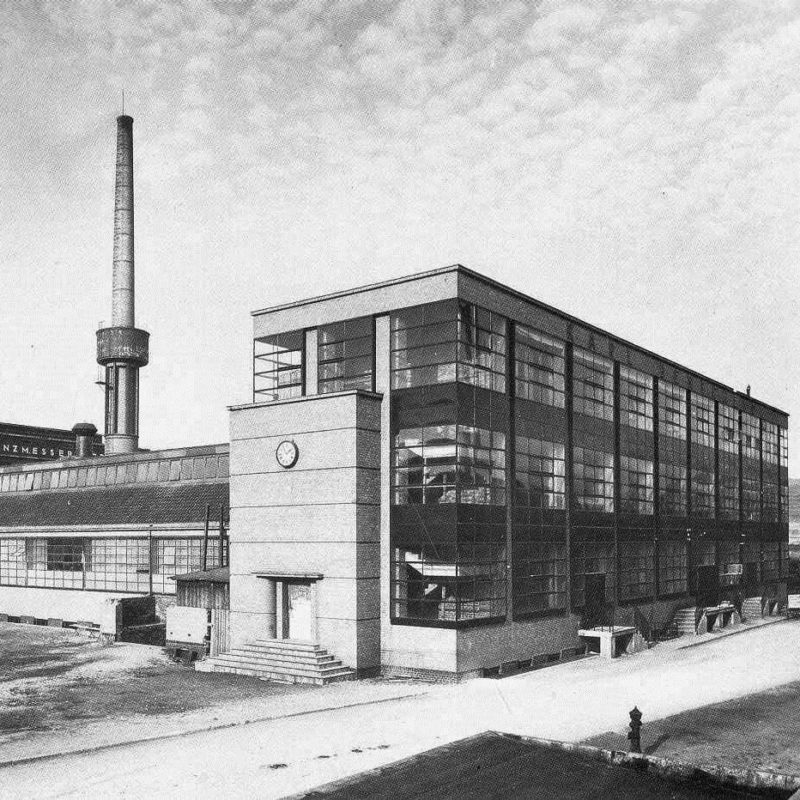
This general call for architectural order and regularity was promoted by several reform institutions founded in the first decade of the century. Among the most important were the preservation oriented German Heimatschutz Bund (Homeland Protection Association), founded in 1907, and the German Garden Cities Association, founded in 1902, to promote the establishment of traditionally planned towns or suburbs with a restrained, arts-and-crafts style architecture to contrast with the increasingly unlivable industrial metropolis. The most well-known reform organization, however, was the Deutscher Werkbund, founded in 1907, intent on promoting a greater cooperation of German artists and industrialists with the explicit intent of producing more modern consumer goods to increase German exports. Behrens’ AEG Turbine Factory (1908–1909) and Walter Gropius’ factories for the Fagus shoe last manufacturer (1911–1914) and for the Cologne Werkbund exhibition (1914) were typical Werkbund products as they expressed Germany’s new industrial image with a reserved, classically inspired set of architectural forms.
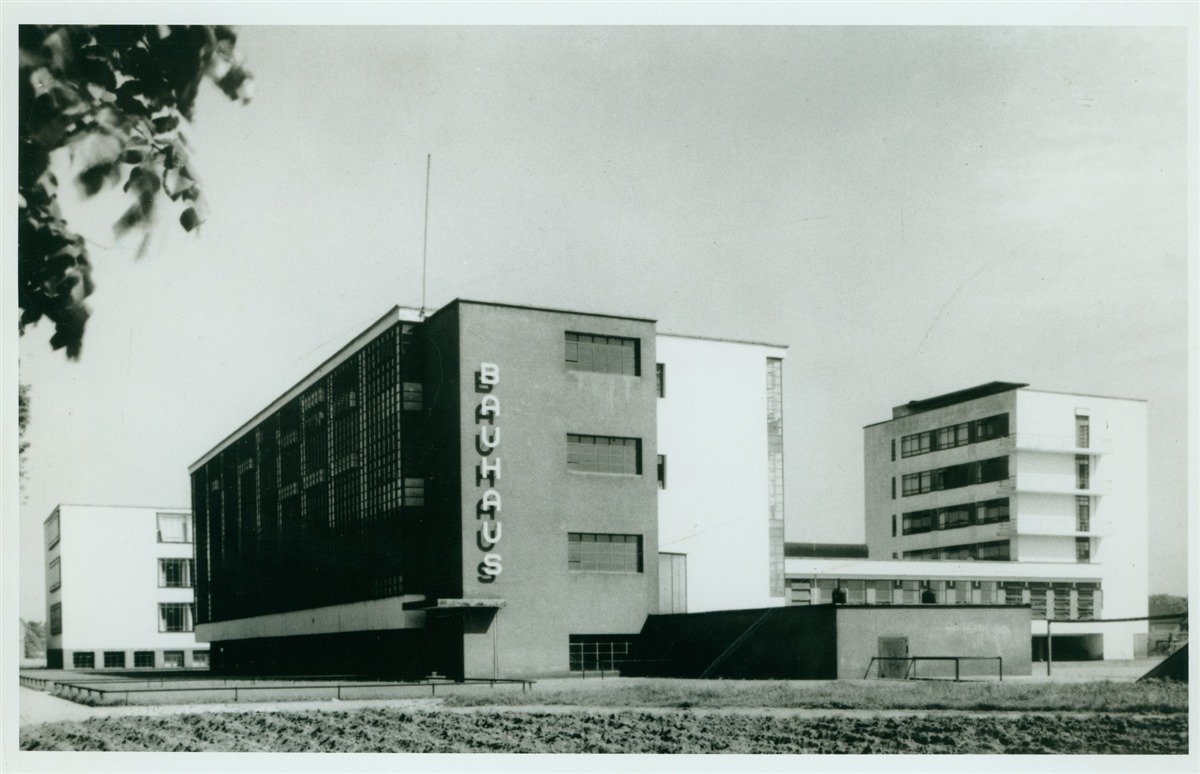
World War I brought Germany’s defeat in November 1918, and with it the end of empire, an unsuccessful communist revolution, the imposition of social democracy, as well as economically crippling war reparations payments imposed on Germany. Although there was little work for architects, culture and architecture took on increasing ideological power in the attempt to reform society in the new social democracy. In the wake of defeat, groups of young artists and architects such as the Arbeitsrat für Kunst (Working Council for Art) and the Novembergruppe, led by Gropius, Bruno Taut, Mies van der Rohe, and others, dreamed up Expressionist, utopian architectural fantasies that spoke of a revolution in architecture and a longing for a new architectures of glass and steel, color and purity. In 1919 state officials asked Gropius to unify Weimar’s old art academy and applied arts schools and create a state-sponsored Bauhaus, a school that unified all the arts under the leadership of architecture on the model of a medieval cathedral workshop. Although it produced very few buildings, the Bauhaus proved to be one of the most important forces in reforming and modernizing design and architectural thinking in Germany and throughout Europe.
In the years immediately after the war, shortages of building materials and spiraling inflation made most construction impossible. The overcrowded cites and poor housing conditions, a legacy of Germany’s rapid industrialization, only grew worse. Some of the more successful attempts to create housing focused on do-it-yourself building technology such as rammed-earth construction and the small-scale Volkswohnung (People’s House), similar to those advocated by the Garden Cities Association. Many of the important commissions that were built after the war, such as the Grosses Schauspielhaus (Large Theater) in Berlin by Hans Poelzig (1918–1919), the Einstein Tower in Potsdam by Erich Mendelsohn (1920–1921), and the Chilehaus by Fritz Höger in Hamburg (1922–1923), began to realize an architecture that was free of academic norms and focused on dynamic, expressive forms and a wide range of colorful materials. This Expressionism was a short-lived but very prevalent style that touched nearly all modern architects, but was rarely continued in the late 1920s. However, the organic functionalism of Hugo Häring and the ecclesiastical architecture of Domenikus Böhm are clearly related in spirit and form.
By the mid-1920s, through the help of American foreign aid, the German economy and building industry began to revive and came into one of the most vibrant and culturally avant-garde moments of 20th-century architecture, the so-called “Golden Twenties,” when Berlin was the cultural capital of Europe. Although most construction in Germany continued regional traditions of the Heimatstil (homeland style) or the ornamental traditions of earlier decades, an unornamented, flat-roofed, technologically oriented modern architecture, or Neues Bauen (New Building) coalesced in urban centers such as Berlin, Frankfurt (Ernst May), and Dessau (Gropius, Hannes Meyer, and the Bauhaus), as well as Magdeburg (Bruno Taut), Celle (Otto Haesler), Hamburg (Karl Schneider), Munich (Robert Vorhoelzer), and Altona (Gustav Oelsner). Progressive architects increasingly associated with new left-leaning social democratic policies that sought technologically oriented renewal for the masses, while many conservative architects chose to associate with right-wing nationalist groups in favor of a pure German culture and architecture.
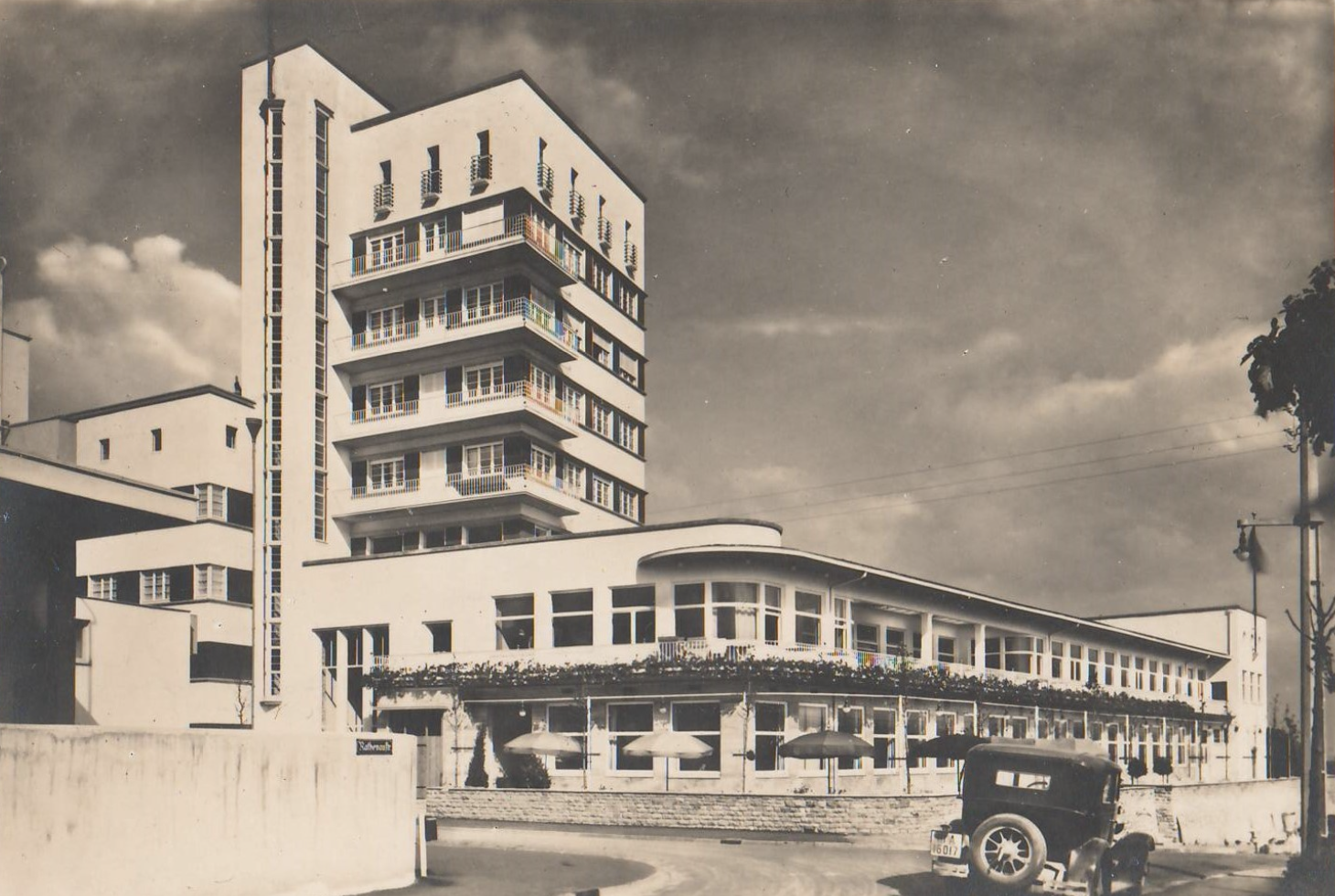
The most important endeavor which brought about the Neues Bauen were the vast public housing projects made possible by the Social Democratic municipal governments all over Germany: over 135,000 new housing units in Berlin, 65,000 units in Hamburg, and 15,000 in Frankfurt alone. Under the guidance of planners such as Martin Wagner and architects such as Taut, cities like Berlin taxed extant landowners steeply, purchased huge tracts of land, formed cooperative house-building associations that modernized the production of building materials, standardized building elements, and streamlined the construction industry. They produced government owned and subsidized housing of all types that allowed thousands of worker families to escape the infamous rental barracks and slums for small but efficiently planned apartment complexes with modern kitchens and other facilities. These innovative housing developments, most designed in a remarkably uniform style that would soon be dubbed the "International Style," drew almost universal international acclaim from architects such as Le Corbusier, J.J.P. Oud, and Philip Johnson. There was, however, increasingly harsh critique from within Germany, as the local press labeled the new architecture as "Bolshevik" or "Jewish" attack on German architectural traditions and inappropriate for the German climate and culture.
When Hitler and his National Socialist regime took over political control of Germany in January 1933, the modern styles associated with social democracy were halted in favor of a mix of conservative styles, including the pitched-roof cottage for domestic architecture, monumental classicism for the civic centre, and a highly technical modern architecture for transportation and industrial facilities. Many of the most esteemed modern architects were forced to leave Germany because of their Jewish heritage, while others such as May, Meyer, Taut, Gropius, Mies van der Rohe, Wagner, Ludwig Hilberseimer, and Marcel Breuer voluntarily left in search of more favorable political and architectural climates, especially in the United States.
Hitler took an intense personal interest in the development of Nazi architecture; he chose Paul Ludwig Troost and later the young Albert Speer to oversee all major architectural production in the Third Reich. Speer and his teams of architects re-planned and even started construction in seven major representative regional cities to serve as party headquarters, foremost among them Berlin. The severe, bombastic neoclassical, solid granite building ensembles they envisioned were to evoke the power and longevity of the German Reich. World War II put a halt to most of these projects, although large ensembles remain in central Munich, namely the party grounds outside of Nuremberg by Speer (1934–1939), in the Gauforum in Weimar by Hermann Giesler (1936–1942), and in Berlin.
But the story of Nazi architecture was more insidious and pervasive than a few monumental projects. German architects designed the concentration and extermination camps of the Holocaust for maximum efficiency. Slave labor from the camps was used in quarries, brick furnaces, and many points of the building industry, especially for the most representative architectural projects. Architects also designed factories and entire industrial towns for the machinery of war such as the cities of Salzgitter for coal mining (Werner Hebebrand, 1937), and Wolfsburg for Volkswagen (Peter Koller, 1938), as well as transport facilities such as the Autobahn, and several vacation facilities for German workers and soldiers such as the great beach facilities on the island of Rügen (Clemens Klotz, 1935–1939). Thousands of German architects of all persuasions joined the Nazi party in order to keep their practices, and most continued their work after the war, despite their Nazi affiliations.
The victorious Western Allied Powers (under the leadership of the United States' Marshall Plan) exercised strong control over the redevelopment of Germany's post-war economy, government, society, culture, and architecture. Throughout Germany, the immediate post-war years were dedicated to clearing and recycling literally mountains of building-rubble from bombed out cities—most of the work being done by women. This was followed by a rapid rebuilding of society's basic architectural needs, including hospitals, schools, temporary churches, and above all housing, with peak production reaching 600,000 units/year.
Under the sway of Communist Russia, in East Germany, an early "National Building Tradition" was officially dictated by Moscow in deliberate contrast to the "American" International Style architecture in West. The references to Schinkel's classicism in the signature project of the Stalinallee (1952–1958) by Hermann Henselmann in Berlin was an attempt to distill references from history and region into the representational and monumentalizing goals of the regime intent on differentiating itself from both the Nazi past and the capitalist West. Over time, important historical monuments and historic city centres were restored with a care and expertise rarely seen in the West, as the best of architectural heritage was made available to the working class.
Following Stalin's death, Khrushchev ordered a complete about-face towards rationalization and standardization, both out of economic necessity as the cheapest way to build, but also to symbolize the modernity of the East. After 1955 the entire building industry was systematically reorganized to churn out factory prefabricated concrete apartment blocks both in and around every East German city. Housing developments in Berlin's Marzahn, Jena, and Hoyerswerda were technologically more primitive and uncomfortable than similar developments in the West but represented a similar loss of urban and architectural quality and an exclusive orientation to function and economics.
In West Germany, the "Economic Miracle" brought on by reconstruction and the development of a capitalist, modern state radically reshaped the face of nearly every city and town by the 1950s. Minimalist, abstract modern architecture became pervasive, especially in the larger, representational projects that commenced after the primary needs of society had been met. Egon Eiermann's German Pavilion for the Brussels World's Fair of 1957 set the dominant tone for architecture that was to be transparent and simple, modest and modern. Increasingly successful German businesses chose to represent themselves with the image of American corporate modernism, such as Eiermann's designs for Neckermann (Frankfurt, 1958–1961), Olivetti (Frankfurt, 1968–1972), and IBM (Stuttgart, 1967–1973) and the refined glass slabs of the Thyssenhaus skyscraper in Düsseldorf (Hentrich & Petschnigg, 1957–1960). Entire new suburban business districts such as Hamburg's City Nord and Frankfurt's Niederrad were part of a general loosening of the traditionally dense core of German towns made possible by the emphasis on transportation and technology in planning and architecture.
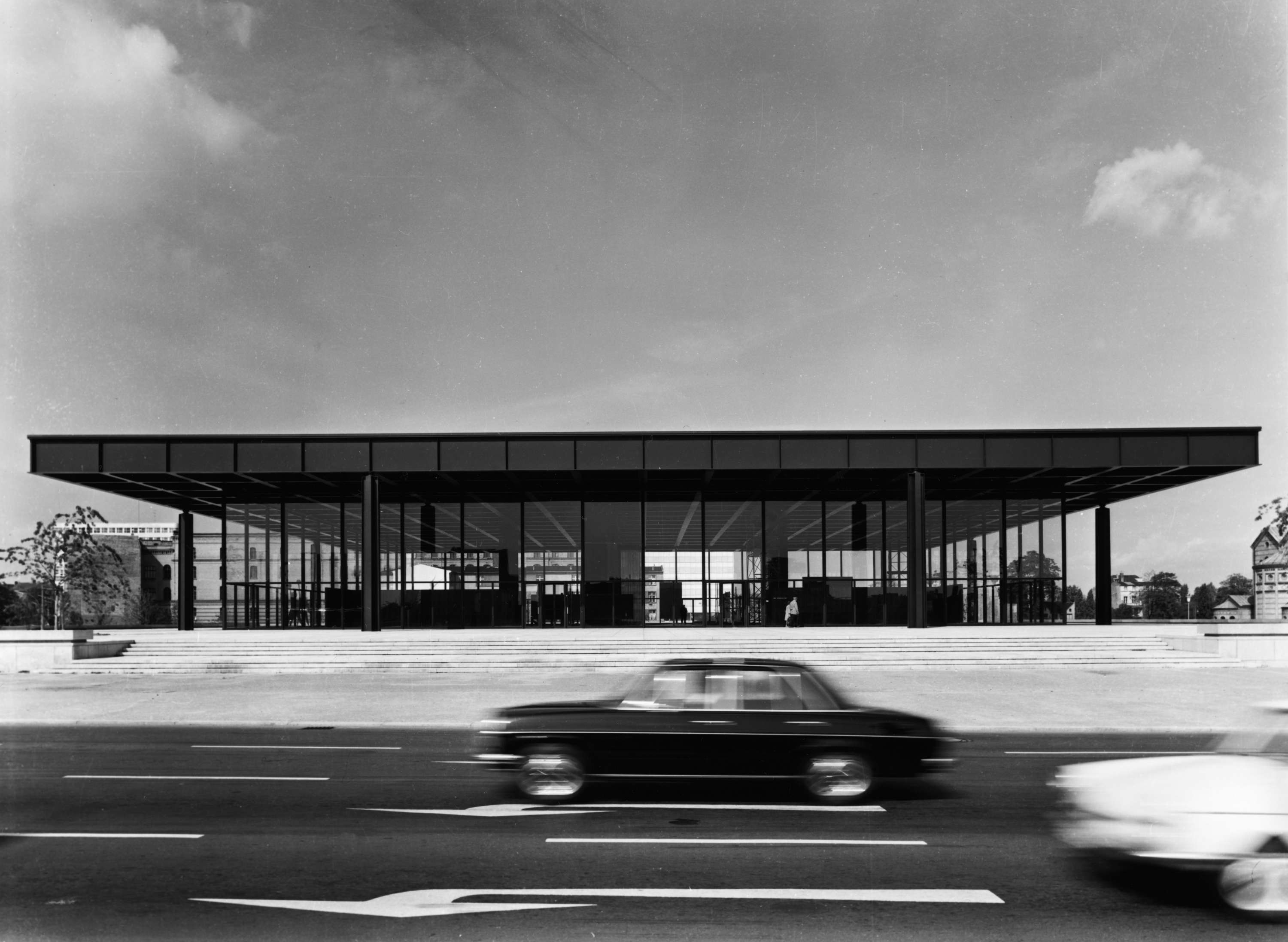
A vast array of museums, theatres, and entire new university campuses built after the 1950s were visible symbols of the attempt by West German social democracy to rebuild German culture by heavily subsidizing arts and education. The Ruhr University in Bochum (Hentrich-Petschnigg, 1962–1967), and the Free University in Berlin by the English designers Candilis, Josic and Woods (1962–1973) were highly ordered megastructures built with purely functional and economic considerations. Mies van der Rohe's new National Gallery in West Berlin (1961–1968) and Philip Johnson's museum in Bielefeld (1963–1968) reinforced a trend towards a minimalist, highly technical and rectilinear, functionalist aesthetic.
As a counter-reaction to the strictures of this highly ordered, rational architecture inspired by Mies and American modernism, the Expressionist Hans Scharoun and others worked towards a more organic, anti-monumental planning and architecture. The freedom of the open spaces of Berlin's Kulturforum, as well as Scharoun's most well known architectural designs, the Berlin Philharmonic and Chamber Music Halls (1956–1963, 1979–1984) and the State Library (1967–1976), each display a highly personal, expressive style based on curves and angled geometries. Located near the Berlin Wall at the heart of the Iron Curtain, they soon became symbols of Berlin's freedom, in opposition to the communist regime in the East. Some of the most evocative buildings by German architects after the war were churches and memorials such as those by Rudolf Schwarz, Gottfried Böhm, and Otto Bartning that provided simple but memorable spaces for worship and remembrance, often with organic plans and hope in the future represented by modern architecture. The draped tensile structures by Frei Otto and Günther Behnisch for the Olympic Stadium in Munich (1972) continued this alternative trend in German modernism, precursor to some of the fragmented shapes of more recent postmodernist and deconstructivist architecture.
Housing, continued to be one of the most pressing issues facing German architects after World War II. Although Germans moved increasingly into single-family houses in the last five decades of the century, large-scale housing developments in the modern style such as those developed by the Neue Heimat housing agency still formed the dominant housing type. The Interbau Building Exhibition, built with the participation of 53 well-known architects from 13 nations in the Hansaviertel district of West Berlin in 1957, was prototypical, replacing a dense city section with a loose array of modern high-rise, low-rise, and single-family houses in a park-like setting. In its wake came a largely successful though often maligned and short-lived trend of developing mega-scale housing complexes such as the Neue Vahr Siedlung for 30,000 residents outside of Bremen (Ernst May, Bernhard Reichow, Alvar Aalto et al, 1957–1962), and the Märkisches Viertel for 60,000 in Berlin (Werner Düttmann, Georg Heinrichs, Oswald Mathias Ungers, et al., 1962–1972).
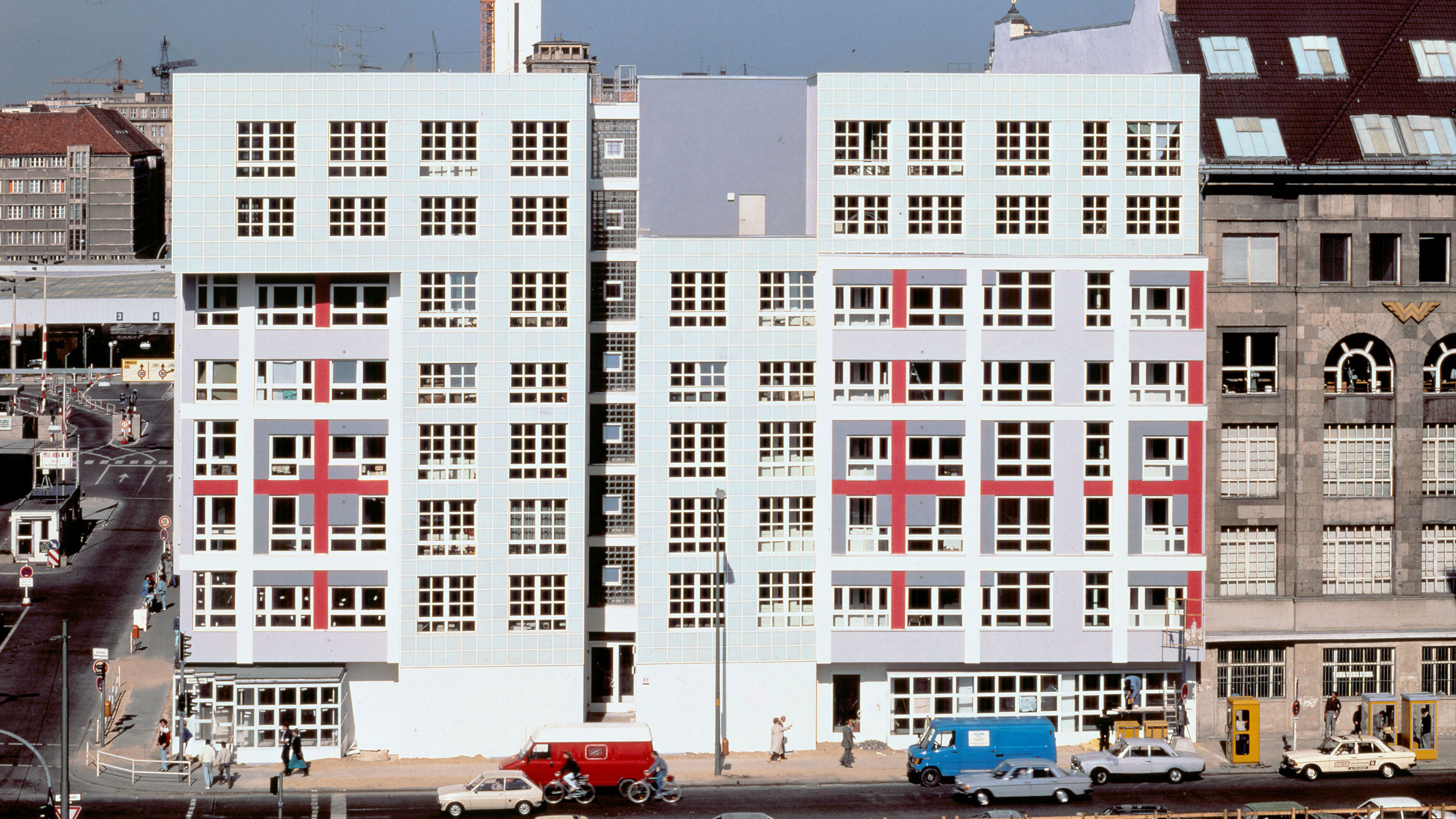
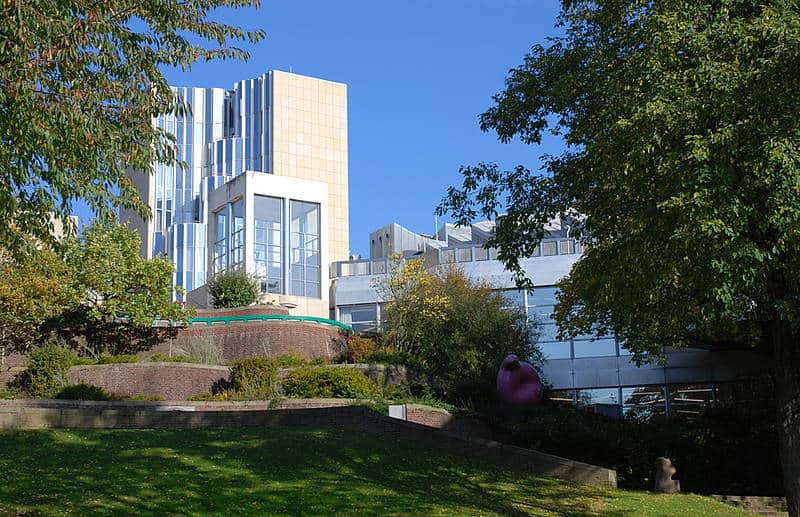
By the early 1970s there began to be an increasing reaction against the ascetic modernist planning ideas and architecture that had come to dominate the German landscape. Architects called for a more contextually sensitive and traditional approach to city building and architecture, and a wave of museum building throughout West Germany, including Hans Hollein's Abteiberg Municipal Museum in Mönchengladbach (1972–1978), James Stirling's Staatsgalerie in Stuttgart (1977–1982), and O.M. Ungers German Architecture Museum in Frankfurt (1979–84), demonstrated an overt connection to the past, traditions, and postmodern variety. Rather than tearing down extant buildings, preservation, restoration, additions, and even reconstruction became increasingly popular alongside a more contextual approach to architecture that coincided with post-modernism. Berlin's International Building Exposition (IBA, 1979–1987) sought to reclaim some of the more run-down districts of West Berlin through a program of careful urban repair, while new infill housing projects, often with architectural references to history, tradition, and region, signalled a return to the traditional urban closed facade and block formation.
The collapse of the Soviet Union led to German unification and the dismantling of the Berlin Wall. The unified government invested heavily in the East and provided incentives for private industry to rebuild the infrastructure, renovate housing and cultural buildings, and set up branch offices and corporate headquarters throughout the Eastern states. The capitol was returned to Berlin, which soon became one of the biggest construction sites in Europe and the world. Department stores on the Friedrichsstrasse by I.M. Pei, Jean Nouvel, O.M. Ungers and others returned the street in the East to its former status as the most elegant shopping street in Germany.
Although Berlin continues to be Germany's dominant metropolis, the country's federal political structure gives large autonomy to the States, and helps reinforce regional identity, pride, and wealth distribution such that pockets of the newest, most innovative architecture appear all over the newly unified Germany. The new bank towers blossoming in Frankfurt, the expanding port and business centers in Hamburg, the new State Parliament in Dresden (Peter Kulka, 1991–94) and the innovative Leipzig Convention Center (Von Gerkan, Marg & Partners, 1995–98) all resulted from unification as well as the internationalization associated with Germany's powerful role in the new European Union and general globalization. Although German architects, with a few noteworthy exceptions, have received comparatively few opportunities to build abroad, the ubiquity of architectural competitions continues to make Germany more open than perhaps any other country to foreign and young architects, and new ideas. At the close of the 20th century bold experiments in theory and deconstructivism, in planning ideas, in environmental sustainability, as well as in all manner of technology and building performance in Germany continued to stimulate and inspire new developments all over the world that will help define the architecture of the succeeding century.
KAI K. GUTSCHOW
Sennott R.S. Encyclopedia of twentieth century architecture, Vol.2. Fitzroy Dearborn., 2005. |
| |
|
| |
|
| |
|
| |
|
| |
|
| |
|
| |
|
| GALLERY |
|
| |
 |
| |
1910-1911, Fagus Factory, ALFELD AN DER LEINE, LOWER SAXONY, GERMANY, WALTER GROPIUS |
| |
|
| |
 |
| |
1919-1921, Einstein Tower,Teltower Vorstadt, Germany, ERICH MENDELSOHN |
| |
|
| |
 |
| |
1925-1926, Bauhaus building in Dessau, DESSAU, GERMANY, WALTER GROPIUS |
| |
|
| |
 |
| |
1927, The Weissenhof Estate, Stuttgart, Germany, GROUP OF ARCHITECTS |
| |
|
| |
 |
| |
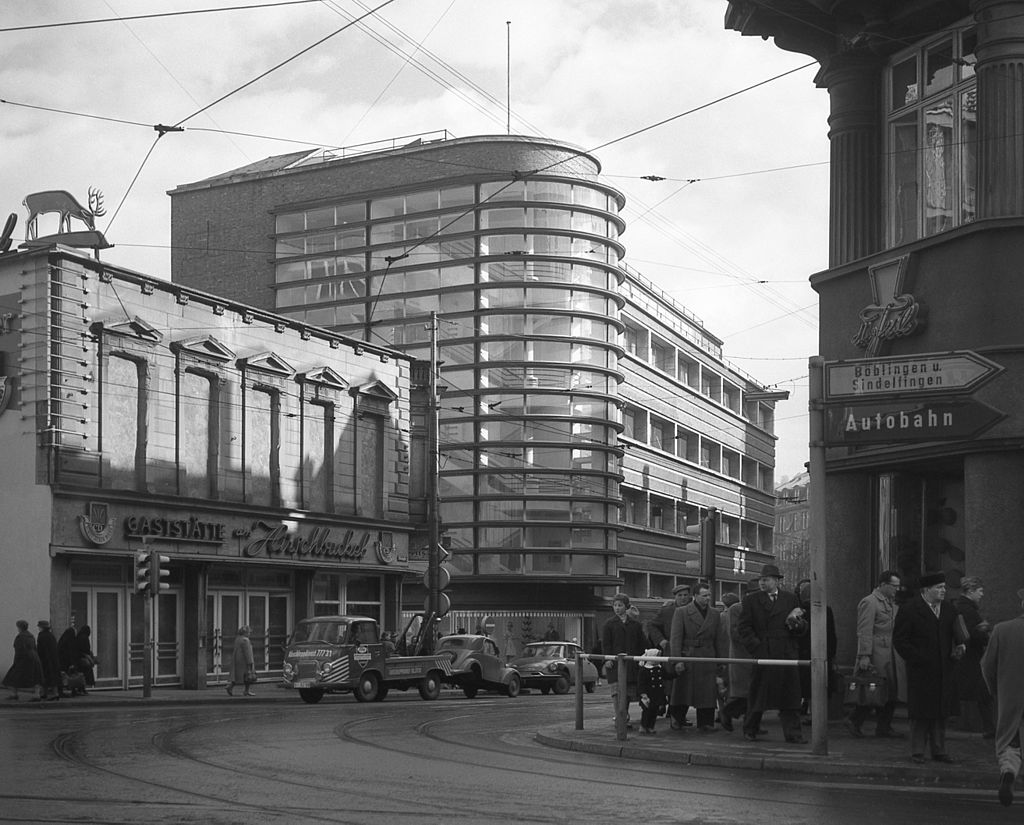
1928, Kaufhaus Schocken, Stuttgart, GERMANY, ERICH MENDELSOHN |
| |
|
| |
 |
| |
1968, Neue Nationalgalerie, Berlin, Germany, MIES VAN DER ROHE |
| |
|
| |
 |
| |
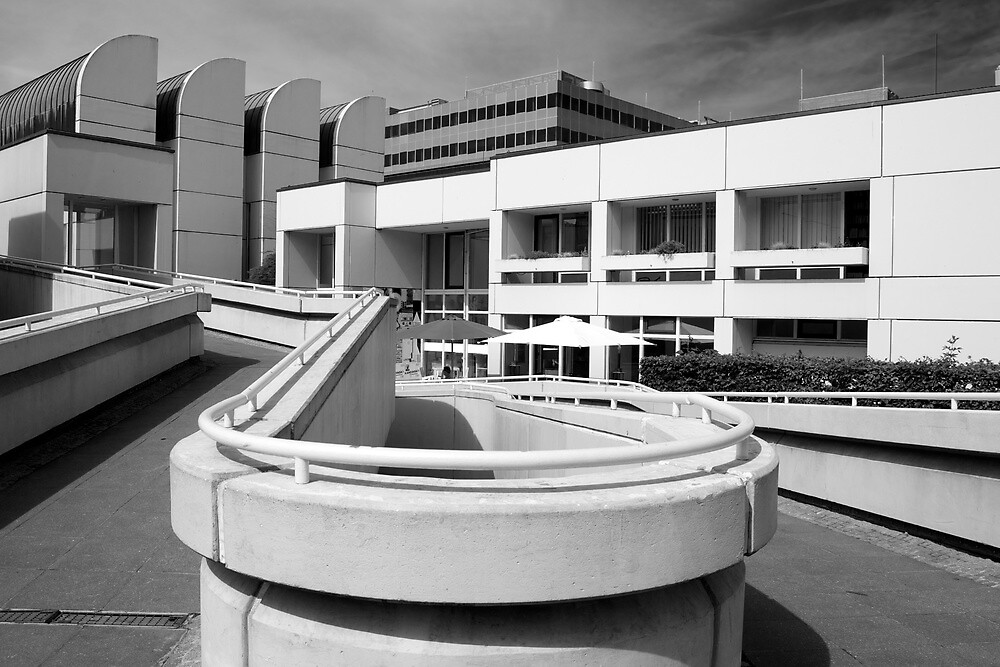
1976-1979, Bauhaus Archiv-Museum, BERLIN, GERMANY, WALTER GROPIUS |
| |
|
| |
 |
| |
1981-1985, IBA SOCIAL HOUSING, Berlin, Germany, PETER D. EISENMAN |
| |
|
| |
 |
| |
1982, ABTEIBERG MUNICIPAL MUSEUM, MÖNCHENGLADBACH, GERMANY, HANS HOLLEIN |
| |
|
| |
 |
| |
1995-1999, Municipal library, Dortmund, Germany, MARIO BOTTA |
| |
|
| |
 |
| |
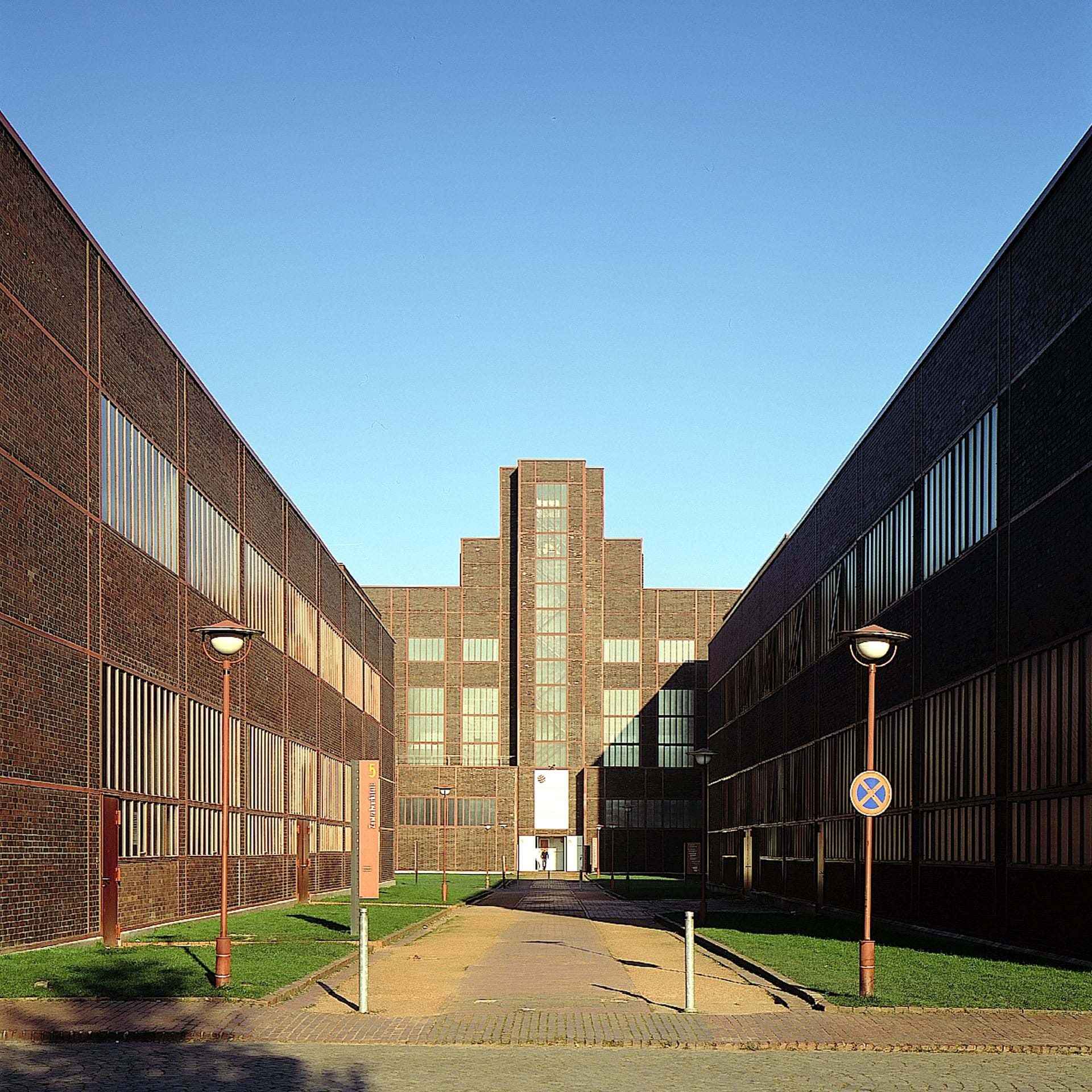
1997, Red Dot Design Museum, Essen, Germany, NORMAN FOSTER |
| |
|
| |
 |
| |
1998, Ludwig Erhard Haus, Berlin, Germany, NICHOLAS GRIMSHAW |
| |
|
| |
 |
| |
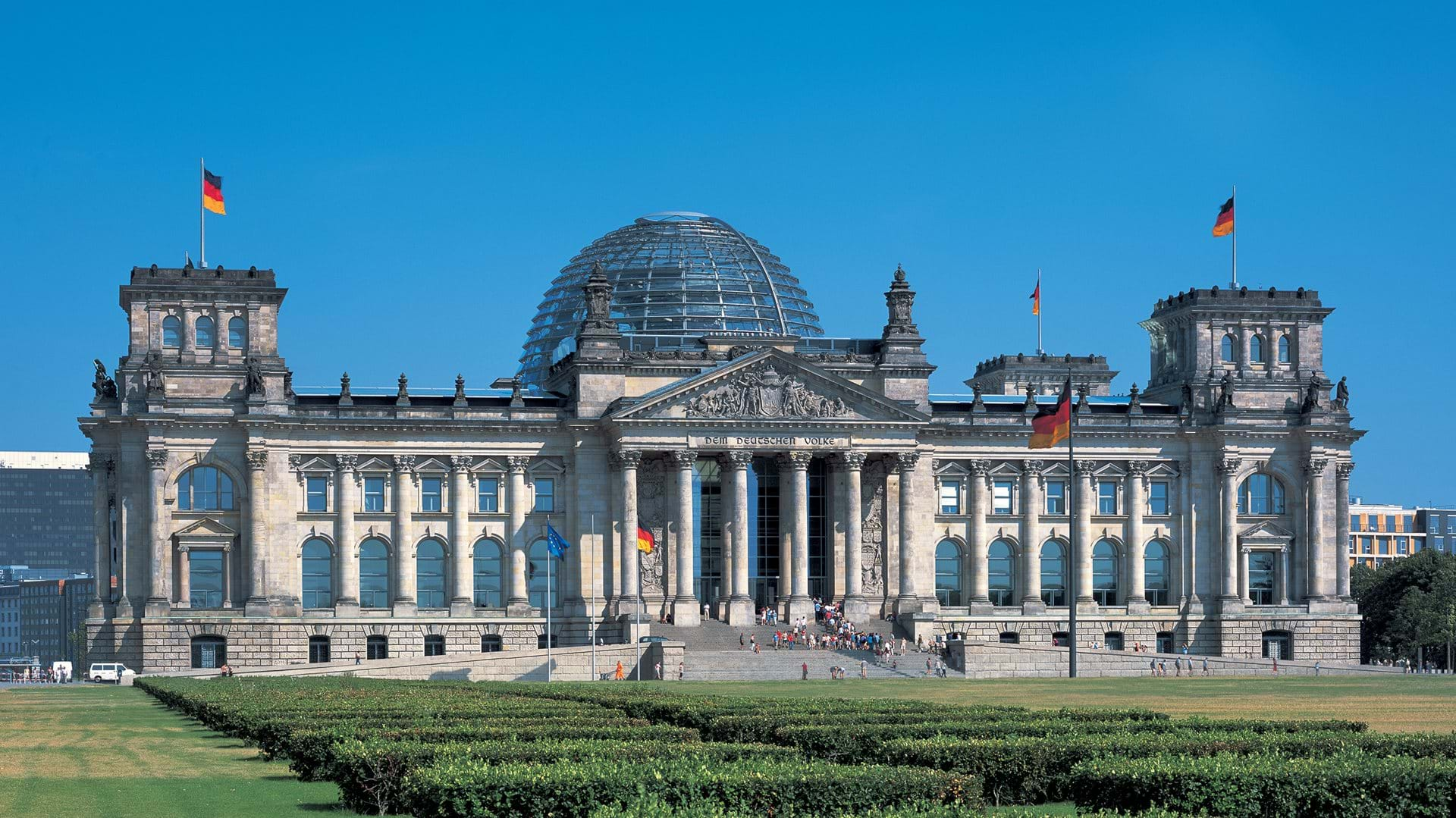
1999, Reichstag, New German Parliament, Berlin, Germany, NORMAN FOSTER |
| |
|
| |
 |
| |
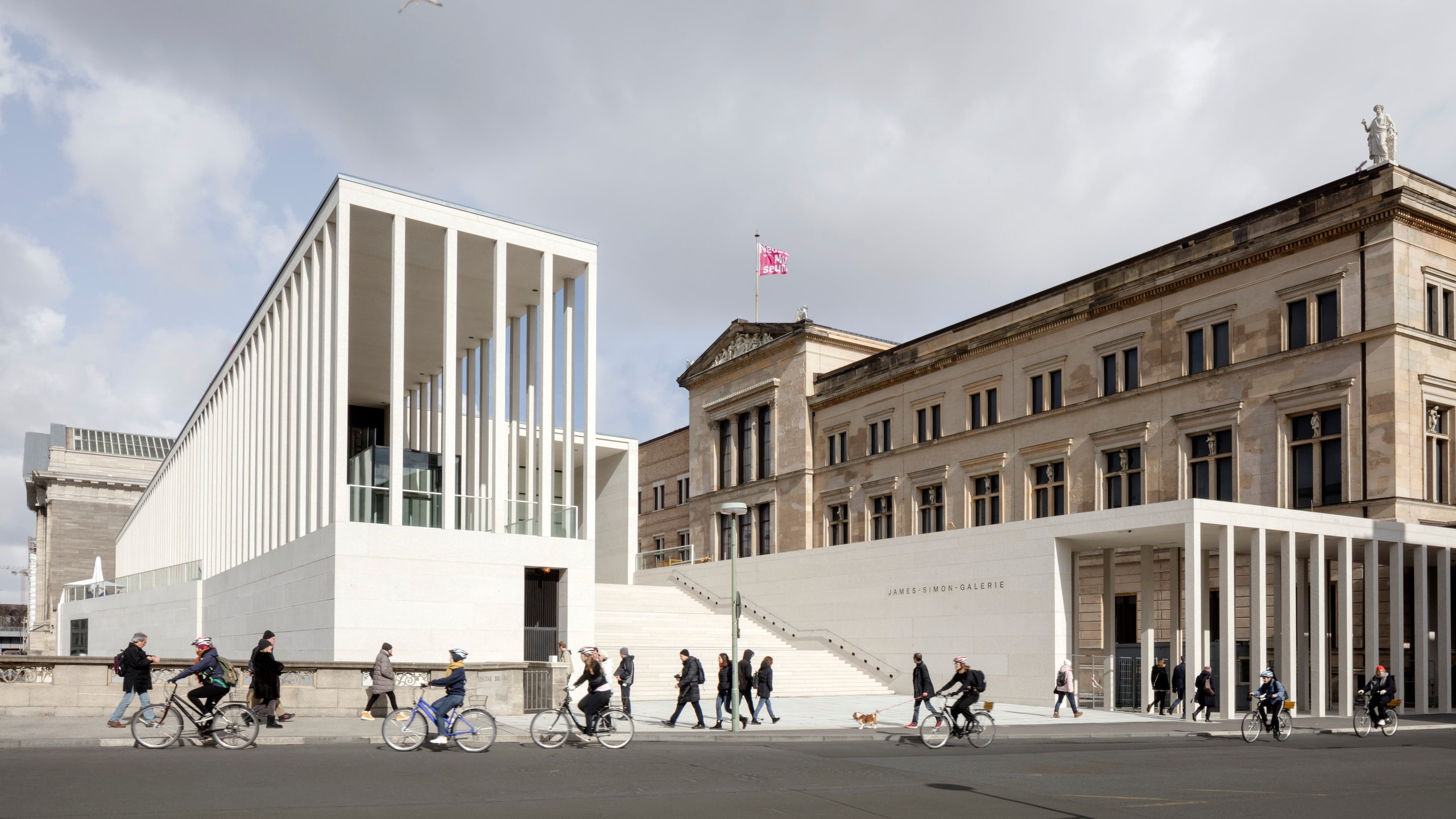
1999–2018, James-Simon-Galerie, Museum Island, Berlin, Germany, DAVID CHIPPERFIELD |
| |
|
| |
 |
| |
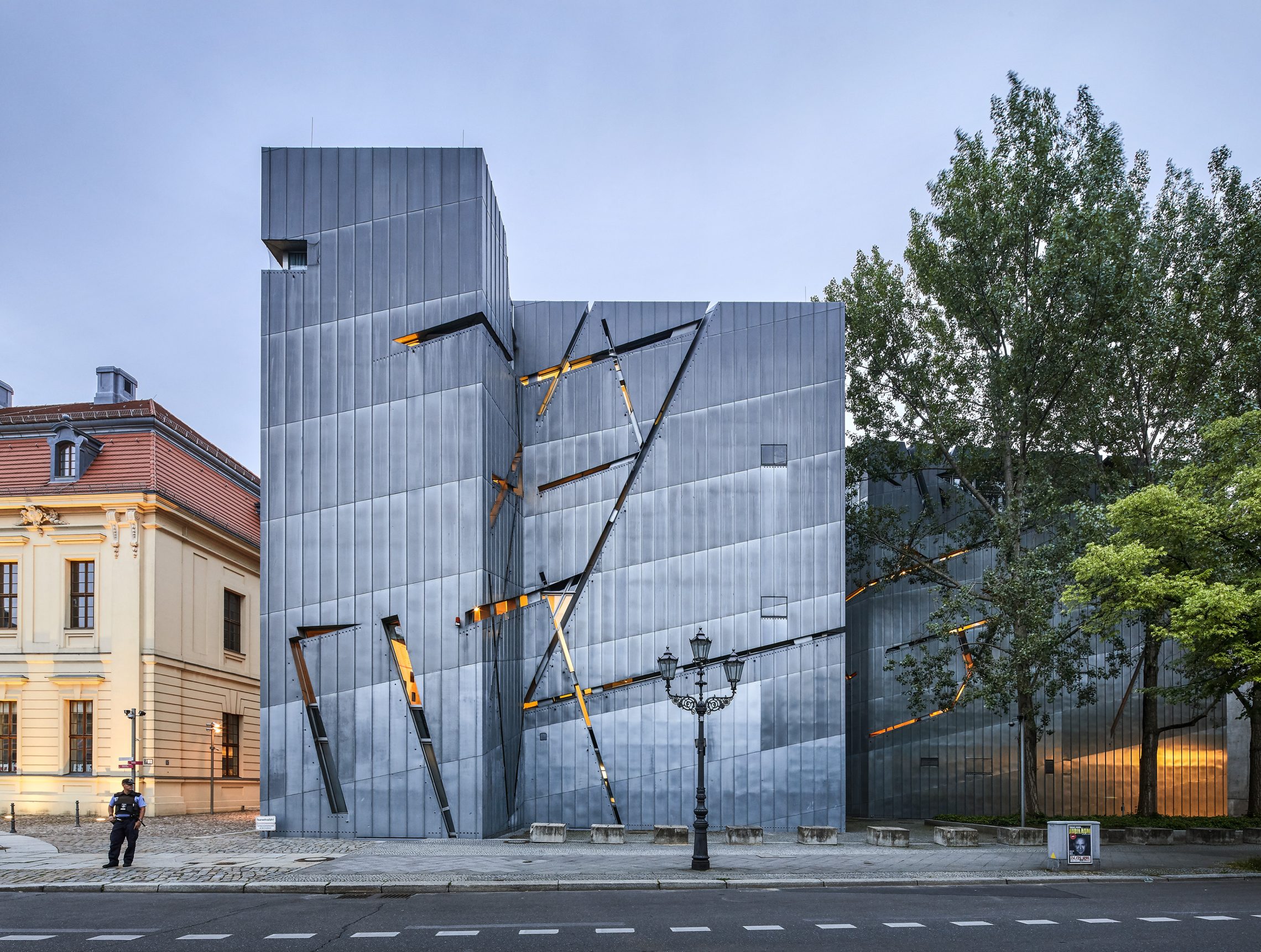
2001, JEWISH MUSEUM BERLIN, Berlin, Germany, DANIEL LIBESKIND |
| |
|
| |
 |
| |
2001, Frankfurt Trade Fair Hall, Frankfurt, Germany, NICHOLAS GRIMSHAW |
| |
|
| |
 |
| |
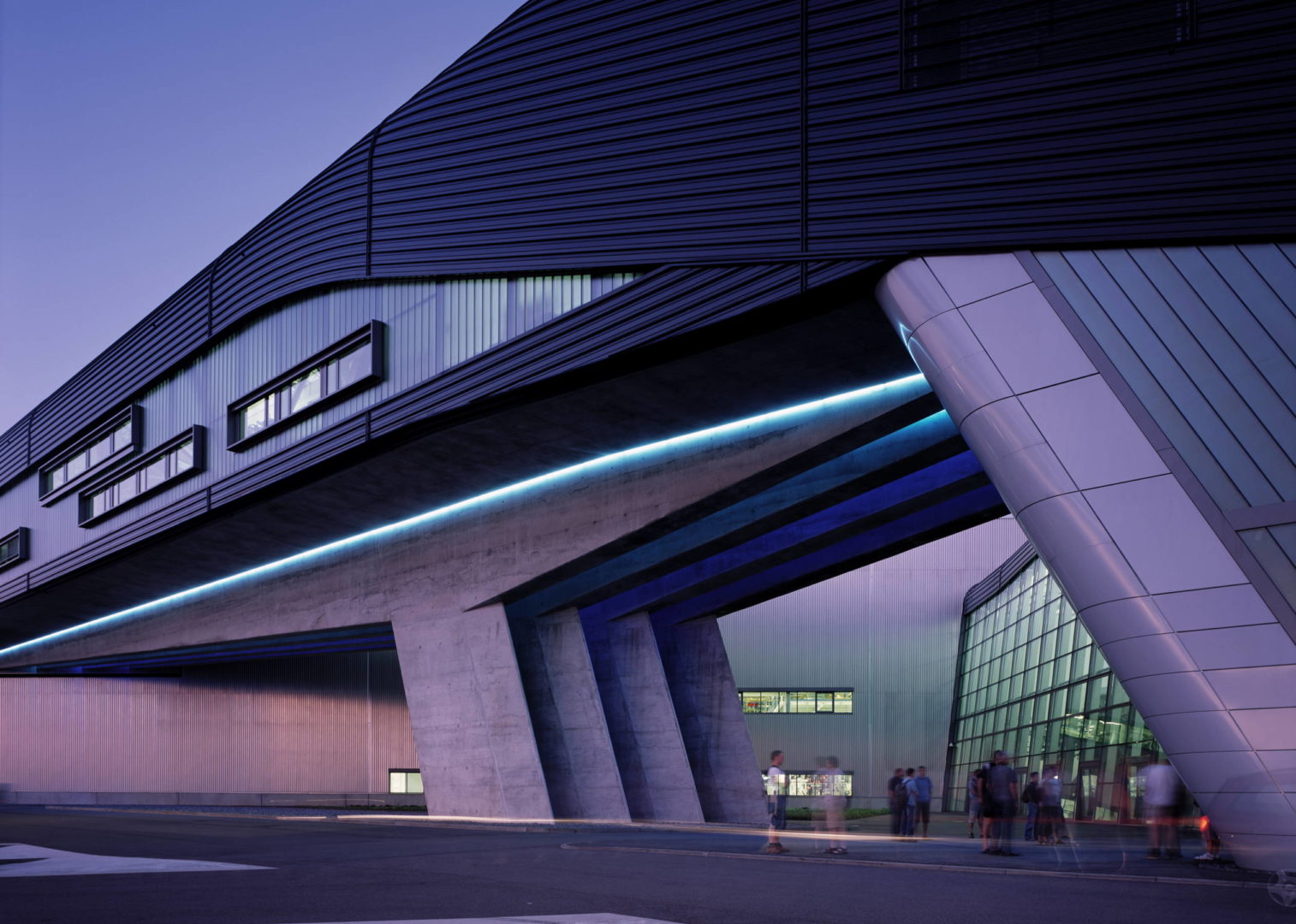
2001-2005, BMW Central Building, Leipzig, GERMANY, ZAHA M. HADID |
| |
|
| |
 |
| |
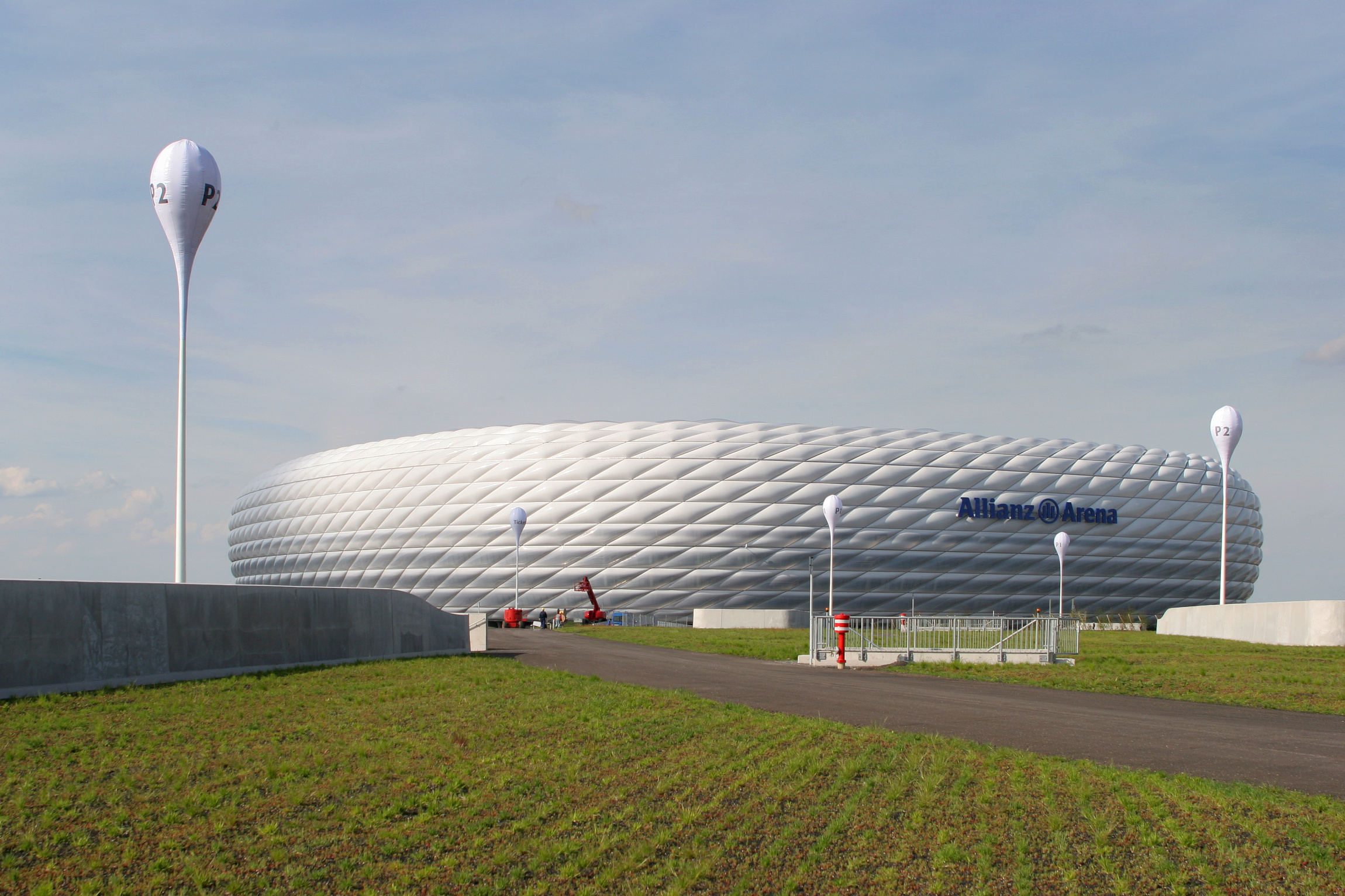
2002-2005, Allianz Arena, München-Fröttmaning, Germany, HERZOG & DE MEURON |
| |
|
| |
 |
| |
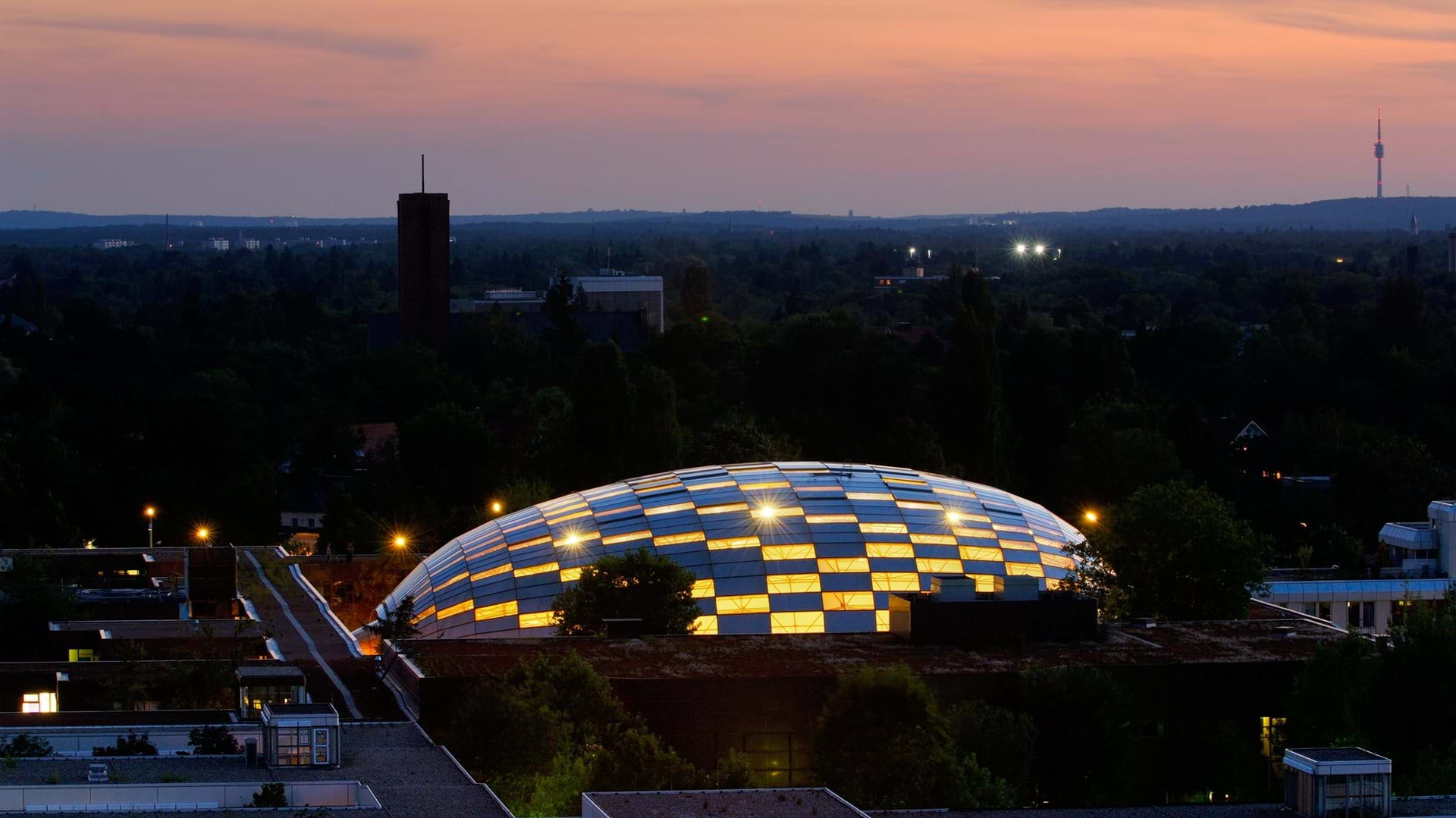
2005, Free University, Berlin, Germany, NORMAN FOSTER |
| |
|
| |
 |
| |
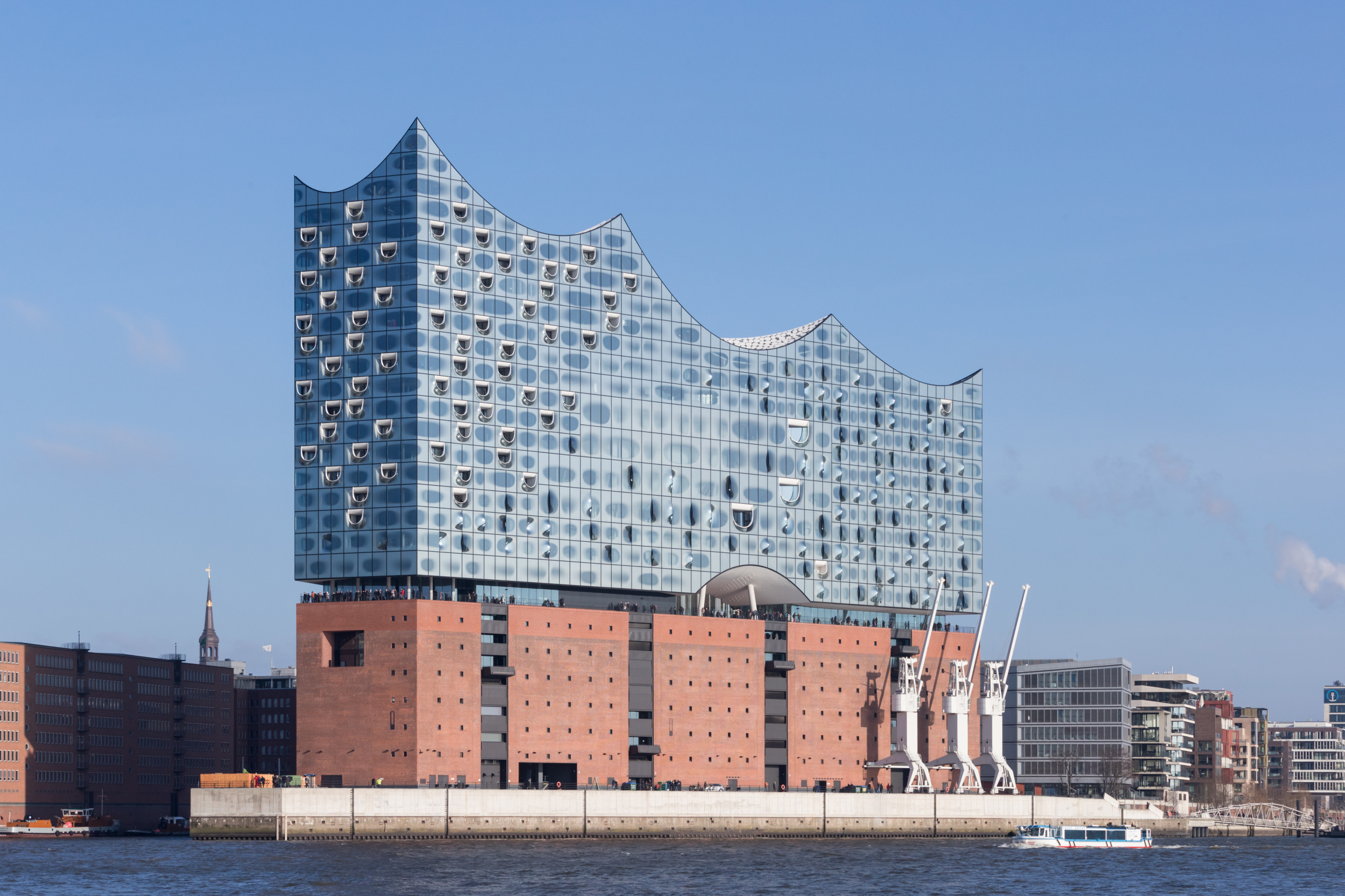
2006-2016, Elbphilharmonie, Hamburg, Germany, HERZOG & DE MEURON |
| |
|
| |
 |
| |
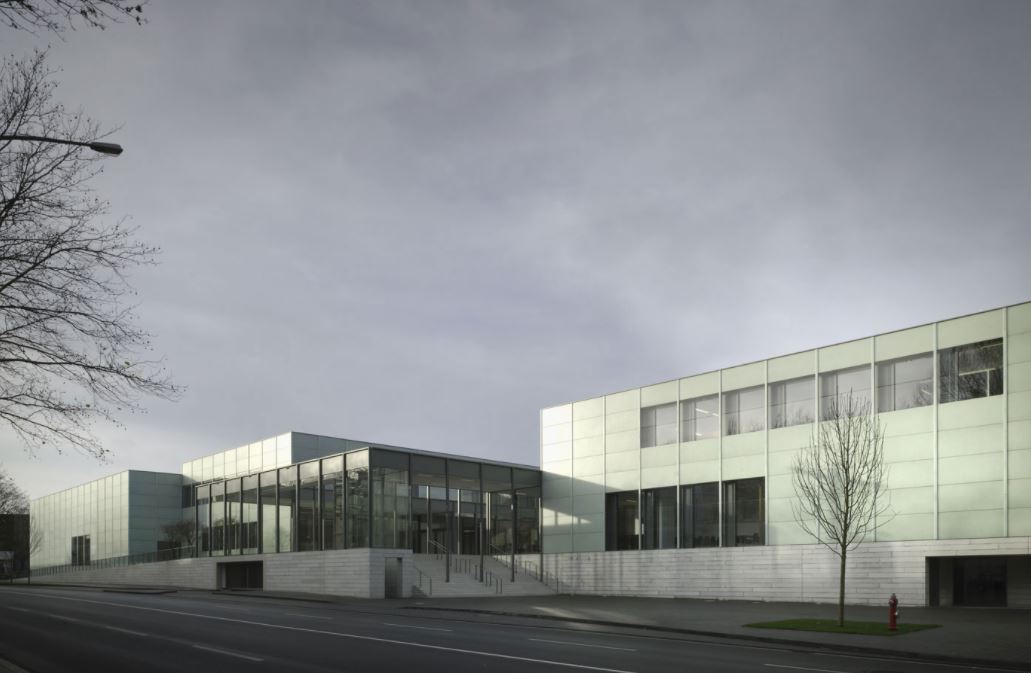
2007–2009, Museum Folkwang, Essen, Germany, DAVID CHIPPERFIELD |
| |
|
| |
 |
| |
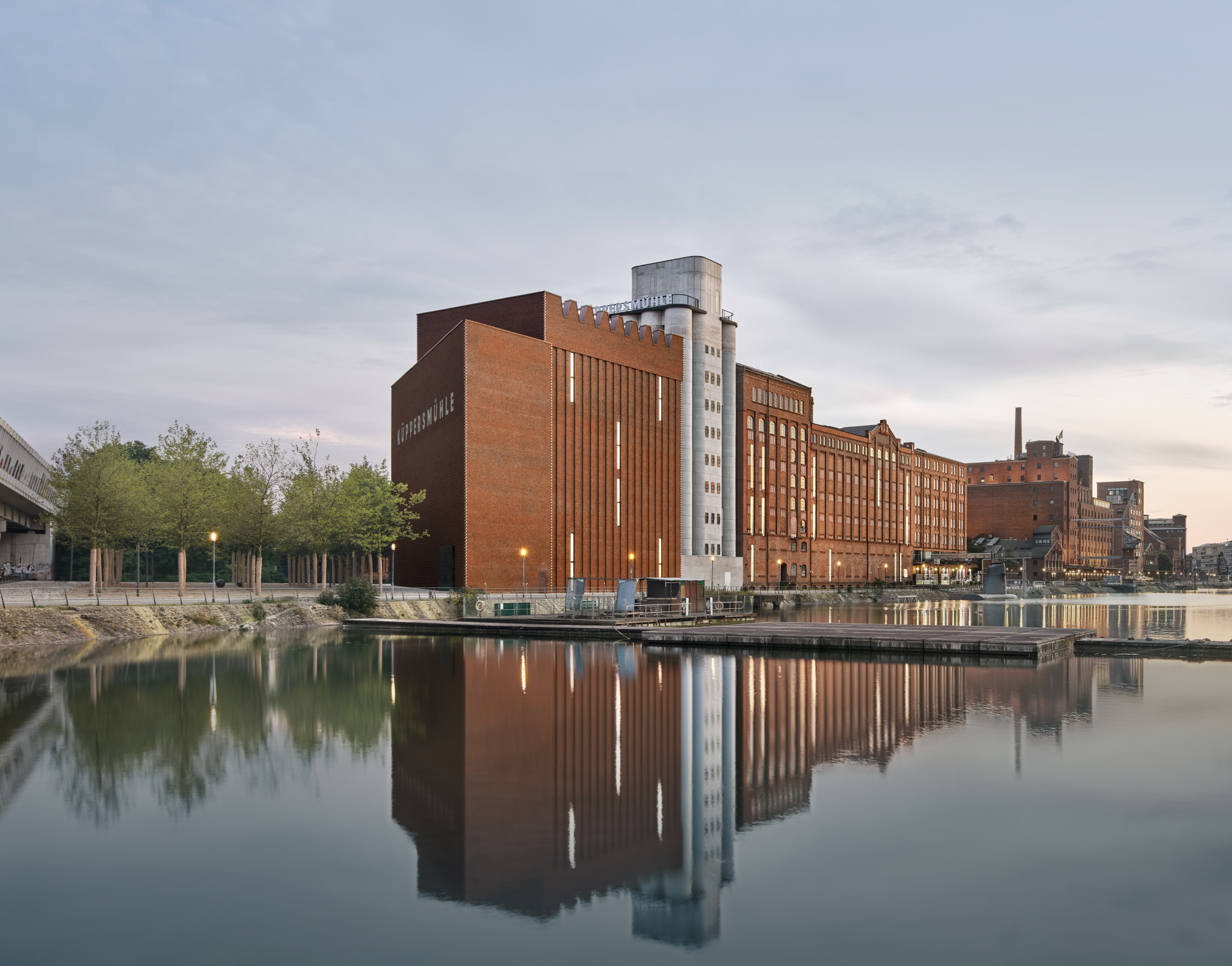
2016-2021, MKM Museum Küppersmühle, Extension, Duisburg, Germany, HERZOG & DE MEURON |
| |
|
| |
|
| |
|
| |
|
| |
|
| |
|
| |
|
| |
|
| ARCHITECTS |
|
| |
ARCHITECTS: GERMANY |
| |
|
| |
|
| |
|
| |
|
| |
|
| |
|
| |
|
| BUILDINGS |
|
| |
BUILDINGS: GERMANY
DESIGN: GERMANY |
| |
|
| |
|
| |
|
| |
|
| |
|
| |
|
| MORE |
|
| |
INTERNAL LINKS
BAUHAUS; BERLIN; COLOGNE; DÜSSELDORF; EXPRESSIONISM; FASCIST ARCHITECTURE; FRANKFURT; STUTTGART;
FURTHER READING
Although the developments of German 20th-century architecture are
summarized in every survey of modern archisecture, and the literature
on the subject is rich and growing rapidly, an authoritative comprehen-
sive survey of this complex and often difficult century has yet to be
written. Monographs exist on most of the major and minor architeces,
institutions and particular epochs, especially of the inter-war period.
Guidebooks, including Nerdinger's, as well as studies on individual
cities, specially Scheer's catalogue on Berlin, often provide the best
overview of architecture across the century, The three catalogue volumes
edited by Magnano Lampugnani (1992, 1994) and Schneider (1998)
accompanied major retrospective exhibits at the German Architecture
Museum and represent some of the best scholarship on German archi-
secure, especially from 1900-1950. The best introductions in English
to pre-WW11 architecture are Lane, Pommet and Zukowsky, while the
best surveys of the developments after the war in English are Marshall,
De Bruyn, and Schwart.
Becker, Annette, editor, DAM Jahrbuch: Architektur in Deutschland, Architecture in Germany, 2006
De Bruyn, Gerd, Contemporary Architecture in Germany, 1970–1996: 50 Buildings, edited by Inter Nationes, Berlin and Boston: Birkhäuser, 1997
Durth, Werner, Deutsche Architekten: Biographische Verflechtungen, 1900–1970, Brunswick, Germany: Vieweg, 1986; new edition 2001
Durth, Werner, and Niels Gutschow, Architektur und Städtebau der fünfziger Jahre, Bonn, West Germany: Deutsches Nationalkomitee für Denkmalschutz, 1987
Durth, Werner, Jörn Düwel, and Niels Gutschow, Städtebau und Architektur in der D.D.R., Frankfurt and New York: Campus, 1998
Feldmeyer, Gerhard G., Die neue deutsche Architektur, Stuttgart: Kohlhammer, 1993; as The New German Architecture, translated by Mark Wilch, New York: Rizzoli, 1993
Feuerstein, Günther, New Directions in German Architecture, New York: G. Braziller, 1968
Hoffmann, Hubert, Gerd Hatje, and Karl Kaspar, Neue deutsche Architektur, Stuttgart: Hatje, 1956; as New German Architecture, translated by H.J. Montague, New York: Praeger, and London: Architectural Press, 1956
Huse, Norbert, Neues Bauen 1918–1933: Moderne Architektur in der Weimarer Republik, Munich: Moos, 1975; 2nd edition, Berlin: Ernst, 1985
James-Chakraborty, Kathleen, German Architecture for a Mass Audience, London and New York: Routledge, 2000
Jakob, Paul B., The Architecture of Oppression: The SS, Forced Labor, and the Nazi Monumental Building Economy, London and New York: Routledge, 2000
Koshar, Rudy, Germany’s Transient Pasts: Preservation and National Memory in Twentieth Century, Chapel Hill: University of North Carolina Press, 1998
Ladd, Brian, Urban Planning and Civic Order in Germany, 1860–1914, Cambridge, Massachusetts: Harvard University Press, 1990
Lane, Barbara Miller, Architecture and Politics in Germany, 1918–1945, Cambridge, Massachusetts: Harvard University Press, 1968; 2nd edition 1985
Magnago Lampugnani, Vittorio, and Romana Schneider (editors), Moderne Architektur in Deutschland 1900 bis 1950: Reform und Tradition, Stuttgart: Hatje, 1992
Magnago Lampugnani, Vittorio, and Romana Schneider (editors), Moderne Architektur in Deutschland 1900 bis 1950: Expression und Neue Sachlichkeit, Stuttgart: Hatje, 1994
Marschall, Werner, and Ulrich Conrads, Neue deutsche Architektur 2, Stuttgart: Hatje, 1962; as Modern Architecture in Germany, translated by James Palmes, London: Architectural Press, and as Contemporary Architecture in Germany, New York: Praeger, 1962
Nerdinger, Winfried, and Cornelius Tafel, Guida all’architettura del Novecento: Germania, Milan: Electa, 1996; as Architectural Guide: Germany: 20th Century, translated by Ingrid Taylor and Ralph Stern, Basel, Switzerland, and Boston: Birkhäuser, 1996
Pehnt, Wolfgang, German Architecture, 1960–70, London: Architectural Press, 1970
Pommer, Richard, and Christian F. Otto, Weissenhof 1927 and the Modern Movement in Architecture, Chicago: University of Chicago Press, 1991
Posener, Julius, Berlin auf dem Wege zu einer neuen Architektur: Das dritte Kaiserreich Wilhelm II., Munich: Prestel, 1979
Posener, Julius, From Schinkel to the Bauhaus, Five Lectures on the Growth of Modern German Architecture, the University of Michigan, 2007
Schneider, Romana, and Wilfried Wang (editors), Moderne Architektur in Deutschland 1900 bis 2000: Macht und Monument, Ostfildern-Ruit: Hatje, 1998
Schreiber, Mathias (editor), Deutsche Architektur nach 1945: Vierzig Jahre Moderne in der Bundesrepublik, Stuttgart: Deutsche Verlags-Anstalt, 1986
Steckewch, Carl, and Sabine Galicher (editors), Ideen, Orte, Entwürfe: Architektur und Städtebau in der Bundesrepublik Deutschland / Ideas, Places, Projects: Architecture and Urban Planning in the Federal Republic of Germany (bilingual English and German text), translated by Larry Fisher, David Magee, and Renate Vogel, Berlin: Ernst, 1990
Weiss, Klaus-Dieter, Young German Architects / Junge deutsche Architekten und Architektinnen (bilingual English and German text), Basel, Switzerland, and Boston: Birkhäuser, 1998
Zukowsky, John (editor), The Many Faces of Modern Architecture: Building in Germany Between the Wars, Munich and New York: Prestel, 1994 |
| |
|
|